
Are Home Inspections Required? What Alabama Buyers Should Know

No. Neither federal law nor Alabama law requires a buyer to get a general home inspection before purchasing a house. The National Association of REALTORS® says home inspections are not required, though a buyer can write an inspection contingency into the purchase agreement. What is required is often confused with it: an appraisal for most mortgages, certain repairs under some loan programs, and whatever your own contract says. At Trinity Home Inspections, we help Gulf Coast buyers sort out which of these is a voluntary inspection and which is someone else’s requirement, because the difference decides who orders what, who pays, and what you can do when the report comes back.
The Short Answer for Alabama Buyers
Alabama regulates the inspector, not the inspection. The state’s Division of Construction Management says a person must be licensed to perform home inspections. The Alabama Administrative Code, in Chapter 355-17-1, defines a home inspection as a visual examination of the readily accessible systems and components of a home and requires inspectors to keep a current license.
That licensing rule protects you in one practical way: if you choose to hire an inspector, that person must hold a state license. It does not make an inspection mandatory for your purchase.
The Alabama Association of REALTORS® consumer guidance says lenders do not require a general home inspection, while recommending one so buyers can identify expensive defects before closing.
So the honest answer has three layers:
By law: no, a buyer’s inspection is optional.
By contract: it is whatever your purchase agreement says it is.
By lender or insurer: they may require their own review, which is not the same thing.
Inspection, Appraisal, Insurer Request and Lender Condition: Four Different Things
Buyers lump these together, and then a deadline passes because everyone assumed someone else had it covered. Here is each one in plain language.
Item | Who requires it | What it answers | Who usually orders and pays |
Buyer’s home inspection | Nobody, unless your contract makes it a condition | What is the physical condition of this house, and what may need repair? | The buyer |
Appraisal | The mortgage lender | Is the home worth the loan amount? | The lender orders it; the buyer typically pays the fee at closing or upfront |
Insurer request | The homeowners insurance company | Does the property meet the insurer’s underwriting needs (roof age, wiring, and similar)? | Varies by insurer; ask your agent for the insurer’s request in writing |
Lender-specific condition | A loan program or lender underwriter | Does the property meet the program’s minimum standards, or must something be repaired first? | Set by the lender; repairs are negotiated between buyer and seller |
The Consumer Financial Protection Bureau states that an appraisal is different from an inspection and that lenders generally require an appraisal when you borrow to buy. The same page explains that some loan programs set property standards or repairs, and a lender may condition closing on those repairs being made or on funds being set aside for them.
A Simple Who-Orders-What Example
Say you are buying a 1990s house in Spanish Fort with a conventional loan. Here is how the pieces typically fall:
You sign a purchase agreement that includes an inspection period.
You hire a licensed inspector and pay for the inspection yourself. This is your decision, for your protection.
Your lender orders an appraisal to confirm value. The report goes to the lender, and a clean appraisal says nothing about whether the roof is near the end of its life.
Your insurance company asks for a few details about the roof and electrical system before it binds coverage.
If the lender’s underwriter flags a condition, such as a repair tied to the loan program, that item goes on your closing to-do list, separate from your inspection.
Four parties, four purposes. Only the first one is yours to control. Because every contract, lender and insurer is different, check your own purchase agreement, your loan estimate and conditions list, and your deadlines with your agent and lender. This article is general information, not legal advice. For questions about what your contract means, an Alabama real estate attorney is the right person to ask.
What FHA, VA and USDA Loans Do and Do Not Require
Government-backed loans are where the confusion peaks. The U.S. Department of Veterans Affairs says its appraisal estimates value and checks basic property condition requirements, and it strongly recommends buyers consider a separate inspection to find major defects. The VA’s own quick reference for real estate professionals says a general home inspection is not required for a VA home loan and that the VA appraisal does not serve as one.
Freddie Mac’s homebuying guidance, reviewed October 3, 2025, says a home inspection is strongly recommended but not always required by lenders, whereas an appraisal is required.
If you are using VA benefits, we go deeper on how the appraisal and an inspection fit together in our guide to VA home inspection requirements.
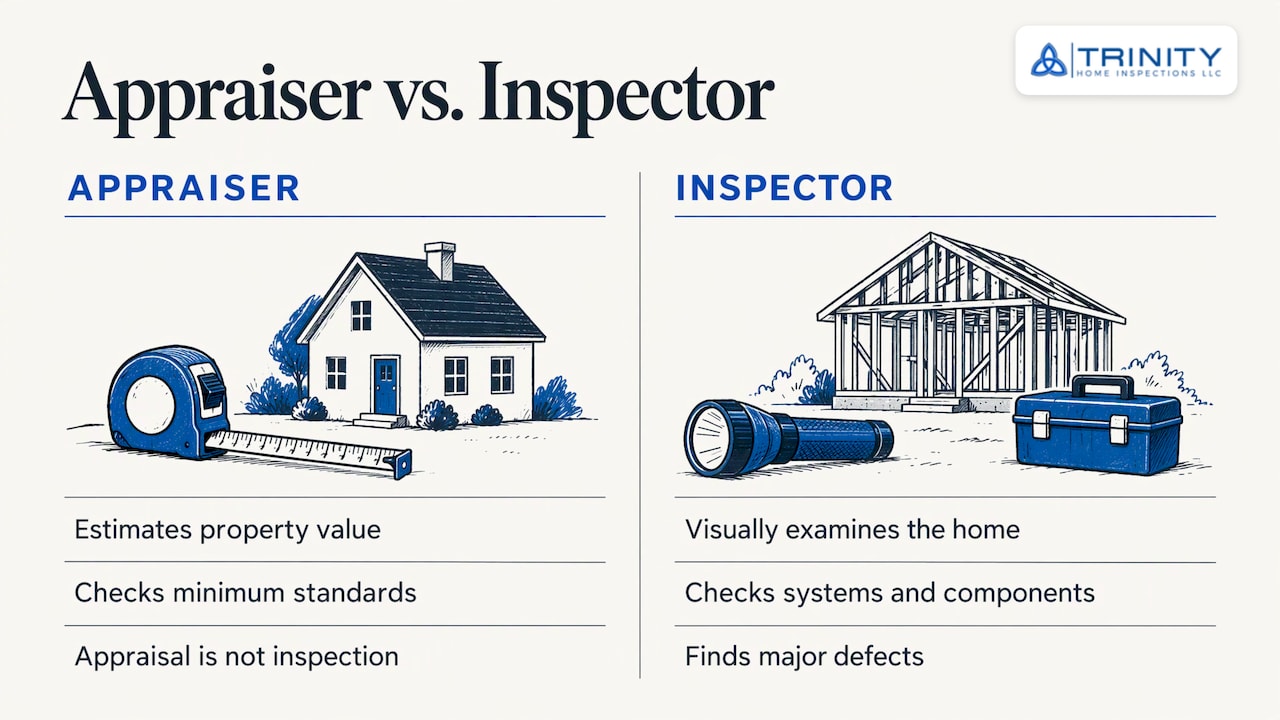
The pattern across programs is consistent: the lender protects its collateral, and you protect yourself. An appraiser looks at value and minimum standards. An inspector’s job, by the state’s definition, is a visual look at the systems and components of the home itself.
Where the Inspection Really Becomes “Required”: Your Contract
The place an inspection becomes binding is your purchase agreement. Alabama REALTORS® says most home-sale contracts include inspection contingencies, and that buyers typically schedule and pay for the inspection.
The Alabama REALTORS® 2025 Residential Purchase Agreement, revised September 2025, gives the buyer a choice. You can buy without an inspection contingency or with a defined inspection period. If the period is left blank, the form’s default is 14 days. The same form says a buyer who is dissatisfied with the results generally has three days after the inspection period ends to cancel in writing or request repairs, and that missing the deadline waives the contingency.
Those are the numbers in the 2025 form. Forms are revised, and individual contracts can be edited, so read the version you are actually signing and confirm your dates with your agent.
Three practical points follow:
The contingency is your exit. The CFPB says that when a contract is contingent on a satisfactory inspection, you have the right to cancel without penalty if you are dissatisfied with the results.
The clock starts at signing. Book your inspector the day the contract is accepted, so the report is in hand well before the deadline, not on the last afternoon.
Some tests have separate contingencies. The 2025 form treats radon, sewer or septic, and wood-infestation reporting as additional contingencies apart from the general inspection election. On the Gulf Coast, that is worth a conversation with your agent before you sign. A sewer scope inspection and mold testing are examples of add-ons buyers often line up inside the same window.
For a plain-English walkthrough of how the contingency works, see our home inspection contingency guide.
Can You Waive or Refuse an Inspection?
Yes, it is legal. NAR notes that buyers may waive inspections, sometimes to make an offer stand out in a competitive market. That is a buyer’s choice, not a legal requirement either way.
What you should know before choosing it is how Alabama allocates responsibility. The 2025 Alabama REALTORS® agreement acknowledges caveat emptor, “buyer beware,” and makes the buyer responsible for determining conditions material to the purchase decision. A 2026 Chambers practice guide adds that caveat emptor generally applies to existing residential property in Alabama, while new residential property carries an implied warranty of fitness and habitability.
In plain terms, on a resale home you are the one expected to find out what you are buying. The inspection is how you do that. If you are weighing a waiver in a fast market, talk it through with your agent and, for the contract language, an attorney. A shorter inspection period or a focused inspection of the big-ticket systems are things to discuss with them as well.
Can the Seller Refuse Your Repair Requests?
Yes. An inspection does not force a seller to fix anything. The CFPB says findings may support negotiation over who pays for repairs, but the seller may or may not agree depending on the contract and local market. Under the Alabama form, the repair request process follows the contract’s terms rather than an automatic repair duty. And in an as-is sale, NAR explains, the seller makes no guarantees about condition and has decided not to make repairs even if you get an inspection.
That is why the report matters even in an as-is deal: it tells you whether to proceed, renegotiate price, or walk away inside your contingency window.
Reading the Report Without Panic
A first report can look long. Freddie Mac points out that inspectors do not pass or fail a home; they report conditions that may need repair or replacement. Alabama REALTORS® also advises judging a report by the seriousness of the defects rather than the count, since minor items are common.
A useful way to sort findings:
Safety items: electrical hazards, gas leaks, carbon monoxide concerns, missing handrails.
Big-ticket systems: roof, HVAC, plumbing, foundation and drainage.
Moisture: active leaks, damp areas, signs of past water intrusion, which matter on the humid Gulf Coast.
Maintenance: caulking, filters, loose fixtures, things any owner handles.
Once you know which category each finding belongs to, you can decide what to request from the seller and what to price in as your own project. If repairs are on your list, it helps to see what local home improvement deals are around while you budget. And if you want to see what a finished report looks like before you book, our page of home inspection report examples walks through one.
If You Are an Agent, Investor or Commercial Buyer
Agents. Your clients ask you this question constantly. The cleanest answer is the three-layer one above: not required by law, set by the contract, and distinct from the appraisal, insurer and lender items. Writing the inspection period and any add-on contingencies clearly at the start prevents most deadline disputes. Our home inspection tips for agents cover how to keep the timeline moving.
Investors and landlords. The same rule applies: nothing in Alabama law makes a purchase inspection mandatory, and the cost of skipping it lands on you after closing. Investors buying rentals or vacation properties in Gulf Shores and Orange Beach often add checks beyond the general inspection, because deferred maintenance directly affects returns.
Commercial buyers. Commercial purchases are governed by the contract you negotiate. A Chambers 2026 guide describes Alabama commercial due diligence as typically covering title and survey matters, a physical property inspection, financial and property records, and zoning, permitting or platting review, sometimes with an environmental examination. It also notes agreements range from as-is sales without representations to deals with extensive seller representations and warranties. That range is why the physical inspection and its deadline should be written into the agreement, with your attorney, not assumed. We offer commercial building inspections for the physical condition piece of that process.
What We Include in a Trinity Inspection
A buyer’s inspection with Trinity Home Inspections is performed by an InterNACHI-certified inspector who has completed the National Home Inspectors Exam and the Standards of Practice and Code of Ethics exams, and who completes continuing education every year. Here is what the service includes:
A visual inspection of the home’s readily accessible systems and components
A photo- and video-rich digital report, with 99% of reports delivered the same day
Thermal imaging at no extra cost, to help identify insulation gaps, potential moisture issues and overheated electrical components
Moisture meters, a carbon monoxide detector and a combustible gas leak detector where needed
Drone views of the roof when roof access is unsafe or limited
The InterNACHI Honor Guarantee up to $25,000
Add-on services such as sewer scope, mold testing and air quality testing are available when your situation calls for them.
Why Buyers Choose to Inspect Anyway
The voluntary nature of an inspection is exactly why it is valuable. Everything else in the closing process serves someone else’s interest: the lender’s appraisal protects the loan, the insurer’s questions protect the policy, and the title work protects ownership. The inspection is the one step whose only client is you.
A licensed, certified inspector with modern tools gives you a clear view of a home before you commit. Thermal imaging can show what the eye cannot, such as insulation gaps behind finished walls. A moisture meter can confirm whether a stain is an old mark or an active leak. Those are the kinds of facts that turn a nervous decision into an informed one, and they are the kind of information you can use in a repair request.
Perspective: Why We Tell Buyers to Inspect
We are asked a version of this question almost every time someone books: “Do I really have to do this?” The honest answer is no, and we say so. Nobody can make you inspect a house in Alabama. What we tell people is that the better question is who the other steps are working for. The appraisal works for the lender. The insurance questions work for the insurer. Your inspection is the only part of the process that works for you. We built Trinity on straightforward answers and a report that tells the truth, not what someone wants to hear. That is why every inspection is done by an InterNACHI-certified, professionally trained inspector, why thermal imaging is included at no extra charge, and why we aim to get your photo and video report to you quickly, so you have time to use it inside your contract deadlines. Treat your home purchase the way you would want a member of your family to treat theirs: with the facts in hand before you sign. Matt
Ready to Book an Inspection?
We serve buyers, sellers and homeowners across Baldwin, Mobile, Washington, Monroe, Clarke and Escambia counties and the surrounding Gulf Coast. Sellers who want to know what a buyer’s inspector will find can also look at our pre-listing inspections, and our main inspection page lists every service.
[
Call 251-210-7376 or visit TrinityInspectionsLLC.com to schedule. Book as soon as your contract is accepted, so your report arrives well inside your inspection period.
FAQ
Is a home inspection required to get a mortgage in Alabama?
No. Lenders generally require an appraisal, not a general home inspection, as the Alabama Association of REALTORS® and the CFPB both explain. Some loan programs set property standards or repairs, so check your lender’s conditions list.
What is the difference between an appraisal and a home inspection?
An appraisal estimates the home’s value for the lender and checks basic condition requirements. A home inspection is a visual examination of the home’s systems and components, ordered by you, that reports what may need repair or replacement. A clean appraisal does not replace an inspection.
Can you refuse a home inspection?
Yes. You can decline or waive an inspection, and the Alabama REALTORS® form lets you buy without an inspection contingency. Because Alabama generally applies caveat emptor to existing homes, you take on responsibility for the conditions you did not check. Talk it over with your agent first.
Does the seller have to fix what the inspection finds?
Not automatically. Repairs are governed by your contract’s terms and by negotiation. A seller may agree, offer a credit, or decline, and in an as-is sale the seller has decided not to make repairs.
How long do I have to get an inspection done?
That depends on your contract. The 2025 Alabama REALTORS® form defaults to 14 days if the inspection period is left blank, with a short window afterward to cancel or request repairs. Confirm the exact dates in the agreement you sign.
Sources
Recommended