
What Is a Home Inspection Contingency? Buyer's Guide


A home inspection contingency is a clause in a real estate purchase contract that gives buyers the legal right to have a property professionally inspected within a defined period and to renegotiate, request repairs, or cancel the contract without losing their earnest money if significant issues are found. In the industry, you will also hear this referred to as an “inspection contingency” or “home inspection clause,” and all three terms describe the same contractual protection. According to Zillow, buyers typically receive 7 to 14 days after contract acceptance to complete this process. That window is your best defense against buying a property with hidden structural failures, electrical hazards, or moisture damage you never saw during a showing. Trinity Home Inspections works with buyers across Mobile, Baldwin, and surrounding Gulf Coast Alabama counties every week to make sure that window is used wisely.
What is a home inspection contingency and how does it work?
A home inspection contingency works as a step-by-step process built directly into your purchase agreement, giving you structured rights at each stage. Understanding the sequence protects you from missing deadlines and losing the protections you negotiated for.
Here is how the process typically unfolds from contract to resolution:
Sign the purchase agreement. Your real estate agent includes the inspection contingency language in the offer. Once the seller accepts, the inspection clock starts. Most contracts in Alabama and across the country set this window at 7 to 14 days.
Schedule your inspection immediately. Do not wait until day five. InterNACHI-certified inspectors like those at Trinity Home Inspections often book out several days, especially in active markets like Fairhope, Daphne, and Gulf Shores.
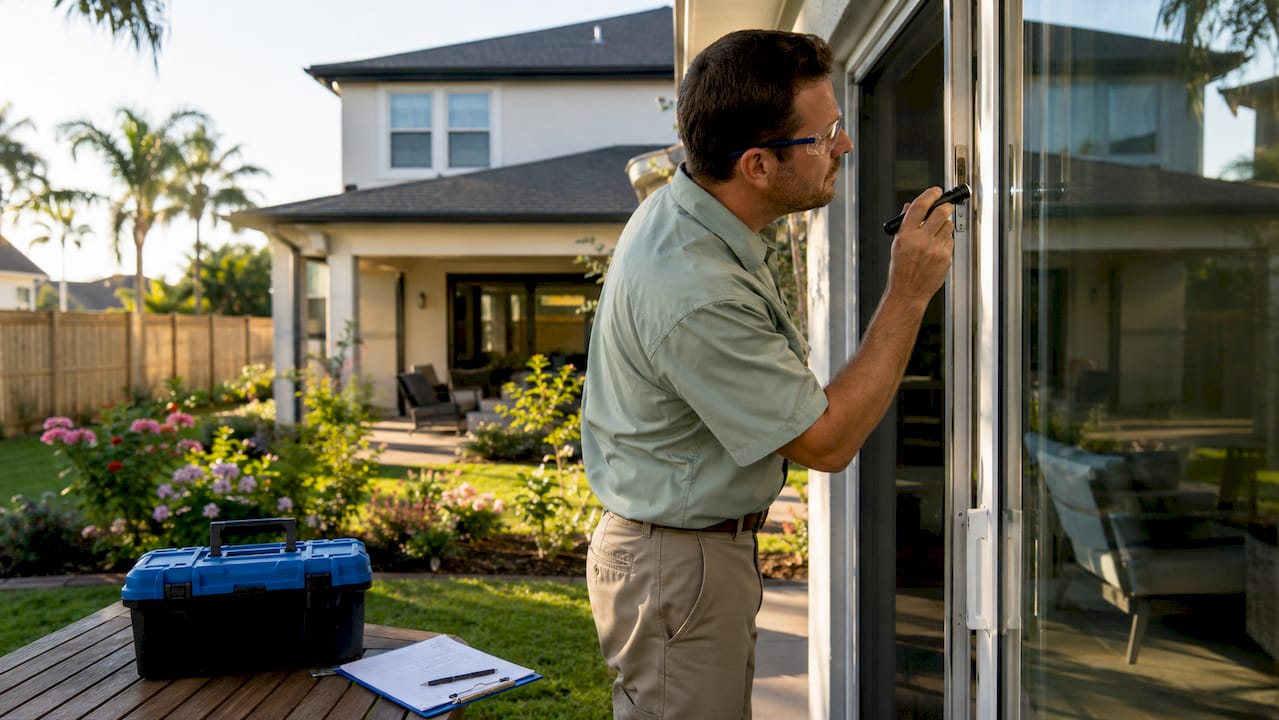
Attend the inspection in person. The National Association of Realtors advises that buyers who accompany inspectors understand findings far better than those who only read the report afterward. You see the cracked joist, the corroded water heater connection, and the soft spot near the HVAC unit firsthand. That context is irreplaceable.
Review the inspector’s report carefully. A quality report will categorize findings by severity. Trinity’s reports use color-coded sections for Safety/Major issues, Issues/Defects, and DIY/Minor items so you know exactly where to focus your attention.
Decide your next move. You have three options: accept the property as-is, submit a repair request or ask for a price reduction or seller credit, or cancel the contract entirely. Each option carries different implications for your timeline and relationship with the seller.
Enter the negotiation period. Once you submit your repair request or credit request, the seller typically has two to five days to respond. They can agree, counter, or decline. If they decline and you cannot reach agreement, you can still cancel within the contingency window.
Remove or exercise the contingency. If you reach an agreement, you sign a contingency removal and proceed to closing. If you cannot, you cancel and your earnest money is returned.
Pro Tip: Schedule your inspection within 24 to 48 hours of contract acceptance. Waiting until the final days of your contingency window leaves no time to bring in specialists for follow-up testing on issues like mold, sewer line damage, or electrical panel concerns.
What are the typical terms, rights, and limitations in inspection contingencies?
Inspection contingency language is not standardized across every state or every contract, and the specific wording determines exactly how much protection you actually have. Reading the clause carefully before signing is not optional.
Common clause types you will encounter:
Broad option period clauses give buyers the right to cancel for any reason during the inspection period, no explanation required. These offer the most protection and are common in states like Texas.
Material defect clauses limit cancellation rights to findings that meet a specific threshold, such as defects affecting safety, structural integrity, or habitability. Minor issues like a dripping faucet or a cracked outlet cover do not qualify.
Specific repair threshold clauses tie the contingency to a dollar amount. For example, if repairs exceed $5,000, the buyer may cancel. Below that threshold, the buyer proceeds regardless.
Contract language varies widely, and some allow backing out for any reason while others restrict cancellation to major defects only. This distinction matters enormously if you discover a long list of moderate issues that individually fall below the threshold but collectively represent a serious financial burden.
Earnest money protection is one of the most practical benefits of the clause. Earnest money is typically protected when a buyer cancels during the inspection period for valid reasons covered by the contingency language. Lose the contingency window by missing the deadline, and that protection disappears.
Here is a quick reference for the key terms you need to understand before signing:
Term | What it means for you |
Inspection period | The number of days you have to complete inspection and submit requests, typically 7 to 14 days |
Material defect | A defect that significantly affects safety, structural integrity, or habitability, not cosmetic issues |
Earnest money | Your deposit held in escrow, returned if you cancel within the contingency for valid reasons |
Contingency removal | A signed document confirming you accept the property and waive further inspection rights |
Seller’s response period | The time the seller has to reply to your repair request, usually two to five days |
State-specific rules also apply. Alabama does not have a single mandated inspection contingency form, which means the language in your contract depends heavily on what your agent drafts or which standard form is used. Working with an experienced local agent and a thorough inspector is the practical answer to navigating these differences.
Should you include or waive a home inspection contingency?
The decision to include or waive an inspection contingency is one of the most consequential choices you make in a real estate transaction. It is not simply a matter of preference. It reflects your risk tolerance, your financial position, and the current market conditions.
The case for including the contingency:
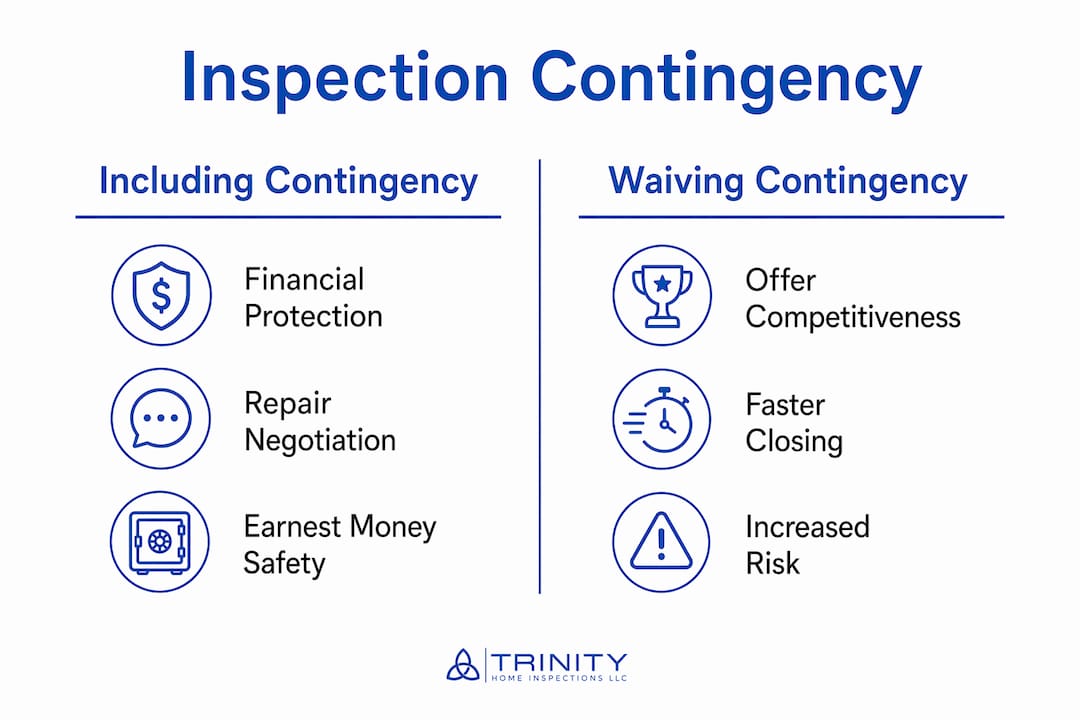
The most direct benefit is financial protection. Professional home inspections cost between $300 and $600, and 66% of mortgage buyers include a contingency to guard against unexpected repair costs or hazards. Spending $400 on an inspection that reveals a $15,000 foundation issue is one of the best returns on investment in real estate. Beyond cost, the contingency gives you negotiation leverage. Sellers who know you have documented evidence of defects are far more likely to offer credits or price reductions than sellers who believe you have no recourse.
The case for waiving the contingency:
Skipping an inspection contingency can make your offer more attractive in competitive markets, but it carries real risk of costly repairs and the complete loss of contingency protection. In a seller’s market where multiple offers are common, a waiver signals confidence and commitment to the seller. Experienced investors who plan to renovate a property anyway sometimes calculate that the cost of potential repairs is already priced into their offer.
Comparison: including vs. waiving the contingency
Factor | Including the contingency | Waiving the contingency |
Offer competitiveness | Slightly less attractive to sellers | More attractive in competitive markets |
Financial protection | Strong, earnest money protected | None, full risk to buyer |
Negotiation leverage | High, based on documented findings | None after closing |
Best suited for | First-time buyers, financed purchases | Experienced investors, cash buyers |
Risk level | Low to moderate | High without prior inspection |
Pro Tip: If you are in a competitive market and want to strengthen your offer without fully waiving protection, consider a pre-offer inspection before submitting your bid. You get the knowledge of an inspection without the contingency delay, and you can still negotiate from a position of information.
How to negotiate repairs or credits after your inspection findings
The inspection report is not the finish line. It is the starting point for a conversation about price, repairs, and risk. How you handle that conversation determines whether you close on favorable terms or walk away from a deal that could have worked.
The most effective negotiation strategy starts with categorization. Not every finding deserves a repair request, and submitting a list of 40 items including burned-out light bulbs and scuffed baseboards signals inexperience to the seller. Buyers who focus on material defects affecting safety or habitability keep deals on track and get better results.
Here is how to approach the negotiation process with clarity:
Separate safety and structural issues from cosmetic ones. Roof damage, foundation cracks, active water intrusion, faulty electrical panels, and HVAC systems at end of life are negotiating priorities. Cosmetic wear is not.
Request repairs or credits, not both. Asking for a seller to fix the roof AND give you a $3,000 credit for HVAC work creates confusion and resistance. Choose the cleaner path: either a price reduction, a seller credit at closing, or specific repairs completed before closing.
Get contractor estimates before submitting your request. A repair request backed by a licensed contractor’s written estimate is far more persuasive than a number you estimated yourself. Trinity provides a trusted contractor referral list to clients for exactly this reason.
Know your walk-away number. Before you submit any request, decide the minimum outcome you will accept. If the seller refuses to address a $20,000 foundation issue and will not reduce the price accordingly, you need to be prepared to cancel.
Use the inspection report as documentation, not ammunition. The goal is a fair resolution, not a confrontation. A well-documented report from a certified inspector like those at Trinity Home Inspections carries professional credibility that supports your position without escalating tension.
Understanding how inspection findings impact negotiations is a skill that pays off in every transaction. Experienced investors prioritize identifying deal-breakers such as foundation failures or HVAC end-of-life issues rather than minor cosmetic repairs, because those are the items that change the fundamental value of the property.
For a deeper look at structuring your requests, the home inspection repair guide covers how to prioritize findings and set realistic expectations for both buyers and sellers in Alabama.
Key takeaways
A home inspection contingency is the single most effective contractual tool buyers have to protect their earnest money, uncover hidden defects, and negotiate from a position of documented fact rather than assumption.
Point | Details |
Definition and purpose | An inspection contingency is a contract clause granting buyers the right to inspect, negotiate, or cancel within 7 to 14 days of contract acceptance. |
Earnest money protection | Buyers who cancel within the contingency period for valid reasons typically recover their earnest money in full. |
Negotiation focus | Prioritize safety, structural, and habitability defects in repair requests. Cosmetic issues rarely move sellers and can derail negotiations. |
Waiver risk | Waiving the contingency strengthens offers in competitive markets but removes all post-contract protection. Pre-offer inspections are a practical middle ground. |
Contract language matters | Clause type determines your actual rights. Broad option clauses offer more flexibility than material-defect-only clauses. |
What I have learned about inspection contingencies in the Alabama market
After inspecting homes across Mobile, Baldwin, and the surrounding Gulf Coast counties, one pattern stands out clearly. Buyers who treat the inspection contingency as a formality rather than a strategic tool consistently leave money on the table or inherit problems they did not budget for.
The most common misunderstanding I see is buyers assuming the contingency protects them from everything. It does not. It protects you within the window and within the terms of your specific contract language. Miss the deadline by one day, and your earnest money is at risk. Submit a vague repair request without documentation, and the seller has every reason to say no. The contingency is only as strong as how you use it.
Another thing I have noticed in the Alabama market specifically: older homes in areas like Mobile’s historic districts and coastal properties near Gulf Shores carry inspection findings that newer buyers do not anticipate. Pier and beam foundations, aging HVAC systems in high-humidity environments, and moisture intrusion from Gulf weather patterns are real and recurring issues. These are not reasons to avoid buying. They are reasons to inspect thoroughly and negotiate with accurate information.
My honest advice is this: attend your inspection, ask questions, and read the full report before deciding what to request. The buyers who do that walk into negotiations with confidence. The ones who skip the inspection or skim the report often find out what they missed after closing.
— Matt
How Trinity Home Inspections supports your contingency process
[
Alt text: Trinity Home Inspections inspector in khaki pants and blue shirt reviewing findings at a Gulf Coast Alabama property during a buyer’s inspection contingency period.
When your inspection contingency window opens, you need a report that is ready to support your negotiation the same day. Trinity Home Inspections delivers same-day photo and video-rich reports, free thermal imaging, and color-coded findings that make it clear what is urgent, what can wait, and what to budget for. From standard buyer inspections to mold testing and sewer scope add-ons, Trinity covers every issue that could affect your negotiation. If you are a seller who wants fewer surprises, a pre-listing inspection gives you the same clarity before you ever accept an offer.
Call 251-210-7376 or visit TrinityInspectionsLLC.com to schedule your inspection today.
FAQ
What is a home inspection contingency in simple terms?
A home inspection contingency is a clause in your purchase contract that gives you the right to inspect the property and cancel or renegotiate the deal without penalty if significant problems are found. It protects your earnest money deposit during the inspection period.
How long does the inspection contingency period last?
The inspection contingency period typically runs 7 to 14 days from the date of contract acceptance. The exact length is negotiable and should be confirmed in your specific contract before signing.
Can you lose your earnest money if you cancel during the contingency?
No, not if you cancel within the contingency window for a valid reason covered by your contract language. Earnest money is protected when buyers exercise the contingency correctly and within the deadline.
Should investors waive the inspection contingency to win deals?
Pre-offer inspections are a strategic alternative for investors who want to compete without a contingency while still understanding the property’s condition. Waiving without any prior inspection is a high-risk move, even for experienced buyers.
What does a home inspection actually cover?
A standard home inspection covers the roof, foundation, structural components, electrical systems, plumbing, HVAC, insulation, windows, and doors. Add-on services like mold testing, sewer scope, and air quality sampling address issues beyond the standard scope.
Recommended

