
Examples of Home Inspection Reports: Alabama Buyer's Guide
- Matt Cameron
- a few seconds ago
- 8 min read

A home inspection report is a written, photo-supported document that records the visible and accessible condition of a property on the day of inspection. Examples of home inspection reports show buyers, sellers, and real estate professionals exactly how inspectors organize findings, classify defects, and communicate urgency. InterNACHI-aligned reports for single-family homes typically run 40–80 pages and include 200–400 photos. That volume reflects thoroughness, not padding. Understanding what a quality report looks like before you hire an inspector is one of the most practical steps you can take in any Alabama real estate transaction.
1. What does a home inspection report look like?
A professional home inspection report follows a consistent structure whether the home is a new build in Fairhope or a 1970s ranch in Mobile. The document opens with a cover page, moves through system-by-system findings, and closes with an executive summary or summary table. Knowing this layout helps you read any report faster and with more confidence.
Every well-built report contains these core sections:
Cover page: Property address, inspection date, weather conditions, and inspector credentials including InterNACHI certification number
Scope and limitations: What was inspected, what was not accessible, and what falls outside standard scope
Executive summary: A condensed list of the most urgent findings, organized by severity
System sections: Roofing, exterior, foundation, structural components, plumbing, electrical, HVAC, interior, attic, and ventilation
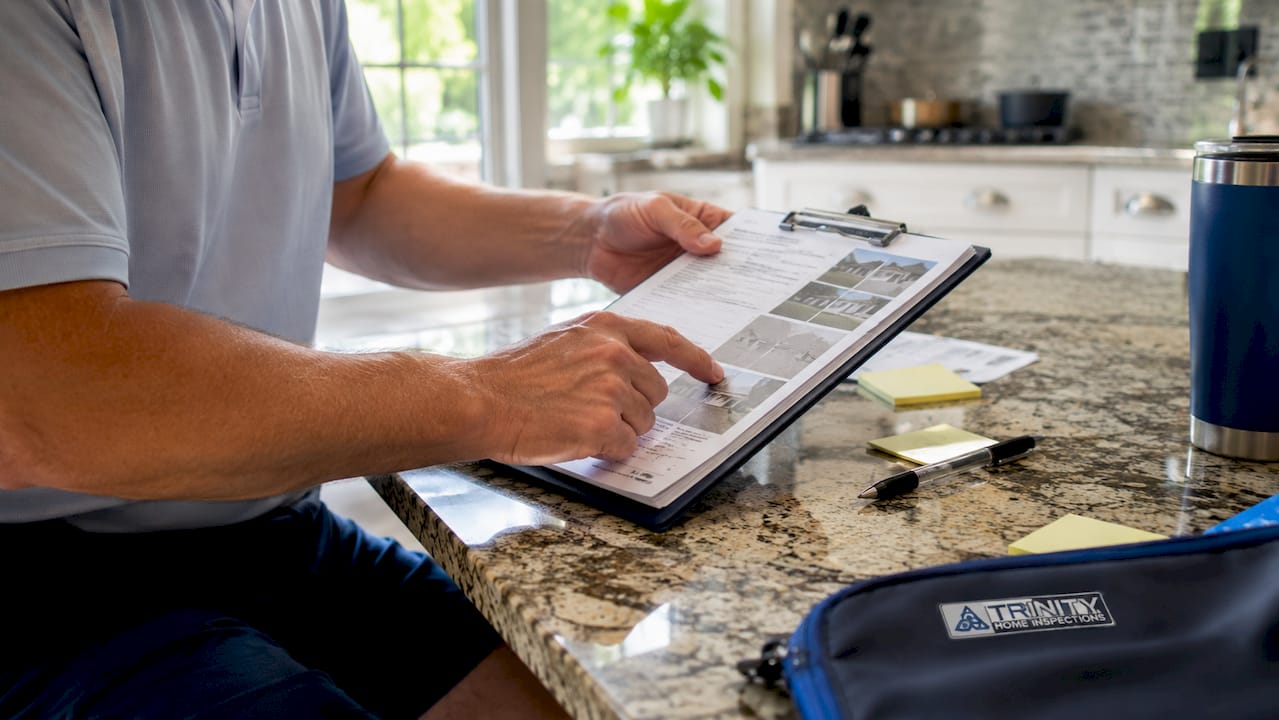
Annotated photos: Images with arrows, circles, or text callouts that identify the exact location and nature of each defect
Exclusions note: A clear statement that specialty tests like radon, mold, asbestos, sewer scope, and septic are separate services
The system sections are the body of the report. Each one describes what the inspector observed, notes the condition, and flags any deficiencies. A roofing section, for example, might describe shingle type, approximate age, visible wear, and any areas showing granule loss or improper flashing.
Pro Tip: Ask any inspector you are considering to share an anonymized sample report before you book. A quality sample tells you more about an inspector’s standards than any sales pitch.
2. How findings are categorized and prioritized
Reports categorize findings into tiers so you can identify priorities within minutes. The most common classification scheme uses four levels: safety hazards, major defects, monitor-and-maintain items, and cosmetic notes.
Here is how those tiers typically break down with real examples:
Safety hazard: Double-tapped breakers in the electrical panel, missing GFCI protection near water sources, or an improperly vented gas water heater. These require immediate attention before move-in.
Major defect: A roof with less than two years of estimated life remaining, active moisture intrusion in the crawl space, or a cracked heat exchanger in the furnace. These affect livability and carry significant repair costs.
Monitor and maintain: Minor caulking gaps around windows, small hairline cracks in drywall, or an aging but functional HVAC system. These are not urgent but should be tracked over time.
Cosmetic note: Scuffed paint, a loose interior door handle, or a missing outlet cover plate. These are buyer preference items, not defects.
Safety hazards typically number 0–5 items, major defects 3–10, and maintenance items 10–30 in a typical report. That range gives you a realistic benchmark when reading your own report.
A well-organized report does not just list problems. It tells you which problems matter right now, which ones can wait, and which ones need a specialist’s eyes before you sign anything.
The executive summary is the most powerful negotiation tool in the document. Separating urgent deal-breakers from routine maintenance in a clear summary prevents transaction delays and helps agents build focused repair requests. Photos support each classification by showing the exact condition, not just describing it.
3. Realistic sample formats and Alabama-specific considerations
Alabama homes present a distinct set of inspection findings that you will not see as often in drier climates. Gulf Coast humidity, clay-heavy soils, and older housing stock in cities like Mobile create patterns that show up repeatedly in local reports.
The table below shows what a typical Alabama inspection report looks like across different home profiles:
Home Profile | Typical Page Count | Typical Photo Count | Common Alabama Findings |
New construction (under 5 years) | 30–50 pages | 100–200 photos | Grading issues, missing caulk, HVAC commissioning gaps |
Mid-age home (10–30 years) | 50–70 pages | 200–350 photos | Moisture intrusion, deferred roof maintenance, aging panels |
Older home (30+ years) | 60–80 pages | 300–400 photos | Foundation settling, knob-and-tube wiring, galvanized plumbing |
Historic home (50+ years) | 70–80+ pages | 350–400+ photos | Multiple system upgrades needed, moisture damage, structural concerns |
Moisture intrusion is the single most common major finding in Gulf Coast Alabama inspections. Crawl spaces in Baldwin and Mobile County homes frequently show standing water, deteriorated vapor barriers, or wood rot at the sill plates. A thorough report documents these with close-up photos, moisture meter readings, and clear narrative describing the extent of the problem.
Foundation settling appears regularly in older Mobile County homes built on expansive clay soils. A quality report distinguishes between cosmetic settling cracks and structural movement. The narrative will note crack width, direction, and whether the pattern suggests ongoing movement or historical settling that has stabilized.
Specialty add-ons appear as separate sections within the same report or as standalone documents. A sewer scope inspection adds a video-documented section showing the interior of the main drain line. A mold test produces a certified lab report with chain of custody documentation. These additions do not replace the standard report. They supplement it with data the visual inspection cannot capture.
Pro Tip: When reviewing a sample report from any inspector, count the annotated photos in one system section. If the roofing section has three photos with no callouts, that inspector is not documenting at a level that protects you in a negotiation.
4. How to read and use a home inspection report effectively
Experienced buyers and agents do not read reports linearly. They start with the executive summary to identify what needs immediate attention, then move into the body sections for context and detail. That approach saves time and keeps negotiations focused.
Here is a practical reading strategy for Alabama buyers and their agents:
Start with the executive summary. Identify all safety hazards and major defects before reading anything else. These are your negotiation anchors.
Cross-reference every finding with its photo. Annotated photos with arrows and circles reduce ambiguity for contractors and buyers alike. If a photo is not annotated, ask the inspector to clarify the exact location.
Read the full narrative, not just the severity label. Inspector phrases like “further evaluation by a qualified specialist” signal conditions that may require costly expert assessment. Severity tags alone can understate the true urgency.
Understand what the report does not cover. A standard inspection is a visual evidence snapshot, not a pass/fail certificate or a cost estimate. It documents visible conditions on one specific day.
Flag items that need specialist follow-up. If the report notes suspected mold growth, active foundation movement, or an aging sewer line, schedule the appropriate add-on inspection before closing.
Use the report as a budgeting tool. Even items outside the negotiation window give you a realistic picture of near-term maintenance costs after purchase.
Real estate professionals can take this a step further by building a formal repair request directly from the report’s executive summary. Agents who understand how to build a repair report from inspection findings close transactions faster and with fewer surprises.
Sellers benefit from reading reports too. A pre-listing inspection gives sellers the same document a buyer’s inspector would produce, before the home hits the market. That knowledge removes the element of surprise and allows sellers to price accurately or make targeted repairs.
Key takeaways
A home inspection report is a structured, photo-rich evidence document that categorizes findings by urgency, and reading it correctly gives Alabama buyers and sellers a clear advantage in every transaction.
Point | Details |
Start with the executive summary | Triage safety hazards and major defects before reading the full report body. |
Annotated photos are non-negotiable | Photos with arrows and callouts reduce ambiguity for buyers, agents, and contractors. |
Severity labels need narrative context | Read full inspector comments to understand true urgency beyond color codes or tags. |
Alabama homes have regional patterns | Moisture intrusion, foundation settling, and aging systems appear frequently in Gulf Coast reports. |
Specialty tests are separate services | Mold, sewer scope, and radon testing supplement the standard report and require add-on scheduling. |
What I’ve learned from years of writing Alabama inspection reports
After inspecting homes across Mobile, Baldwin, and the surrounding Gulf Coast counties, the pattern I see most often is this: buyers focus on the number of findings and miss the weight of individual ones. A report with 45 items is not automatically worse than one with 20. What matters is whether the critical items are clearly identified and whether the photos give you enough evidence to act.
The reports that actually protect buyers are the ones built around clarity. When I write a finding, I ask myself whether a homeowner with no construction background could read that entry and understand what it means, where it is, and what to do next. If the answer is no, the entry is not finished.
Sample reports are one of the most underused evaluation tools available to buyers. Viewing sample reports before hiring tells you whether an inspector documents with precision or with vague generalities. A report full of “appeared functional at time of inspection” with no supporting photos is not protecting you. It is protecting the inspector.
The other mistake I see regularly is treating the report as the end of the conversation. The report is the beginning. It tells you what to ask, what to price out, and what to investigate further. Buyers who call me after delivery with questions get better outcomes than those who file the report away and move on. The findings do not change, but your understanding of them can.
— Matt
Trinity Home Inspections: detailed reports for Alabama buyers and sellers
Trinity Home Inspections delivers InterNACHI-certified inspection reports across Mobile, Baldwin, Escambia, Washington, Monroe, and Clarke counties, with 99% of reports delivered the same day of inspection.
[
Every report is color-coded by severity, packed with annotated photos and video, and written in plain English so you know exactly what is urgent, what can wait, and what to budget for. Add-ons including sewer scope inspections and mold testing are available as bundled services so you do not need to coordinate multiple vendors. Sellers can request a pre-listing inspection to get ahead of buyer findings before the home hits the market. Call 251-210-7376 or visit TrinityInspectionsLLC.com to schedule or request a sample report.
FAQ
What does a home inspection report include?
A home inspection report includes a cover page, executive summary, system-by-system findings covering roofing through interior spaces, annotated photos, and a list of exclusions. InterNACHI-aligned reports typically run 40–80 pages with 200–400 supporting photos.
How long is a typical home inspection report?
Report length depends on home size and age, but most single-family home reports run 40–80 pages. Older homes and larger properties trend toward the higher end due to more systems and more documented findings.
Is a home inspection report a pass or fail document?
A home inspection report is not a pass/fail document. It is a visual evidence snapshot of the property’s condition on the inspection date, and it does not include repair cost estimates or code compliance certifications.
How do I use a home inspection report to negotiate?
Start with the executive summary to identify safety hazards and major defects. The executive summary separates urgent issues from routine maintenance, giving buyers and agents a focused list for repair requests or price adjustments.
What are common findings in Alabama home inspection reports?
Alabama reports frequently document moisture intrusion in crawl spaces, foundation settling on clay soils, aging electrical panels, and deferred roof maintenance. Gulf Coast humidity accelerates wood deterioration and creates conditions that inspectors in drier regions rarely encounter.
Recommended