
Brick Veneer Weep Holes: Why They Matter on Alabama Homes

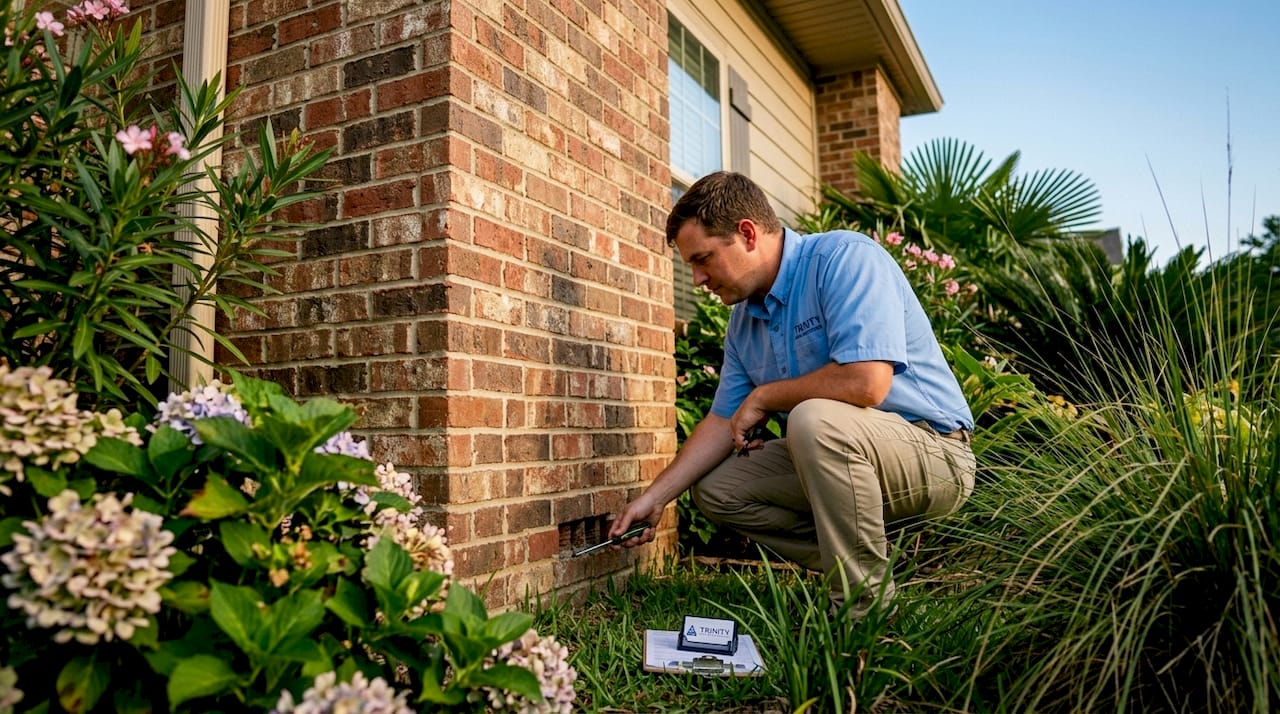
Weep holes in brick veneer are intentional drainage openings placed at the base of the brick wall to let water escape from the cavity behind the brick. On Alabama homes, where Gulf Coast humidity and heavy seasonal rainfall push moisture into every wall assembly, these small gaps are not optional details. They are the primary defense against hidden water damage. Missing or blocked weep holes trap that moisture inside the wall, where it silently attacks wood framing, metal ties, and insulation. Trinity Home Inspections inspects weep hole placement and condition on every brick veneer home across Baldwin, Mobile, Escambia, and surrounding counties.
What happens when weep holes are missing or blocked in brick veneer walls?
Modern masonry walls rely on weep holes as fundamental components of drainage-based design. Water always finds a way through brick. Rain, condensation, and wind-driven moisture all penetrate the outer brick face and collect in the air cavity behind it. Weep holes give that water a path out. Without them, the water has nowhere to go.
When weep holes are missing or filled, the consequences build slowly and stay hidden for a long time. The damage typically shows up in several forms:
Wood rot. Moisture saturates the wood sheathing and framing behind the brick. Rot weakens structural members without any visible sign on the exterior brick face.
Metal corrosion. Wall ties that connect the brick veneer to the framing are made of metal. Trapped moisture corrodes them, reducing the structural connection between the brick and the wall.
Mold growth. Wet cavities create ideal conditions for mold. Spores spread through wall assemblies and eventually affect indoor air quality.
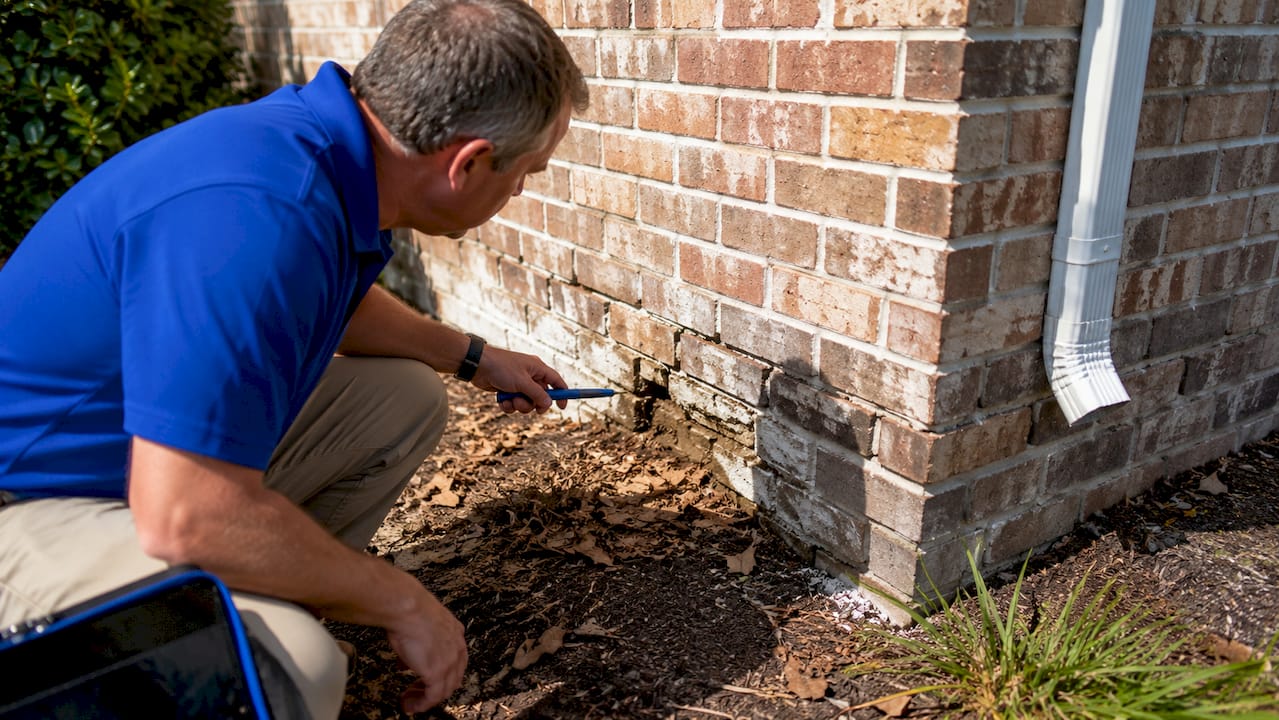
Efflorescence. White mineral deposits appear on the brick face when water carries salts through the masonry. This is often the first visible sign of a drainage problem.
Brick spalling. Repeated freeze-thaw cycles in saturated brick cause the face of the brick to flake and crack over time.
The most misleading part of this problem is that the brick exterior can look perfectly fine while serious damage accumulates behind it. Alabama homeowners often discover the issue only after interior signs appear, such as paint bubbling near the base of walls, musty odors in rooms adjacent to exterior brick, or water stains on interior drywall. By that point, the damage is usually well established.
Pro Tip: Run your hand along the base of your brick veneer after a heavy rain. If the weep holes are working, you may see small amounts of water draining from them. If the wall looks completely dry at the base but you know it rained hard, that is a sign worth investigating.
Moisture trapped in the wall cavity also degrades insulation performance. Wet insulation loses its ability to resist heat transfer, which means your HVAC system works harder and your energy bills climb. In Alabama’s hot, humid climate, that effect compounds quickly.
What do building codes require for weep holes in Alabama homes?
Alabama has adopted the International Residential Code (IRC), which sets clear requirements for weep hole placement in brick veneer construction. IRC standards require weep holes at a maximum spacing of 33 inches on center along the base of the veneer and above all through-wall flashing. That spacing requirement is a ceiling, not a target. In high-rainfall climates like coastal Alabama, closer spacing improves drainage performance.
The code also specifies where weep holes must be located. They are required at the bottom of the veneer, above every window and door opening, and above any through-wall flashing location. This placement works together with the flashing system. Flashing collects water behind the brick and directs it toward the weep holes for drainage. Without both components working together, the drainage system fails even if one part is present.
Code Requirement | IRC Standard |
Maximum weep hole spacing | 33 inches on center |
Required location: base of veneer | Yes, at the lowest brick course |
Required location: above flashing | Yes, above all through-wall flashing |
Required location: above openings | Yes, above windows and doors |
Recommended spacing in wet climates | Closer than 33 inches for better drainage |
Noncompliance with these requirements is a defect, not a minor oversight. A home built without proper weep holes or with weep holes that were later filled does not meet the standard the code was designed to protect. For homeowners buying or selling a brick veneer home in Alabama, this is a point worth verifying before closing. The Alabama pre-drywall inspection process is the best time to catch missing weep holes in new construction, before the landscaping and finish work make them harder to evaluate.
What common problems reduce weep hole effectiveness?
Weep holes can be present at construction and still fail to function properly. Several common problems reduce or eliminate their effectiveness over time.
Mortar droppings in the cavity
Mortar debris restricts water flow and air circulation in the cavity. During construction, mortar squeezed from joints falls into the air gap and piles up at the base of the wall. These droppings can completely block weep holes from the inside, and they create mortar bridges that connect the brick to the backup wall. Those bridges carry moisture directly across the air gap, bypassing the drainage plane entirely. This is a widespread construction defect that homeowners cannot see from the outside.
Landscaping burial
Mulch and soil piled above weep holes negate their drainage function and lead to unseen damage. Homeowners often add mulch beds or raise soil grades near the foundation without realizing the weep holes are being buried. The IRC and best practice guidance both call for maintaining clearance well below the lowest brick course. Keep mulch and soil at least 6–8 inches below the weep holes to preserve proper drainage.
Homeowner sealing mistakes
The most damaging mistake a homeowner can make is filling weep holes with caulk or spray foam. This happens because weep holes look like gaps that should be sealed. Homeowners see them and assume they are a construction error or a pest entry point. Filling them eliminates drainage and traps moisture inside the cavity, accelerating hidden structural deterioration.
Pest intrusion and the right solution
Weep holes do create a potential entry point for insects and small pests. The correct solution is not to seal them. Approved weep hole screens allow drainage while preventing pests. These are small mesh or plastic inserts designed specifically for weep holes. They maintain airflow and water drainage while blocking entry. Sealing the hole entirely solves the pest concern but creates a far more costly moisture problem.
Here is a step-by-step approach to maintaining your weep holes:
Walk the perimeter of your home after a significant rain and look for water draining from the base of the brick.
Check that mulch, soil, and vegetation are at least 6–8 inches below the lowest weep hole.
Look for white mineral staining (efflorescence) on the brick face, which signals water movement through the masonry.
Check that no weep holes have been filled with caulk, foam, or mortar.
Install approved weep hole screens if insects are a concern, rather than sealing the openings.
Clear any visible debris from weep hole openings using a thin wire or small brush.
Pro Tip: If you are unsure whether your weep holes are functioning, a professional inspector can thread a small camera through the opening to check the cavity condition and confirm whether mortar droppings or other blockages are present.
How do you inspect and address missing or malfunctioning weep holes?
Visual inspection is the starting point for any homeowner concerned about weep hole condition. Walk the full perimeter of your home and look at the base of the brick veneer. Weep holes appear as open vertical joints in the mortar, typically every few feet along the bottom course. If you see none, or if every joint is filled with mortar, that is a problem worth addressing.
Signs that point to a drainage failure include:
White mineral deposits (efflorescence) on the brick face
Paint bubbling or peeling on interior walls adjacent to exterior brick
Musty or mildew odors in rooms near exterior brick walls
Water stains on interior drywall or baseboards
Visible rust streaks on the brick face, which can indicate corroding wall ties
Soft or spongy flooring near exterior brick walls
Failure to see water exit weep holes after heavy rain usually means the wall is not draining as designed. That condition warrants a professional evaluation. Professional inspections incorporate camera tools and specialized knowledge to assess weep hole blockage and cavity condition. Trinity Home Inspections uses thermal imaging and moisture meters during inspections to identify hidden moisture behind brick veneer, even when the exterior looks intact.
Repairs depend on the specific problem. Blocked weep holes can sometimes be cleared from the exterior. Missing weep holes in an existing wall require removing mortar from select joints to reopen them. Mortar bridging in the cavity is harder to address and may require more involved remediation. In cases where moisture has already reached the framing, a mold inspection is a smart next step before any repair work begins.
Addressing weep hole problems early costs far less than repairing rotted framing, corroded ties, or mold-contaminated wall assemblies. The repair window for a blocked weep hole is measured in hours of labor. The repair window for structural rot is measured in thousands of dollars.
What are the best practices for brick veneer drainage on Alabama homes?
Keeping your brick veneer drainage system working requires attention to several interconnected elements. No single fix works in isolation.
Grade the soil away from the foundation. The ground should slope away from your home at a rate of at least 6 inches over the first 10 feet. Flat or inward-sloping grades push surface water toward the wall base and increase the load on the weep hole system.
Keep gutters and downspouts clear and functional. Overflowing gutters dump large volumes of water directly onto the brick veneer and at the foundation. That volume overwhelms any drainage system. Crawlspace moisture risks in coastal Alabama are often traced back to failed gutters and poor grading.
Use approved weep hole screens consistently. Screens protect against pests without blocking drainage. Replace damaged screens rather than sealing the opening.
Schedule routine inspections after heavy rain seasons. Alabama’s Gulf Coast receives significant rainfall, particularly from late spring through fall. Check weep holes and the base of the brick after major rain events.
Coordinate with contractors during landscaping or renovation. Any work near the base of the brick, including adding mulch beds, installing irrigation, or modifying grades, can bury or damage weep holes. Make sure contractors know where the weep holes are before they start.
Verify house wrap continuity during any remodeling. The house wrap behind the brick veneer works with the weep holes to manage moisture. Gaps or tears in the wrap reduce the system’s effectiveness even when weep holes are open.
Regular inspection and clearing of debris improves weep hole function and prolongs brick veneer wall life. Routine maintenance after rain events is the single most cost-effective thing you can do to protect your brick exterior.
Key Takeaways
Missing or blocked weep holes in brick veneer walls allow moisture to accumulate in the wall cavity, causing wood rot, mold, and structural damage that remains hidden until repairs become costly.
Point | Details |
Weep holes are code-required | IRC mandates weep holes at maximum 33-inch spacing at the base of veneer and above all flashing. |
Blocking them causes hidden damage | Filling weep holes with caulk or foam traps moisture and accelerates rot, corrosion, and mold. |
Landscaping is a silent threat | Mulch or soil within 6–8 inches of weep holes buries them and eliminates drainage function. |
Screens solve the pest problem | Approved weep hole screens allow drainage and airflow while keeping insects out. |
Professional inspection finds what eyes miss | Thermal imaging and cavity cameras detect moisture and blockages before visible damage appears. |
What I see on Alabama homes that most homeowners miss
I have inspected a lot of brick veneer homes across Mobile, Baldwin, and the surrounding Gulf Coast counties. The weep hole issue comes up more often than most homeowners expect, and the pattern is almost always the same. The brick looks great from the street. The mortar is clean. The color is consistent. Nothing on the outside suggests a problem. Then I check the base of the wall and find every weep hole filled with mortar, or buried under six inches of mulch, or sealed with a bead of caulk that someone applied thinking they were doing the right thing.
The misconception I run into most often is that weep holes are a construction mistake. Homeowners see an open joint in the mortar and assume it was missed during finishing. That assumption leads directly to the most damaging repair: sealing the hole. I understand the instinct. An open gap in your exterior wall does not look intentional. But that gap is doing critical work.
Alabama’s climate makes this issue more serious than it would be in a drier state. We get real rainfall here, and our humidity means that even moisture vapor moves through wall assemblies constantly. A wall system that cannot drain is a wall system that is slowly failing. The brick itself may last decades, but the wood and metal behind it will not survive sustained moisture exposure.
My honest recommendation is to walk your perimeter twice a year, once in spring and once in fall, and look at the base of your brick. If you cannot identify open weep holes, or if you see signs of efflorescence or staining, call a professional before the problem grows. Early intervention is always the better investment.
— Matt
Get a professional weep hole and moisture evaluation for your Alabama home
[

If you are not sure whether your brick veneer is draining properly, a professional inspection gives you a clear answer. Trinity Home Inspections evaluates weep hole placement, flashing condition, and moisture intrusion risk on brick veneer homes throughout Mobile, Baldwin, Escambia, and surrounding Gulf Coast Alabama counties. Every inspection includes free thermal imaging to detect hidden moisture behind walls, and same-day reports with photos and video so you know exactly what was found.
If moisture has already reached the wall cavity, mold testing services identify whether remediation is needed before you invest in repairs. Sellers benefit from a pre-listing inspection that catches weep hole and drainage issues before buyers do.
Call Trinity Home Inspections at 251-210-7376 or visit TrinityInspectionsLLC.com to schedule your inspection.
FAQ
What are weep holes in brick veneer?
Weep holes are intentional open vertical joints in the mortar at the base of a brick veneer wall. They allow water that collects in the cavity behind the brick to drain out and prevent moisture buildup.
How far apart should weep holes be on an Alabama home?
The IRC requires weep holes at a maximum spacing of 33 inches on center at the base of the veneer and above all through-wall flashing. Closer spacing is recommended in high-rainfall climates like coastal Alabama.
Can I seal weep holes to keep bugs out?
Sealing weep holes eliminates drainage and traps moisture inside the wall cavity, leading to wood rot, mold, and corrosion. The correct solution is to install approved weep hole screens, which block pests while preserving drainage and airflow.
How do I know if my weep holes are blocked?
Walk the base of your brick veneer after heavy rain and look for water draining from the open joints. Efflorescence (white mineral staining), paint bubbling on interior walls, or musty odors near exterior brick are signs that drainage is not working as designed.
When should I call a professional to inspect my weep holes?
Call a professional if you cannot identify open weep holes at the base of your brick, if you see efflorescence or staining on the brick face, or if you notice interior signs of moisture near exterior walls. A professional inspector can use cameras and thermal imaging to assess the cavity condition without opening the wall.
Recommended