
Electrical safety checklist for Gulf Coast Alabama homes

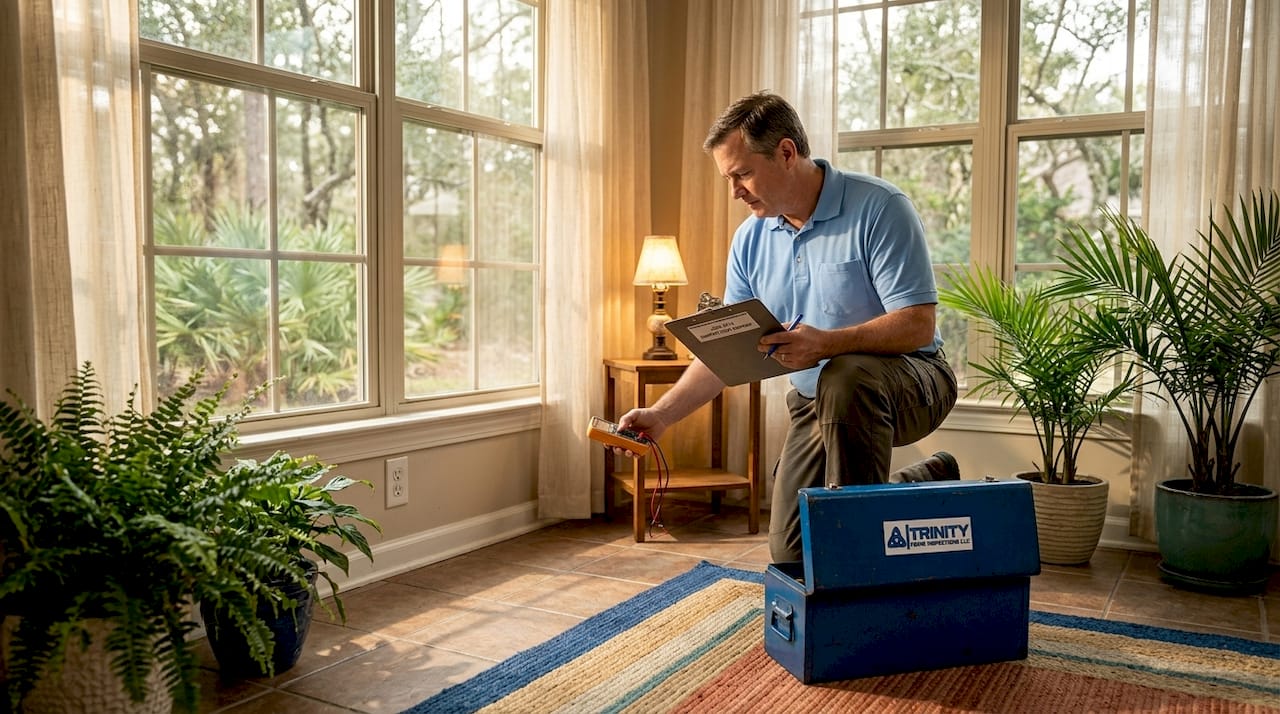
Ensuring electrical safety before buying, renting, or selling a home in Gulf Coast Alabama is not optional — it is one of the most critical steps you can take to protect your investment and the people living in it. An electrical safety checklist gives you a clear, organized way to catch real hazards before they become expensive problems or, worse, emergencies. The salty, humid coastal air along Mobile Bay and the Gulf Coast accelerates corrosion in ways that inland homeowners rarely deal with, making routine electrical checks especially important here. This guide walks you through exactly what to look for, how to test key components yourself, and when to call a licensed professional.
Key Takeaways
Point | Details |
Prioritize GFCI testing | Testing GFCI outlets regularly is vital because they rapidly cut power and prevent shocks especially in wet areas. |
DIY checks are visual | Visual and non-invasive inspections help identify obvious electrical issues but do not replace professional diagnostic testing. |
Label breaker panels clearly | Proper breaker panel labeling and clear access facilitate emergency response and prevent costly inspection delays. |
Know when to call electricians | Signs like scorching, double-tapped breakers, or warm outlets require licensed electrician evaluation and repair. |
Routine checks prevent hazards | Regular electrical safety checklists help Gulf Coast Alabama homeowners and landlords avoid dangers and protect occupants. |
Key electrical safety criteria for Gulf Coast Alabama homes
To build an effective checklist, start by understanding the crucial safety criteria tailored to electrical systems in homes along the Gulf Coast. Not every item on a generic electrical safety inspection checklist applies equally here. Coastal conditions create specific vulnerabilities that homebuyers, sellers, and landlords need to prioritize.
Ground-Fault Circuit Interrupter (GFCI) protection is at the top of the list. GFCIs are special outlets or breakers designed to detect tiny current imbalances and shut off power within milliseconds — fast enough to prevent a deadly shock. They are required in bathrooms, kitchens, garages, crawl spaces, and any other wet or damp areas. In Gulf Coast homes where humidity is persistent and flooding events are not uncommon, working GFCIs are non-negotiable.
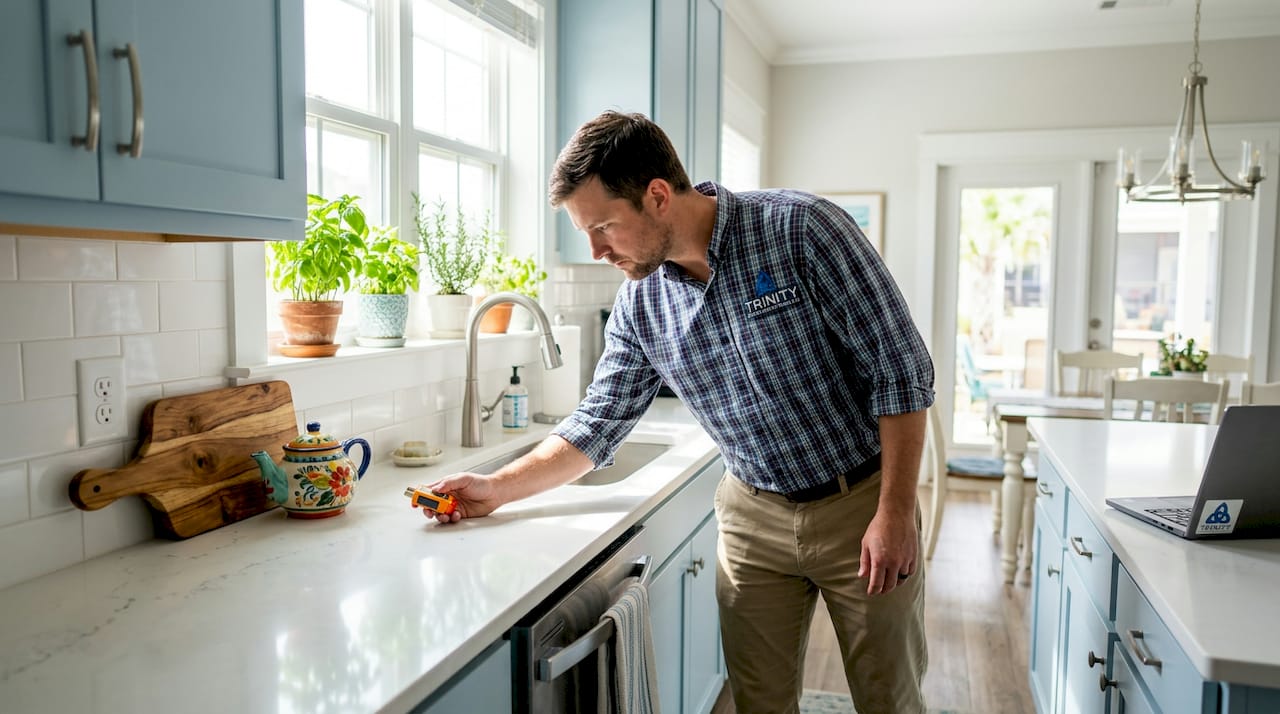
Alabama Power recommends testing GFCIs, keeping cords safely arranged, and correctly labeling the breaker box as foundational steps for home electrical safety. These are not suggestions — they are practical habits that prevent fires and shocks.
Here are the core criteria your electrical safety checklist should cover:
Test all GFCI outlets in wet areas monthly using the test and reset buttons
Keep power cords out of high-traffic walkways to prevent tripping and cord damage; never run cords under rugs or furniture
Label every circuit in the breaker panel clearly so homeowners and emergency responders can act quickly
Replace cracked, broken, or missing outlet and switch covers immediately to eliminate shock exposure
Check for visible corrosion on outlets, panels, or wiring near exterior walls, especially in older coastal properties
Confirm adequate lighting in utility areas, stairways, and the space around the electrical panel
For a more detailed look at what each of these criteria involves during a formal evaluation, our electrical inspection guide covers the full scope of what gets assessed in Alabama homes.
DIY electrical safety checklist steps for homebuyers, sellers, and landlords
With these key safety priorities understood, let’s explore a straightforward DIY checklist you can use to screen common electrical issues yourself. These are non-invasive steps — you are not opening panels or touching wiring. You are looking, listening, and doing basic functional tests that any careful homeowner can perform safely.
Following a consistent home safety inspection routine before a transaction or tenant move-in can flag problems early and give you real negotiating power or peace of mind.
Inspect the electrical panel from the outside. Look for rust, burn marks, corrosion on the panel door, and breakers that appear loose or out of position. Do not open the panel cover — that step requires a licensed electrician.
Verify every circuit is labeled. Unlabeled breakers are a safety issue and a practical problem. If labels are missing or faded, note it as a priority item.
Test every accessible GFCI outlet. Press the “Test” button — the outlet should lose power. Press “Reset” to restore it. Any outlet that does not respond correctly needs replacement.
Use a plug-in outlet tester on standard outlets. These inexpensive testers plug in and use indicator lights to show wiring issues like open grounds or reversed polarity. You can find them at any hardware store for under $15.
Check for warm outlets or switch plates. Place the back of your hand near (not on) each outlet and switch. Warmth without a running appliance is a warning sign.
Listen near outlets and the panel. Buzzing, crackling, or humming sounds indicate loose connections or arcing — both fire hazards.
Look for exposed or damaged wiring. Check basements, crawl spaces, attics (if accessible), garages, and anywhere visible wiring runs. Frayed insulation, missing junction box covers, and wires stapled too tightly are all red flags.
Confirm cover plates are present and intact on every outlet, switch, and junction box. Missing covers expose live wiring.
A detailed DIY inspection checklist also recommends checking for neutral-to-ground voltage above 2 volts using a multimeter, which can signal a “bootleg ground” — a common but hazardous wiring shortcut where the ground and neutral wires are incorrectly connected together.
It is also worth understanding the limits of what you are doing. Home inspections are non-invasive assessments that follow Standards of Practice — they are not code compliance audits. Your DIY walkthrough is even more limited in scope. Use it to identify obvious concerns, then bring in qualified professionals for anything beyond the surface.
Pro Tip: Before closing on a Gulf Coast Alabama home, walk through this checklist with a notepad and photograph every concern. Even if you plan to hire a home inspector, arriving with a documented list of questions makes the inspection more targeted and gives you better information for negotiations.
How to test GFCI outlets: a critical safety check
Since GFCIs protect critical areas from electrical shocks, here’s how you can properly test them to confirm they work correctly. Many homeowners press the test button, hear a click, and assume the outlet is fine. That click alone does not confirm the outlet is actually cutting power.
GFCIs have reduced electrocutions from consumer electronics by 95% and are required in many wet or damp home locations. That statistic makes one thing very clear: a working GFCI is one of the most effective safety measures for electricity that exists in a residential setting.
Here is the correct testing procedure recommended by the Electrical Safety Foundation International:
Press the “Reset” button on the GFCI outlet to make sure it is in the active (armed) position.
Plug in a nightlight or small lamp and confirm it turns on. This gives you a visible indicator of power.
Press the “Test” button. The nightlight should turn off immediately. If it stays on, the GFCI is not functioning correctly.
Press the “Reset” button again. The nightlight should turn back on. If it does not, the GFCI needs to be replaced.
A GFCI that clicks but does not actually cut power is more dangerous than a dead outlet — it gives a false sense of protection while providing none. Always use a plugged-in load during testing, not just your finger on the test button.
Pro Tip: In Gulf Coast Alabama, GFCI outlets near exterior walls or in garages are especially prone to corrosion-related failure. Add these to your home safety checklist as priority test points, not afterthoughts.
If an outlet fails the test, do not reset it and move on. Mark it, note its location, and arrange for a licensed electrician to replace it before occupancy. GFCI replacement is a relatively inexpensive repair, but skipping it is not an option when it is your family or your tenants at risk.
Common electrical panel issues and when to call a professional
After knowing how to do safe DIY checks, here’s what to watch for in panels and why calling a professional is sometimes necessary. The electrical panel is the nerve center of the home’s power system, and certain conditions found there are beyond what any self-inspection should try to resolve.
Inspectors evaluate panels for double-tapped breakers, scorch marks, Federal Pacific and Zinsco panels, knob-and-tube or aluminum branch wiring, and missing AFCI or GFCI protection. Each of these represents a documented fire or shock risk.
Common panel issues to watch for:
Double-tapped breakers: Two wires connected to a single breaker terminal designed for one. This causes overheating and unreliable circuit protection.
Scorch marks or burning smell: Any discoloration or odor near the panel is a sign of arcing or overheating — treat it as an emergency.
Federal Pacific or Zinsco panels: These older panel brands have documented failure rates and are considered fire hazards by most inspectors and electricians.
Knob-and-tube wiring: An older wiring method found in homes built before the 1950s that lacks a ground wire and cannot safely handle modern electrical loads.
Aluminum branch circuit wiring: Used in some homes built from the 1960s to 1970s, aluminum wiring expands and contracts more than copper and can loosen connections over time, increasing fire risk.
Missing AFCI protection: Arc-Fault Circuit Interrupters (AFCIs) detect dangerous electrical arcs in wiring and are required in bedrooms and living areas in newer construction.
Panel condition | DIY action | Professional needed? |
Unlabeled breakers | Document and note | Recommended |
Double-tapped breakers | Note and avoid panel interior | Yes |
Scorch marks or burning smell | Vacate area | Immediately |
Federal Pacific or Zinsco panel | Document | Yes |
Knob-and-tube wiring | Document | Yes |
Tripping breakers | Note frequency | Yes |
Formal electrical inspections by qualified inspectors can identify these panel conditions and flag them in a clear, prioritized report. But remember: home inspectors perform visual, non-invasive inspections and do not conduct full compliance audits. For repairs, rewiring, or panel replacement, a licensed electrician is required.
Pro Tip: If you are buying a Gulf Coast Alabama home built before 1980, put the electrical panel on your must-check list before you even get to the inspection. Ask your real estate agent for the panel brand so you can research it in advance.
Comparison of DIY checklist steps versus professional inspections
Understanding when to call a pro is critical; comparing DIY tasks and professional inspections clarifies these roles and helps you plan your safety checks effectively. Many buyers and landlords assume a thorough walk-through with a checklist covers the same ground as a professional assessment. It does not — and knowing the difference protects you.
Home inspections focus on visual, non-invasive assessments under Standards of Practice; electricians perform detailed diagnostics, code compliance verification, and repairs. Here is how those roles break down in practice:
Task | DIY checklist | Home inspector | Licensed electrician |
Visual panel exterior check | Yes | Yes | Yes |
GFCI outlet testing | Yes | Yes | Yes |
Outlet tester (plug-in device) | Yes | Yes | Yes |
Internal panel inspection | No | Yes (visual only) | Yes (full) |
Voltage and amperage load testing | No | Limited | Yes |
Grounding continuity testing | No | No | Yes |
Code compliance verification | No | No | Yes |
Repairs and replacement | No | No | Yes |
Thermal imaging for hot spots | No | Some inspectors (Trinity includes it free) | Rarely |
What DIY checks do well:
Identifying obvious visual hazards like damaged covers, exposed wiring, or missing labels
Confirming GFCI outlets function at a basic level
Flagging warm outlets, buzzing sounds, and other sensory warning signs
Building a prioritized list of items for your professional inspector
What they cannot replace:
Hidden wiring defects inside walls
Overloaded circuits that look fine but run hot
Full assessment of grounding system integrity
Compliance with current Alabama electrical code requirements
Your DIY electrical safety checklist is your first line of screening. A professional inspection is your verification layer. Think of DIY as narrowing the list, and the professional as confirming what’s actually on it.
Before listing your home, reviewing a pre-listing checklist for sellers can help you identify which electrical items to address proactively, saving you from surprises during the buyer’s inspection. For more on the formal scope, our electrical inspection insights break down exactly what gets evaluated and why.
Why routine electrical safety checks are essential but often overlooked in Gulf Coast Alabama homes
Here is something that comes up repeatedly in Gulf Coast Alabama inspections: homeowners who have lived in their homes for years genuinely believe the electrical system is fine because nothing has gone wrong yet. That logic works until it does not. Electrical hazards are quiet. They do not announce themselves until a breaker trips, a wire arcs, or worse.
Coastal conditions along Mobile Bay, Baldwin County, and the Gulf Shores corridor create a specific set of risks that most electrical safety guides written for general audiences skip entirely. Salt air accelerates corrosion inside junction boxes, at outlet terminals, and on panel bus bars. High humidity keeps wiring insulation in a constant state of stress. Homes that sit close to the water or are elevated on piers can develop wiring damage that goes unnoticed for years because the affected areas are hard to access and easy to ignore.
Alabama Power stresses that clear breaker panel labeling and accessible panel working space are details that often get missed until a real-world inspection uncovers costly issues. That point matters more than it might seem. If a breaker is labeled incorrectly and a fire breaks out, responders can waste critical seconds trying to cut power to the right circuit. If furniture or storage blocks panel access, the same problem applies. These are not code nitpicks — they are life-safety issues.
There is also a widespread misconception that needs to be addressed directly. Many homeowners and even some sellers believe that passing a home inspection means the electrical system is “up to code.” It does not. Home inspectors perform visual screening, not code compliance audits, and the two are fundamentally different evaluations. A home inspector can tell you that an outlet looks wrong or that a panel has scorch marks. An electrician with a permit and diagnostic tools tells you whether it meets current code and exactly what needs to be done.
The practical takeaway for landlords is significant. A rental property with an uninspected electrical system is a liability. GFCI failures, improperly grounded outlets, and outdated panels are the kinds of issues that surface during tenant incidents — not during casual walkthroughs. Proactive annual checks combined with a full professional inspection every five years are the kind of habits that prevent expensive calls at 2 a.m.
For homebuyers, approaching electrical safety as a checklist item that ends at closing is the wrong frame. Think of it as the beginning of an ongoing maintenance relationship with your home. The electrical inspection insights we provide after every inspection are designed to give you a clear picture of where your system stands today and what to watch in the years ahead.
Schedule your comprehensive electrical inspection with Trinity Home Inspections
For peace of mind beyond self-inspection, trust Trinity Home Inspections to deliver expert electrical safety evaluations tailored to Gulf Coast Alabama homes. Our InterNACHI-certified inspectors go well beyond a representative sample — we test every accessible outlet, switch, and GFCI, verify breaker panel labeling, use thermal imaging to identify overheated components, and deliver a same-day report that tells you exactly what is urgent, what can wait, and what to budget for. Every finding is documented with photos and video, color-coded for clarity, and explained in plain English.
[

Whether you are a homebuyer in Fairhope preparing to close, a landlord in Gulf Shores getting ready for a new tenant, or a seller in Mobile who wants fewer surprises at the buyer’s inspection, we are here to give you the honest information you need. Our pre-listing inspection services help sellers identify electrical and other issues before they become deal-killers. We also offer permit and deed research as part of our commitment to giving you the full picture. Call us at 251-210-7376 or visit TrinityInspectionsLLC.com to schedule your inspection today.
Frequently asked questions
How often should I conduct electrical safety checks in my Gulf Coast Alabama home?
Basic visual and functional checks should be done annually, with professional inspections recommended every five years or after major renovations. Electrical fires cause thousands of house fires annually, and licensed electricians consistently recommend a full inspection on that five-year cycle.
What are the warning signs of electrical hazards that require a professional inspection?
Look for warm or buzzing outlets, scorch marks near the panel or outlets, frequently tripping breakers, flickering lights, and burning smells. These warning signs indicate active hazards that go beyond what any DIY check can resolve.
Can I rely solely on a home inspection report to ensure electrical safety?
No. A home inspection covers only visual, non-invasive checks and does not replace diagnostic testing by a licensed electrician. Home inspections are visual and non-invasive by design, and code compliance requires a separate evaluation by a licensed electrician.
How do I correctly test a GFCI outlet to ensure it is functioning?
Press the reset button, plug in a nightlight, press the test button (the light should turn off), then press reset again to restore power. ESFI recommends using a plugged-in load during testing to reliably confirm the outlet is actually cutting and restoring power — not just clicking.
What should landlords in the Gulf Coast Alabama region include in their electrical safety checklist prior to tenant move-in?
Landlords should visually inspect the panel exterior, test all GFCIs with a plugged-in load, verify breaker labeling and clear panel access, and arrange licensed electrician repairs for any flagged issues. Testing GFCIs with known loads and confirming labeled, accessible panels are the two most commonly missed steps that create costly problems later.
Recommended
