
Gas Stove Safety: Do You Need an Accessible Shutoff Valve?

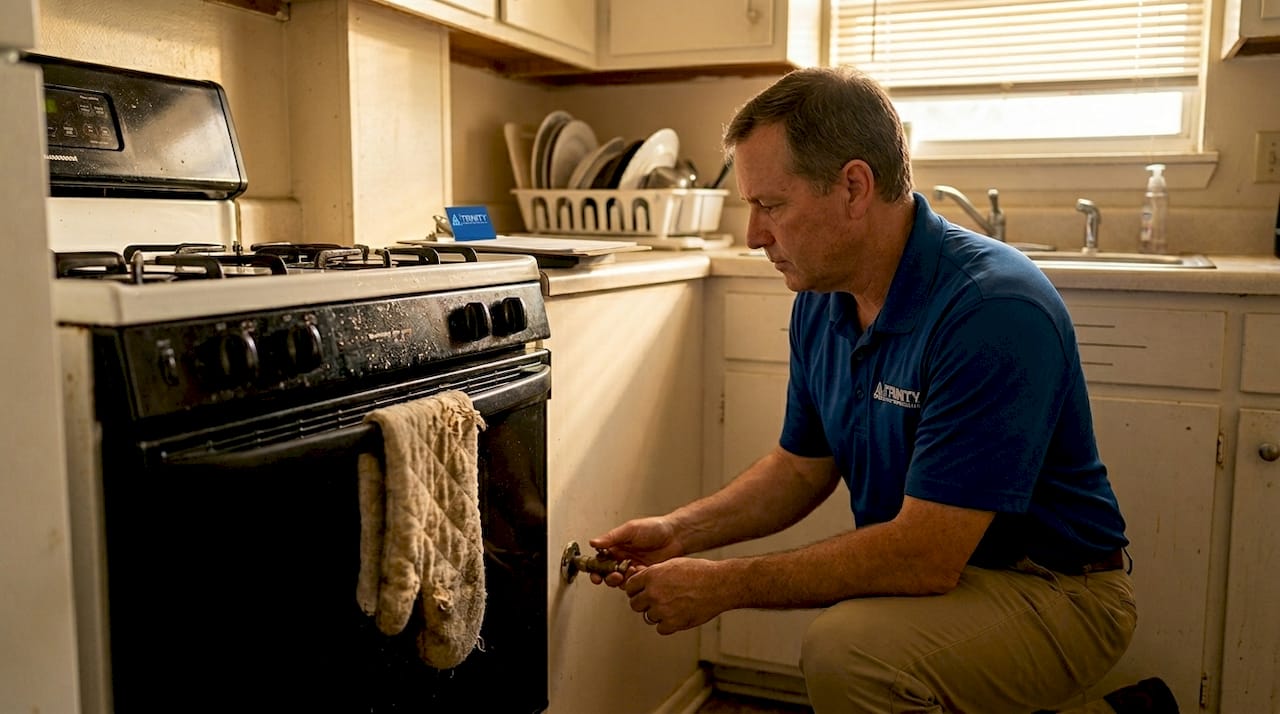
Many homeowners in Gulf Coast Alabama are genuinely surprised to learn that their gas stove setup could fail a home inspection, not because of the stove itself, but because of a small valve behind it. An accessible gas shutoff valve is one of those details that most people never think about until an inspector flags it. Yet this single component can be the difference between quickly stopping a gas leak and watching a dangerous situation spiral out of control. In this article, we break down what accessible gas shutoff valves are, what Alabama codes require, who can legally install them, and what you can do right now to stay safe and compliant.
Key Takeaways
Point | Details |
Code requires access | Both Alabama and national codes mandate that gas shutoff valves for stoves must be accessible and located in the same room. |
Licensing ensures safety | Only licensed gas fitters can install or modify shutoff valves, and permits are required to verify compliance. |
Maintenance is crucial | Regularly testing and servicing your shutoff valve helps prevent leaks and failure in an emergency. |
Home inspection impact | An inaccessible gas shutoff valve can lead to inspection failures and increased safety risks. |
Why accessible gas shutoff valves matter for gas stoves
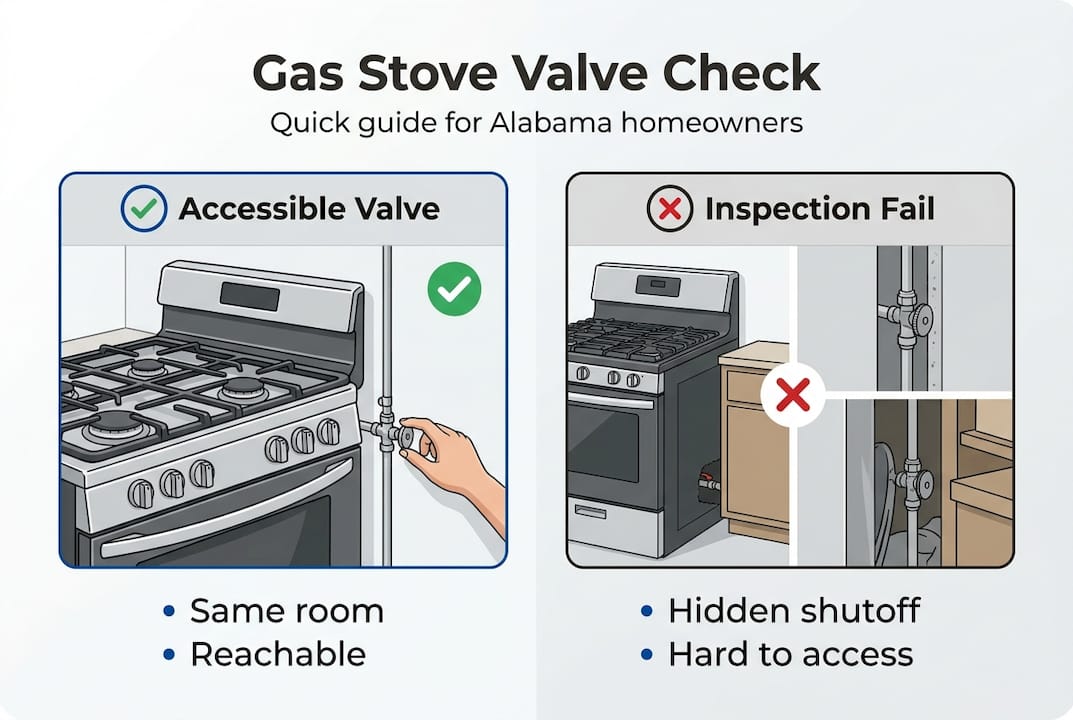
A gas shutoff valve is a mechanical device installed on the gas supply line that feeds your stove. When you turn it, it stops the flow of gas completely. The word “accessible” in code language means the valve must be reachable and operable without having to move the appliance, remove panels, or dig through a cabinet. In plain terms, you should be able to reach it quickly in an emergency, no tools required.
This matters more than most people realize. Gas leaks can escalate fast. A small leak near an ignition source can ignite within seconds. Every moment spent searching for a buried or blocked shutoff valve is a moment the situation gets worse. Inaccessibility delays emergency shutoff, directly increasing the risk of a fire or explosion. That is not a regulatory opinion, it is a physical reality.
A lot of homeowners assume that if their stove is working fine, the gas setup must be fine too. That is a common and understandable mistake. The stove’s operation and the safety of its gas supply setup are two separate things. You can have a perfectly functioning stove with a shutoff valve that is completely inaccessible, jammed behind a drawer unit, or so corroded it would not turn in an emergency.
“Accessible” does not mean visible from across the room. It means physically reachable and operable by a person standing in front of it, without special effort or tools.
Here are some real situations where inaccessible shutoff valves created problems:
A stove was pushed flush against a wall, with the shutoff valve pinned behind it and no one in the household knew where it was.
A valve was installed inside a sealed cabinet with no access panel, making it impossible to reach during a gas smell event.
An older home had a corroded gate valve (a type that requires multiple turns to close) instead of a modern ball valve, causing critical delay during a leak.
A buyer discovered during inspection that the shutoff was in an adjacent room, which violates code and creates real risk.
These are not rare edge cases. Our gas line inspections regularly turn up these exact issues in homes across Mobile and Baldwin County. Understanding why this matters is the first step. Now let’s look at what the rules actually say.
What Alabama codes and inspectors require
Alabama adopts national model codes, which means the standards that govern your gas stove shutoff come from two key sources. First, IFGC Section 409.5 requires that manual gas shutoff valves for appliances be located in the same room as the appliance and be accessible. Second, NFPA 54 requires shutoff valves upstream of flexible connectors, and those valves must be accessible for both operation and maintenance. Together, these two standards form the backbone of what inspectors check.
When a home inspector evaluates your gas stove setup as part of home safety inspection steps, they are typically following a consistent process. Here is how that typically looks:
Confirm a shutoff valve is present on the gas supply line serving the stove.
Verify the valve is located in the same room as the stove, not in an adjacent space or utility room.
Check that the valve is accessible, meaning reachable without moving the appliance or removing fixed structures.
Confirm the valve type is appropriate, preferably a quarter-turn ball valve.
Look for visible damage, corrosion, or signs that the valve has not been operated in years.
Here is a quick comparison of what passes and what fails:
Condition | Pass or fail |
Ball valve in same room, reachable without moving stove | Pass |
Valve in same room but blocked by fixed cabinetry | Fail |
Valve in adjacent room or hallway | Fail |
Corroded gate valve that will not turn | Fail |
Valve present and labeled, tested and operational | Pass |
Flexible connector present but no upstream shutoff | Fail |
Inspectors are not code enforcement officers, but they are trained to identify conditions that violate these standards and pose real safety risks. If a shutoff valve fails these checks, it will show up in your inspection report as a safety item, which carries real weight in negotiations and in your decision to buy or sell.
Installation, licensing, and permitting in Alabama
Once you know what is required, the next question is: who can actually fix it? In Alabama, licensed gas fitters are required for any installation or modification of gas lines, including shutoff valves. Permits are also required, and those permits trigger inspections that verify the work meets code, including shutoff valve accessibility.
This is not a job for a general handyman or a DIY weekend project. Gas line work carries serious liability, and unlicensed work can void your homeowner’s insurance, create issues during future inspections, and put your family at risk. Here is an overview of how the process typically works in Alabama:
Step | What happens | Who is involved |
1. Hire a licensed gas fitter | Contractor reviews existing setup | Homeowner and licensed contractor |
2. Pull a permit | Contractor submits permit application | Contractor and local municipality |
3. Complete the work | Valve installed or relocated to accessible location | Licensed gas fitter |
4. Schedule inspection | Local code official inspects the work | Code inspector |
5. Receive approval | Work is documented and signed off | Municipality |
This process protects you. When you sell your home, a buyer’s inspector will look at whether gas work was permitted and approved. Unpermitted work is a red flag that can stall or kill a deal. Reviewing your water heater maintenance requirements alongside gas line work is smart, since both share similar permitting and inspection requirements in Alabama.
Pro Tip: Before hiring anyone for gas line work, ask to see their Alabama gas fitter license number and verify it with the state licensing board. Also ask if they will pull the permit themselves. A contractor who resists pulling permits is a contractor you should walk away from. You can also review our home maintenance inspection guide for a broader look at what licensed work looks like across your home’s systems.
Best practices for homebuyers and owners: Safety, maintenance, and upgrades
Knowing the rules is vital, but consistent safety depends on practical steps and ongoing vigilance. Whether you are buying a home or have lived in yours for years, here is how to make sure your gas stove shutoff is doing its job.
How to check if your shutoff is accessible and compliant:
Pull the stove out slightly and look for a valve on the gas line behind or beside it.
Confirm you can reach the valve without removing cabinetry or using tools.
Check that the valve is in the same room as the stove, not around a corner or in a closet.
Look at the valve type. A ball valve has a lever handle and closes with a quarter turn. A gate valve has a round wheel and requires many turns, which is slower and less reliable.
Check for any visible corrosion, rust, or damage on the valve body or the line connection.
Maintenance tips to keep your shutoff reliable:
Ball valves are preferred for their quick quarter-turn shutoff, and you should test yours annually using a soap solution applied to connections to check for leaks.
Turn the valve fully off and back on once a year to prevent it from seizing in place. A valve that has not moved in a decade may not move when you need it most.
Label the valve clearly so every adult in your household knows where it is and what it does.
If you smell gas, do not test the valve yourself. Leave the house, call 911, and contact your gas utility.
When to upgrade your valve:
If you have a gate valve, it is worth replacing it with a ball valve even if it technically passes inspection. The speed advantage in an emergency is significant. If your valve shows any corrosion or feels stiff when turned, replacement is the right call. A licensed gas fitter can handle this quickly, and the permit process is straightforward for a simple valve swap.
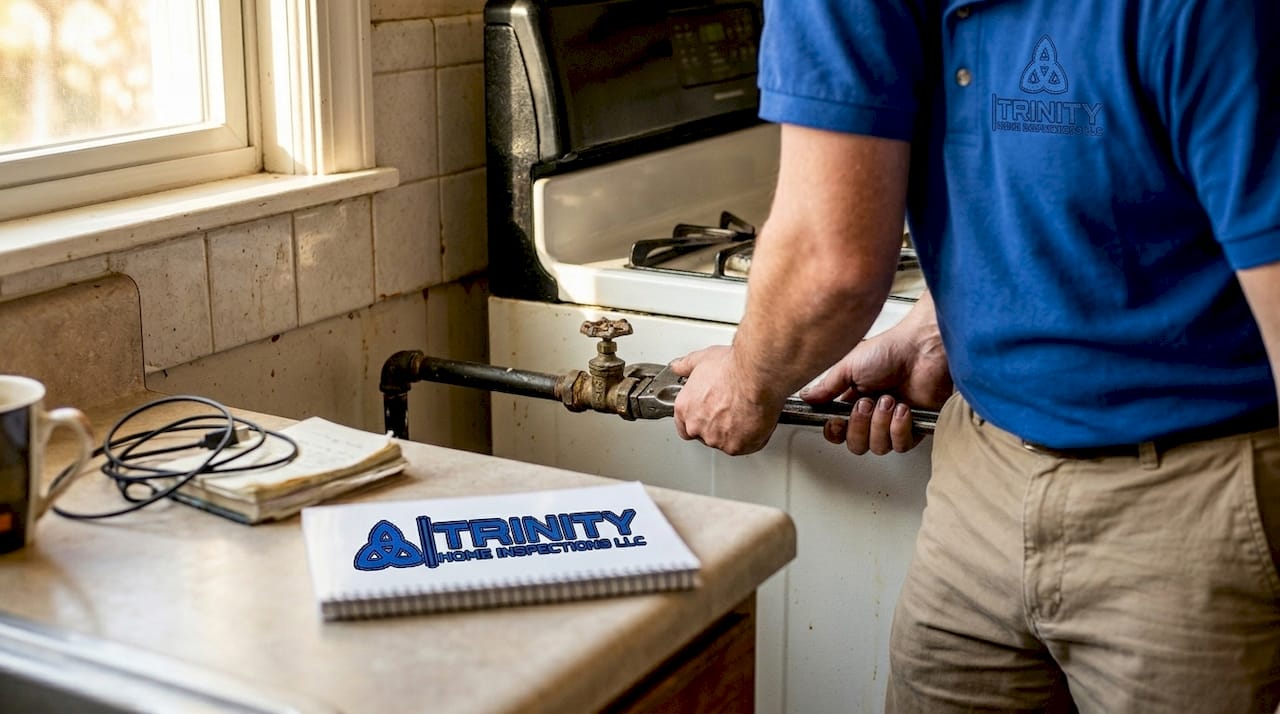
Pro Tip: Schedule a gas line safety check as part of your annual home maintenance routine. Also, if you are adding a new appliance or relocating your stove, always check whether a new sediment trap installation is needed at the same time, since both components are often addressed together during permitted gas work.
The truth about gas shutoff accessibility: What most homeowners don’t realize
Here is something we see regularly in our inspections across Gulf Coast Alabama: a home passes inspection, the buyer closes, and within a year the shutoff valve is blocked again because someone pushed the stove back too far or added a cabinet. Passing inspection is a moment in time. Real safety is an ongoing commitment.
A lot of people treat the safety inspection essentials checklist as a finish line. It is actually a starting point. The best inspectors do not just confirm the valve’s location. They actually attempt to operate it. They check whether it moves freely, whether the handle is positioned correctly, and whether the connection shows early signs of corrosion. That level of scrutiny is what separates a thorough inspection from a checkbox exercise.
Our honest advice: do not settle for “it passed.” Know where your shutoff is, test it once a year, and make sure everyone in your home knows what to do in a gas emergency. That is what real safety looks like, and it costs you almost nothing extra once the valve is properly installed and accessible.
Get expert inspection and ensure your home’s safety
If you are buying or selling a home in Gulf Coast Alabama and want to know your gas stove setup is truly safe and code-compliant, a professional inspection is the clearest path forward.

At Trinity Home Inspections, we use a combustible gas leak detector on every inspection and flag shutoff valve issues with photos and plain-English explanations in your same-day report. Whether you need a pre-sale home inspection to get ahead of problems before listing, a permit search to verify prior gas work was done legally, or simply want a trusted local home inspector in your corner, we are here to help. Reach out today and get the clarity you deserve.
Frequently asked questions
Must the gas shutoff valve for a stove be in the same room?
Yes. IFGC Section 409.5 requires the manual shutoff to be in the same room as the appliance and easily accessible for operation and emergencies. A valve in an adjacent hallway or utility room does not meet this standard.
Who is allowed to install or replace a gas shutoff valve in Alabama?
A licensed gas fitter must perform the work, and a permit is required before starting any installation or replacement. Unlicensed work can create insurance and resale problems down the line.
How do I know if my gas shutoff valve is accessible?
The valve should be visible and reachable without moving the stove or removing any fixed structure, typically within arm’s reach and operable by hand. If you have to pull out the appliance or open a sealed panel to reach it, it is not accessible by code.
What kind of maintenance does a gas shutoff valve require?
Test your valve annually using a soap solution applied to the connections to check for leaks, and turn the valve fully off and back on to confirm it moves freely. A valve that seizes from years of inactivity is a serious safety hazard.
Can an inaccessible gas shutoff valve cause inspection failure?
Yes. Inaccessibility delays emergency shutoff, which increases the risk of fire or injury, and inspectors will flag this as a safety defect in your report. It can affect negotiations, delay closing, or require correction before a sale can proceed.
Recommended

