
Why Every Gas Water Heater Needs a Drip Leg

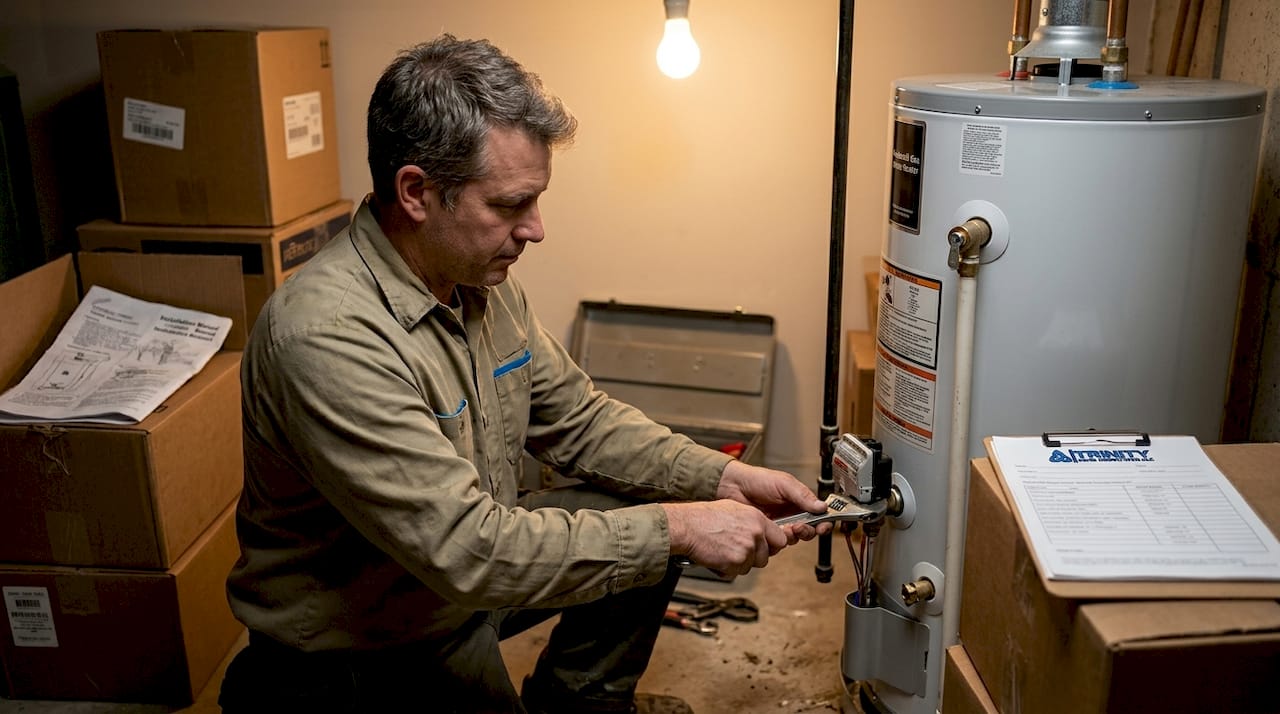
A drip leg is not optional equipment on your gas water heater. It is a code-required safety device, and missing one is one of the most common reasons water heater installations fail inspection in Alabama homes. Many homeowners and buyers have never heard the term, let alone checked whether one is properly installed. That gap in knowledge can cost you at closing, create real safety risks, and even void your appliance warranty. This guide covers exactly what a drip leg is, how it works, what Alabama code requires, and what mistakes to watch for so you can approach your next inspection with confidence.
Key Takeaways
Point | Details |
Drip legs prevent damage | A drip leg stops dirt and moisture from entering your water heater’s gas controls and burner. |
Required by Alabama code | State regulations demand a properly installed drip leg for all gas water heaters during inspection. |
Installation must be by pros | Only licensed plumbers or gas fitters can legally install or replace a drip leg in Alabama homes. |
Failed drip legs risk safety | Missing or incorrect drip legs are a leading cause of inspection failure and dangerous gas leaks. |
What is a drip leg on a water heater?
The term sounds more complicated than it is. A drip leg, also known as a sediment trap or dirt leg, is a short vertical section of pipe installed on the gas supply line just before it enters a gas appliance like a water heater. That is the whole thing. A short drop of pipe, capped at the bottom, positioned right where the gas line connects to your appliance.
Pro Tip: The terms “drip leg,” “sediment trap,” and “dirt leg” all mean the same thing in Alabama codes and in the field. If a plumber or inspector uses any of these terms, they are talking about the same component.
Here is a quick reference for what a drip leg looks like and where it sits:
Feature | Details |
Location | Gas supply line, just before the appliance connection |
Orientation | Vertical, pointing downward |
Material | Black iron or approved gas pipe |
End cap | Capped at the bottom to collect debris |
Size | Must match the diameter of the supply gas line |
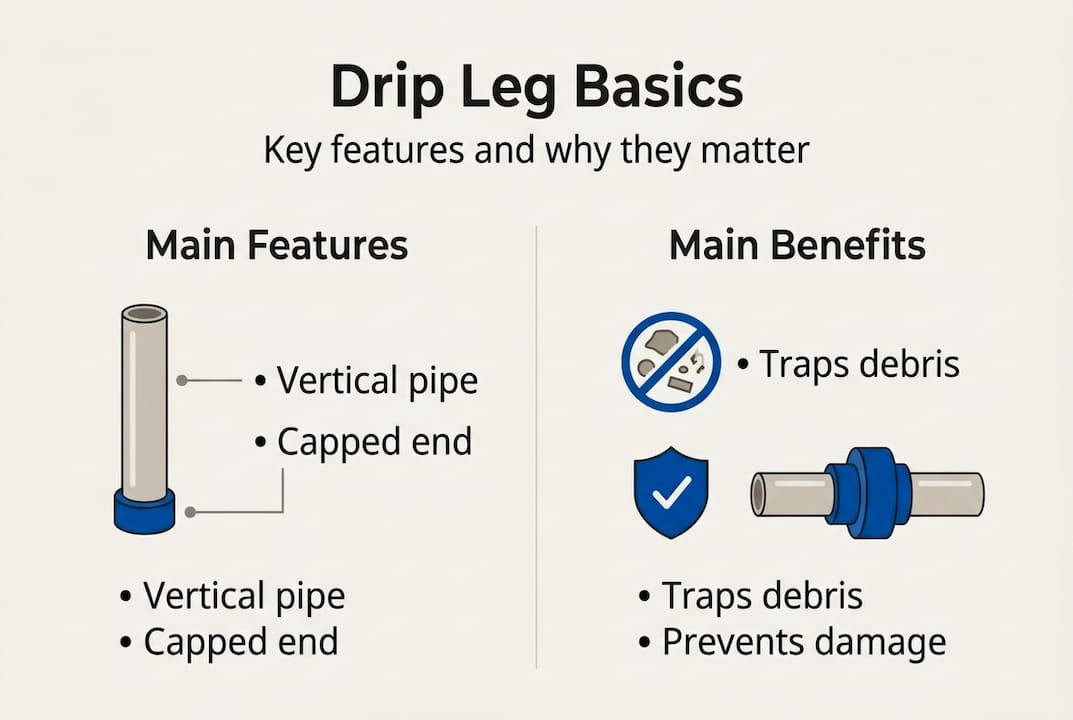
It is worth noting that a drip leg is not the same as a plumbing trap under your sink. Those traps hold water to block sewer gases. A drip leg works on a completely different principle and serves a completely different purpose. Understanding this distinction matters because some homeowners confuse the two and assume a water trap serves the same protective function on a gas line. It does not.
When you look at gas line inspections in Alabama homes, the drip leg is one of the first things a qualified inspector checks. Its absence or improper installation is a red flag that the entire gas line setup may not have been permitted or inspected correctly.
How does a drip leg work and why does it matter?
Gas lines are not perfectly clean on the inside. Over time, rust particles, pipe scale, moisture, and small debris travel through the line with the gas flow. Most of the time you never notice. But those contaminants are heading straight toward your water heater’s burner, gas valve, and controls.
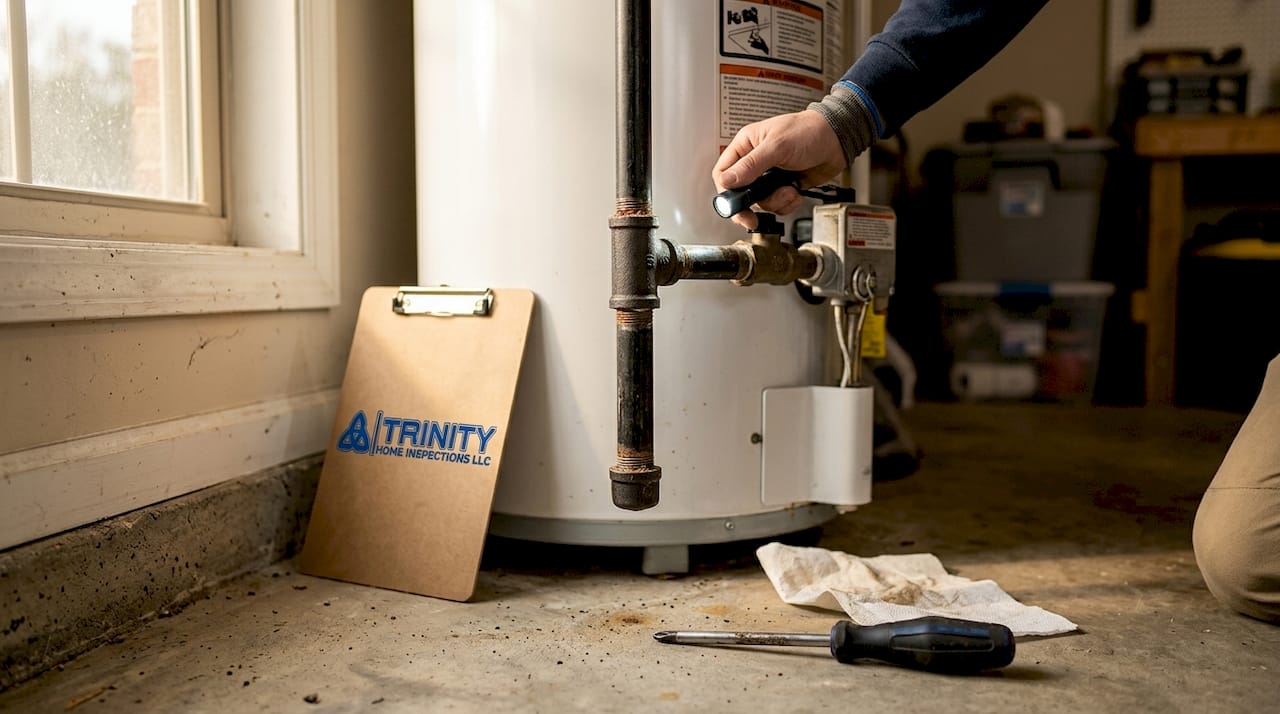
A drip leg uses gravity and inertia to stop them. Gas moving through the line has to make a turn to continue into the appliance. The debris, which is heavier, keeps moving straight down into the capped pocket of the drip leg instead of following the gas into the burner. The primary purpose is to capture debris, sediment, rust, moisture, and other contaminants from the gas line before they reach the appliance’s burner, gas valve, and controls.
Here is the chain reaction that happens when there is no drip leg protecting your water heater:
Rust and debris enter the gas valve and begin to wear down its internal components.
The valve starts to seat improperly, allowing small gas leaks or inconsistent flow.
The burner receives contaminated gas, leading to uneven or incomplete combustion.
Carbon buildup accelerates, reducing efficiency and increasing the risk of a flame failure.
Eventually the appliance malfunctions, shuts down, or creates a fire or gas leak hazard.
Without a drip leg, contaminants can clog valves, damage burners, cause inefficient combustion, reduce appliance lifespan, and create safety hazards like gas leaks or fire risks.
Pro Tip: Gas valves and burner assemblies on water heaters can cost several hundred dollars to replace. Most appliance warranties specifically exclude damage caused by contaminated gas supply, which means sediment damage is almost always an out-of-pocket expense. A drip leg costs a fraction of that to install correctly.
For Alabama homeowners, this is not a theoretical concern. Reviewing your water heater maintenance checklist is a smart starting point to see where a drip leg fits into the bigger picture of appliance safety.
Alabama code requirements: What homeowners must know
So what does Alabama actually require? The short answer is that drip legs are mandatory on gas water heaters, and the rules are backed by both national and state-level codes.
Drip legs are required by IFGC section 408.4 for gas appliances including water heaters. Alabama adopts the International Fuel Gas Code (IFGC) and NFPA 54 for fuel gas piping in conjunction with its plumbing code. That means the same standard used across most of the country applies here, and local inspectors enforce it.
Here is how Alabama’s requirements compare by appliance type:
Appliance | Drip leg required? | Notes |
Gas water heater | Yes | Required per IFGC 408.4 |
Gas furnace | Yes | Required per IFGC 408.4 |
Gas range or cooktop | Sometimes | Low-demand appliances may qualify for exceptions |
Electric water heater | No | Fuel gas codes do not apply |
For the Alabama water heater code checklist, here are the most common inspection failures related to drip legs:
Missing drip leg entirely on the gas supply line before the water heater
Horizontal installation instead of vertical, which prevents gravity from doing its job
Wrong pipe size where the drip leg does not match the diameter of the supply line
No end cap installed, leaving the pocket open and non-functional
Improper location where the drip leg is installed too far from the appliance connection
These are common inspection issues that show up in both older homes and brand-new construction. Do not assume a newly built home automatically has everything installed correctly. Permit records and a qualified inspection are the only way to know for sure.
Installation, inspection, and common mistakes in Alabama homes
Knowing the code is one thing. Making sure the work is done right is another. Alabama requires that gas line work, including drip leg installation, be performed by a licensed plumber or gas fitter. Permits and inspections are mandatory for water heater installations. This is not a DIY project, and it is not something to skip for the sake of saving a few dollars.
Here is what a compliant installation and inspection process looks like:
Hire a licensed plumber or gas fitter who is registered to pull permits in your Alabama county.
Pull the required permit before any work begins. This protects you legally and ensures the work is on record.
Install the drip leg vertically on the gas supply line, directly before the appliance connection point.
Match the drip leg size to the diameter of the existing gas supply line.
Cap the bottom of the drip leg securely with an approved end cap.
Schedule the final inspection with your local authority having jurisdiction before the water heater is put into service.
The most common installation mistakes that lead to failed inspections include:
Installing the drip leg horizontally, which allows debris to be pushed past rather than trapped
Using a drip leg that is undersized for the gas line, such as a half-inch leg on a three-quarter-inch line
Skipping the permit entirely and assuming the work will not be checked
Installing the drip leg after a union or flex connector instead of directly on the rigid supply line
Forgetting to check whether common inspection red flags like improper gas line routing are also present alongside the drip leg issue
Pro Tip: Always request a copy of the permit and the final inspection sign-off for any gas line or water heater work done on your home. If a seller cannot produce those documents, treat it as a red flag during your purchase due diligence.
Why the small details matter: An inspector’s perspective
After inspecting homes across Baldwin, Mobile, and the surrounding Gulf Coast Alabama area, one pattern stands out clearly. The drip leg is the single most common water heater code item flagged during inspections, and it shows up in new construction just as often as in older homes. That fact surprises most buyers.
The reason it matters beyond just passing inspection is this: a missing or improperly installed drip leg is evidence that the installation was likely never permitted or inspected. Where one shortcut exists, others usually follow. A licensed installation with proper permit compliance is your best indicator that the rest of the gas system was handled correctly.
Fixing a drip leg before closing is simple and inexpensive. Fixing it after you own the home, after an insurance claim is denied, or after a gas-related incident, is a completely different situation. Checking your reliable home inspection checklist before closing gives you the leverage to require corrections while the seller is still responsible. Small details like this are exactly why a thorough inspection pays for itself many times over.
Book a code-compliant home inspection in Alabama
If you are buying or selling a home in Alabama and want to know whether your gas water heater and drip leg meet current code, a professional inspection is the clearest path to that answer. At Trinity Home Inspections, we check gas line components, water heater installations, and permit compliance as part of every inspection across Mobile, Baldwin, Escambia, and surrounding counties.

You can also run a permit and property search to verify whether past gas or plumbing work was properly documented. For homes with older gas systems, our sewer and gas line inspections add an extra layer of safety review. Visit Trinity Inspections to book your inspection or ask us a question. Same-day reports, free thermal imaging, and straight answers every time.
Frequently asked questions
What happens if my water heater is installed without a drip leg in Alabama?
Homes without a code-compliant drip leg can fail inspection, create safety hazards, and may void appliance warranties because contaminants can clog valves and create gas leak risks. You may also face issues with insurance claims if the missing component contributed to a loss.
Are drip legs and sediment traps the same thing?
Yes. The terms drip leg, sediment trap, and dirt leg all describe the same device, which is a short vertical pipe section installed on the gas supply line before an appliance to trap debris using gravity.
How do I know if my home’s water heater drip leg meets Alabama code?
Your drip leg should be installed vertically, sized to match the gas supply line, and capped at the bottom, with the work signed off by a licensed plumber with proper permitting on record. A qualified home inspector can verify all of this during a standard inspection.
Do electric water heaters need a drip leg?
No. Drip legs are only required on gas appliances per IFGC section 408.4, so electric water heaters are not subject to this requirement at all.
Recommended
