
How to Clean AC Evaporator Coils Safely in 5 Steps

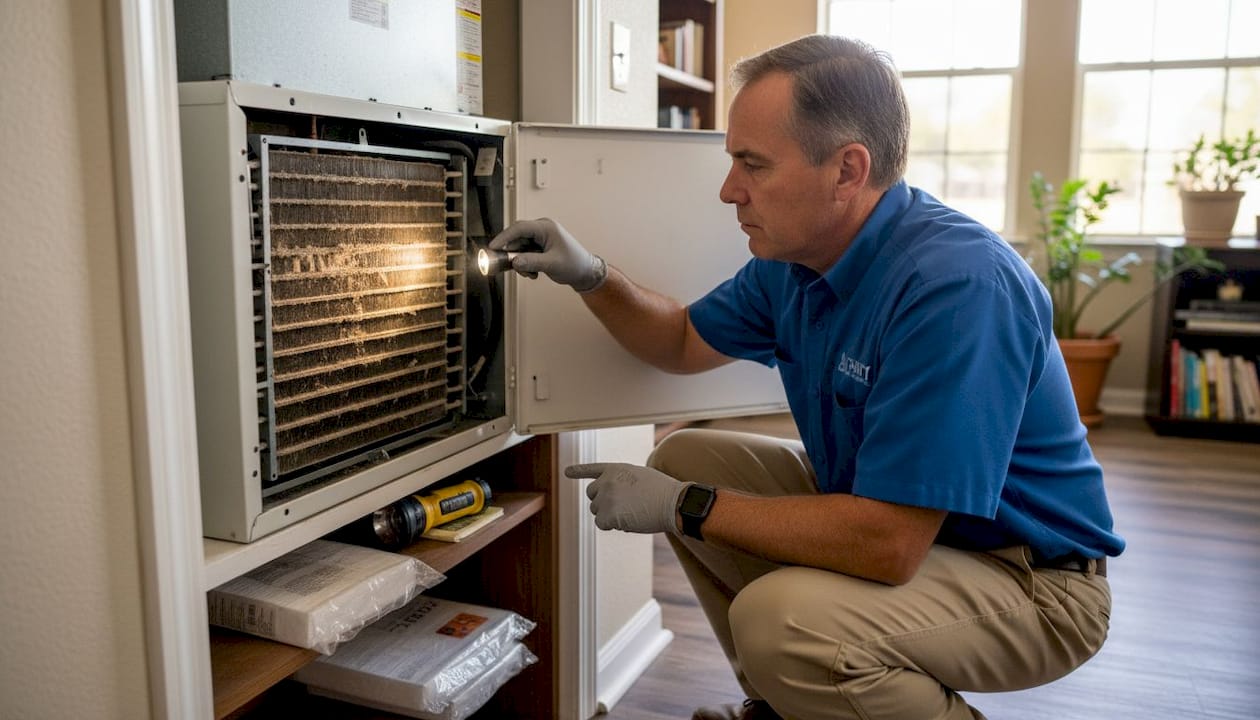
Your energy bill is climbing, the air from your vents feels lukewarm, and your AC runs constantly without cooling your home. In Mobile and Baldwin County, where your system works hard for nine or more months a year in thick, humid air, dirty evaporator coils are often the hidden cause. Dirty coils can cut efficiency by 30% and drive up your electricity costs fast. This guide walks you through exactly why coils get dirty here, what tools you need, how to clean them safely, and how to know when to call a professional instead.
Key Takeaways
Point | Details |
Frequent cleaning is crucial | Mobile and Baldwin County homes need more frequent coil cleaning due to high humidity and dust. |
Right tools prevent damage | Use soft brushes and approved cleaners to safely clean coils and avoid costly repairs. |
Look for warning signs | Weak airflow, musty smells, or ice on coils signal it’s time for immediate cleaning. |
Know your limits | Call a professional for mold, severe buildup, or if in doubt to protect your system and warranty. |
Coil cleaning boosts efficiency | Clean coils quickly lower bills and improve comfort by restoring your AC’s peak performance. |
Why cleaning evaporator coils matters for Alabama homes
Evaporator coils sit inside your air handler and absorb heat from your indoor air. When they get coated in dust, mold, and debris, they cannot transfer heat efficiently. Your system works harder, runs longer, and still leaves you uncomfortable. In Gulf Coast Alabama, this problem moves faster than it does in drier climates.
The combination of coastal salt air and high humidity in Gulf Coast areas accelerates mold and mildew growth directly on the coils. Salt particles corrode the metal fins over time, and moisture gives mold a perfect surface to colonize. If you live in Daphne, Foley, Gulf Shores, or Orange Beach, your system faces conditions that simply do not exist in most of the country. Staying on top of coastal HVAC maintenance is not optional here. It is a necessity.
The performance difference between clean and dirty coils is significant. Research confirms that dirty coils increase electricity use by up to 30%, meaning a $200 monthly bill could jump to $260 for no reason other than neglected maintenance. Beyond cost, dirty coils push musty, contaminated air through your home and can cause the coil to freeze solid, shutting your system down entirely.
Here is a quick comparison of what you experience with clean versus dirty coils:
Condition | Clean coils | Dirty coils |
Cooling efficiency | Optimal | Up to 30% reduced |
Energy cost | Normal | Up to 30% higher |
Airflow | Strong and even | Weak or restricted |
Air quality | Fresh | Musty or stale |
System lifespan | Extended | Shortened |
Skipping coil cleaning in a humid, coastal environment creates a chain of problems. Understanding protecting HVAC systems in the Gulf region means recognizing these specific risks:
Higher utility bills every single month the coils stay dirty
Poor cooling performance even when the system runs constantly
Mold and mildew growth that spreads spores into your living space
Frozen coil shutdowns that require a service call to resolve
Voided manufacturer warranty if maintenance is neglected too long
Shortened system life from corrosion and overwork
Proper humidity control tips combined with regular coil cleaning are your best defense against all of these outcomes. Now that you know why dirty coils hurt your home’s comfort and efficiency, let’s see what you need to address the problem.
What you need: Tools, materials, and safety essentials
Before you touch anything inside your air handler, gather the right supplies. Using the wrong tools is one of the most common mistakes homeowners make, and it can bend the delicate aluminum fins on the coil or introduce chemicals that cause corrosion. Good DIY HVAC maintenance always starts with preparation.
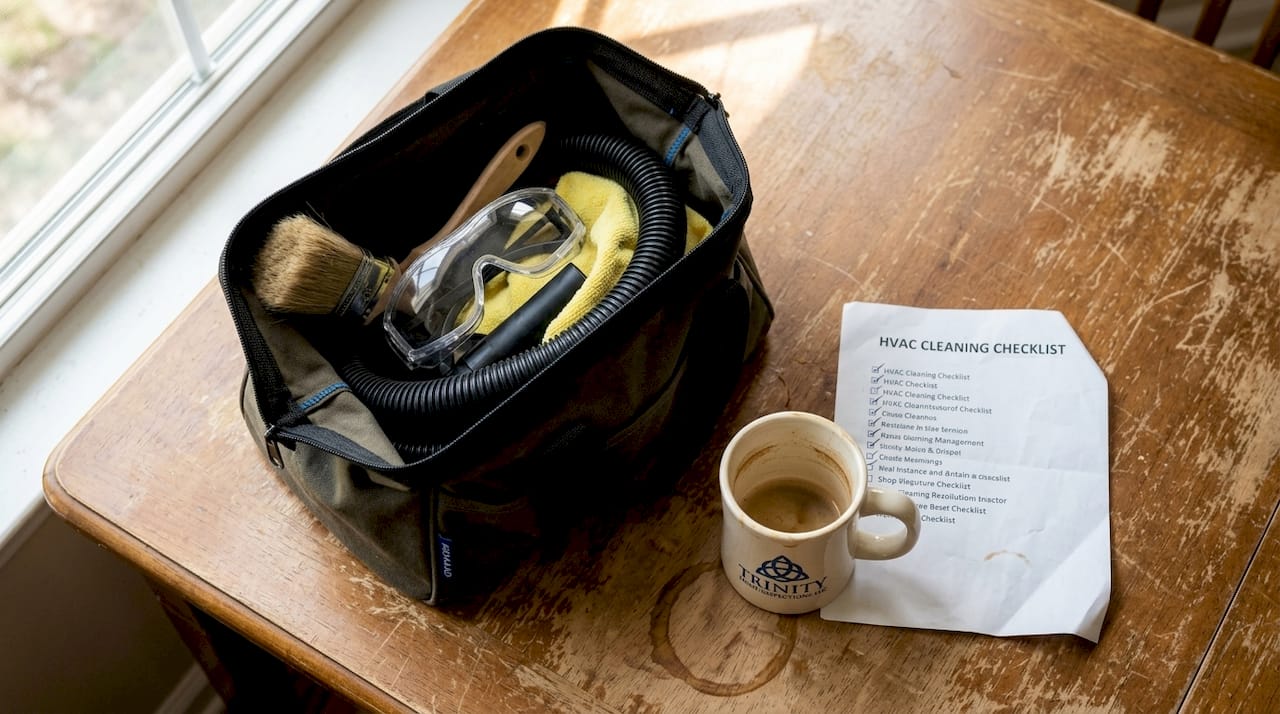
Here is what you need:
Tool or product | Purpose |
Soft-bristle brush | Gently loosen surface dust and debris |
Shop vacuum with brush attachment | Remove loose dirt without bending fins |
No-rinse foaming coil cleaner | Dissolve grime and drain away safely |
Fin comb | Straighten bent aluminum fins |
Nitrile gloves | Protect hands from cleaner and sharp fins |
Safety glasses | Shield eyes from spray and debris |
N95 mask | Block mold spores during cleaning |
Flashlight or work light | See inside the air handler clearly |
Experts recommend using only soft-bristle brushes, shop vacs, and no-rinse foaming cleaner and avoiding high-pressure water or acid-based products. High pressure bends fins and pushes debris deeper into the coil. Acids eat away at the metal over time, voiding warranties and causing leaks.
Pro Tip: Use a pH-neutral, no-rinse foaming cleaner specifically labeled for evaporator coils. These products foam up, lift dirt, and drain away through the condensate line without rinsing. They protect the coil finish and keep your warranty intact.
Always turn off power at both the thermostat and the breaker before opening your air handler. This is not optional. High-voltage components inside the unit can cause serious injury.
Mistakes to avoid during this process:
Bending the fins by pressing too hard with a brush or vacuum nozzle
Using household cleaners like bleach or all-purpose sprays not rated for coils
Skipping the condensate drain line, which can back up and cause water damage
Rushing the cleaner before it has time to foam and penetrate the buildup
If you see heavy black mold, thick biological growth, or your system is still under the manufacturer’s warranty, professional cleaning is the safest route to preserve your coverage and your health. Also make sure to check your cleaning AC drain line guide before you reassemble, because a clogged drain undoes all your hard work. With your tools and safety measures ready, you’re set to tackle the actual cleaning process.
Step-by-step: How to clean AC evaporator coils yourself
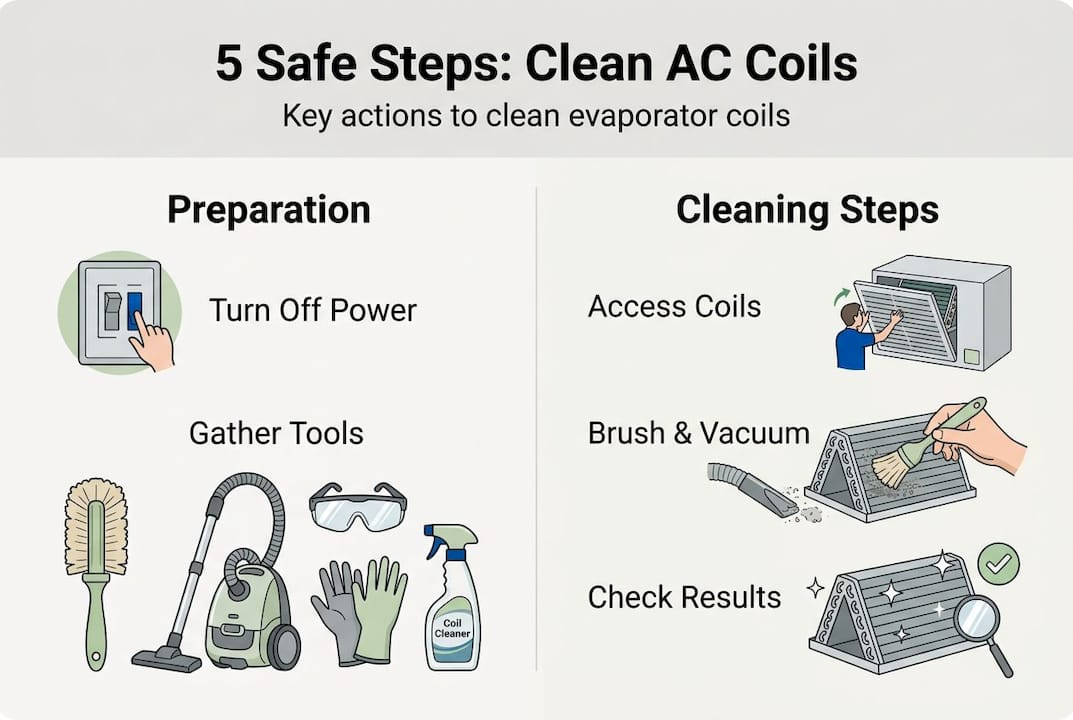
This process follows the standard DIY procedure recommended by major HVAC manufacturers: power off, access the coil, clean gently, apply no-rinse foam, and reassemble. Follow each step carefully.
Turn off all power. Shut off the thermostat, then go to your breaker panel and flip the breaker for the air handler to the off position. Do not skip this step.
Access the evaporator coil. Remove the access panel on your air handler. This usually involves unscrewing a few screws on the front or side of the unit. Set the panel aside carefully.
Inspect the coil. Use your flashlight to look at the coil surface. Note how dirty it is, whether you see visible mold, and whether any fins are already bent. This tells you what level of cleaning is needed.
Vacuum loose debris. Attach the soft brush head to your shop vacuum and gently vacuum the coil surface. Work in the direction of the fins, not across them. Remove as much loose dust as possible before applying any liquid.
Apply no-rinse foaming cleaner. Shake the can well and spray evenly across the coil surface. The foam will expand, penetrate the buildup, and begin to drip down into the drain pan below. Let it sit for the time listed on the product label, usually 5 to 10 minutes.
Straighten bent fins if needed. Use a fin comb to carefully realign any bent fins. Straight fins allow proper airflow across the coil surface.
Check the drain pan and drain line. Look at the drain pan below the coil. If it has standing water or slime, clean it out. Pour a small amount of diluted vinegar down the drain line to keep it clear.
Reassemble and restore power. Replace the access panel, restore power at the breaker, and set the thermostat back to cooling mode. Let the system run for 15 to 20 minutes and check performance.
Pro Tip: Before you put the access panel back on, install a fresh air filter. A dirty filter is the number one reason coils get contaminated in the first place. Check your spring HVAC tips for a full seasonal filter schedule.
A properly cleaned coil can restore a 15 to 20 degree Fahrenheit temperature drop across the coil and save up to 60% of fan energy in severely restricted systems. That is a meaningful difference in comfort and cost. Stop and call a professional if you see thick mold colonies, a frozen coil that will not thaw, refrigerant oil stains, or if your system is under warranty. Now that you understand the cleaning process, let’s ensure you get it right and avoid common pitfalls.
Troubleshooting, warning signs, and how to verify success
Knowing when your coils need cleaning is just as important as knowing how to clean them. Your system gives you clear signals before it fails completely. Catching these signs early saves you money and prevents a full breakdown during the hottest week of an Alabama summer.
Watch for these warning signs that your evaporator coils need attention:
Weak or reduced airflow from your vents even when the system is running
Warm or room-temperature air instead of cold air from the registers
Ice forming on the coil or on the refrigerant lines outside
Musty or sour odors coming from the vents when the AC runs
Unexplained spikes in your monthly energy bill
Uneven cooling where some rooms stay warm while others are fine
Here is what you should see before and after a proper cleaning:
Symptom | Before cleaning | After cleaning |
Airflow strength | Weak, restricted | Strong and consistent |
Air temperature | Warm or barely cool | Noticeably cold |
Energy use | Elevated | Reduced, closer to normal |
Odor from vents | Musty or stale | Fresh, neutral |
Cooling consistency | Uneven room to room | Even throughout home |
After cleaning, run your system for at least 20 minutes and check each vent with your hand. You should feel a strong, cold airflow. The musty smell should be gone within a day or two as the system runs clean. Check your thermostat readings and compare them to what the system was delivering before.
If your coil re-freezes shortly after cleaning, do not just thaw it and move on. Contact a professional. Root causes like low refrigerant or a failing blower motor must be diagnosed and fixed first.
You can also use this as part of your broader home maintenance checklist for Gulf Coast homes. Pairing coil cleaning with drain line flushing, filter changes, and attention to improving indoor air quality gives you a complete picture of your home’s health. With your AC running cleaner, let’s look at the bigger picture of preventative care and expert opinion.
Why most AC coil cleaning guides miss the mark for Gulf Coast homeowners
Most online coil cleaning guides are written for a generic American homeowner somewhere with moderate humidity and mild seasons. They are not written for someone in Foley or Mobile who runs their AC from March through November in air that feels like a warm wet towel.
Generic advice skips the details that matter most here. Salt air from the Gulf accelerates corrosion on aluminum fins and copper tubing in ways that simply do not happen inland. Mold threats are greater in Alabama’s humidity, and standard cleaning schedules designed for drier climates leave Gulf Coast homeowners behind. Cleaning once a year might be fine in Phoenix. In Mobile County, every six months is a more realistic standard for most homes.
The warranty issue is also underplayed in most guides. Trane recommends professional service specifically because of high-voltage risks and the potential to void coverage with improper DIY cleaning. If your system is less than five years old, read your warranty terms before you pick up a spray can.
Finally, coil cleaning alone is not enough in this climate. You must also keep the condensate drain clear, manage indoor humidity, and treat the coil with a mold-inhibiting product after cleaning. A full coastal coil maintenance approach protects your investment far better than a once-a-year spray and hope strategy. With this expert perspective in mind, here’s how to take the next step for your home.
Keep your AC and your home in top shape
Regular coil cleaning is one of the best things you can do for your energy bills and your family’s air quality. But it is only one piece of the picture. Dirty coils often go hand in hand with mold risk, moisture problems, and hidden issues that a trained eye can catch before they become expensive repairs.

At Trinity Home Inspections, we help Mobile and Baldwin County homeowners and sellers see the full condition of their home, including HVAC concerns, moisture issues, and mold risks. Whether you need mold testing services after discovering something suspicious in your air handler, or a thorough home inspection before selling to avoid surprises, we are here with same-day reports, free thermal imaging, and honest answers rooted in local experience.
Frequently asked questions
How often should I clean my air conditioner’s evaporator coils in Alabama?
Annual cleaning is standard for most homes, but in Alabama’s humid climate, cleaning every 3 to 6 months is smarter if you have pets, heavy usage, or live near the coast.
Is cleaning AC coils a DIY job or should I hire a professional?
Homeowners can safely handle light dust removal with the right tools, but hire pros for mold, heavy dirt, or warranty coverage to avoid voiding your system’s protection.
What are the signs that my evaporator coils need cleaning?
Weak airflow, musty odors, higher bills, ice on the coil, or warm air from your vents are all clear signals that it is time to clean.
How do I prevent mold and mildew on my AC coils in Mobile County?
Change your filter every 30 to 60 days, flush the condensate drain with vinegar monthly, and use a mold-inhibiting spray on the coil, since high humidity increases mold risk significantly in this region.
Will cleaning my evaporator coils lower my energy bills?
Yes. Dirty coils cut efficiency by 30% and push your bills higher, so cleaning them can deliver noticeable savings, especially if the buildup was severe.
Recommended
