
How To Install A Sediment Trap On A Gas Line Safely

Updated: May 14
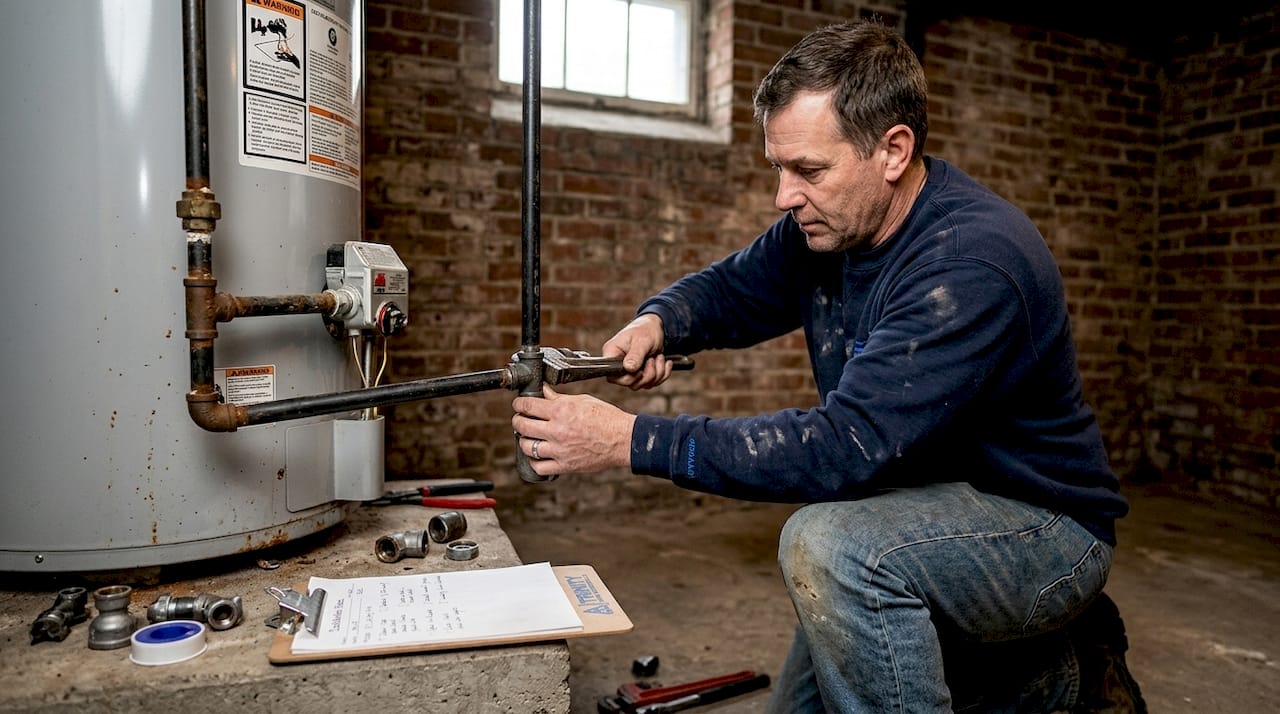
TL;DR:
Sediment traps protect appliances by catching debris in gas lines at each connection point.
Installation requires specific fittings, proper orientation, gas-rated sealant, and leak testing.
Alabama law mandates licensed professionals for gas piping work; proper installation ensures safety and compliance.
A gas appliance that suddenly stops working, or worse, starts leaking, is not a minor inconvenience. It is a safety event. One of the most overlooked causes of appliance failure and gas line blockage in Gulf Coast Alabama homes is a missing or incorrectly installed sediment trap. Alabama adopts NFPA 54 and the International Fuel Gas Code (IFGC), which means specific installation standards apply statewide. This guide walks you through what a sediment trap is, what you need to install one correctly, how to do it step by step, and how to verify your work meets code before you turn the gas back on.
Key Takeaways
Point | Details |
Code compliance is essential | Alabama law requires following national fuel gas codes and licensed professionals for sediment trap installation. |
Trap placement matters | Install a sediment trap at each gas appliance, never just at the main line. |
Safety steps are non-negotiable | Always leak test, use approved materials, and verify installation before restoring gas. |
Inspections avoid future problems | Routine professional checks catch mistakes and keep your home compliant and safe. |
What is a sediment trap and why is it important?
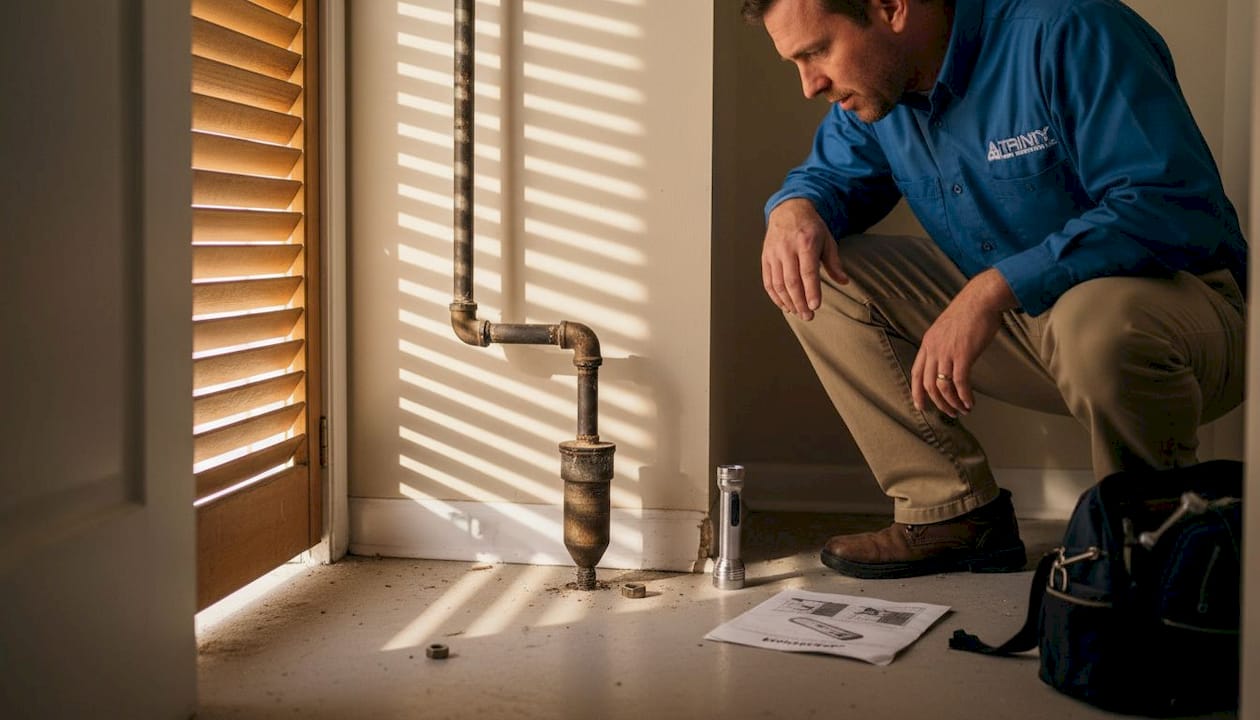
A sediment trap is a short section of pipe, typically a tee fitting with a capped nipple extending downward, installed just before a gas appliance’s inlet. Its job is simple but critical: it catches rust flakes, pipe scale, dirt, and other debris that travel through the gas line before they can reach and damage the appliance’s valve or burner components.
You may also hear the term “drip leg” used interchangeably. There is a slight difference worth knowing. A drip leg is a general term for any downward pipe extension that allows debris or condensate to drop out of the gas flow. A sediment trap is more specifically defined by code as a tee-and-cap assembly at the appliance connection point. In practice, many inspectors and contractors use both terms to describe the same fitting, but per IFGC and NFPA 54, the appliance-specific sediment trap is the code-required component.
Here is why this matters for your Gulf Coast Alabama home:
Appliance protection: Debris in the gas line clogs valves, burners, and igniters, causing premature failure.
Code compliance: NFPA 54 and IFGC require a sediment trap at each appliance, not just at the meter or main line.
Insurance and warranty: Many appliance manufacturers require a sediment trap for warranty coverage to remain valid.
Resale value: A home inspector will flag missing sediment traps as a defect, which can affect your closing negotiations.
For a deeper look at how gas line inspections evaluate these components, it helps to understand what inspectors are looking for at each appliance connection.
Important: Some homeowners and even contractors argue that one main sediment trap at the gas meter is sufficient. This is incorrect. Code and appliance manufacturers both require per-appliance installation. Cutting corners here is not a gray area.
Every gas appliance in your home, including your furnace, water heater, range, dryer, and fireplace, needs its own sediment trap. If you are unsure whether your water heater has one, the water heater drip leg guide covers that specific appliance in detail. The bottom line is that skipping or misplacing a sediment trap puts your appliances, your family, and your investment at real risk.
What you’ll need before you start: Tools, parts, and code requirements
Understanding its purpose, you will need to be ready with the right tools and materials, plus follow Alabama’s code before touching any gas line fitting.
Here is a full list of what you will need for a standard sediment trap installation on a residential gas appliance:
Black iron pipe in the correct diameter for your appliance connection (commonly 1/2 inch or 3/4 inch)
Tee fitting (same diameter as the supply line)
Close nipple or short nipple for the trap body
Cap fitting to seal the bottom of the trap
Two pipe wrenches (one to hold, one to turn)
Gas-rated Teflon tape or pipe dope approved for gas service
Adjustable wrench
Leak detection solution (soapy water or commercial gas leak detector spray)
Pipe cutter or reciprocating saw if cutting existing pipe
Component | Standard option | Alternative |
Pipe material | Black iron pipe | CSST (flexible, requires bonding) |
Thread sealant | Gas-rated Teflon tape | Yellow gas-rated pipe dope |
Trap fitting | Tee with capped nipple | Pre-assembled drip leg kit |
Leak test | Soapy water | Commercial leak detector spray |
Now, a critical point about Alabama law. Alabama requires licensing for gas piping work, which means modifying or installing gas lines is not a standard DIY project in this state. If you are adding a sediment trap to an existing appliance connection without cutting into the main gas line, some homeowners choose to handle it themselves. However, any work that involves modifying the gas supply piping requires a licensed professional. When in doubt, call a licensed gas contractor.
Pro Tip: Before you purchase any fittings, photograph your existing appliance connection and bring the photo to the supply house. This saves you a second trip when the first fitting does not match.
Also confirm that your gas supply is shut off at the appliance shutoff valve before you touch anything. If there is no shutoff valve at the appliance, stop and call a licensed plumber or gas contractor. A proper home maintenance inspection will often catch missing shutoff valves before they become a problem during repairs.
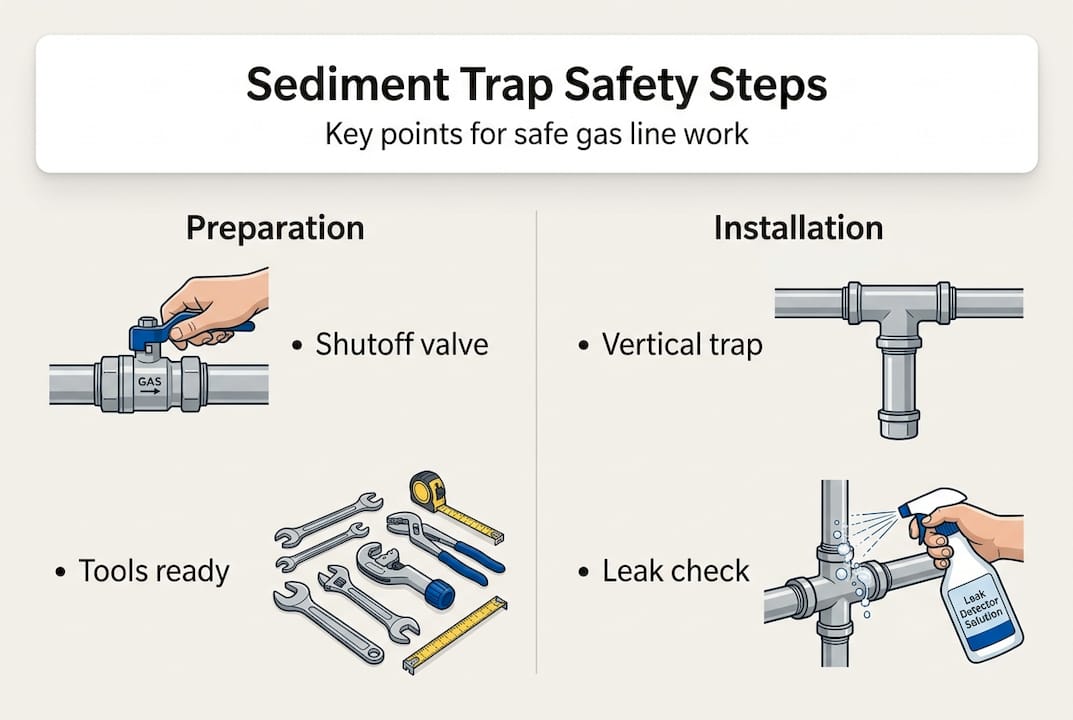
Step-by-step: How to install a sediment trap on a gas line
With tools in hand and safety briefed, let’s get started with the installation.
Shut off the gas supply at the appliance shutoff valve. Confirm the gas is off by attempting to light the appliance. If it does not ignite, you are clear to proceed.
Disconnect the appliance connector from the existing gas supply stub-out. Use two wrenches to avoid twisting the supply pipe.
Install the tee fitting on the gas supply stub-out. The run of the tee should align with the direction of gas flow toward the appliance. The branch of the tee points downward.
Thread the short nipple into the downward branch of the tee. This forms the body of the sediment trap.
Thread the cap onto the bottom of the nipple. Apply gas-rated thread sealant to every threaded connection.
Reconnect the appliance connector to the run outlet of the tee.
Slowly restore gas supply and perform a leak test on every joint you touched.
Step | Time estimate | Pro tip |
Shut off gas | 2 minutes | Confirm with appliance test |
Disconnect connector | 5 minutes | Use two wrenches to prevent pipe twist |
Install tee and trap | 10 minutes | Apply sealant to all threads |
Reconnect and test | 10 minutes | Check every joint, not just new ones |
Pro Tip: The trap nipple should extend at least 3 inches below the tee to give debris enough space to collect without backing up into the gas flow.
Code reminder: Per-appliance traps are required by code. Installing one at the main line only does not satisfy the requirement at each appliance.
Orientation matters. The trap must hang vertically downward from the tee. A horizontal or angled trap will not catch debris effectively and may not pass a gas line inspection checklist review. In Gulf Coast Alabama’s humid climate, black iron pipe connections can corrode faster than in drier regions, so using quality thread sealant rated for gas service is especially important here.
Testing your work: Inspection, verification, and common issues
Once installed, it is critical to verify your work for both safety and code reasons.
The most reliable field test is a soapy water check. Mix dish soap with water in a spray bottle, apply it generously to every threaded joint you touched, and watch for bubbles. Bubbles forming at any joint indicate a gas leak. Do not skip this step. It takes five minutes and it is your best defense against a dangerous situation.
Here is what a correct installation looks like versus a problem installation:
Correct: Tee aligned with gas flow, trap nipple pointing straight down, cap fully threaded, all joints sealed with gas-rated sealant, no bubbles during leak test.
Incorrect: Trap installed horizontally, cap hand-tight only, standard white Teflon tape used instead of yellow gas-rated tape, bubbles present at any joint.
Common mistakes to avoid:
Backward trap placement: The tee run must align with gas flow direction. Installing it reversed restricts flow.
Loose joints: Every connection must be wrench-tight, not just hand-tight.
Wrong thread sealant: Standard white Teflon tape is not rated for gas service. Always use yellow gas-rated tape or approved pipe dope.
Too short a trap nipple: A nipple that is too short does not give debris enough room to collect.
Statistic to know: Gas-related incidents in homes are among the top causes of residential fires and carbon monoxide events nationally. A properly installed sediment trap is one of the lowest-cost, highest-impact safety measures you can add to a gas appliance connection.
Pro Tip: After your leak test, run the appliance through a full cycle and check the joints again. Thermal expansion from the first heat cycle can sometimes reveal a joint that was borderline tight.
If you are preparing a home for resale, a missing or incorrect sediment trap is the kind of defect that shows up in buyer inspection reports and can slow your closing. Alabama requires licensing for gas work, so if your installation does not pass a professional review, you will need a licensed contractor to correct it. Scheduling gas line safety checks before listing your home removes that risk entirely. You can also review questions to ask home inspectors to understand what a thorough inspection covers.
Why code compliance trumps shortcuts: A professional take
Here is something we see regularly in Gulf Coast Alabama homes: a homeowner or even a well-meaning contractor installs one sediment trap at the main gas line and considers the job done. It feels logical. One filter for the whole system, right? But that thinking misses how gas systems actually work.
Debris does not travel evenly through a gas system. It accumulates at specific points, especially near appliance connections where flow slows and pressure changes. Best practice always follows IFGC and NFPA 54, even when others argue that a single main trap is sufficient. The code exists because field experience, not theory, showed that per-appliance traps nearly eliminate debris-related appliance failures.
Skipping a per-appliance trap is false economy. The cost of the fitting is minimal. The cost of a failed appliance valve, a voided warranty, or a failed home inspection is not. We have seen transactions delayed and repair bills climb because one small fitting was missing or installed incorrectly. The value of proper inspections is that they catch these small issues before they become expensive ones. Do the job right the first time.
Get expert help and ensure full code compliance
If you have questions about your gas line setup, are preparing a home for sale, or want a professional set of eyes on your work, Trinity Home Inspections is here to help. We serve Baldwin, Mobile, Escambia, Washington, Monroe, and Clarke counties with InterNACHI-certified inspections, same-day reports, and free thermal imaging.

Our combustible gas leak detector and thorough inspection process help identify missing sediment traps, improper installations, and other gas line concerns that could affect your safety or your sale. You can also use our permit search services to verify past gas work on a property. For sellers, our pre-sale home inspections give you the clarity to list with confidence. Reach out to our local inspection experts today and schedule your inspection online.
Frequently asked questions
Is a sediment trap required for every gas appliance in Alabama?
Yes, Alabama’s adopted codes require a sediment trap at each gas appliance connection, not just at the main gas line. One trap at the meter does not satisfy this requirement.
Can a homeowner install a sediment trap in Alabama, or is a license required?
Alabama requires a license for gas piping work, so any modification to gas supply lines should be performed or verified by a licensed professional. Minor appliance-level work exists in a gray area, but when in doubt, hire a licensed gas contractor.
What are the consequences of not installing a sediment trap?
Skipping a sediment trap can lead to appliance valve failure, code violations during resale inspections, and voided warranties that leave you responsible for repair costs. It also increases safety risk.
How can you tell if a sediment trap is installed correctly?
The trap nipple should extend straight down from the tee fitting, be located as close as possible to the appliance inlet, and have all joints sealed with gas-rated thread sealant. No bubbles should appear during a soapy water leak test.
Are sediment traps and drip legs the same thing?
They are closely related and often used interchangeably, but code definitions can distinguish between them based on function and placement. When in doubt, follow IFGC and NFPA 54 language for your specific appliance type.
Does a gas line need a sediment trap?
Sediment traps installed at gas appliances, water heaters, HVAC are used to help catch any sediment or debris that may be present in the gas line and prevent it from entering the appliance and possibly damaging it. This is also done for saftey reasons.
Recommended

