
Glass Tinting for Homes: Alabama Energy Savings Guide

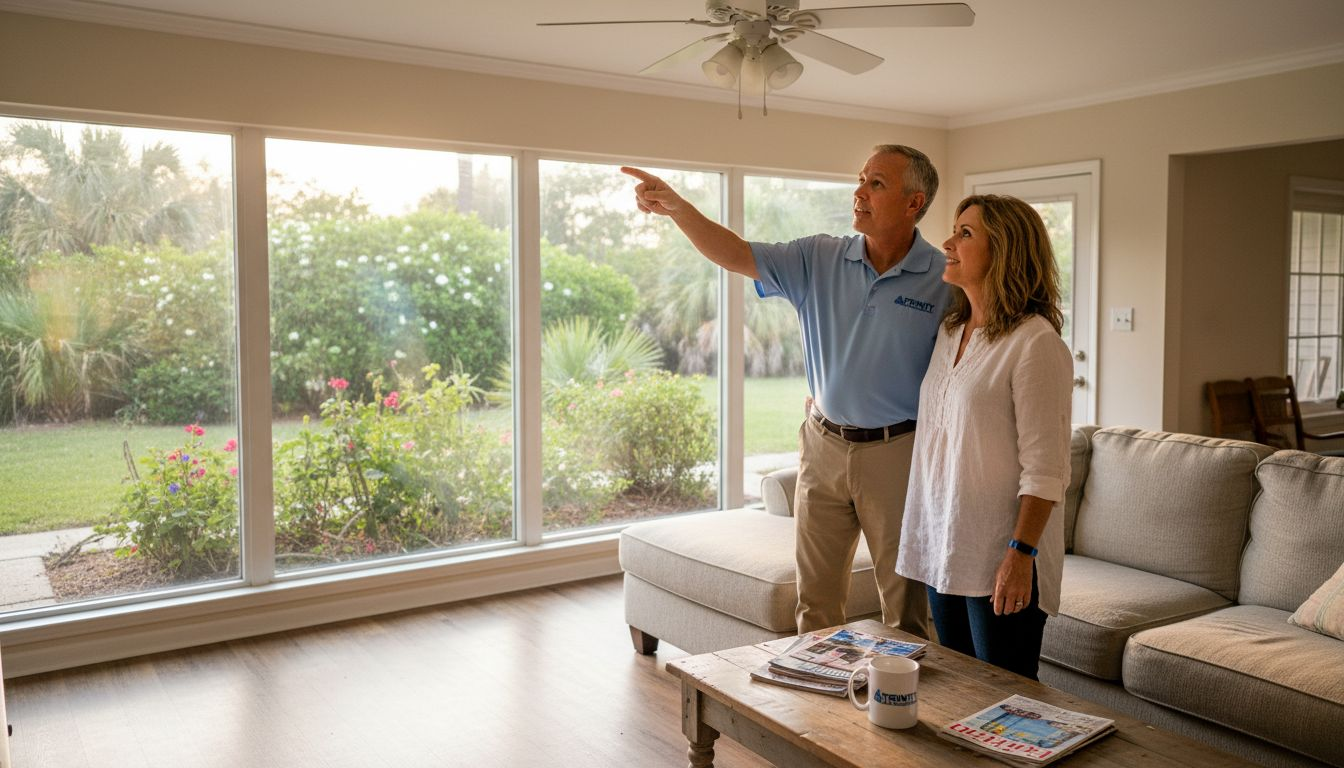
Living along Alabama’s Gulf Coast means dealing with intense summer heat and relentless UV exposure that drive up cooling bills and fade your furniture. Your windows are the weakest link in your home’s thermal envelope, allowing up to 75% of harmful radiation to stream through unfiltered. Glass tinting offers a proven solution that reduces cooling costs by up to 30% while protecting your interiors from sun damage. This guide walks you through everything you need to know about residential window tinting in 2026, from selecting the right film type to understanding installation and measuring real energy savings.
Key takeaways
Point | Details |
Energy savings potential | Professional window films cut cooling costs by 20 to 30 percent in Alabama’s climate. |
UV protection benefit | Quality films block up to 99% of ultraviolet rays that cause furniture fading and floor damage. |
Installation matters | Proper professional application with edge sealing prevents 95% of peeling and durability issues. |
Privacy and comfort | Tinted windows reduce glare, increase privacy, and make rooms more comfortable year round. |
Return on investment | Annual savings of $150 to $250 for typical homes make tinting cost effective within 3 to 5 years. |
Why glass tinting matters for residential homes in Alabama
Alabama’s Gulf Coast experiences some of the most intense solar exposure in the continental United States. Your home faces prolonged periods of direct sunlight that push air conditioning systems to their limits and cause visible damage to interiors. Standard untreated glass allows up to 75% of UVA radiation to enter your home, which steadily bleaches hardwood floors, fades upholstery, and damages artwork.
Professionally installed residential window films address these problems by creating a barrier that reflects solar heat before it enters your living space. The technology works by incorporating metallic particles, ceramics, or dyes into thin polyester layers that adhere directly to your existing glass. These films reject infrared radiation while maintaining visible light transmission, so your rooms stay bright without the heat penalty.
The benefits extend beyond temperature control. Window films can block up to 99% of UV rays, dramatically slowing the fading process that ruins expensive furnishings. You gain privacy during daylight hours without sacrificing your view outward. Glare reduction makes screen time more comfortable and protects your eyes from strain.
Not all window films deliver the same performance. The three main categories serve different priorities:
Metalized films use microscopic metal layers to reflect heat and provide excellent energy savings but may interfere with cell phone signals
Ceramic films offer superior heat rejection without signal interference and resist fading better than other types
Dyed films prioritize aesthetics and privacy over energy performance, using color absorption rather than reflection
Hybrid films combine technologies to balance cost, performance, and appearance
Choosing the wrong film type means missing out on energy savings or paying for features you don’t need. Ceramic films cost more upfront but deliver the best long term value in hot climates like ours. Dyed films work well for north facing windows where heat gain is minimal but privacy matters. If you’re also considering structural upgrades, hurricane impact windows provide both storm protection and energy benefits worth evaluating alongside tinting options.
“The right window film transforms your home’s comfort level while cutting energy waste. In Alabama’s climate, that translates to measurable monthly savings and protection for everything inside your walls.”
Preparing for your residential glass tinting project
Successful window tinting starts with understanding your specific needs and local conditions. Gulf Coast humidity and heat create unique challenges that require careful planning. Your first decision involves matching film type to your goals, whether that’s maximum energy savings, enhanced privacy, or aesthetic improvement.
Ceramic films deliver the strongest heat rejection and UV blocking, making them ideal for west and south facing windows that bear the brunt of afternoon sun. Dyed films cost less and work well for rooms where privacy outweighs energy concerns. Metalized options fall in the middle, offering solid performance at moderate prices. Consider each room’s exposure, usage patterns, and your budget when selecting film types.
Professional installation makes the difference between film that lasts a decade and film that peels within months. Installers with experience in coastal climates understand how to handle edge sealing and moisture barriers that prevent the bubbling and separation common in humid environments. Proper edge sealing prevents 95% of peeling issues that plague DIY installations and bargain services.
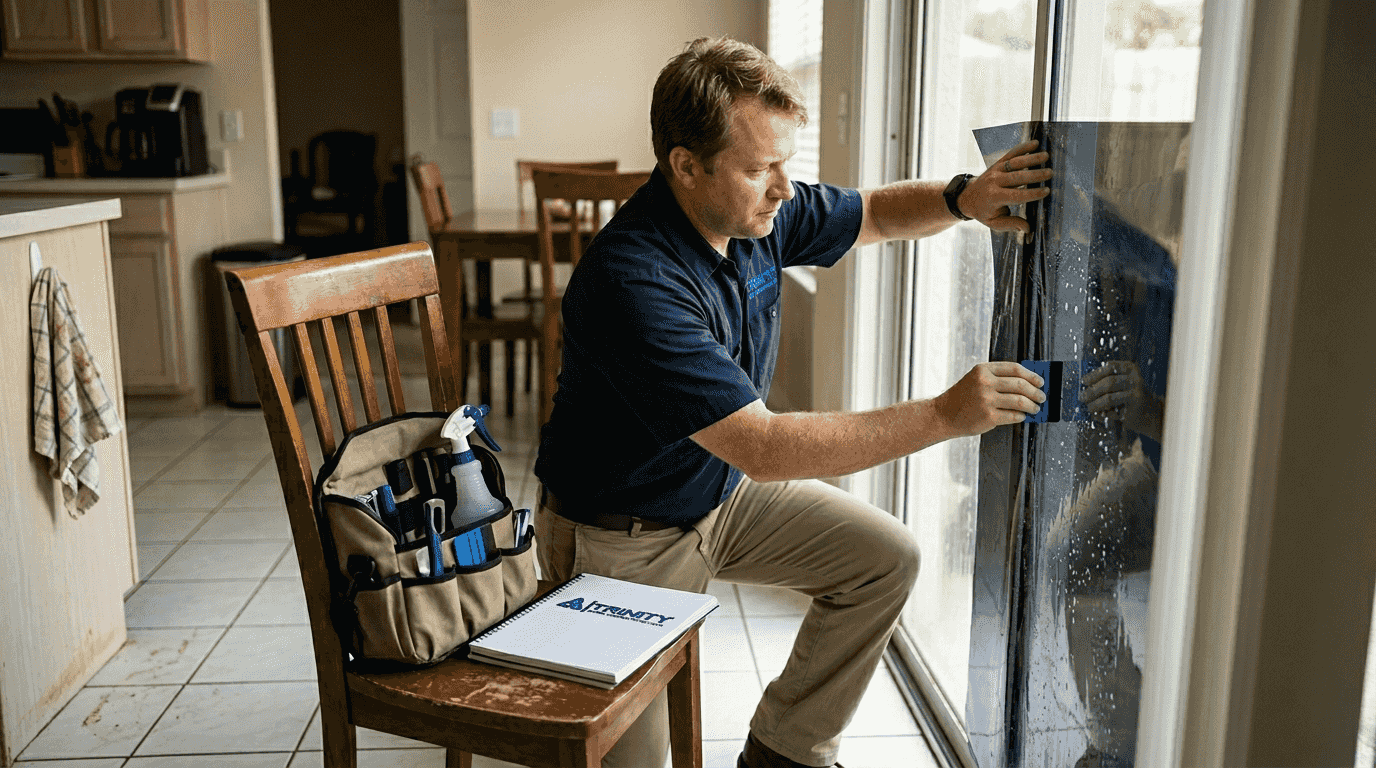
Before installation day, your windows need thorough cleaning to remove all dirt, debris, and residues that interfere with adhesion. Professional installers handle this step, but you should clear window areas of furniture, curtains, and decorations to provide easy access. Accurate measurements ensure you order the right amount of film without waste or shortages.
Coastal climate factors demand special attention. High humidity slows the curing process and can trap moisture if installation occurs during rainy periods. Summer heat accelerates adhesive bonding but makes handling film more difficult. Spring and fall offer the best installation windows when temperatures stay moderate and humidity drops. Quality films designed for marine environments resist salt air corrosion and maintain clarity despite constant moisture exposure.
Film Type | Primary Benefit | Cost Range | Expected Lifespan | Best Application |
Ceramic | Maximum heat rejection and UV blocking | $8 to $14 per sq ft | 10 to 15 years | South and west windows, living areas |
Metalized | Balanced performance and cost | $5 to $9 per sq ft | 7 to 10 years | Multiple room applications |
Dyed | Privacy and aesthetics | $3 to $6 per sq ft | 5 to 7 years | Bathrooms, bedrooms, decorative use |
Hybrid | Versatile performance | $6 to $10 per sq ft | 8 to 12 years | Whole home projects |
Pro Tip: Schedule your installation during a dry weather forecast and plan to keep windows undisturbed for 48 hours afterward. This curing period allows adhesives to bond fully without stress from opening, closing, or cleaning. Just like you’d clean outside windows methodically to avoid streaks, proper preparation and timing ensure flawless film application.
Step by step: how residential glass tinting is installed
Professional window film installation follows a precise sequence that ensures bubble free adhesion and long term durability. Understanding this process helps you evaluate installer quality and know what to expect on installation day.
Surface preparation begins with thorough cleaning using specialized solutions that remove oils, residues, and contaminants that compromise adhesion. Installers scrape away any stuck on debris and wipe down frames and sills.
Precise measurements guide film cutting to match each window’s exact dimensions. Professional installers add small margins for trimming to achieve perfect edge alignment.
Film positioning starts with peeling the protective liner and applying a slip solution that allows repositioning before final placement. This water based solution keeps the adhesive workable during alignment.
Application involves carefully laying the film onto wet glass and using professional squeegees to push out water and air from center to edges. This step requires skill to avoid creases, bubbles, or stretching.
Edge trimming removes excess film using sharp blades guided along window frames. Clean cuts prevent peeling and create professional looking borders.
Final squeegeeing expels remaining moisture and ensures complete contact between film and glass. Installers work systematically to eliminate any trapped air or water pockets.
Edge sealing applies additional adhesive or sealant along perimeters in high humidity environments to create moisture barriers that extend film life.
Curing time varies by film type and weather conditions but typically requires 3 to 30 days for adhesives to fully bond and haze to disappear. During this period, avoid cleaning or disturbing the film.
The most critical factor for success is thorough glass cleaning before film application. Any dirt, dust, or residue creates bumps and weak spots that eventually cause failure. Professional installers use lint free cloths and multiple cleaning passes to achieve pristine surfaces.
Pro Tip: Gulf Coast humidity actually helps during installation by keeping slip solutions workable longer, but it extends curing time significantly. Proper installation accounts for local climate by adjusting solution mixtures and allowing extra drying time. Expect some haziness for the first few weeks as moisture evaporates completely. This temporary cloudiness is normal and clears as curing completes.
Expected results and benefits after tinting your home windows
The transformation tinted windows create goes beyond aesthetics to deliver measurable improvements in comfort, costs, and home value. Understanding these benefits helps you set realistic expectations and track your return on investment.
Energy savings represent the most quantifiable advantage. Annual summer season savings for a 2,000 square foot home in Alabama range from $150 to $250 depending on film quality, window coverage, and air conditioning efficiency. These savings accumulate year after year, typically paying back your installation investment within 3 to 5 years. Monthly cooling bills drop by 20 to 30 percent during peak summer months when air conditioners run constantly.
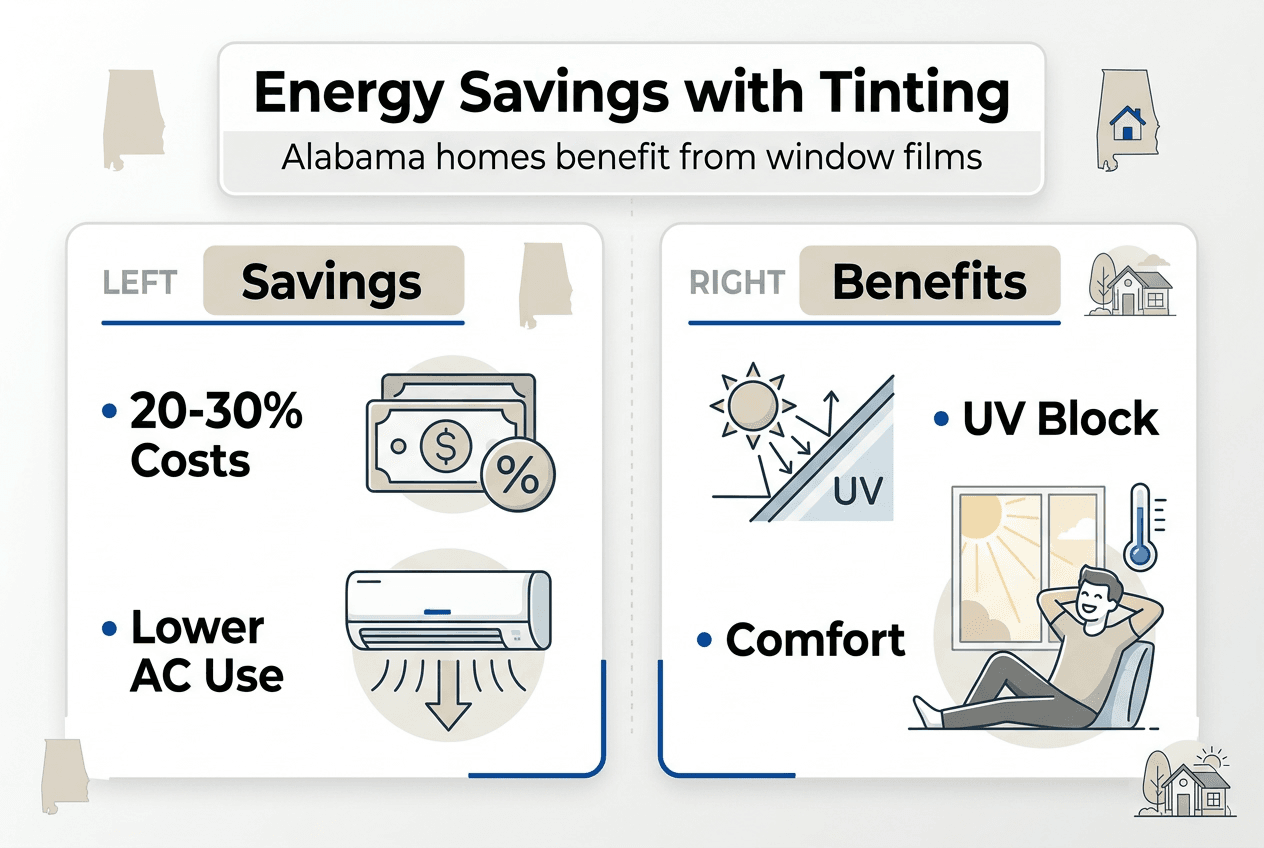
Interior protection extends the life of everything sunlight touches. Window tinting protects furniture and other items from sun damage that would otherwise require replacement every few years. Hardwood floors maintain their original color instead of developing uneven fading patterns. Upholstery, curtains, and artwork stay vibrant decades longer. This preservation saves thousands in replacement costs over your home’s lifetime.
Comfort improvements change how you use your living spaces. Rooms that were unbearably hot in afternoons become usable throughout the day. Glare reduction makes television viewing and computer work easier without constantly adjusting blinds. Temperature consistency improves as hot spots near windows disappear. Your air conditioning system runs less frequently and lasts longer without the constant strain of fighting solar heat gain.
Privacy enhancement works during daylight hours when exterior brightness exceeds interior light levels. People outside see reflections rather than clear views into your home. You maintain outward visibility while gaining security from prying eyes. This benefit proves especially valuable for street facing windows and homes with close neighbors.
Benefit Category | With Quality Tinting | Without Tinting | Impact Magnitude |
Annual cooling costs | $150 to $250 lower | Baseline spending | 20 to 30% reduction |
UV exposure indoors | 1% or less | 75% penetration | 99% improvement |
Furniture lifespan | 15 to 20 years | 5 to 8 years | 2 to 3 times longer |
Glare reduction | 50 to 80% less | Full sun intensity | Major comfort gain |
Daytime privacy | High from outside | Fully visible | Complete transformation |
Resale value benefits come from both the installed upgrade and the documented energy savings. Buyers appreciate homes with energy efficient features and low utility bills. Window tinting serves as a talking point that demonstrates your commitment to maintenance and smart improvements. Combined with other protective measures like Alabama window protection options, tinting contributes to a more marketable property.
Environmental benefits matter too. Lower energy consumption means reduced carbon emissions from power generation. A typical Alabama home with comprehensive window tinting avoids releasing 1 to 2 tons of CO2 annually compared to untinted equivalents. This reduction supports sustainability goals while saving money.
The cumulative effect of these benefits creates a more comfortable, efficient, and valuable home. You’ll notice immediate improvements in room temperatures and glare levels. Energy savings appear on your first full month utility bill. Long term advantages like furniture preservation and increased home value build steadily over years of protection.
Explore professional home inspection and real estate services to complement your home upgrades
Window tinting represents just one aspect of maintaining and improving your Gulf Coast home. When you invest in upgrades that enhance energy efficiency and comfort, professional inspections ensure everything works together properly and meets current standards. Trinity Home Inspections provides the expertise you need to verify that improvements like window tinting integrate seamlessly with your home’s existing systems.
Before listing your home for sale, a pre sale home inspection identifies issues buyers will discover anyway, giving you control over repairs and negotiations. Our detailed reports highlight energy efficient upgrades like window tinting that increase your home’s appeal and value. We also offer real estate permit searches to verify that all improvements were completed legally and documented properly.

Complementing your window upgrades with indoor air quality testing ensures your home’s sealed, energy efficient environment maintains healthy ventilation and air circulation. Our InterNACHI certified inspectors use thermal imaging and specialized equipment to assess how improvements affect your home’s overall performance, giving you confidence that every upgrade delivers the intended benefits.
FAQ
How long does residential window tinting last in Alabama’s climate?
Quality ceramic films typically last 10 to 15 years in Gulf Coast conditions when professionally installed with proper edge sealing. Metalized and hybrid films average 7 to 10 years, while budget dyed films may need replacement after 5 to 7 years. No tint is entirely permanent, but professional installation with moisture barriers and UV resistant adhesives maximizes longevity. Coastal humidity and salt air accelerate degradation in poorly installed films, making professional application essential for durability.
Will window tinting reduce my home’s energy bills significantly?
Yes, you can expect cooling cost reductions of 20 to 30 percent during Alabama’s long summer season. Professionally installed window films save $33 to $50 monthly on average homes, translating to $150 to $250 annually. Actual savings depend on your home’s size, window area, film quality, and air conditioning efficiency. South and west facing windows deliver the highest returns because they receive the most intense solar exposure.
How does window tinting improve home privacy and security?
Tinted films create a one way mirror effect during daylight hours, preventing outsiders from seeing inside while you maintain clear outward views. Window tinting increases privacy by limiting visibility into your home and adds a security layer that deters potential intruders who can’t easily survey your interior. Some security films also strengthen glass against break ins, though standard tinting films focus primarily on privacy and solar control.
Can I install window tinting myself or should I hire professionals?
Professional installation is strongly recommended for Gulf Coast homes where humidity and heat create application challenges that DIY efforts rarely overcome successfully. Professionals achieve bubble free, long lasting results through specialized tools, slip solutions, and edge sealing techniques. DIY installations frequently suffer from trapped air, moisture problems, and premature peeling that waste your film investment. The cost difference between professional and DIY is small compared to the performance and longevity gap.
Does window tinting work on all types of residential windows?
Most residential windows accept tinting films, including single pane, double pane, and even some triple pane configurations. However, certain low E coated windows and thermally tempered glass require specific film types to avoid thermal stress cracking. Professional installers assess your window types and recommend compatible films that won’t cause damage. Unusual shapes, textures, or coatings may limit film options or require custom solutions.
Will tinted windows make my home too dark inside?
Quality window films maintain 40 to 70 percent visible light transmission, preserving natural brightness while blocking heat and UV rays. You’ll notice reduced glare rather than darkness, making rooms more comfortable without feeling dim. Ceramic and metalized films achieve excellent solar control with minimal light reduction. If maximum brightness matters for specific rooms, installers can use lighter tint shades or skip north facing windows that contribute little heat gain.
Recommended

