
The Home Buying Inspection Guide for First-Time Buyers

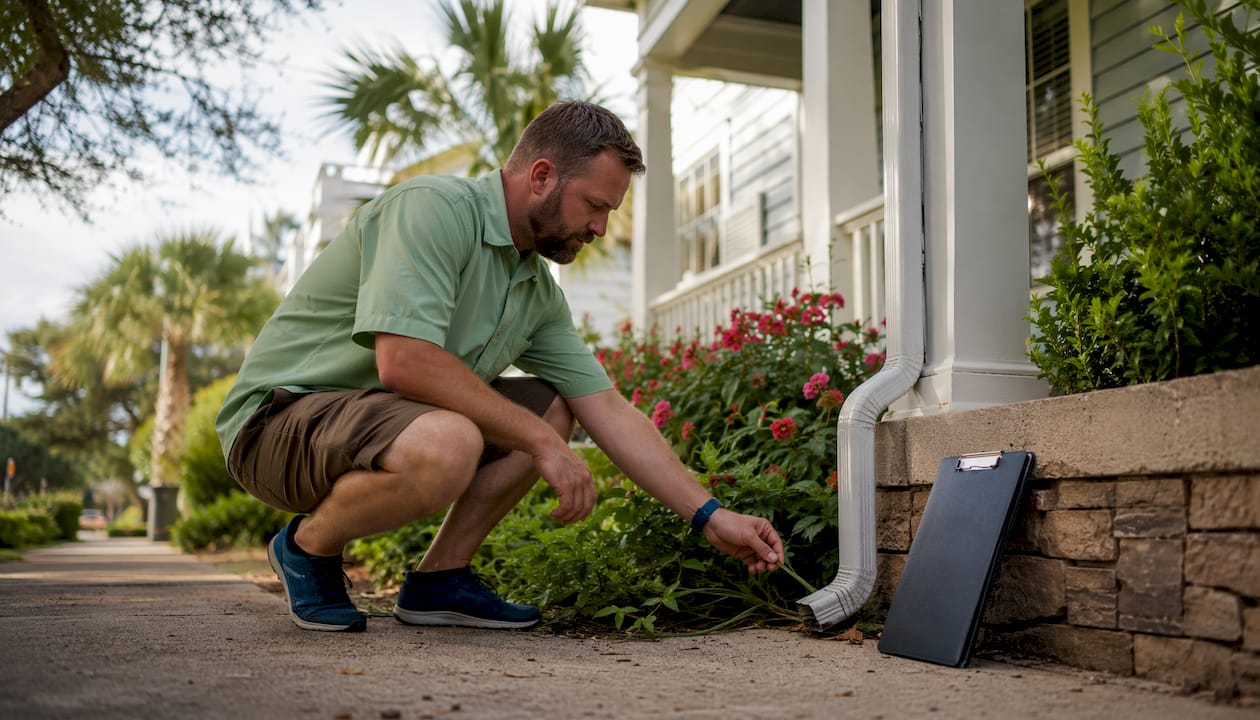
What a home buying inspection really does for you
A home buying inspection is a professional, visual evaluation of a property’s condition performed by a certified inspector before you close. It is not a pass/fail test, and it is not code enforcement. It is your clearest look at what you are actually buying, from the roof to the foundation, before you hand over your money.
For first-time buyers especially, this step can mean the difference between a confident purchase and a costly surprise. A large majority of home inspections uncover at least one issue requiring attention, and buyers who negotiate based on findings can save a significant amount of money. That is not a small number when you are already stretching your budget.
A standard inspection covers the major systems and structural components of the home:
Roof — shingles, flashing, gutters, and drainage
Foundation and structure — walls, floors, ceilings, and framing
Electrical system — panel, wiring, outlets, and switches
Plumbing — supply lines, drains, water heater, and fixtures
HVAC — heating, cooling, and ventilation equipment
Interior — windows, doors, insulation, and attic
Safety features — smoke detectors, carbon monoxide alarms, and handrails
Industry certifications like InterNACHI (International Association of Certified Home Inspectors) set the standards of practice that qualified inspectors follow. When your inspector holds an InterNACHI certification, you know their training meets a nationally recognized benchmark.
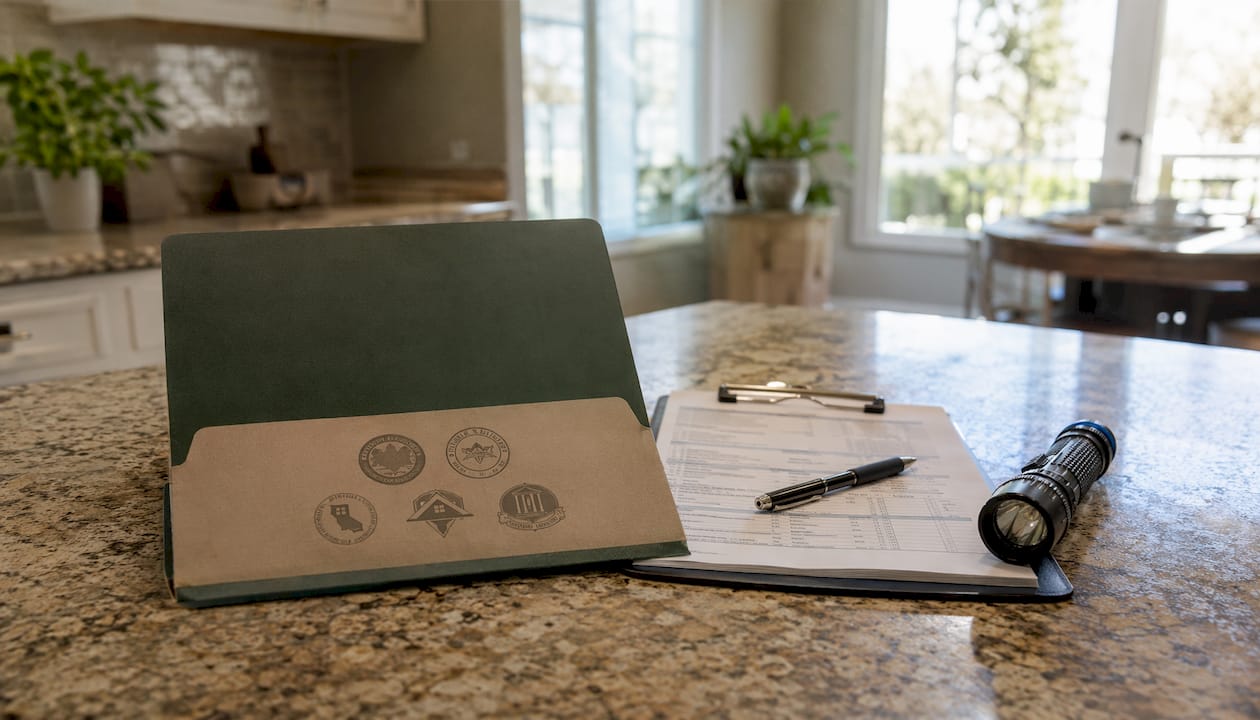
Types of home inspections you should know about
A standard general inspection covers a lot of ground, but it does not cover everything. Depending on the age, location, and condition of the home, you may want to add specialty inspections to your due diligence.
Standard general inspection — covers all major systems and components visible and safely accessible; the baseline for every purchase
Radon testing — radon is the second leading cause of lung cancer in the United States; testing is especially important in areas with known elevated levels
Mold inspection and air quality testing — recommended for homes with visible moisture damage, musty odors, or a history of flooding; certified lab reports confirm findings
Sewer scope inspection — a camera run through the main sewer line to check for root intrusion, cracks, or blockages; critical for older homes
Termite and wood-destroying organism inspection — required by many lenders in the Southeast; identifies active infestations and prior damage
Roof inspection — a deeper evaluation when the general inspection flags concerns; may involve a roofing specialist
Septic system inspection — necessary for rural properties not connected to municipal sewer; proper septic evaluation protects you from expensive repairs after closing
Pool and spa inspection — covers pumps, filters, heaters, and structural condition of the pool shell
Lead paint inspection — relevant for homes built before 1978; the EPA provides guidance on when and how to test
Add-ons make the most sense when the home is older than 30 years, sits in a high-risk zone for a specific hazard, or when the general inspection raises a flag that warrants a closer look. Your inspector should be able to bundle these services so you are not coordinating multiple vendors on your own.
Who conducts inspections and what qualifications matter
Not every inspector is equally qualified. Many states regulate home inspectors, but some do not, which means the burden falls on you to verify credentials before you hire.
Here is what to look for:
InterNACHI or ASHI certification — both organizations require members to pass exams, follow a standards of practice, and complete ongoing education
State license — check your state’s requirements; in Alabama, for example, inspectors must meet state standards, and Trinity Home Inspections holds InterNACHI certification recognized by the U.S. Department of Education
Errors and omissions (E&O) insurance — protects you if the inspector misses something; state minimums vary, so ask how much coverage they carry
General liability insurance — covers accidental damage caused during the inspection; most purchase contracts make the buyer responsible for inspector-caused damage, so this matters more than most buyers realize
FAA drone certification — required for inspectors who use drones for roof access; operating a drone without FAA licensing creates safety and liability risks
Advanced tools — thermal imaging cameras, moisture meters, combustible gas detectors, and carbon monoxide detectors are signs of a thorough inspector
Pro Tip: Ask to see a sample report before you hire. A well-organized, photo-rich report with clear severity ratings tells you a lot about how the inspector communicates. If the sample is vague or text-only, keep looking.
Avoid inspectors who also offer to perform the repairs they find. InterNACHI’s Code of Ethics prohibits members from offering repair services on homes they have inspected for 12 months. An inspector who profits from finding problems has a conflict of interest, whether intentional or not.
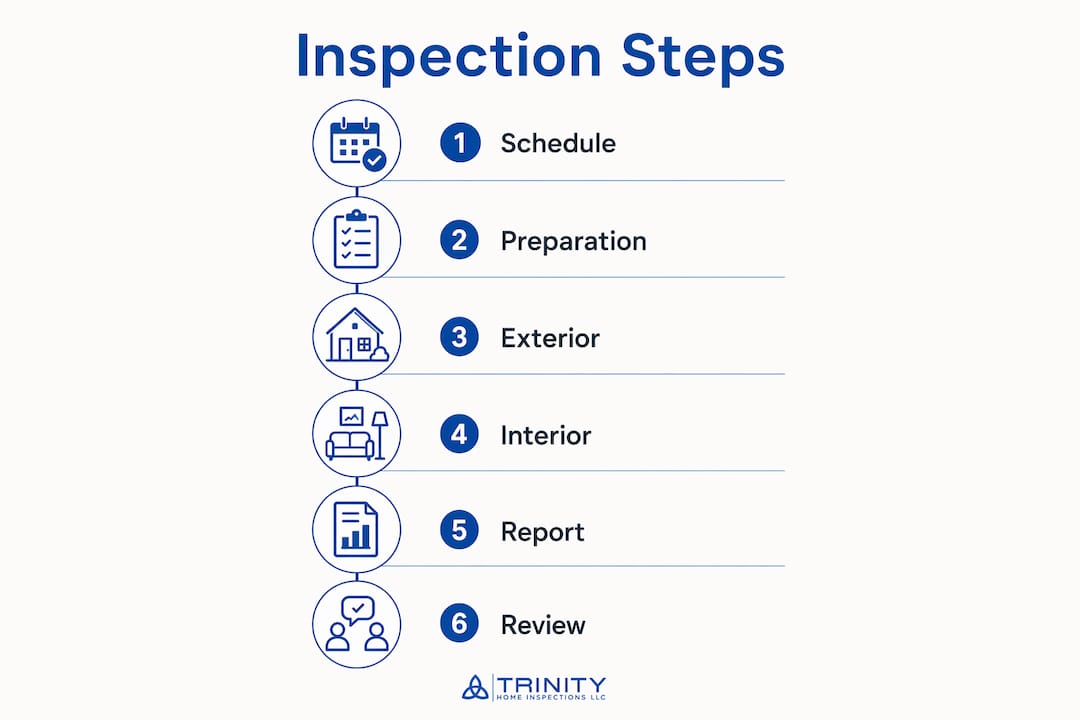
How the home inspection process works, step by step
Understanding the timeline helps you stay in control of the process instead of reacting to it.
Before the inspection:
Schedule within 7–10 days of offer acceptance to stay within your contingency window
Review the seller’s disclosure statement so you know what issues they have already acknowledged
Decide which add-on services you want and confirm them with your inspector in advance
Use a buyer preparation guide to organize your questions and priorities
During the inspection:
A standard inspection runs 2–4 hours depending on the home’s size and complexity
The inspector works through the home systematically, checking every accessible system and component
Some inspectors prefer to work alone for the first portion and then walk you through findings at the end; either approach works, but plan to be there for the walkthrough
Take notes, ask questions, and pay attention when the inspector points out the electrical panel location, water main shutoff, and HVAC controls
After the inspection:
Trinity Home Inspections delivers 99% of reports the same day; most inspectors deliver within 24–48 hours
Review the report with your real estate agent to prioritize findings by severity
Decide whether to request repairs, ask for a price reduction, or walk away if the findings are serious enough
Pro Tip: Bring a notepad and wear closed-toe shoes. You will be in crawl spaces, attics, and muddy yards. The inspection is also your best chance to learn where the shutoff valves are before you ever need them in an emergency.
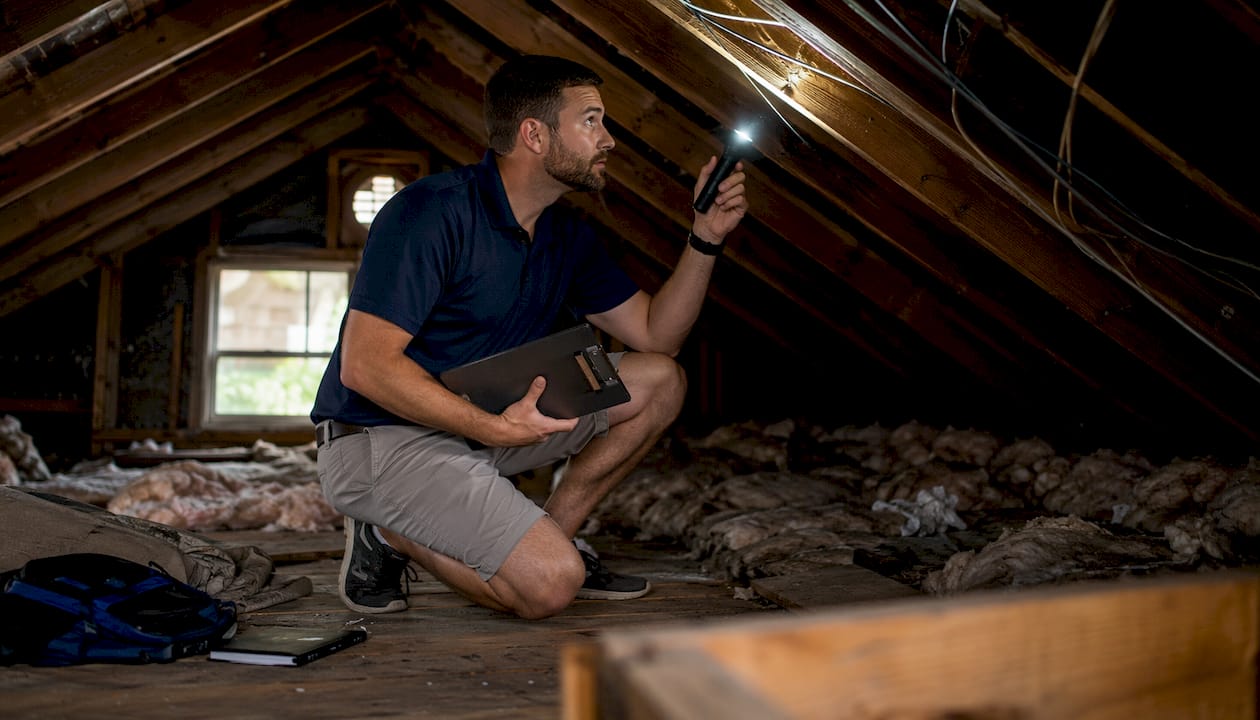
Common problems found during inspections and what they mean for you
Knowing what inspectors find most often helps you interpret the report without panic. Most findings fall into one of three categories: minor maintenance items, moderate defects worth negotiating, and major issues that require serious consideration.
Professional inspectors follow detailed checklists covering roof, foundation, plumbing, electrical, HVAC, interior, exterior, and safety features. Here are the most common findings and what they typically mean:
Roofing issues — missing or curling shingles, worn flashing, and clogged gutters are common; a full roof replacement is a major negotiating point
Electrical hazards — double-tapped breakers, ungrounded outlets, and outdated panels (especially Federal Pacific or Zinsco brands) are safety concerns that sellers should address
Plumbing leaks — slow drains, corroded supply lines, and water heater age are frequent findings; a water heater past 10–12 years is a budget item to plan for
HVAC age and condition — systems older than 15–20 years may be functional but near end of life; get a service estimate before closing
Foundation cracks — hairline cracks in concrete are often normal settling; horizontal cracks or stair-step cracks in block foundations warrant a structural engineer’s review
Moisture and mold — water intrusion in basements, crawl spaces, or around windows is one of the most consequential findings; mold testing with certified lab results gives you documented evidence for negotiation
Insulation gaps — thermal imaging can reveal missing insulation in walls and attics that drives up energy costs without being visible to the naked eye
Minor items like a missing outlet cover or a sticky door are normal in any home. Focus your negotiation energy on safety hazards, structural concerns, and systems that are expensive to replace.
Why attending your inspection gives you a real advantage
Showing up to your inspection is one of the best decisions you can make as a buyer. You will learn more about the home in those 2–4 hours than in any amount of online research.
Expert inspectors emphasize that buyers who attend learn where shut-off valves are located, how to distinguish a major defect from a minor one, and what maintenance the home will need in the first year. That knowledge is practical and immediate.
Trinity Home Inspections actively encourages every client to attend. Led by Matt Cameron, an InterNACHI-certified inspector and active member of his local church, the team brings a commitment to honest, thorough reporting on every job. The approach is straightforward: you get the truth about the home’s condition, not a softened version of it.
What you get when you attend an inspection with Trinity Home Inspections:
A real-time walkthrough of every finding, explained in plain English
Same-day digital report with color-coded severity ratings, photos, and video
Free thermal imaging to catch hidden moisture and insulation gaps
A trusted contractor referral list for any repairs that come up
Post-inspection support by phone or text so you are never left guessing
Pro Tip: Ask your inspector to show you the main water shutoff, the electrical panel, and the HVAC filter location during the walkthrough. These three things will save you time and money in the first year of ownership.
The home inspection checklist for buyers on Trinity’s site is a useful companion to bring along so you can track what gets covered and flag anything you want to revisit.
Understanding inspection contingencies and your legal protections
An inspection contingency is a clause in your purchase contract that gives you the right to cancel the deal and recover your earnest money if the inspection reveals problems you cannot accept. It is one of the most important protections a buyer has.
Home inspection contingencies typically give you a set window, usually 7–14 days after the inspection, to review findings and decide how to proceed. Your options within that window generally include:
Accept the home as-is and proceed to closing
Request repairs from the seller before closing
Negotiate a price reduction or closing cost credit in lieu of repairs
Cancel the contract and receive your earnest money back if the findings are serious enough
In a seller’s market, some buyers waive the inspection contingency to make their offer more competitive. That is a significant risk. A home with a hidden foundation problem or failing HVAC system can cost tens of thousands of dollars to repair, and without a contingency, you have no legal recourse after closing.
State-specific rules govern how contingencies are written and enforced. In Texas, for example, the Texas Real Estate Commission provides consumer protection notices that outline buyer rights. Always review your contract with a licensed real estate agent or attorney before waiving any contingency.
Ready to schedule your inspection in Gulf Coast Alabama?
[
Alt text: Trinity Home Inspections inspector in khaki pants and blue shirt with white pocket logo conducting a home inspection in Gulf Coast Alabama
Trinity Home Inspections serves Mobile, Baldwin, Escambia, Washington, Monroe, and Clarke counties, including Daphne, Fairhope, Spanish Fort, Foley, Gulf Shores, Orange Beach, and more. Every inspection includes same-day reporting, free thermal imaging, and post-inspection support.
Call or text 251-210-7376 or visit TrinityInspectionsLLC.com to schedule your inspection today. You can also explore property and permit records for Baldwin, Mobile, and Escambia counties to do your homework before the inspection day.
Key Takeaways
A home buying inspection is your best tool for protecting your investment, and attending it in person multiplies its value.
Point | Details |
Most inspections find issues | 86% of inspections uncover at least one problem; buyers who negotiate on findings save an average of $14,000. |
Plan for 2–4 hours on-site | Standard inspections typically take a few hours to complete, depending on the home’s size and complexity; same-day reports let you act quickly within your contingency window. |
Verify credentials before hiring | Look for InterNACHI or ASHI certification, E&O insurance, general liability coverage, and FAA drone licensing. |
Contingencies protect your earnest money | An inspection contingency generally allows cancellation and recovery of earnest money if major unacceptable findings arise. |
Add-ons address specific risks | Radon, mold, sewer scope, and termite inspections fill gaps the standard inspection does not cover. |
FAQ
What does a home inspection cover?
A standard home inspection is a
of a property’s condition performed by a certified inspector before you close. Inspectors check the roof, foundation, structure, electrical system, plumbing, HVAC, interior, and safety features, using tools like drones, thermal cameras, and moisture meters to assess hard-to-reach areas.
How much does a home inspection cost?
Home inspection costs vary depending on region, home size, and market conditions. Specialty add-ons like radon testing, sewer scopes, or mold testing carry additional fees.
What should a buyer do during a home inspection?
Attend the inspection, take notes, and ask questions throughout the walkthrough. Pay attention when the inspector identifies the water main shutoff, electrical panel, and HVAC controls, since knowing those locations will help you respond quickly to any future emergency.
What are the four main types of home inspections?
The common types include the standard general inspection, specialty environmental inspections (radon, mold, lead), and structural or system-specific inspections (sewer scope, roof, foundation). New construction inspections may include pre-close and warranty inspections.
Can I cancel my purchase based on inspection findings?
Yes, if your contract includes an inspection contingency. Inspection contingencies allow buyers to cancel and recover their earnest money if the inspection reveals major issues within the agreed timeframe, usually within a set period after the inspection is completed, often about one to two weeks.
Recommended

