
How to floor attic above garage: a homeowner's guide

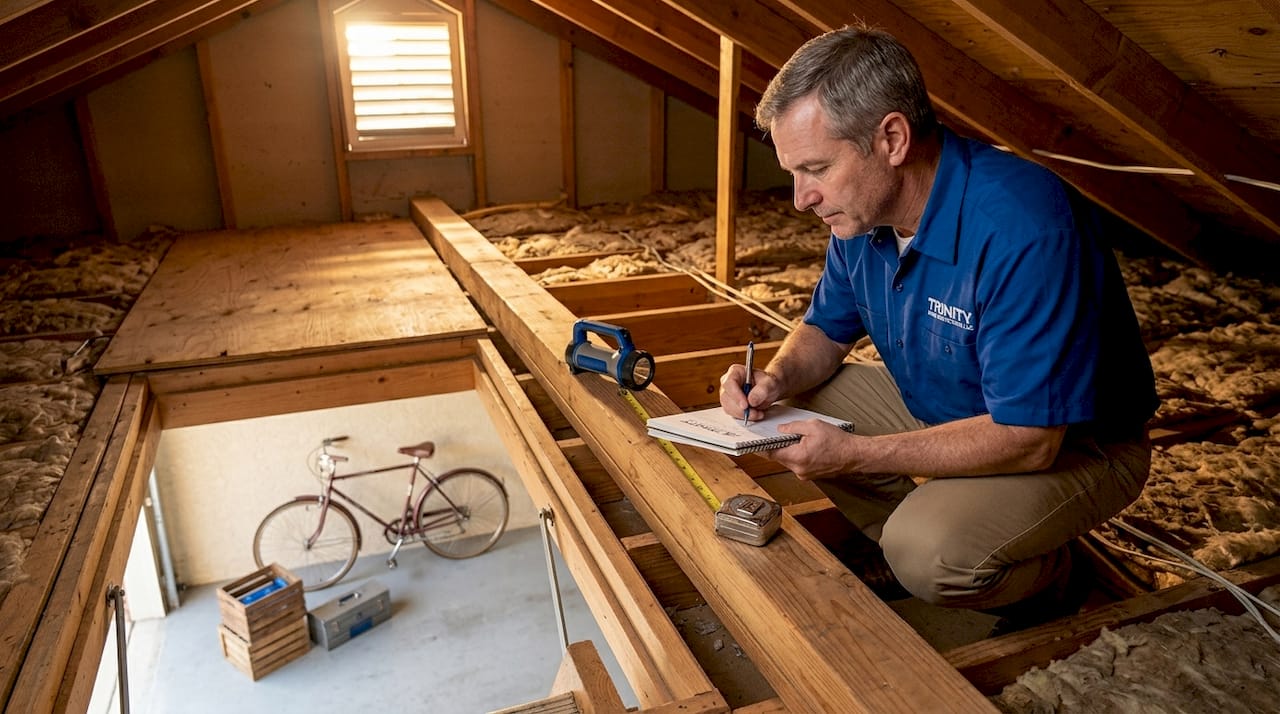
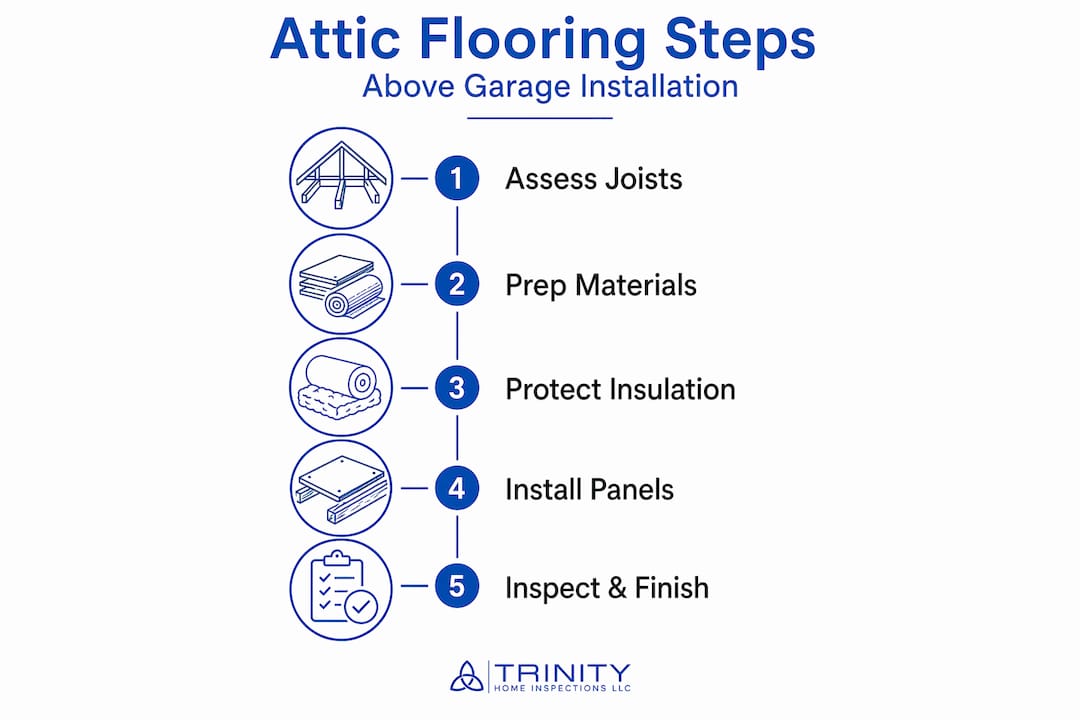
That empty space above your garage is not just dead air. For Gulf Coast Alabama homeowners, it represents 200 to 400 square feet of potential storage or usable space that most people never touch because they don’t know how to floor attic above garage safely. The problem is not ambition. It’s that doing this wrong can crack the ceiling below, compress insulation, or create a floor that bounces under weight. This guide walks you through every step: structural assessment, material selection, insulation protection, installation, and final inspection, so you get it right the first time.
Key Takeaways
Point | Details |
Assess joist capacity | Check ceiling joist size, span, and load rating before installing attic flooring to avoid structural damage. |
Use raised flooring | Build a raised platform to preserve attic insulation depth and maintain proper ventilation. |
Install panels properly | Lay subfloor panels perpendicular to joists with screws spaced every 8-12 inches to spread the load evenly. |
Maintain attic access | Ensure code-compliant attic access openings for safety and usability above the garage. |
Avoid common mistakes | Don’t compress insulation or overload small areas; inspect for sagging or blocked ventilation after installation. |
Assessing your attic’s structural capacity and safety requirements
Before you buy a single sheet of plywood, you need to understand what your joists can actually hold. This is the step most DIYers skip, and it’s the one that causes the most damage.
Attic framing design determines whether your space is built for “limited storage” (20 pounds per square foot live load) or “no storage” (10 pounds per square foot live load). These are not the same thing. Joists sized for no storage cannot simply be loaded down with boxes and seasonal gear without risking structural stress or ceiling failure below.
Here’s what you need to check before anything else:
Joist size and spacing: Common ceiling joists over garages are 2x6 or 2x8 lumber, typically spaced 16 or 24 inches apart. Larger lumber at tighter spacing handles more load.
Joist span: The distance a joist travels without intermediate support matters significantly. A 2x6 joist spanning 12 feet under a 10 psf load behaves very differently than one spanning 8 feet.
Load design category: Live load and deflection limits vary depending on whether you plan limited storage or habitable space use, directly affecting what your joists can support safely.
Attic access compliance: The IRC requires an access opening of at least 22 by 30 inches when attic space exceeds 30 square feet with 30 or more inches of headroom. Confirm yours meets this before flooring around it.
Reviewing attic safety issues specific to your home type is a smart early step. If the joists are undersized for your intended use, you have two options: reinforce them with sister joists (adding new lumber alongside the existing ones) or limit what you store up there. Check your garage ceiling insulation advice while you’re at it, because insulation choices and joist sizing often go hand in hand.
Pro Tip: When in doubt about your load category, design for limited storage at 20 psf rather than no storage at 10 psf. That extra margin of safety costs you almost nothing at the planning stage and protects you from expensive surprises later.
Now that you understand the importance of structural capacity, let’s look at what materials and tools you’ll need to safely floor your attic.
Gathering the right materials and tools for flooring your attic
Getting your materials list right before you climb into that attic space saves you trips down the ladder and prevents costly mid-project decisions. Here’s what you’ll need.
Attic flooring materials typically center on plywood or oriented strand board (OSB) panels, fastened perpendicular to joists with construction screws for proper load distribution. The panel thickness you choose directly affects floor stiffness. Too thin and the floor flexes uncomfortably, which can also crack the drywall ceiling below over time.
Panel thickness guide:
3/4 inch plywood or OSB is the standard for 16-inch joist spacing and handles typical storage loads well.
5/8 inch panels work for lighter loads but may flex noticeably at 24-inch joist spacing.
1/2 inch panels are generally too thin for any real attic storage application above a garage.
For your garage ceiling insulation tips and flooring project together, here is a complete materials and tools reference:
Item | Specification | Notes |
Plywood or OSB panels | 3/4 inch, 4x8 sheets | Rated for structural use |
Construction screws | 3-inch coarse thread | Not nails; screws hold better over time |
Circular saw | Standard 7-1/4 inch blade | For cutting panels to size |
Drill/driver | Cordless recommended | For driving screws quickly |
Tape measure | 25-foot minimum | Measure twice, cut once |
Chalk line | Standard | For marking cut lines accurately |
Safety glasses | ANSI Z87.1 rated | Required when cutting |
Knee pads | Heavy-duty foam | Attic work is hard on knees |
Respirator mask | N95 or better | Insulation fibers are a real hazard |
Headlamp | 500+ lumens | Better than handheld flashlight in tight spaces |
2x6 or 2x8 lumber | 8 or 10-foot lengths | For raised frame (covered in next section) |
Safety equipment is not optional. Attic spaces in Gulf Coast Alabama are hot, tight, and full of insulation fibers. Wear your mask every time you go up, even for short trips.
With your materials ready, let’s move on to the critical step of preparing your attic safely while protecting insulation and ventilation.
Preparing the attic for flooring while protecting insulation and ventilation
Here is where many Gulf Coast homeowners make a mistake that costs them money every month on their energy bill. They lay plywood directly onto the insulation, flatten it down, and call it done. That feels like progress, but it creates two serious problems.
First, compressing insulation reduces its R-value, which is the measure of its resistance to heat flow. Compressed fiberglass batts or blown insulation can lose 30 to 50 percent of their thermal effectiveness. In Gulf Coast Alabama’s brutal summers, that translates directly into higher cooling costs and a harder-working HVAC system.
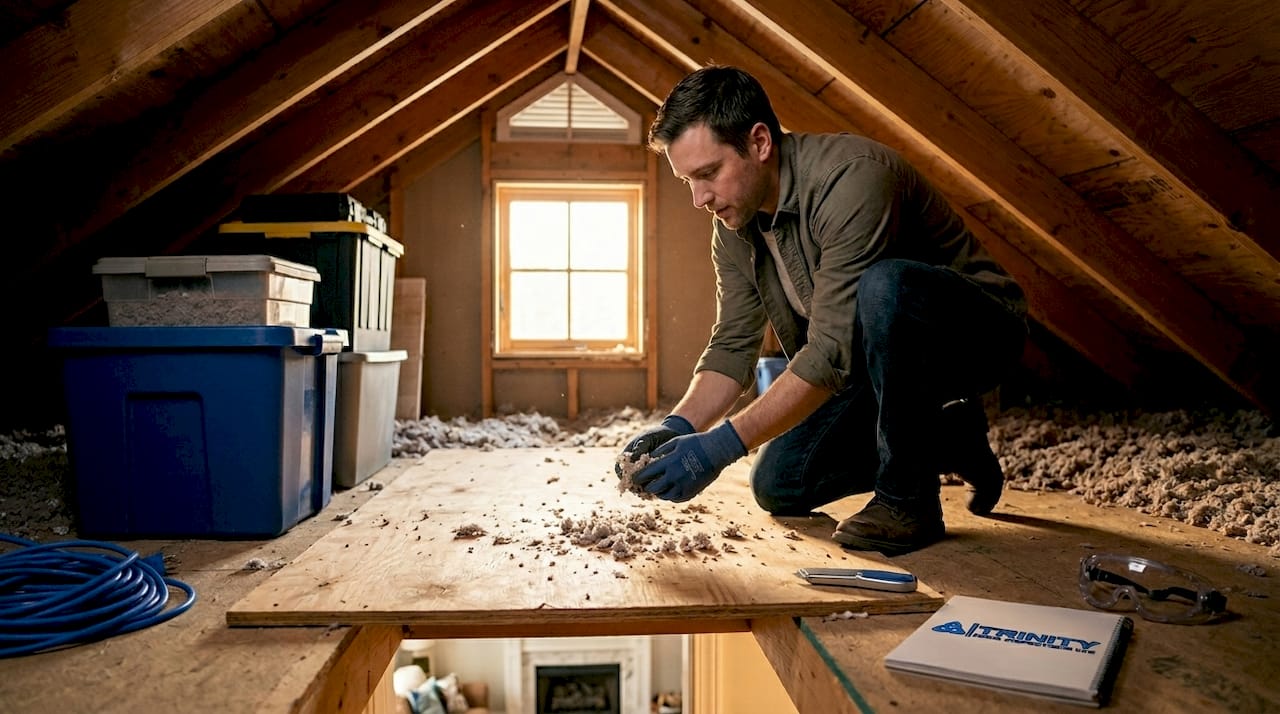
Second, a raised flooring system is recommended specifically because it maintains insulation depth and preserves the airflow that prevents moisture buildup. Trapped moisture in a Gulf Coast attic is a recipe for mold, and mold in an attic above your garage can spread faster than you expect.
Here’s how to build a proper raised subfloor system:
Map your joist layout. Use a tape measure to identify joist direction and spacing across the attic floor. Mark the joist locations clearly with a chalk line on the existing ceiling below if possible, or mark them directly on the insulation surface before stepping off.
Plan your raised frame direction. The new 2x6 or 2x8 sleeper boards run perpendicular to the existing ceiling joists. This distributes the load across multiple joists instead of concentrating it on one or two.
Check electrical wiring paths. Before installing anything, trace the path of any wiring running through the attic space. This is critical. You do not want to pin wiring under a sleeper board. Reroute wires carefully or adjust your frame layout to avoid them.
Cut your sleeper boards to length. These boards sit on top of the ceiling joists and create an elevated deck. They should span multiple joists to spread load effectively.
Fasten sleepers to joists through the insulation. Use long structural screws driven through the sleeper and insulation directly into the ceiling joist below. Check that each fastener actually hits the joist, not just the insulation.
Verify clearance beneath the raised deck. The space between the original insulation surface and the underside of your new deck should maintain the insulation’s designed depth without compression.
“Compressing insulation under attic flooring is one of the most common and costly mistakes homeowners make, reducing energy efficiency while simultaneously trapping moisture that leads to mold growth.”
Reviewing attic air sealing tips before you close up the space is worth your time. Proper garage insulation guidance for Gulf Coast climates can help you select the right insulation depth to begin with, setting your raised floor height correctly from the start.
Pro Tip: Before fastening a single sleeper board, photograph every electrical wire you see in that attic. Date the photos and keep them. If something goes wrong during installation, you’ll know exactly where the wiring runs.
With the attic properly prepared, let’s review the correct steps to install the flooring panels for safe use.
Step-by-step instructions to install attic flooring above the garage
With your raised frame in place, the actual panel installation moves faster than most people expect. The key is precision in the first few panels, because every cut and fastening decision after that follows from how well you started.
Measure your joist or sleeper spacing precisely. Even if you set sleepers at 16 inches on center, measure the actual spacing at each bay. Attic framing is not always perfectly consistent, and panels that miss their landing point by half an inch will flex.
Cut your first panel. Start from a corner or wall and work outward. Lay subfloor panels perpendicular to the joists and secure with screws spaced 8 to 12 inches apart to evenly spread loads across the framing.
Stagger your panel joints. Think of it like laying brick. Offset the end joints between rows by at least 24 inches so no two adjacent panels share a seam at the same point. This increases overall floor strength.
Drive screws, not nails. Nails can back out over time with thermal expansion and contraction, which is a real factor in Gulf Coast Alabama’s temperature swings. Screws hold permanently.
Leave a 1/8-inch gap between panel edges. This small gap allows for slight seasonal movement without buckling.
Mark and maintain a clear access path. Leave the area around your attic hatch clear and structurally accessible. You need to be able to exit quickly if needed, and your attic access point must remain unobstructed per code.
Label storage zones if flooring only part of the attic. Use paint or chalk to mark the boundaries of your floored area so anyone using the space stays on safe footing.
Pro Tip: Cut your 4x8 panels into 2x8 strips before taking them into the attic. A full 4x8 sheet weighs around 60 pounds and is nearly impossible to maneuver through a standard attic hatch. Narrower strips go up easily and still fasten correctly.
Understanding when full flooring makes sense versus partial coverage helps you plan smarter:
Approach | Benefits | Drawbacks |
Full attic flooring | Maximum storage space, uniform walking surface | Higher cost, more material, more insulation risk if done wrong |
Partial flooring (storage zones only) | Lower cost, easier to preserve insulation and ventilation | Limited usable area, requires clear zone marking |
Raised platform system | Protects insulation, works in humid climates | More labor, requires additional lumber for frame |
For attic access and safety tips and creative attic storage access solutions, reviewing both links will help you think through the full picture before you finalize your layout.
Now that you know how to install flooring, let’s cover how to verify your work and avoid common pitfalls.
Verifying your attic floor installation and avoiding common mistakes
Installation day feels like the finish line, but the inspection step is where you protect everything you just built. Walk the floor carefully and look for these specific issues.
Check for panel flex. Walk slowly across every section of the new floor. Any noticeable bounce or flex under your weight indicates undersized sleepers, missed fasteners, or inadequate joist support beneath. Do not ignore this.
Verify insulation is not compressed. Shine a flashlight into the edges of the floored area and confirm the insulation retains its original depth. If it looks flattened, your raised frame may not be sitting high enough.
Confirm ventilation paths are open. Soffit vents at the eaves and any ridge venting must remain unobstructed. Flooring that extends too close to the eaves can block critical airflow and create moisture problems.
Inspect all screw fastening. Every screw should be driven flush or slightly below the panel surface. Raised screw heads create trip hazards and indicate the fastener may not have fully engaged the framing below.
Check your attic access hatch. It must open fully and the area around it must be clear. This is both a code requirement and a safety necessity.
Critical safety warning: Do not overload your attic floor, even after it’s properly installed. Piling concentrated heavy loads in one area can exceed local joist capacity and cause ceiling damage or collapse below. Spread weight evenly and stay within your design load limits.
Common attic flooring errors that inspectors find regularly include blocked ventilation, compressed insulation, thin plywood that flexes under load, and typical mistakes like overloading small floor areas. If your municipality required a permit for this work, keep a copy of the approved inspection documentation with your home records. It matters when you sell.
With your flooring installed and inspected, here’s a fresh perspective on optimizing attic flooring projects in Gulf Coast Alabama.
Why Gulf Coast homeowners should prioritize raised loft flooring and proper load assessment
Most online guides treat attic flooring like a simple weekend project. Lay down some plywood, add some shelves, done. That framing is fine for a dry climate with moderate temperatures, but it’s the wrong mental model for Gulf Coast Alabama.
Here, humidity is a structural concern, not just a comfort issue. Many DIYers unknowingly reduce energy efficiency and risk structural damage by compressing insulation under attic flooring. In a climate where summer attic temperatures routinely exceed 140 degrees Fahrenheit and humidity can spike during storm season, compressed insulation combined with trapped moisture is an active invitation for mold growth in a space you rarely look at.
The smarter framing is to treat attic flooring as a structural upgrade, not a surface covering. When you think of it that way, decisions like building a raised frame, checking joist load categories, and reviewing your insulation depth feel like necessary steps rather than optional extras. They are.
We’ve inspected attics above garages that failed silently for years. The homeowner thought everything was fine. The ceiling below showed hairline cracks they attributed to settlement. It wasn’t settlement. It was joist overstress from an improperly loaded attic floor. Catching that early, before it becomes a ceiling replacement project, is the entire point of doing this right.
Consulting energy-saving insulation tips specific to Gulf Coast conditions before finalizing your project is one of the most practical things you can do. What works in the mid-Atlantic doesn’t always translate here.
The other piece most guides miss is code compliance. If you ever sell your home, an unpermitted attic floor that compressed the insulation and blocked ventilation will show up in the buyer’s inspection report. That turns into a negotiating point against you. Doing it correctly the first time costs less than fixing it under pressure at closing.
Trusted attic inspection and permit assistance in Gulf Coast Alabama
If you’re ready to move forward with your attic above the garage, having a professional assessment before you start can save you significant time and money. Trinity Home Inspections serves Baldwin, Mobile, Escambia, and surrounding Gulf Coast Alabama counties with InterNACHI-certified inspections that include free thermal imaging to identify insulation gaps and moisture issues before they become expensive problems.
[

Our team can evaluate whether your garage attic joists are sized for storage loads, identify any existing moisture or ventilation concerns, and help you understand what reinforcement, if any, your framing needs before you invest in materials and labor. We also offer permit search assistance to verify whether previous work on your home was properly permitted, and pre-listing home inspections if you’re planning to sell after completing your project. Call us at 251-210-7376 or visit TrinityInspectionsLLC.com to schedule your inspection.
Frequently asked questions
Can I lay plywood directly over insulation in my attic above the garage?
No. Laying plywood directly over insulation compresses it, reducing its thermal resistance and trapping moisture underneath, which creates mold risk, especially in Gulf Coast Alabama’s humid climate. A raised flooring system that keeps insulation at its full depth is the correct approach.
How do I know if my garage attic joists can support a floor?
You must check joist size, span, and spacing against the intended load category. Ceiling joists sized for no storage may only handle around 10 psf and will need reinforcement or load restrictions if you plan to add flooring for storage use.
What materials are best for attic flooring above a garage?
Plywood or OSB panels of 3/4 inch thickness, installed perpendicular to joists and fastened with construction screws spaced 8 to 12 inches apart, are the most reliable attic flooring options for this application.
Is an access opening required for attic floors above garages?
Yes. IRC Section R807.1 requires a minimum 22-by-30-inch access opening when attic space exceeds 30 square feet with at least 30 inches of headroom. Your flooring layout must preserve this opening fully.
How can I avoid ceiling damage when flooring an attic above a garage?
Size your joists or sleepers for the actual load you plan to place on them, fasten panels perpendicular to joists to spread weight evenly, avoid concentrated heavy loads in one area, and consider a professional inspection before starting to confirm your framing can handle the project safely.
Recommended