
How to Insulate a Garage Door for Energy Savings

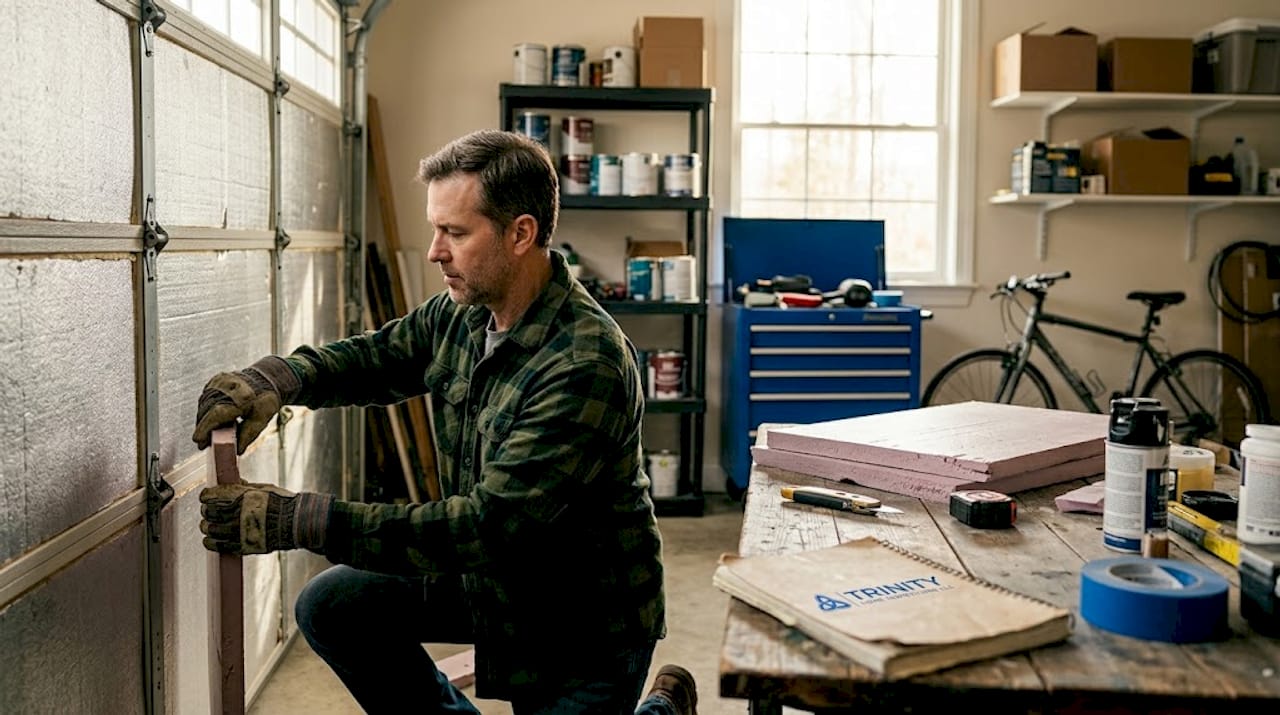
If you live on the Gulf Coast and your garage feels like a sauna from May through September, you already know the problem. An uninsulated garage door is one of the biggest sources of heat gain in your home, and in Alabama’s brutal humidity, that translates directly into higher energy bills and miserable working conditions. Learning how to insulate a garage door is one of the most affordable DIY upgrades you can make, and this guide covers exactly what you need, how to do it right, and what mistakes to avoid so you get real results.
Key Takeaways
Point | Details |
Assess and seal first | Check current insulation and air seal your garage before adding new materials for best results. |
Pick the right materials | Choose insulation and weatherstripping rated for hot, humid climates to reduce heat gain and moisture. |
Follow proper installation | Use foam or fiberglass insert systems and install according to manufacturer instructions for lasting performance. |
Prioritize safety | Garage door operation can change after insulation; always test and address any issues promptly. |
Expect improved comfort | Properly insulated garage doors in Gulf Coast Alabama boost comfort and can lower energy bills year-round. |
What you need before starting: Tools, materials, and safety musts
Now that you know why insulating your garage door matters, let’s get you prepared with the right materials and a solid safety plan.
Before you buy a single panel or roll of insulation, take ten minutes to assess what you are working with. The DOE recommends addressing air sealing before adding insulation, because insulation alone cannot compensate for air leaking in around the door frame, bottom seal, or side jambs. Check whether your current door already has any factory insulation, and look for gaps where daylight or outside air is getting through.
Next, confirm your garage door type. Steel panel doors with hollow cavities are the most common and the easiest to insulate yourself. Solid wood doors and doors with very shallow panels require different approaches. Also check whether your door is worth insulating at all based on how your garage connects to your living space.
Tools and materials checklist:
Item | Purpose |
Measuring tape and utility knife | Measure and cut insulation panels to fit |
Straight edge or T-square | Clean, accurate cuts |
Retainer clips or double-sided tape | Secure insulation inside door panels |
Rigid foam board or fiberglass batt kit | Primary insulation material |
Weatherstripping (foam, vinyl, or rubber) | Seal gaps at bottom and jambs |
Safety glasses and work gloves | Protect from fiberglass and sharp edges |
Ladder (if needed) | Access upper panels safely |
Safety notes before you start:
Disconnect the automatic opener before working on panels to prevent accidental door movement.
Never tamper with the torsion spring above the door. It is under extreme tension and can cause serious injury.
After installation, always test the door’s balance manually. Lift it halfway and release it. It should stay in place. If it drops or shoots up, the spring tension needs professional adjustment.
Important: Adding insulation increases your door’s weight. Even a modest foam kit can add 10 to 25 pounds. This changes how hard your opener works and can affect the spring balance over time. Check door operation carefully after every installation.
Pro Tip: In Gulf Coast Alabama, look for insulation products that are rated for high humidity and temperatures above 100°F. Not all foam boards hold up equally in extreme heat.
Choosing the right insulation for Gulf Coast garages
Once you have your tools and materials in mind, it’s crucial to pick the best insulation and seals for the Gulf Coast’s unique weather challenges.
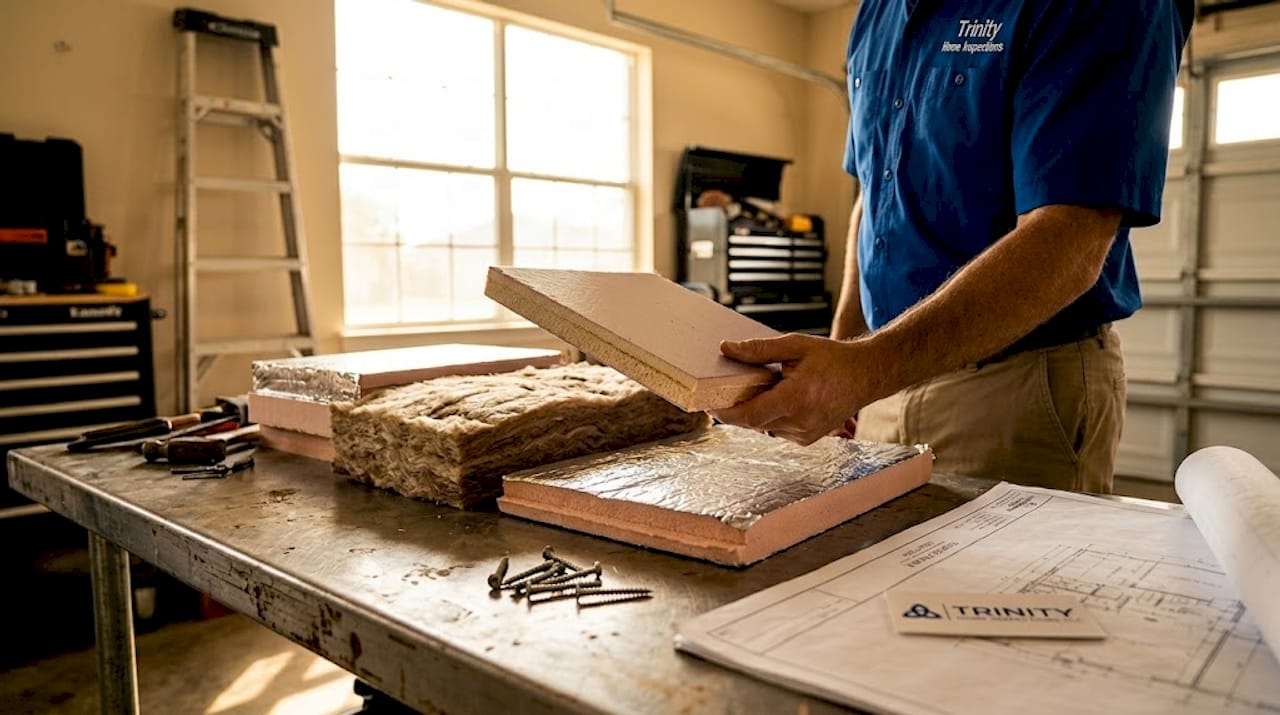
For hot, humid regions like ours, reducing heat gain and air leakage matters more than simply stacking up R-value. A door with R-8 foam and tight weatherstripping will outperform a door with R-13 batts and gaps along the bottom seal. Here is how the main garage door insulation options compare:
Insulation type | R-value per inch | Approximate cost | Gulf Coast suitability |
Polystyrene (EPS) rigid foam | R-3.8 to R-4 | Low ($) | Good, lightweight, easy to cut |
Polyisocyanurate (polyiso) rigid foam | R-6 to R-6.5 | Moderate ($$) | Excellent, best R-value per inch |
Fiberglass batt (door kit) | R-8 (kit) | Moderate ($$) | Good, but can absorb moisture |
Reflective foil barrier alone | R-1 to R-2 | Low ($) | Poor without an air gap |
A few things worth knowing before you buy:
Rigid foam panels (EPS or polyiso) are the most popular choice for DIY garage door insulation because they are lightweight, moisture resistant, and easy to cut with a utility knife. Polyiso gives you the most thermal resistance per inch, which matters when your door panels are shallow.
Fiberglass batt kits work well but can absorb humidity over time if the door is not well sealed. If you go this route, make sure your weatherstripping is solid before installation.
Reflective foil barriers are widely marketed as a simple solution, but they only work when there is an air gap between the foil and the surface. Pressed directly against a door panel with no gap, real-world performance drops significantly.
For weatherstripping, choose a material rated for both UV exposure and high heat. Standard foam tape degrades quickly in Alabama summers. Vinyl bulb or rubber compression weatherstripping lasts much longer and seals more reliably along the bottom and side jambs. Good garage ventilation works alongside your insulation to manage humidity, so consider both together.
Pro Tip: If you have a metal door, polyiso rigid foam is your best bet. It bonds well with adhesive, cuts cleanly, and handles heat without off-gassing or warping the way some cheaper foams can.
How to insulate your garage door: Step-by-step
Now let’s walk through exactly how to insulate your garage door for better efficiency and comfort.
This process works for most standard steel panel doors using either a pre-cut foam kit or rigid foam boards you cut yourself. DIY garage door insulation typically involves fitting foam or fiberglass inserts into each panel cavity and securing them with clips, tape, or retention caps.
Seal air gaps first. Before touching the insulation, apply weatherstripping to the door bottom and jambs. Clean each surface with a dry cloth, then press the weatherstripping firmly into place. For stationary gaps around the frame, use paintable caulk. This step alone can make a noticeable difference in comfort.
Measure each panel cavity. Garage door panels are rarely uniform. Measure the width and height of each individual cavity, not just one and assume they are all the same. Write the measurements down before cutting.
Cut your insulation panels. Use a straight edge and utility knife to score and snap rigid foam. For fiberglass batts, use scissors or a utility knife. Cut each piece about a half inch wider than the cavity so it fits snugly without gaps.
Install retainer clips. Most door kits include plastic retention clips that snap into the door’s face. Space them evenly across each panel, typically two to four clips per panel depending on width. These hold the insulation in without adhesive damage to the door.
Press insulation into place. Slide each cut panel into the cavity and press it behind the retainer clips. The fit should be firm but not so tight that it bows the door. For panels without clips, use double-sided foam tape or a compatible adhesive.
Check door operation. Once all panels are installed, manually lift the door to the halfway point and release it. It should hold its position. If it falls or rises on its own, the added weight has shifted the balance and you need a professional to adjust the spring tension.
Safety reminder: Garage door springs handle hundreds of pounds of tension. If your door’s balance changes after insulation, do not attempt to adjust the springs yourself. A properly functioning door is a safety issue, not just a convenience one. Call a qualified technician.
Pro Tip: Work from the bottom panels up. If you make a cutting error on a lower panel, it is easier to correct before you have committed to the upper sections.
Troubleshooting and mistakes to avoid
Even with the best materials and process, mistakes can undermine your results. Here’s how to recognize and fix them.
Common problems and quick fixes:
Condensation forming on the inside of the door: This usually means warm, humid air is still getting in around the edges. Recheck your weatherstripping at the bottom and jambs, and look for gaps at the top seal.
Insulation panels falling out: Retainer clips were not seated properly, or the foam was cut too small. Remove the panel, add clips, and recut to a snug fit.
Door not closing flush at the bottom: The new bottom weatherstrip may be too thick. Trim it slightly or choose a lower-profile seal designed for your door type.
Door feels heavier or opener struggles: The added insulation weight exceeded what your opener and springs were balanced for. Have a technician check spring tension.
Increased humidity inside the garage: Insulation without ventilation can trap moisture. Review your garage ceiling insulation situation and consider adding a vent or exhaust fan.
The truth about thin reflective wraps: Many budget products promise big results, but real-world performance of thin foil materials placed directly against a door surface falls well short of the label claims. Without an air gap, the reflective surface has nothing to reflect. Use purpose-built foam insert systems or follow the product’s stated installation requirements exactly.
Pro Tip: At the start of each summer and winter, spend five minutes checking your weatherstripping for cracks, compression loss, or gaps. Replacing a worn bottom seal costs under $20 and can recover much of the efficiency you gained from the original installation.
What results to expect: Energy, comfort, and value improvements
With your project complete, here’s what you can anticipate in terms of comfort, bill savings, and home value boosts.
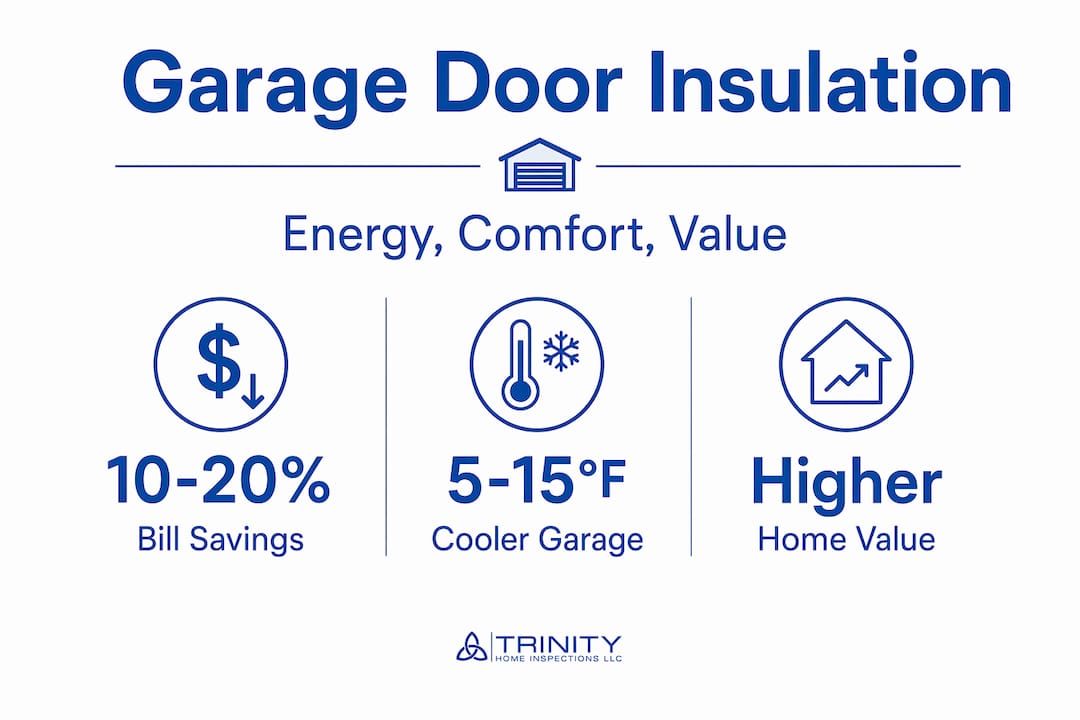
The impact of insulating your garage door depends largely on how your garage connects to your home. R-value recommendations vary based on whether the garage is attached or detached, conditioned or unconditioned, and whether there is living space above it. Here is a realistic look at what to expect:
Garage type | Recommended door R-value | Estimated comfort gain | Potential energy impact |
Detached, no living space above | R-6 or higher | Moderate | Lower for whole-house bills |
Attached, no living space above | R-8 to R-12 | High | Noticeable reduction in HVAC load |
Attached, living space above | R-12 to R-18 | Very high | Meaningful savings on cooling costs |
In Gulf Coast Alabama, where air conditioning runs for eight or more months of the year, reducing heat gain through an attached garage door directly reduces the load on your HVAC system. The garage acts as a thermal buffer between the outdoors and your conditioned living space. A well-insulated and air-sealed door can drop garage temperatures by 10 to 20 degrees on a hot summer day, which is a meaningful change when outdoor temps hit 95°F and above.
The financial return is real, though modest on its own. A DIY foam kit typically costs $50 to $150. Combined with whole-home air sealing and energy-smart roofing choices, these upgrades compound into a measurably more efficient home. Buyers notice, too. An energy-conscious home with documented upgrades carries more appeal in today’s market.
Stat to know: The U.S. Department of Energy estimates that air sealing and insulation together can reduce home energy costs by up to 15%. Your garage door is one piece of that picture.
The expert’s take: What most guides miss about garage door insulation
Here is where most online guides stop short. They walk you through the steps, list the materials, and send you on your way. But there are real-world nuances that matter specifically on the Gulf Coast, and they are worth saying plainly.
Air sealing beats R-value in humid climates. A door with R-12 foam and no weatherstripping will underperform a door with R-6 foam and a tight, well-maintained seal. In Mobile or Baldwin County, the air itself carries moisture. Every gap is an invitation for that humid air to enter, condense, and cause problems. Prioritizing air sealing is not optional here. It is the foundation.
Insulation does not fix a moisture problem. It can hide one. If your garage already has signs of water intrusion, staining on the floor, or mold on the walls, adding insulation to the door without addressing those issues first can trap moisture and make things worse. We see this regularly during inspections. The insulation looks fine on the surface, but behind it, conditions are worsening.
Ignoring door balance is a safety issue, not just a mechanical one. A door that is out of balance puts stress on the opener motor, wears out hardware faster, and in a worst case, can fall. If your door did not pass the halfway-lift test after installation, that is not something to put off.
The myth that “any insulation helps” is mostly true, but with a catch. Poorly installed insulation that traps moisture, throws off door balance, or blocks ventilation can create new problems while solving old ones. Do the job correctly or consult someone who can.
Get help or go further with professional inspections
Whether you want confirmation your efforts hit the mark or need a pro for peace of mind, here are services built for Gulf Coast homeowners.
Sometimes a DIY project uncovers more than you bargained for. A garage with moisture staining, soft drywall near the door frame, or an unusual smell behind the panels may have a bigger issue underneath. That is where a professional inspection adds real value.
[

At Trinity Home Inspections, we use thermal imaging (included free with every inspection) to identify insulation gaps, hidden moisture, and air leakage that you cannot see with the naked eye. If your garage project raised questions about mold, moisture, or structural concerns, our mold inspection services and Mobile area mold testing can give you clear answers fast. We also help homeowners verify permits and records for any work done on their property. Call us at 251-210-7376 or visit TrinityInspectionsLLC.com to schedule.
Frequently asked questions
How much will I realistically save on energy bills by insulating my garage door?
Savings depend on your garage type, but attached garages with proper insulation and air sealing can meaningfully reduce HVAC load, especially when living space sits above the garage.
What’s the best insulation type for humid climates like Alabama?
Moisture-resistant rigid foam panels, particularly polyiso, paired with quality weatherstripping are the most reliable choice for hot, humid regions like the Gulf Coast.
What safety concerns should I watch for when insulating my garage door?
Insulation adds weight and can affect door balance. After installation, test the door at the halfway point and consult a professional if it does not hold position.
Does insulating my garage door help with moisture control?
It reduces heat-driven moisture movement, but insulation alone is not enough. Good air sealing and ventilation must work alongside it to prevent condensation and mold.
Recommended

