
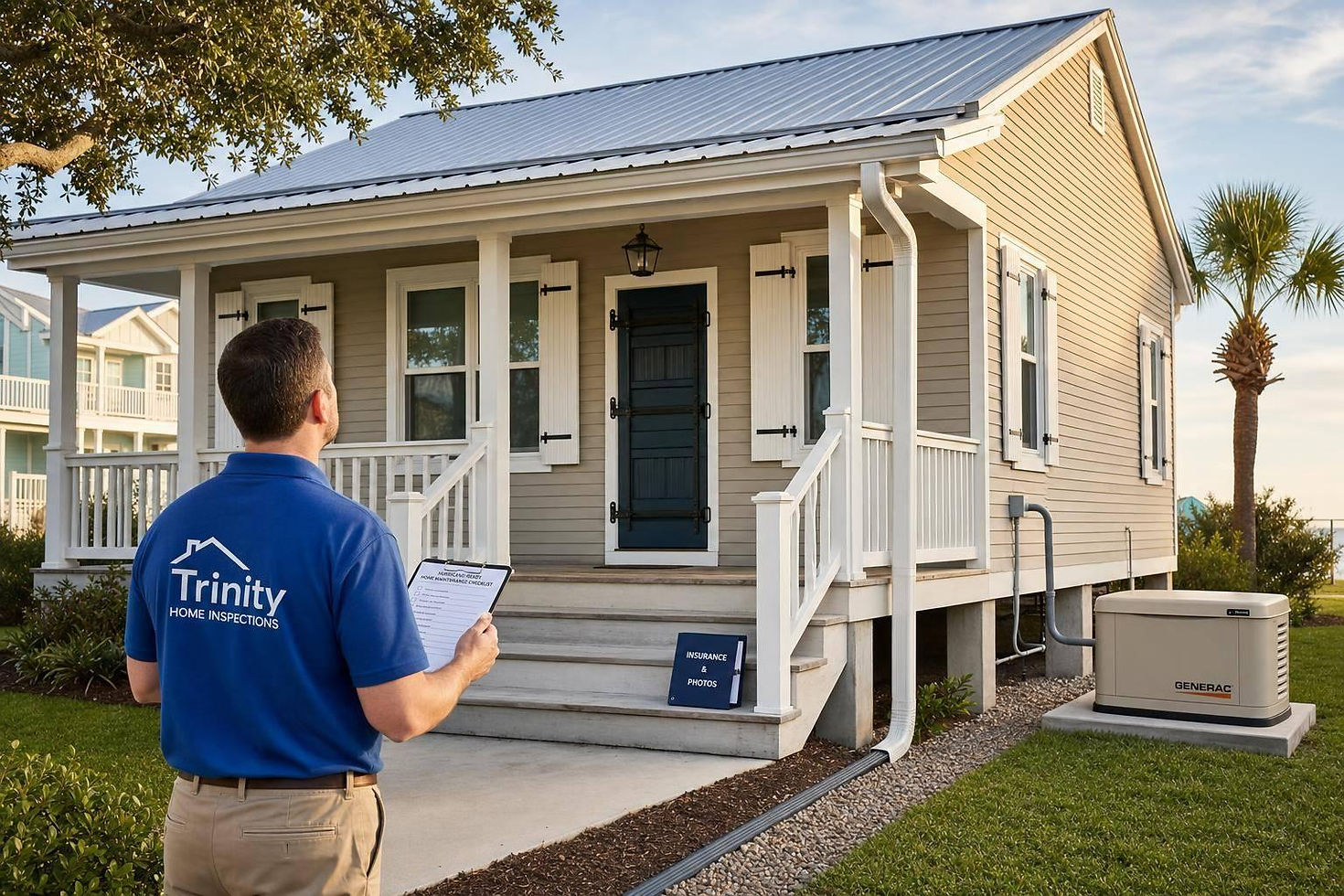
Hurricane-Ready Home Maintenance: A Year-Round Checklist for Gulf Coast Alabama Homeowners

If you wait until a storm is named, you may already be late. On Alabama’s Gulf Coast, many home repair jobs need 4 to 8 weeks of lead time, and flood insurance often takes 30 days to start.
I’d boil the article down to this: check your home before June 1, keep up with seasonal maintenance, and document your home with dated photos and inspection records. The main trouble spots are the roof, attic, drainage, windows, doors, garage door, generator, and sump pump.
Here’s the short version:
Spring: trim limbs, check roof parts, test pumps and backup power, and get shutters or 5/8-inch plywood ready
Summer: monitor for new gaps, re-caulk openings, brace the garage door, and secure yard items before a storm
Fall/Winter: photograph damage within 48 hours, dry wet areas, and fix worn seals, flashing, gutters, and siding
All year: keep water moving away from the house, hold indoor humidity at 30% to 50%, and store insurance records in a safe place
A few numbers stand out: keep a 7-day water supply, store 10 to 20 gallons of treated generator fuel, and trim tree limbs at least 10 feet from the roofline.
If I owned a home in Mobile or Baldwin County, I’d treat this as a simple routine, not a one-time project. Check early, fix small issues fast, and keep records before peak season arrives.
Hurricane Preparedness: Protecting Your Home and Family with Matt Brading & Lily Jang
sbb-itb-3aaca89
Annual Hurricane Readiness Baseline Checklist
This baseline covers the checks Gulf Coast Alabama homeowners should do once a year, before storm season begins. Think of it as the starting point that sets up the rest of your seasonal prep.
Roof, Attic, and Exterior Openings
Inspect shingles, flashing around chimneys, vents, and skylights, along with soffits and fascia, for soft spots or gaps. Check the attic for leaks or moisture.
Then move to the places where water and wind often sneak in. At doors and windows, inspect seals for gaps in caulking or weatherstripping. Verify the garage door is wind-rated and braced.
Drainage, Grading, and Moisture Control
Clean gutters and downspouts, then make sure they carry water away from the foundation. If water pools near the house after rain, regrade the yard or add a French drain.
Do not assume inland south Alabama homes are safe from flooding; tropical systems can push water far inland. A moisture meter can help you spot hidden dampness in walls, window frames, and areas around exterior doors.
Once water is moving away from the house, test the systems that help keep it that way during storms.
Power, Pumps, and Storm Supplies
Test your generator under load once a year and keep 10–20 gallons of treated fuel ready before storm season. Run generators outdoors, far from doors and windows; carbon monoxide can be fatal.
Test the sump pump before rainy season to confirm it turns on and discharges as it should.
Keep these storm supplies on hand:
Storm shutters or plywood panels
A 7-day water supply
A battery-powered NOAA weather radio
Power banks
Small bills for storm-day cash needs
Insurance documents in a waterproof container or cloud backup
After the baseline is complete, use the seasonal checklist below to stay ahead of storm-season wear.
Season-by-Season Maintenance Checklist
Use this seasonal checklist to stay ahead of hurricane damage. Start with your yearly baseline, then move through these seasonal jobs as storm risk shifts.
Spring (March Through May): Get Ready Before Storm Season
Spring is the main prep window. If you need flood coverage, buy it well before June 1. NFIP policies take 30 days to become effective.
Walk the yard and trim branches back from the roof. Remove any dead or weak limbs. Check hurricane straps or clips in the attic, and swap out any corroded or missing hardware.
If you plan to use plywood for window protection, pre-cut 5/8-inch panels and pre-drill the mounting hardware now. That way, you can put them up fast if a storm is on the way.
Retest the sump pump battery backup before spring storms hit.
Summer (June Through August): Check and Reinforce During Peak Season
Once storm season starts, shift from prep to monitoring. Take dated photos or video of the inside and outside of your home before peak season.
Re-caulk windows and doors. Check soffits, siding, and roof edges for any new gaps.
Test or install garage-door bracing before the first storm threat.
Bring in or secure outdoor furniture, grills, and planters when a named storm is forecast.
Once peak season passes, move from monitoring to repairs and off-season prep.
Fall And Winter (September Through February): Repair Damage And Fix Weak Points
Mid-August through mid-October is the highest-risk stretch for Alabama, so early fall is the time to check for damage and keep records in order. Within 48 hours of any storm, photograph all damage before making repairs. Then start drying any water intrusion with dehumidifiers.
Use the quieter months to repair loose flashing, clear gutters, service the generator, and replace storm-damaged siding.
Use January and February to replace worn caulk, weatherstripping, and damaged hardware.
Quick Mini Checklists By Home System
Use these mini checklists for fast pre-storm checks between seasonal maintenance rounds.
Roof and Attic Mini Checklist
Roof trouble can turn into leaks in a hurry when hurricane winds hit.
[ ] No missing, cracked, curled, or lifted shingles, especially along roof edges
[ ] Flashing is sealed at pipe boots, chimneys, skylights, and wall-to-roof joints
[ ] No water stains on rafters, sheathing, or insulation batts
[ ] No daylight coming through the attic roof deck
[ ] Hurricane straps or clips are installed and fastened tight
Exterior, Openings, and Yard Mini Checklist
This checklist covers the spots beyond the roofline where wind-driven rain can get in, or loose items can turn into debris.
[ ] Tree limbs are trimmed at least 10 feet back from the roofline
[ ] Detached sheds and fences are anchored or braced
[ ] Storm shutters or pre-cut, labeled 5/8-inch plywood panels are ready to install
[ ] Window and door seals, weatherstripping, and door sweeps are intact - no gaps or peeling
[ ] Door hinges and locks move freely and show no corrosion
[ ] Garage door is wind-rated or has a bracing kit
[ ] Outdoor items are secured or stored before a named storm
Mechanical, Electrical, and Moisture Mini Checklist
On the Gulf Coast, power outages and water getting inside often show up together. This checklist helps you get in front of both.
[ ] Sump pump runs, and the battery backup holds a charge
[ ] Generator starts and runs for 15–20 minutes; oil and fuel are checked monthly
[ ] Generator fuel is stabilized, and the unit is fully cooled before refueling
[ ] Carbon monoxide detectors have fresh batteries
[ ] Exterior GFCI outlets are tested, and covers are intact
[ ] Indoor humidity stays between 30% and 50%
[ ] Rinse exterior metal and HVAC coils with fresh water every few weeks to slow salt corrosion
"The one rule that matters most: generators run outside. At least 20 feet from any window, door, or vent, with the exhaust pointed away from the house." - Katie Ragland, Associate Broker
Conclusion: Start the Checklist Early and Get Hidden Risks Inspected
Hurricane readiness on the Alabama Gulf Coast is not a last-minute job. It’s year-round upkeep. These checklists focus on the spots that tend to fail first: the roof, drainage, openings, garage door, and moisture control. Once you’ve gone through the annual and seasonal checklists, bring in a professional inspection to catch issues a visual review can miss.
The best time to act is before storm season begins. Start in March or April. By late spring, repair schedules fill up fast, and most jobs need 4 to 8 weeks of lead time before June 1.
If your checklist shows signs of hidden moisture, roof wear, or insulation gaps, have those areas inspected before peak season. Based in Daphne, Alabama, Trinity Home Inspections serves Baldwin, Mobile, and nearby Gulf Coast counties with thermal imaging, drone roof inspections, and annual maintenance inspections that give you a dated, documented baseline before storm season starts.
A dated pre-storm record can help separate new storm damage from pre-existing damage. If you haven’t had a professional inspection this year, schedule one now.
FAQs
What should I fix first if I’m short on time before storm season?
If you’re short on time before hurricane season, start with your roof and building envelope. Those two areas often decide whether a storm brings minor cleanup or major water damage.
Have a roofing pro inspect for loose or missing shingles, along with damaged flashing. Clean out gutters and downspouts so water can drain the way it should. It’s also smart to reinforce the garage door and get plywood or storm shutters ready for windows and doors.
How do I know if my home has hidden moisture problems?
Check your attic for water stains on rafters or daylight coming through the roof boards.
You should also watch for musty air, damp insulation, water lines in crawl spaces, popping tiles, or doors that start to rub.
For the most reliable answer, schedule a professional inspection. Trinity Home Inspections uses thermal imaging to spot hidden moisture, insulation gaps, and overheated components that may not be visible.
When should I schedule a professional hurricane-readiness inspection?
Schedule a professional hurricane-readiness inspection once a year, ideally before the Atlantic hurricane season begins on June 1.
March or April is the best time to get it on the calendar, and booking by mid-May gives you time to handle any repairs before peak storm activity in August and September. It also gives you a documented baseline of your home’s condition for insurance purposes.