
What Do I Need To Be A Home Inspector In Alabama

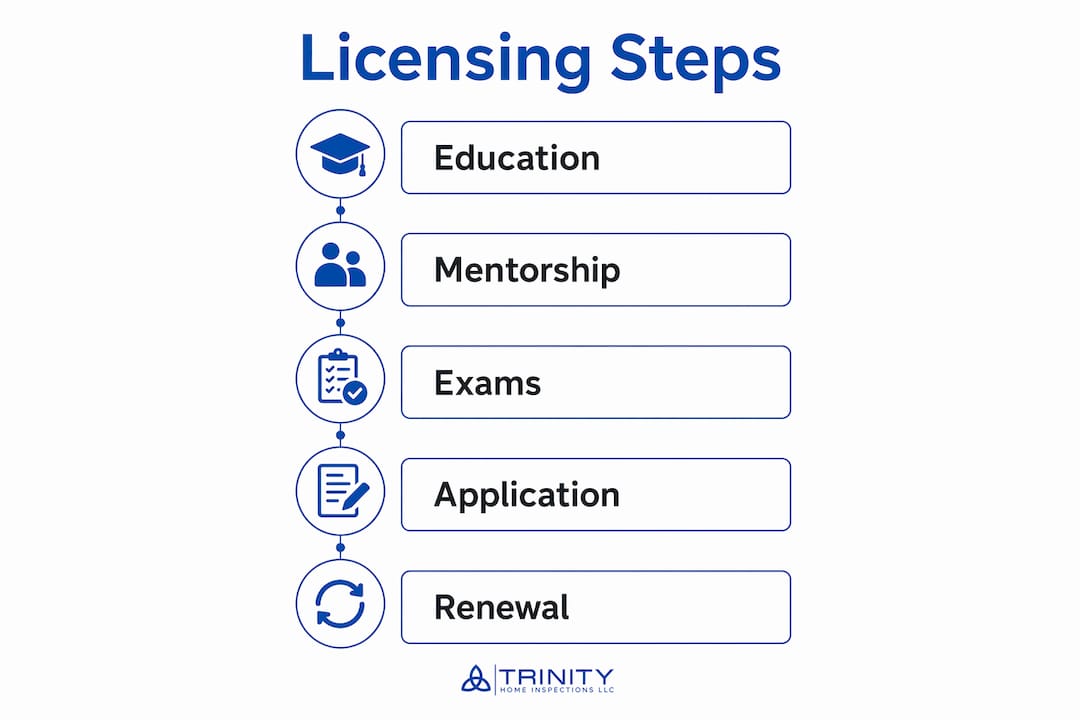
To become a licensed home inspector in Alabama, you need one qualifying membership or certification, a completed education and supervised inspection path, passing scores on two exams, 25 drafted reports with 10 mentor-reviewed, proof of insurance, and a completed application to the Alabama Building Commission Division of Construction Management (DCM).
Here is the full checklist:
Qualifying category: Active membership in InterNACHI or ASHI, or certification by HUD, ICC, or another DCM-approved body
Education + inspections (choose one path):
Path A: 120 hours of approved education plus 35 supervised inspections
Path B: 35 hours of approved education plus 100 supervised inspections
Reports: Draft 25 professional inspection reports; 10 must be reviewed and corrected by a licensed inspector with at least five years of licensure
Exams: Pass the National Home Inspectors Examination (NHIE) and the ASHI Standards & Ethics exam, both within 18 months before submitting your application
Insurance minimums (per Alabama DCM application): $20,000 property damage; $50,000 injury to one person; $100,000 injury to more than one person; $250,000 errors and omissions (E&O) coverage
WDO exclusion: Per Alabama Administrative Code Rule 80-10-9-.18, wood-destroying organism (termite) inspections are not part of a standard home inspection. Only a licensed structural pest-control permittee may issue an official WDO report.
Application: Submit the New Home Inspector Application, Participation Log, Supervising Inspector Verification form, Report Certification form, and ACORD insurance certificate to DCM
Important: Always confirm current forms and fees directly at dcm.alabama.gov before you apply, as requirements can be updated.
For Gulf Coast applicants specifically, the state minimums on insurance are a floor, not a ceiling. Coastal construction complexity and storm exposure make higher coverage a practical necessity, not just a professional courtesy.
How Long Does It Take and What Will It Cost?
Most applicants complete the licensing process in a timeframe ranging from several months up to about a year, depending on education path and securing supervised inspections.
Rough cost estimates to budget for:
Education: Path A (120 hours) typically runs $500–$1,500 through InterNACHI’s accredited programs or other DCM-approved providers; Path B (35 hours) costs less upfront but requires far more field time
Exams: The NHIE and ASHI Standards & Ethics exam each carry separate fees paid directly to the testing organizations; register for the ASHI exam through PearsonVue and the NHIE through PSI Exams
Insurance: Annual premiums vary by coverage level; Gulf Coast inspectors commonly carry well above state minimums given local risk profiles
Equipment: A basic toolkit (moisture meter, gas detector, CO detector, flashlight, ladder) can run $500–$1,500; adding thermal imaging capability increases that figure
Application fee: Paid to DCM at submission
The certification process for home inspectors in Alabama is genuinely achievable within a year if you stay organized and move through each step without long gaps between them.
How Do You Find a Qualified Mentor in Alabama?

The mentor requirement is where many applicants stall. You need someone licensed in Alabama for at least five years who will actually review and correct your reports, not just sign a form.
Start with InterNACHI’s inspector directory to find local members. ASHI’s member locator works the same way. Reach out directly, explain you are a new applicant, and ask whether they are open to supervising inspections and reviewing reports. Most experienced inspectors remember what it was like to start out.
Pro Tip: A mentor who gives you line-by-line feedback on report language will prepare you far better for real transactions than one who simply signs off. Ask upfront how they handle the review process.
When you find a willing mentor, get clarity on logistics: how many inspections per month, how they prefer to receive your draft reports, and their turnaround time for corrections. Document everything using DCM’s official Verification of Qualified Home Inspector Participant Supervision form from the start. See tips for choosing a home inspector for additional signals of a thorough, professional inspector worth learning from.
How Do You Apply to the Alabama Building Commission?
Gather every document before you touch the application form. Missing one item delays the whole submission.
Documents to assemble:
Completed New Home Inspector Application (download from dcm.alabama.gov)
Home Inspection Participation Log (all supervised inspections logged)
Verification of Qualified Home Inspector Participant Supervision form (signed by your mentor)
Home Inspection Report Certification Form (confirming 25 drafted reports, 10 reviewed)
NHIE and ASHI exam score reports (both within the 18-month window)
ACORD certificate of insurance meeting all DCM minimums
Proof of qualifying membership or certification (InterNACHI, ASHI, HUD/ICC, etc.)
Application fee (check or money order, or pay online)
Per Code of Alabama Title 34, Chapter 14B, the application must be accurate and complete. Incomplete submissions are returned, which resets your timeline. Mail everything together or use DCM’s online application portal when available.
What Does License Renewal Look Like in Alabama?
Alabama home inspector licenses require renewal, and the DCM sets the schedule and continuing education requirements. Renewal applicants submit the Renewal Home Inspector Application along with proof of continuing education hours completed during the license period and updated insurance documentation.
Staying current with InterNACHI or ASHI membership helps here. Both organizations offer ongoing education that satisfies state requirements, and their courses keep you current on updated standards of practice. Letting your membership lapse can affect your renewal eligibility, so treat annual education as part of running your business, not an afterthought.
See What a Professional Inspection Looks Like Up Close
Trinity Home Inspections serves Baldwin, Mobile, Escambia, Washington, Monroe, and Clarke counties across Alabama’s Gulf Coast. For buyers and sellers, Trinity delivers same-day reports packed with photos and video. For aspiring inspectors curious about the field, Trinity’s lead inspector Matt Cameron is open to conversations about the profession and what real-world inspections look like on the Gulf Coast.
[
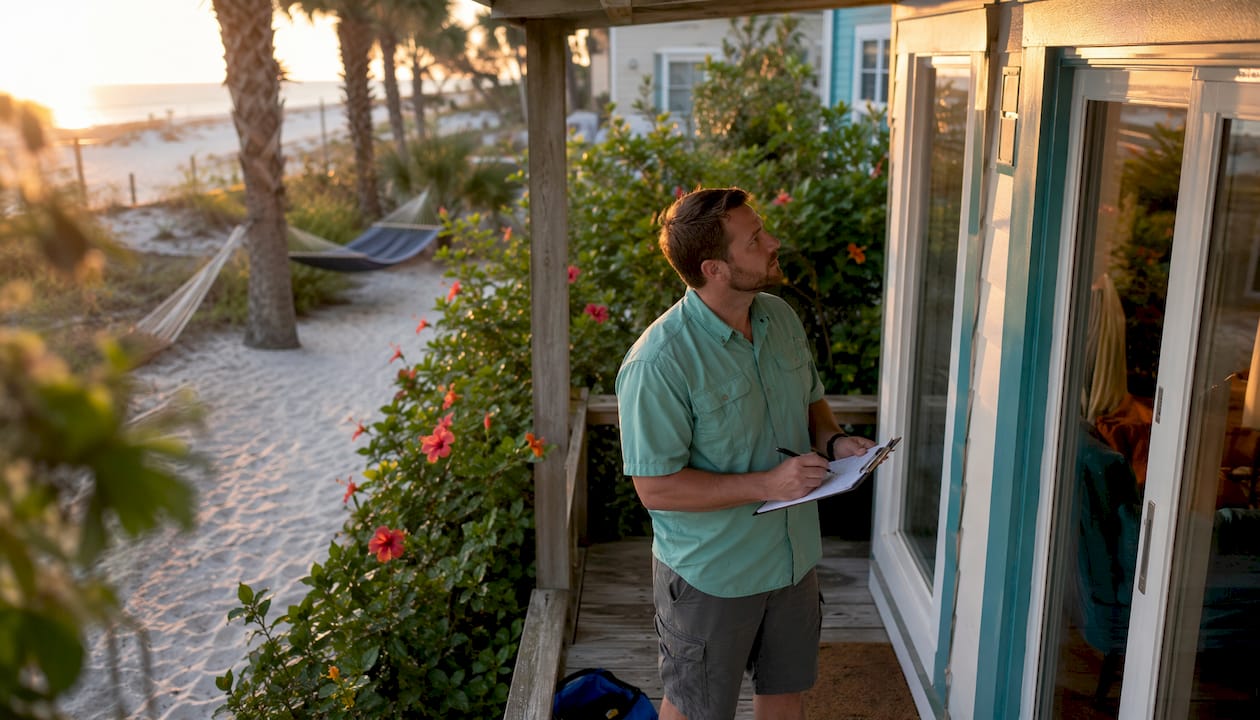
Alt text: Trinity Home Inspections inspector in khaki pants and blue shirt with white pocket logo conducting a home inspection in Alabama’s Gulf Coast region.
What’s included with every Trinity inspection:
Full home inspection per Alabama Standards of Practice
Free thermal imaging (included, not an add-on charge)
Same-day digital report with photos and video
Pre-listing inspection option for sellers
Mold testing and air quality sampling as add-ons
Sewer scope, pool/spa inspection, and drone roof documentation available
Post-inspection walkthrough by phone or in person
Trinity carries professional insurance coverage levels that are higher than Alabama’s state minimums, and holds InterNACHI certification recognized by the U.S. Department of Education. Trinity does not issue WDO/termite reports; those require a separately licensed pest-control permittee.
Ready to book or ask a question? Call 251-210-7376 or visit TrinityInspectionsLLC.com.
Key Takeaways
Alabama home inspector licensure requires completing one of two education paths — either 120 hours plus 35 inspections or 35 hours plus 100 inspections — passing two exams within 18 months, drafting 25 reports with 10 mentor-reviewed, meeting state insurance minimums, and filing a complete application with the DCM.
Point | Details |
Two education paths | 120 hours + 35 inspections, or 35 hours + 100 inspections; both require DCM-approved coursework. |
Dual exam requirement | Pass the NHIE and the ASHI Standards & Ethics exam within 18 months before applying. |
Mentor-reviewed reports | 10 of your 25 drafted reports must be corrected by an inspector licensed for at least five years. |
WDO inspections excluded | Termite/WDO reports are a separate regulated service; standard home inspectors cannot issue them in Alabama. |
Trinity Home Inspections | InterNACHI-certified, carrying $1M E&O and $2M general liability, serving the Gulf Coast with same-day reports. |
FAQ
What qualifications do I need to apply for an Alabama home inspector license?
You need active membership in an approved organization (such as InterNACHI or ASHI), completion of one of the two education and supervised inspection paths, passing scores on the NHIE and ASHI Standards & Ethics exam, 25 drafted reports with 10 reviewed by a qualified inspector, and proof of required insurance.
Is a termite inspection part of a standard home inspection in Alabama?
No. Per Alabama Administrative Code Rule 80-10-9-.18, only a licensed structural pest-control permittee may issue an official wood infestation report; a standard home inspection does not satisfy WDO reporting requirements for lenders or real estate transactions.
How long do both required exams stay valid for my application?
Both the NHIE and the ASHI Standards & Ethics exam must be passed within 18 months before you submit your application to the Alabama DCM.
How much insurance does Alabama require for home inspectors?
State minimums are $20,000 for property damage, $50,000 for injury to one person, $100,000 for injury to more than one person, and $250,000 in E&O coverage. Gulf Coast inspectors often carry significantly higher limits given coastal risk; Trinity Home Inspections carries $1M E&O and $2M general liability.
Is home inspection a good career in Alabama’s Gulf Coast region?
The Gulf Coast’s active real estate market, new construction activity, and high volume of buyer transactions create steady demand for licensed inspectors. Completing the Alabama licensing requirements positions you to serve a market where thorough, professional inspections are consistently in demand.
This article is general information about Alabama home inspector licensing requirements, not legal or professional advice. Confirm current rules, fees, and application forms directly with the Alabama Building Commission Division of Construction Management before you apply.
Meta description: What do you need to be a home inspector in Alabama? Full checklist: education paths, exams, reports, insurance, and WDO exclusion explained. Gulf Coast focused.
Recommended

