
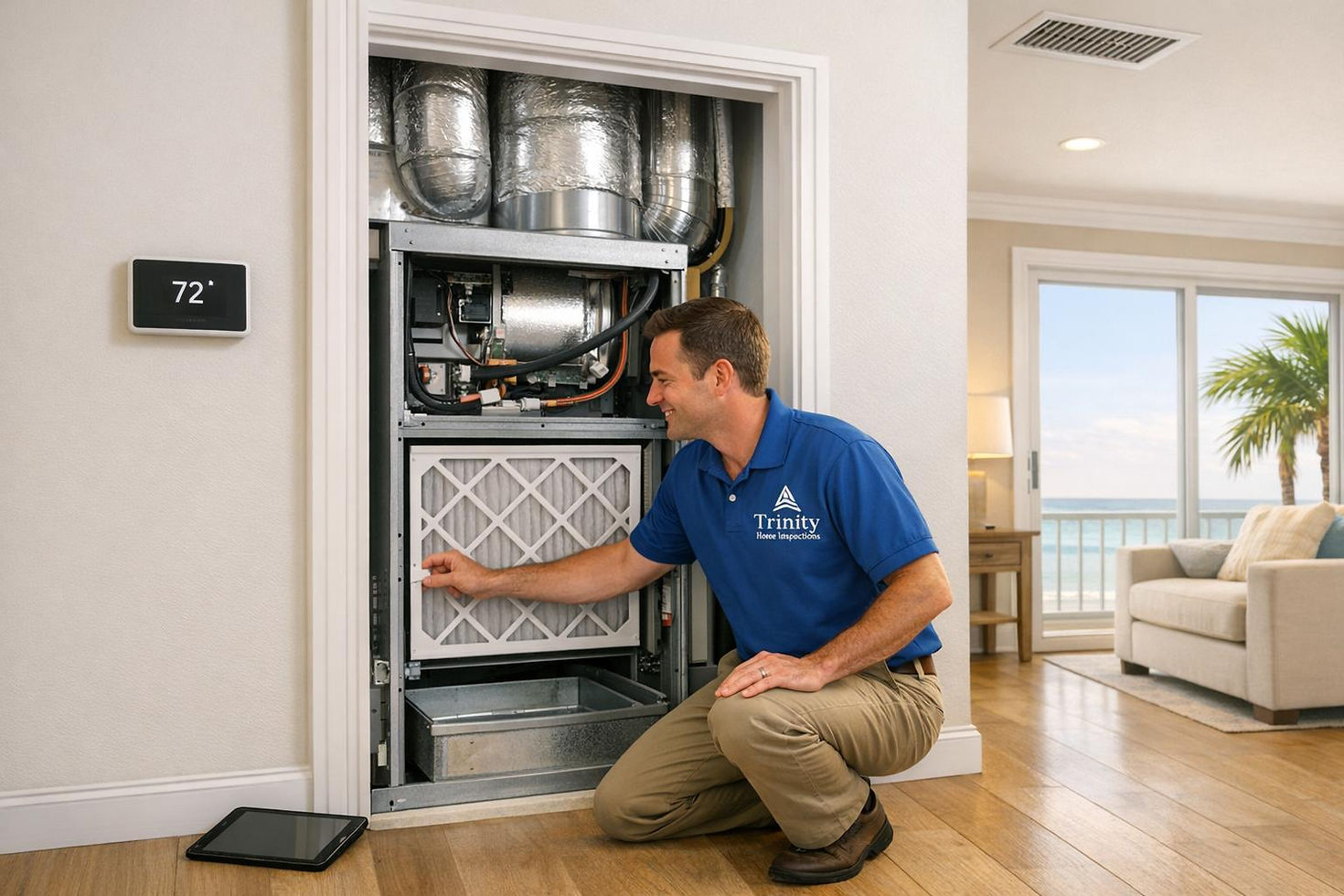
Why HVAC Inspections Matter for Short-Term Rentals

A broken HVAC system can ruin your rental property’s reputation and cost you thousands. Regular inspections help prevent breakdowns, protect your income, and ensure guest satisfaction, especially in humid coastal areas like Gulf Shores, Orange Beach, and Fairhope. Neglecting maintenance leads to issues like mold, water damage, and skyrocketing repair costs.
Here’s what you need to know:
Coastal Challenges: Salt air speeds up corrosion, and guest misuse strains systems.
Financial Impact: Emergency repairs can cost $150–$12,000, plus refunds and lost bookings.
Guest Comfort: HVAC failures lead to negative reviews and lower search rankings.
Preventive Maintenance: Routine inspections catch problems early, saving money.
Investing in regular HVAC checks keeps guests comfortable, protects your property, and avoids costly surprises.
HVAC Challenges Specific to Coastal Short-Term Rentals
How the Gulf Coast Climate Affects HVAC Systems
The Gulf Coast's unique climate, with its salt-filled air, high humidity, and intense heat, accelerates wear and tear on HVAC systems. As Trinity Home Inspections notes:
"Salt air and hurricane exposure accelerate wear on all four systems in Gulf Coast Alabama homes. Electrical connections corrode faster. HVAC coils degrade sooner." - Trinity Home Inspections
While typical HVAC systems are designed to last 15 to 20 years, coastal properties often face significant issues much earlier. Outdoor coil fins corrode more quickly, refrigerant lines develop leaks, and electrical connections deteriorate at a faster rate. Insurance providers in areas like Baldwin and Mobile counties are well aware of these challenges, often requiring proof of HVAC functionality before issuing or renewing policies.
How Guest Behavior Puts Strain on HVAC Systems
The behavior of guests can place additional stress on HVAC systems. Leaving sliding doors or windows open while the air conditioning is running allows warm, humid air to flow in, forcing the system to work overtime to maintain a comfortable indoor environment. High occupancy levels also contribute to increased body heat and humidity. Additionally, items like luggage or furniture can block vents, reducing airflow and causing the system to work harder. These guest-related factors add to the wear already caused by frequent turnover.
How High Turnover Adds to HVAC Wear
Frequent back-to-back bookings leave little to no downtime for HVAC systems to recover. Turnover days, in particular, introduce extra heat loads due to activities like cooking, laundry, and cleaning.
Postponing maintenance only worsens these issues. Problems such as dirty evaporator coils or clogged drain lines may go unnoticed between guest stays until they lead to a breakdown. For example, a clogged condensate drain can overflow, potentially causing water damage to ceilings or floors. What starts as a minor issue can quickly escalate into a costly repair if left unaddressed. Addressing these challenges with regular inspections is essential to avoid unexpected failures.
Preventative Airbnb Maintenance: Stop ignoring this or Pay later!!
What Happens When HVAC Systems Fail in Short-Term Rentals
Effects on Guest Comfort and Reviews
On the Gulf Coast, a malfunctioning AC unit can turn a rental into an unbearable space almost instantly. During the summer, indoor temperatures can soar above 85°F, while humidity levels often exceed 60–70%. These conditions not only make it difficult for guests to relax but also lead to a flood of negative reviews.
HVAC breakdowns are one of the quickest ways to earn 1–3 star ratings on platforms like Airbnb and Vrbo. Guests often leave comments like "no AC" or "too hot to sleep", and these reviews remain visible to anyone browsing your listing. Under Airbnb's Guest Refund Policy, an HVAC failure can qualify as a habitability issue, giving guests the right to request partial or full refunds - or even cancel their stay without penalty. Repeated complaints about HVAC issues can push your listing down in search rankings, forcing you to rely on discounts to attract bookings, even after repairs are made.
These problems aren’t just bad for your reputation - they can lead to serious financial setbacks.
Financial and Booking Losses
HVAC failures don’t just inconvenience guests; they come with hefty financial consequences. The costs can pile up quickly, starting with emergency repair fees, which range from $150–$650 (plus an additional $50–$200 for after-hours service). If major components need replacement, you might face bills exceeding $2,500, while a full system replacement can cost up to $12,000.
During peak rental seasons, delays in repairs can make matters worse. High demand often results in waits of 24–72 hours for service, leaving guests uncomfortable and leading to cancellations. In some cases, hosts may need to cover hotel accommodations for displaced guests - costing several hundred dollars per night, especially in high-demand areas like Gulf Shores or Orange Beach - alongside refunds for the disrupted stay.
This underscores the importance of regular HVAC inspections to avoid costly breakdowns and protect both your income and your property’s reputation.
Property Damage from Ignored HVAC Problems
An unresolved HVAC issue doesn’t just affect your guests - it can also cause lasting damage to your property. For example, a clogged condensate drain can overflow, soaking ceilings, drywall, and flooring beneath the air handler. Over time, this can lead to wood decay and damage to flooring. As Trinity Home Inspections explains:
"If the moisture source isn't corrected, it can contribute to ongoing damage like deteriorated drywall, wood decay, and flooring problems over time." - Trinity Home Inspections
In the naturally humid Gulf Coast environment, a non-functioning HVAC system can push indoor humidity levels above 60%, which is the point where mold and dust mites thrive, according to ASHRAE and EPA recommendations. If mold starts growing inside walls, ductwork, or behind furniture, the remediation costs can range from $1,500–$6,000+ - and may exceed $10,000 if walls or ceilings need to be opened and rebuilt. Addressing this type of damage often means taking the property offline for days or even weeks, resulting in significant revenue loss. Routine inspections are the best way to catch and resolve these issues before they escalate.
How Regular HVAC Inspections Catch Problems Early
The damage discussed earlier - like water-soaked ceilings, mold growth, and unexpected repair bills - doesn’t happen all at once. It’s the result of small issues that go unnoticed and worsen over time. Regular HVAC inspections can catch these problems early, preventing costly headaches. Let’s break down what these inspections involve and why they’re so important.
What Inspectors Check During an HVAC Inspection
HVAC inspections are thorough, covering much more than just checking if the system turns on. Inspectors examine components such as air filters, evaporator and condenser coils, refrigerant levels, blower components, condensate drain lines and pans, electrical connections, capacitors, and thermostat calibration. They also ensure the system can quickly reach and maintain the desired temperature - a critical factor in short-term rentals, where guests expect a comfortable environment upon arrival.
For properties on the Gulf Coast, inspectors pay extra attention to salt-air corrosion on coil fins and electrical connections, as the coastal environment accelerates wear and tear much faster than inland areas. Some inspections even use thermal imaging to uncover hidden issues, like moisture around the air handler or overheated wiring, which aren’t visible to the naked eye.
These detailed evaluations often reveal inefficiencies that could hinder system performance if left unresolved.
Why Routine Inspections Pay Off
Routine HVAC inspections don’t just catch problems - they help systems run better. According to the U.S. Department of Energy, replacing a dirty, clogged filter can reduce an air conditioner’s energy use by 5–15%. Dirty or corroded evaporator and condenser coils can cut efficiency by 30% or more, making the system work harder and wear out faster. Over time, this extra strain can damage expensive components like the compressor and blower motor.
Preventive maintenance also extends the lifespan of HVAC systems. While most systems last around 15–20 years, neglecting maintenance can shorten that timeline significantly. For rental property owners, this means fewer emergency repairs, steadier maintenance costs, and reliable cooling for back-to-back summer bookings.
Common HVAC Problems Found During Inspections
Most issues detected during inspections are minor maintenance concerns - but if ignored, they can snowball into serious problems.
HVAC Problem | Why It Matters | If Left Unaddressed |
Clogged air filter | Restricts airflow, overworking the system | Reduced cooling, higher energy bills, compressor strain |
Dirty or corroded coils | Reduces efficiency by up to 30% | System struggles to maintain desired temperature |
Blocked condensate drain | Causes water to back up into the drain pan | Overflow can lead to water damage and mold growth |
Loose electrical connections / failing capacitors | Common cause of sudden breakdowns during high demand | System failure mid-stay; costly emergency repairs |
Low refrigerant | Weakens cooling ability | Uneven temperatures, guest dissatisfaction, compressor damage |
As Trinity Home Inspections wisely notes:
"A system that sits right on the boundary is not a comfort; it is a liability waiting to surface at the worst possible moment." - Trinity Home Inspections
Addressing these issues early is far less expensive. For example, clearing a blocked drain costs much less than repairing water damage. Similarly, replacing a failing capacitor during a scheduled inspection typically costs $150–$300, while an emergency service call for the same issue could exceed $300 before even factoring in parts and labor. By staying proactive, rental owners not only protect their investment but also ensure guest satisfaction.
sbb-itb-3aaca89
Building an HVAC Inspection Schedule for Your Rental Property
Understanding what to inspect in your HVAC system is important, but sticking to a regular schedule is what truly helps prevent expensive breakdowns.
When to Schedule Professional HVAC Inspections
Having a consistent inspection schedule ensures your system stays in good shape, especially during peak rental seasons. For properties along the Gulf Coast, plan for professional HVAC inspections twice a year - once in early spring to prepare for the summer heat and again in the fall after heavy usage. Coastal climates bring unique challenges, so these regular checks are essential.
If your HVAC system is 15–20 years old or older, you may need to provide proof of its condition to keep your insurance coverage. A 4-point inspection, which evaluates HVAC, roof, electrical, and plumbing systems, typically costs between $100 and $250 in the Gulf Coast area.
Simple HVAC Checks to Do Between Guest Stays
While professional inspections are thorough, you can handle some straightforward tasks between guest stays. On turnover days, take a few minutes to:
Replace or check the air filter.
Confirm the thermostat is working properly.
Ensure vents are clear and unobstructed.
Be especially mindful of the condensate drain line. In areas like Baldwin and Mobile Counties, these lines can clog, leading to water damage. If the system seems to struggle with humidity or you notice water dripping near the air handler, address the issue immediately. Performing these routine checks can extend the life of your system and help avoid unexpected problems.
Keeping Records of HVAC Maintenance
Maintaining detailed records of your HVAC system's upkeep is invaluable. Not only do these logs help you stay on top of repairs, but they also provide critical documentation for insurance claims, warranty support, and even future property transactions.
Your records don’t have to be complicated but should cover the essentials. Keep track of inspection dates, findings, repairs, contractor details, and any parts replaced. Photos of key components, like the coil, drain pan, and data plate, can provide a helpful visual reference over time. Tracking the serial number and manufacture date of your unit also helps you plan for replacements, avoiding inconvenient breakdowns during busy rental periods.
Record Type | Details |
Inspection Reports | Dates, inspector names, photos, and findings |
Maintenance Logs | Filter changes, thermostat checks, and vent walkthroughs |
Repair Records | Invoices, contractor names, and parts replaced |
Permit History | Permit numbers for system replacements |
System Data | Serial number, model number, and manufacture date |
As Trinity Home Inspections puts it:
"Permit records and maintenance documentation make or break report results for buyers and sellers." - Trinity Home Inspections
Even if selling isn’t in your plans, keeping detailed records protects you. They’re not just handy for insurers or warranty claims - they can also make things easier for future property managers or repair technicians.
How Trinity Home Inspections Supports Gulf Coast Rental Owners
Inspection Services Built for Short-Term Rentals
Trinity Home Inspections specializes in inspections tailored to the unique needs of Airbnb and other short-term rental properties. These properties often face heavy wear and tear, especially in the Gulf Coast's challenging climate, where HVAC systems endure constant use and environmental stressors.
For property owners wanting regular oversight, Annual Maintenance Inspections offer a practical way to identify recurring issues before they turn into costly emergencies. Inspectors are trained to spot wear and tear specific to Gulf Coast conditions - details that might be missed in a standard inspection.
Clear Reports with Actionable Findings
One of the standout benefits for rental owners is the same-day report delivery. In fact, 99% of inspections result in reports being sent out on the same day. This quick turnaround is especially valuable for properties with tight guest turnover schedules, such as when a new guest checks in just 48 hours after the previous one.
The reports are organized into three categories: DIY/Minor, Issues/Defects, and Safety/Major. This structure allows owners, especially those managing multiple properties or living out of state, to quickly prioritize repairs. High-quality photos and videos accompany every report, along with clear, straightforward explanations of each issue, so there’s no confusion about what needs to be addressed.
"Know what's urgent, what can wait, and what to budget for." - Trinity Home Inspections
These detailed reports help rental owners stay ahead of maintenance needs, reducing the likelihood of unexpected emergencies. Trinity also provides add-on services that enhance property protection, offering even more peace of mind.
Additional Services for Coastal Properties
Trinity goes beyond standard inspections by offering specialized add-ons designed for Gulf Coast rental properties. One major perk? Thermal imaging is included at no additional cost with every inspection.
For homes where humidity control is a challenge, certified mold swab testing and indoor air quality (IAQ) sampling deliver lab-backed results. As Trinity explains:
"HVAC systems that struggle to control humidity can create the right conditions for microbial growth-like staining to show up." - Trinity Home Inspections
These services complement routine inspections, ensuring both guest comfort and property condition are maintained. For properties with roof-mounted HVAC units or areas that are hard to access, drone inspections - conducted by an FAA-certified pilot - provide a safe and thorough way to check for storm or wind damage.
Add-On Service | Why It Matters for Rentals |
Thermal Imaging | Identifies hidden HVAC electrical issues and moisture problems before they escalate |
Mold Swab Testing | Confirms whether humidity issues have led to microbial growth |
IAQ Sampling | Ensures air quality meets standards for guest health, especially in older homes |
Drone Inspection | Safely assesses roof-mounted HVAC systems and potential storm damage |
These additional options, paired with Trinity’s detailed inspections, provide rental owners with the tools they need to protect their investments and ensure a comfortable stay for guests.
Conclusion: Keep Guests Comfortable and Protect Your Investment with HVAC Inspections
Gulf Coast rental properties face unique challenges like salt-laden air, relentless humidity, and heavy AC usage - all of which can take a toll on HVAC systems. In Baldwin and Mobile counties, homes older than 20 years often require insurers to have documented proof that the HVAC system is still in good working order.
Routine inspections can help prevent costly repairs and disruptions. The process is straightforward and reasonably priced, with a full home inspection, including a detailed HVAC assessment, typically costing between $350 and $500 in Alabama. This is a small price compared to the expense of emergency replacements or the loss of income from canceled bookings during the busy season. Maintaining inspection records not only protects your finances but also provides proof of proper system maintenance for insurers and potential buyers. These proactive steps ensure guest comfort, safeguard your property from issues like moisture and mold, and help maintain consistent rental income.
While skipping inspections might seem like a way to save money, it opens the door to costly problems - like a compressor breaking down during a peak summer weekend in Gulf Shores.
For those managing short-term rentals along the Alabama Gulf Coast, Trinity Home Inspections specializes in vacation rental property inspections designed for the unique demands of coastal, high-turnover homes. From thermal imaging to mold testing, their expertise helps you address potential problems before they turn into expensive emergencies.
FAQs
How can I tell if my rental’s HVAC system is about to fail?
Look out for red flags such as ineffective humidity control, unexpected performance issues, or persistent condensation. Professional inspections can reveal hidden problems by utilizing advanced tools like thermal imaging to spot overheating or irregular temperature patterns. Additionally, keeping track of your system's age is crucial, as every unit has a defined lifespan. Trinity Home Inspections provides expert assessments to help pinpoint potential issues early, saving you from expensive repairs down the line.
What should I ask for in an HVAC inspection report?
When reviewing an HVAC inspection report, make sure it provides a thorough assessment of the system’s functionality, safety, and overall condition. A well-documented, photo-rich report is especially helpful, as it can visually highlight potential concerns, such as drainage or condensation issues, which might otherwise go unnoticed.
The report should clearly categorize findings, separating urgent repairs from less critical maintenance tasks. This prioritization helps you address immediate problems while planning for future upkeep. Advanced tools like thermal imaging can also be invaluable, as they reveal hidden issues that might compromise the system's performance. These steps are crucial for protecting your investment and ensuring guests enjoy a comfortable environment.
What can I do between guest stays to reduce HVAC problems?
Between guest stays, take some time to perform basic HVAC maintenance to help prevent system strain and moisture-related problems. Look out for issues like condensation buildup or clogged drains, as these are frequent trouble areas. Regularly monitor the system's performance and overall condition to extend its lifespan. If you encounter persistent humidity or suspect hidden problems that could impact guest comfort, consider reaching out to Trinity Home Inspections. They offer professional maintenance inspections and indoor air quality testing to detect and address potential risks before they escalate.

