
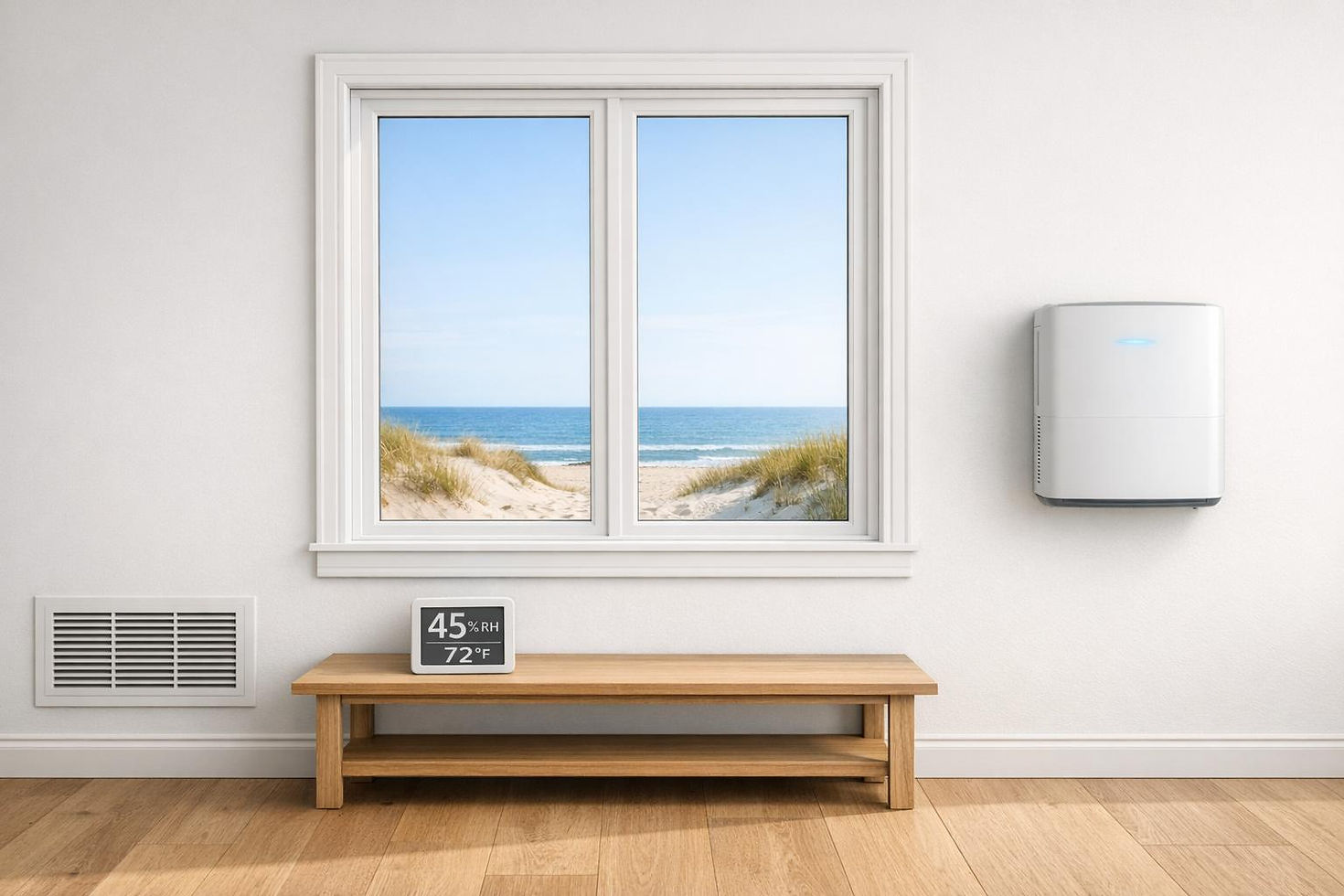
Humidity Control Tips for Coastal Homes

Living in a coastal home has its perks, but managing humidity is a year-round challenge that can impact your comfort, health, and property. High humidity leads to mold growth, structural damage, and higher energy bills. Here's what you need to know to keep it under control:
Target Humidity Levels: Keep indoor humidity between 40%-50%. Over 60% encourages mold growth.
Monitor Humidity: Use digital hygrometers or smart thermostats to track levels. Place monitors in crawlspaces, attics, and near windows or vents.
Maintain HVAC Systems: Replace filters, clean condensate drains, and schedule annual inspections to ensure effective moisture removal.
Seal Air Leaks: Use caulk, weatherstripping, and insulation to block humid air from entering through gaps in windows, doors, and crawlspaces.
Use Dehumidifiers: For persistent humidity, consider a whole-home or portable dehumidifier to supplement your HVAC system.
Reduce Indoor Moisture: Run exhaust fans in kitchens and bathrooms, avoid air-drying laundry indoors, and fix leaks promptly.
Inspect for Damage: Look for signs of water intrusion, like musty odors, discoloration, or efflorescence, and address them quickly.
Humidity control is vital to protect your home and health. Regular maintenance and monitoring can prevent costly repairs and ensure a comfortable living environment. For persistent issues, professional inspections using tools like thermal imaging and air quality testing can identify hidden problems.
How to Control Humidity in Your Beach Home
sbb-itb-3aaca89
Monitoring and Maintaining Indoor Humidity Levels
Understanding your home's humidity levels is the key to managing them effectively. Without accurate data, controlling moisture becomes a guessing game.
How to Measure Humidity in Your Home
A digital hygrometer is a simple and affordable tool for tracking indoor humidity and temperature in real time. You can find reliable models for under $20. Many modern smart thermostats also come equipped with built-in humidity sensors, allowing you to monitor levels remotely through an app.
For more advanced assessments, professionals often rely on tools like thermal imaging and moisture meters. These methods uncover hidden issues that may not be visible to the naked eye. As Trinity Home Inspections explains:
"Thermal imaging, also known as infrared scanning, adds a valuable layer to a home inspection by revealing patterns you can't see with the naked eye."
Moisture meters, on the other hand, are particularly useful for distinguishing between active moisture problems and older, dried damage. This distinction is crucial before starting any repairs.
Target Humidity Levels for Coastal Homes
For a comfortable and healthy indoor environment, aim to keep humidity between 40% and 50%. Staying in this range helps prevent mold growth while maintaining comfort. When humidity rises above 60%, mold spores are more likely to thrive. Warning signs of excessive humidity include persistent window condensation and musty odors. If you notice these, it’s time to act. Ensuring your HVAC system is effectively managing humidity is the next step.
Where to Place Humidity Monitors
Strategic placement of humidity monitors is essential for a complete understanding of moisture levels throughout your home. A single monitor in the living room won’t tell the whole story. Pay extra attention to crawlspaces and attics, especially in coastal areas:
"In Baldwin County AL, crawlspaces and attics are especially important due to humidity, ventilation issues, and moisture risk."
Other key locations include areas near windows, exterior doors (especially those facing the Gulf), bathrooms, and HVAC supply and return vents. Monitoring these spots ensures your HVAC system is effectively controlling moisture. If high humidity persists even when the system is running, it may indicate your HVAC needs attention. Regular monitoring helps guide both immediate fixes and long-term maintenance plans.
Keeping Your HVAC System Working Against Humidity
Your air conditioner doesn’t just cool - it also removes moisture from the air. In coastal areas like Baldwin County, where humidity is a constant challenge, this dehumidification function is just as important as temperature control. If your HVAC system isn’t running efficiently, humidity can quickly build up, leading to more than just discomfort.
Routine HVAC Maintenance Tasks
Taking care of your HVAC system is the easiest way to ensure it stays effective at controlling moisture. Here are a few key tasks to keep in mind:
Replace air filters regularly: Swap them out every 1–3 months to maintain airflow and prevent moisture issues like mold growth.
Clean the condensate drain annually: This prevents clogs and water backups that can lead to bigger problems.
Inspect for salt air corrosion: Coastal climates can be tough on exterior components, so regular checks are important.
Schedule annual maintenance inspections: A professional tune-up can catch potential issues before they become costly repairs.
By staying consistent with these steps, you’ll help your system stay in top shape for both cooling and dehumidifying.
Warning Signs Your HVAC Is Inefficient at Moisture Removal
Does your room feel cool but clammy? That’s a telltale sign your HVAC system isn’t effectively removing moisture. Short cooling cycles often leave too much humidity in the air, which can lead to damp conditions. Other warning signs include:
Dark stains or discoloration around vents
Persistent musty odors
As Trinity Home Inspections points out:
"HVAC systems that struggle to control humidity can all create the right conditions for microbial growth-like staining to show up."
Another red flag? If someone in your household notices respiratory symptoms or allergies improve when they’re away from home but worsen upon returning, it could indicate elevated mold spores or poor air quality caused by excess moisture. If these issues persist despite regular maintenance, it might be time to explore additional options.
When to Add a Dedicated Dehumidifier
For older or larger homes - especially those with crawlspaces or limited attic ventilation - a dedicated dehumidifier can make all the difference. If your HVAC system upgrades aren’t keeping humidity in check, this could be the solution you need.
A whole-home dehumidifier integrates directly with your HVAC system, targeting moisture without overcooling your space. Portable units can also work well for specific problem areas like basements or bedrooms that tend to stay humid.
The big advantage of a dedicated dehumidifier? It operates independently of your AC’s cooling cycle. During mild weather, when your AC runs less frequently, humidity can still creep above 60%. A supplemental dehumidifier helps manage moisture levels, protecting your home’s structure, improving air quality, and keeping you comfortable year-round.
Sealing Your Home Against Moisture Intrusion
Even the best HVAC system can't fully protect your home if outside air is sneaking in through cracks and gaps. When humid coastal air seeps into your home, it undermines your defenses and raises indoor humidity levels. Sealing your home's envelope is key to managing moisture and maximizing the effectiveness of your HVAC system. Here's how to pinpoint vulnerabilities and address them effectively.
Finding Air Leaks in Your Home
Thermal imaging is one of the most effective tools for detecting hidden air leaks. Infrared scanning identifies temperature differences, which can reveal areas where air is infiltrating or insulation is lacking.
"Infrared scanning can help identify temperature anomalies that may be consistent with moisture intrusion, insulation gaps, or overheating electrical components." - Trinity Home Inspections
There are other clues to watch for as well. Musty odors, staining, and efflorescence (a white, powdery residue) often indicate moisture moving through walls or other materials. Along the Gulf Coast, salt crystals from sea spray might accumulate indoors near windows, signaling outdoor air infiltration.
Pay close attention to common trouble spots, including:
Window and door frames
Attic access points
Areas under sinks
Around HVAC equipment
Electrical outlets and switches
How to Seal and Insulate Problem Areas
Once you've identified where air or moisture is getting in, the fixes are usually straightforward. Use caulk to seal small gaps around window and door frames. For movable parts like door edges or operable windows, weatherstripping is a reliable solution. For larger gaps, such as those around pipes or wiring, expanding foam is a great option for irregular spaces.
If you're unsure about a damp spot, a moisture meter can help you determine how serious the issue is. This tool measures the moisture content in walls, floors, or other materials, helping you decide if immediate repairs are necessary.
"If the moisture source isn't corrected, it can contribute to ongoing damage like deteriorated drywall, wood decay, and flooring problems over time." - Trinity Home Inspections
Crawlspaces and attics need special attention, especially in coastal areas. Poor ventilation in these spaces can trap humidity, leading to structural damage. Ensure crawlspace vents are working properly and check that attic insulation is intact, dry, and not compressed.
Don't forget to inspect exterior components as well.
Maintaining Windows and Doors on the Coastal Side
Coastal conditions are tough on windows and doors. Salt air can corrode metal hardware, damage wood trim, and cause factory seals to fail faster than they would inland. The combination of high humidity, wind-driven rain, and salt spray makes regular maintenance a must for controlling moisture and protecting your home.
"The Gulf Coast has unique weather and environmental factors that can affect homes differently than other regions. From humidity and hurricanes to salt air corrosion, these conditions can cause specific issues that require expert knowledge to spot." - Trinity Home Inspections
Inspect all windows and doors, even those not directly facing the water. Check for tight seals and watch for early warning signs like discoloration or staining around frames, which could indicate water intrusion or microbial growth. If you notice peeling paint or deteriorating finishes, address them quickly. These protective layers are essential for shielding the underlying materials from the harsh coastal environment. In areas with extreme exposure, such as Point Clear or Gulf Shores, these inspections should be done more frequently.
Cutting Down on Moisture Generated Inside Your Home
Everyday activities like cooking, showering, and even breathing release water vapor into your home. In coastal areas such as Baldwin County, where humidity levels are naturally high, this extra moisture can make indoor humidity harder to manage.
Simple Habits That Reduce Indoor Moisture
The kitchen is a major source of indoor moisture. To keep it in check, always run your exhaust fan while cooking, and use pot lids to trap steam at its source. Proper ventilation is key since cooking not only releases moisture but also other particles into the air.
Bathrooms are another common contributor to indoor humidity. Running the bathroom exhaust fan during and for 10–15 minutes after showers can help reduce moisture buildup. If you use a humidifier or an essential oil diffuser, limit their use to avoid adding unnecessary moisture to the air. Similarly, avoid air-drying laundry indoors, as even a single load of wet clothes can significantly increase indoor humidity levels. High humidity can also attract dust mites, which thrive in moist environments and often settle in bedding and carpets. Washing your bedding frequently and keeping humidity under control can help minimize their presence.
Fixing Leaks and Standing Water
No amount of ventilation or dehumidification will solve a moisture problem if there’s a leak. Regularly inspect sinks, appliances, and your roof for any signs of leaks. After storms, check windows and doors for signs of water intrusion, such as musty odors or condensation. If you suspect hidden moisture behind walls or under floors, using a moisture meter can help locate the issue before it worsens.
"If the moisture source isn't corrected, it can contribute to ongoing damage like deteriorated drywall, wood decay, and flooring problems over time." - Trinity Home Inspections
Addressing leaks is just one step. It’s also important to manage moisture-prone areas like crawlspaces to prevent long-term damage.
Moisture Control in Crawlspaces and Basements
Certain parts of your home, like crawlspaces and basements, are particularly vulnerable to moisture buildup. In coastal Alabama, crawlspaces face unique challenges due to humid air, heavy rainfall, and poor drainage, all of which can lead to water seeping into these spaces and damaging the floor framing above.
"In Baldwin County AL, crawlspaces and attics are especially important due to humidity, ventilation issues, and moisture risk, so we pay close attention to those areas." - Trinity Home Inspections
To maintain a healthy crawlspace, focus on three key areas: controlling moisture, ensuring proper ventilation, and maintaining structural integrity. Installing a vapor barrier on the ground can effectively limit moisture from rising into the space. Make sure crawlspace vents are clear and functional, and ensure exterior grading directs water away from your home’s foundation. If you notice efflorescence - a white, chalky residue on masonry - it’s a clear sign that water is moving through the material, and the source of the moisture needs to be addressed immediately.
When to Call a Professional
Handling moisture issues with DIY approaches - like improving ventilation, sealing gaps, or using dehumidifiers - can help in many cases. However, when deeper problems persist, it’s time to bring in a professional. Routine maintenance is great, but some warning signs demand expert attention.
Signs You Need a Professional Inspection
Certain red flags point to hidden water intrusion. Musty odors, water stains on walls or ceilings after rain or plumbing issues, persistent window condensation, or high humidity levels that won't improve are all cause for concern. Additionally, if family members experience frequent headaches, sinus issues, or aggravated allergies that improve when they're away from home, poor indoor air quality could be to blame. While store-bought test kits may seem like an easy fix, they often provide incomplete or unreliable results. When these signs persist, a professional inspection is the best course of action.
How Trinity Home Inspections Can Help
Trinity Home Inspections specializes in comprehensive evaluations tailored for coastal homes. Covering areas like Gulf Shores, Orange Beach, Fairhope, and Daphne, they use advanced tools like thermal imaging to uncover hidden moisture issues behind walls and under floors, ensuring no detail is overlooked.
If mold is suspected but not visible, their Indoor Air Quality (IAQ) testing can measure airborne mold spore concentrations and identify specific types, including Stachybotrys (commonly known as black mold). IAQ testing starts at $375 as a standalone service or $275 when combined with a standard home inspection. Lab results are typically available within 2–3 business days. For visible mold or staining, certified mold swab testing can pinpoint the exact species. In 99% of cases, digital reports are delivered the same day, giving you clear guidance on what needs immediate action and what can wait.
Conclusion: Staying Ahead of Humidity in a Coastal Home
Tackling coastal humidity effectively requires a combination of consistent practices and proactive habits. On the Gulf Coast, humidity isn’t just an occasional nuisance - it’s a persistent challenge. Keeping your HVAC system in top shape, sealing air leaks, monitoring crawlspaces and attics, and watching for early warning signs are all essential steps to protect your home and your family’s well-being.
Ignoring humidity can lead to expensive damage, impacting walls, floors, and even the structural integrity of your home.
One of the smartest long-term strategies for coastal homeowners is scheduling annual maintenance inspections. Professionals, like those at Trinity Home Inspections, use advanced tools such as infrared thermal imaging - offered at no additional cost - to detect hidden moisture pathways around windows, ceilings, and foundations. These inspections help catch potential problems early, saving money and stress by preventing costly repairs later on.
Take action now: make humidity control a regular part of your home maintenance routine, address small problems before they grow, and don’t hesitate to seek professional advice when needed.
FAQs
Why is my house humid even when the AC is running?
High humidity in coastal homes can stick around even if you’re running the AC. Why? It often comes down to things like poor attic ventilation, damp crawlspaces, or older HVAC systems that struggle with moisture control. Hidden water leaks - whether around windows, doors, or the roof - can also be a sneaky culprit. To tackle this, Trinity Home Inspections uses tools like thermal imaging to locate moisture problems. This helps pinpoint whether your HVAC system needs attention or if structural issues are behind the persistent humidity.
Do I need a whole-home dehumidifier or a portable one?
The decision comes down to the humidity challenges in your home. If you're dealing with musty smells, condensation, or mold in just one or two rooms, a portable dehumidifier might do the trick. However, if dampness is a problem across several areas or your HVAC system isn't keeping things comfortable, a whole-home dehumidifier is likely a better option. Companies like Trinity Home Inspections provide services such as thermal imaging and air quality testing to pinpoint moisture issues and recommend the right solution for your needs.
What are the first signs of hidden moisture or mold?
Hidden moisture or mold often gives itself away through subtle clues. You might catch a musty smell lingering in the air, notice persistent indoor humidity, or experience unexplained allergy symptoms or respiratory discomfort. Visually, keep an eye out for stains or discoloration on walls and ceilings, as well as any signs of water damage. These problems often lurk out of sight, hidden behind surfaces or within walls.
To uncover these hidden issues, tools like thermal imaging cameras and moisture meters can be incredibly useful. For a thorough evaluation, Trinity Home Inspections specializes in identifying and addressing such concerns, ensuring your home stays safe and healthy.

