
Installing LVP on Stairs: Safe, Stylish Steps for Alabama Homes

TL;DR:
LVP can be installed safely on Alabama stairs with proper adherence and code compliance.
Use textured, thick-layer LVP with matching stair nosing and high slip resistance for safety.
Proper preparation, careful installation, and routine maintenance extend stair LVP lifespan and safety.
Luxury vinyl plank flooring has taken Alabama homes by storm, but stairs are where most homeowners hit a wall of doubt. Can you actually put LVP on stairs safely? Is it up to code? Will it hold up to daily foot traffic without becoming a slip hazard? The good news is that LVP can be installed on stairs using glue-down methods paired with stair nosing for edge protection. The key is knowing exactly what that process requires. This guide walks you through code requirements, the real pros and cons, the correct installation steps, and how to choose the right product so your staircase looks great and stays safe for years to come.
Key Takeaways
Point | Details |
LVP is code-compliant for stairs | Alabama homeowners can safely install LVP on stairs if building codes are met. |
Glue-down, textured LVP is best | Using a glue-down method and choosing textured planks with proper stair nosing maximize safety and durability. |
Installation precision matters | Careful prep and expert installation are critical to avoid trip hazards and product failure. |
Maintenance extends lifespan | Regular cleaning and checking adhesive and nosings keep LVP stairs safe for 10-20+ years. |
Is LVP allowed on stairs? What codes and standards apply
Now that you know LVP installation is possible, let’s tackle the regulations homeowners in Alabama should keep in mind.
The short answer is yes. LVP is permitted on stairs in Alabama when installed correctly. There are no state-specific bans on using luxury vinyl plank on stairways. Alabama follows general US building codes for stair construction, which cover stair nosing projection and surface slip resistance. That means your local installer is already familiar with what is required, and standard US codes apply for stair dimensions and nosing without any extra Alabama-specific hurdles.
Here is what those general codes actually require:
Stair nosing projection: The nosing, which is the rounded edge piece that caps the front of each step, must typically project no more than 3/4 inch beyond the riser below it. This prevents tripping hazards caused by overhanging edges.
Slip resistance: Stair surfaces must meet slip-resistant standards. The industry benchmark is a DCOF (Dynamic Coefficient of Friction) value above 0.5. The higher the number, the better the grip underfoot.
Uniform riser height: Stair risers must remain consistent in height across all steps. This means your LVP and any underlayment cannot add significantly different thicknesses to individual steps.
Secure attachment: Stairs see intense, concentrated foot traffic. Floating installation is not acceptable. Every plank must be firmly adhered to the stair substrate.
Stat to know: A DCOF value above 0.5 is the recommended minimum for slip resistance on stair surfaces. Glossy LVP finishes often fall below this threshold, especially when wet.
Surface texture is the single most important code-related detail to get right. Glossy finishes may look polished and modern, but they become dangerously slick in humid conditions, which is a real concern in Gulf Coast Alabama. Textured or embossed surfaces stay grippy. You can also review how LVP vs tile compares for high-traffic and moisture-prone areas in this climate.
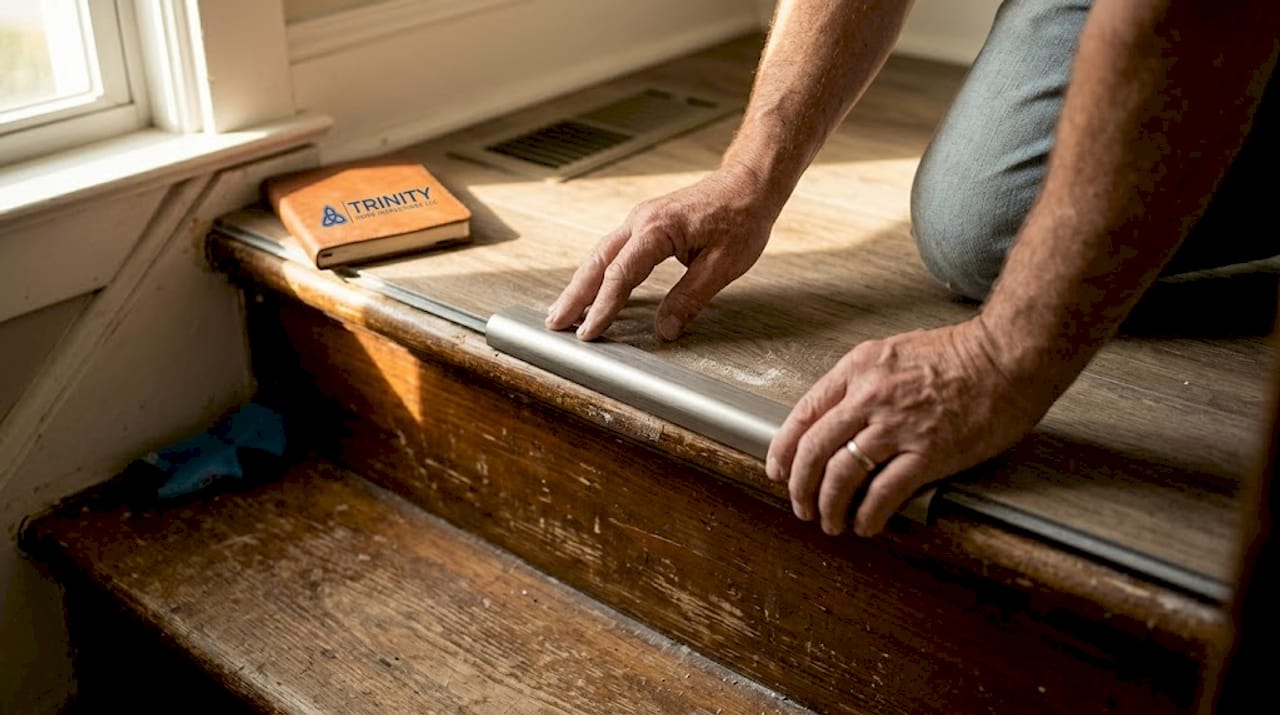
Special accessories are not optional. Stair nosing, sometimes called bullnose trim, serves both a safety function and a finished aesthetic purpose. Without it, the raw edge of each LVP tread is exposed to impact and can chip or lift over time. Most LVP manufacturers sell matching nosing pieces designed to coordinate with their plank lines. Always confirm the nosing is compatible with your specific product before purchasing.
Bottom line: if you follow glue-down installation methods, use proper stair nosing, and select a textured surface with DCOF above 0.5, your LVP stair project will meet building code expectations in Alabama.
Pros and cons of installing LVP on stairs
With building codes addressed, it’s time to weigh the practical pros and cons before starting the project.
LVP has a lot going for it when used on stairs. But it is not perfect for every situation. Here is an honest look at both sides.
The case for LVP on stairs:
Seamless visual flow: Using the same LVP throughout your home and staircase creates a clean, cohesive look that is popular with buyers and appraisers alike.
Easy to clean: Unlike carpet, which traps dust, pet dander, and allergens, LVP wipes clean with a damp mop. This is a real advantage in Alabama’s humid, pollen-heavy climate.
Waterproof options available: SPC (stone polymer composite) core LVP resists moisture far better than wood, making it well-suited for homes near the Gulf Coast where humidity is constant.
Cost-effective: Installed costs run $70 to $200 per stair including professional labor, which is generally less than hardwood.
10 to 20 year lifespan with proper installation and routine care.
Factor | LVP on stairs | Hardwood on stairs |
Cost per stair | $70 to $200 | $100 to $300+ |
Moisture resistance | Excellent (SPC) | Poor to moderate |
Slip resistance | Good (textured) | Good (with finish) |
Durability | 10 to 20 years | 20 to 50+ years |
DIY-friendly | Moderate | Difficult |
The case against LVP on stairs:
Not everyone agrees that LVP belongs on stairs. Some flooring professionals actively advise against it, and their concerns are worth hearing. Edge crushing from repeated heel strikes, adhesive failures over time, and slip risk from smooth finishes are the most commonly cited problems. When LVP is installed on stairs with a glossy surface or without proper glue-down adhesion, callbacks and repairs can add up quickly.
“For safety and longevity, some pros prefer wood treads on stairs over LVP, citing concerns about edge durability and slip risk under real-world conditions.”
Pro Tip: If you have young children or elderly family members in the home, prioritize a deeply textured LVP surface over appearance. The difference in slip resistance between a lightly embossed and a heavily textured plank can be significant, especially on a wet morning.
For best flooring options in Alabama’s climate, SPC core LVP with a textured finish is generally the strongest candidate among vinyl products for stair use.
The right way to install LVP on stairs: Step-by-step for homeowners
Once you’ve decided LVP is right for your stairs, understanding the installation process is essential.
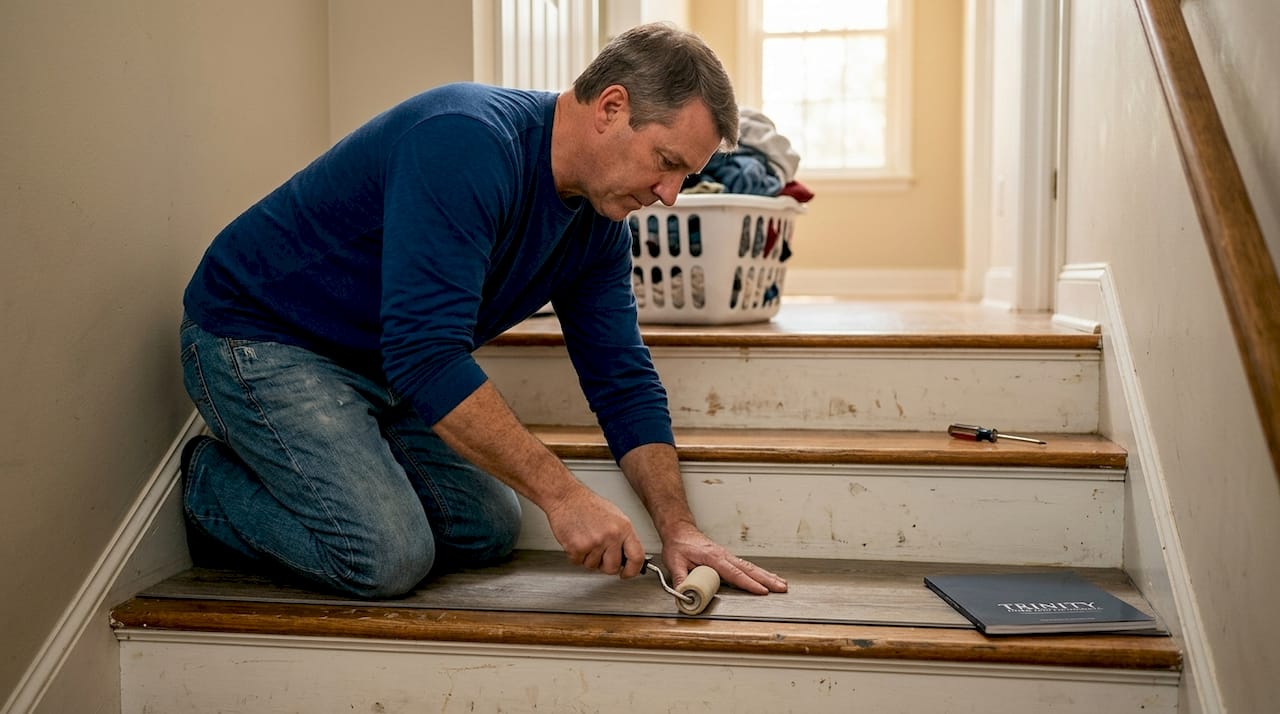
Installation quality is what separates a safe, long-lasting staircase from one that becomes a repair project in two years. The correct approach starts at the bottom step and works upward, using cut-and-glue methods for every riser and tread.
Step-by-step installation overview:
Inspect and prepare the stairs. Check for loose treads, uneven surfaces, protruding nails, or soft spots. All stairs must be level, structurally sound, and free of debris before any LVP goes down.
Remove old flooring or carpet. Strip carpet, padding, and staples completely. Sand down any high spots and fill low spots with floor leveling compound. Let it cure fully.
Measure and cut risers. Start with the vertical faces of each step, called risers. Measure each one individually since stairs are rarely perfectly uniform. Cut LVP planks to size with a jigsaw or utility knife.
Remove click-lock profiles. LVP sold as floating click-lock flooring must have its locking edges cut off before stair use. Never leave click-lock edges on stair planks.
Apply adhesive to risers. Use a quality construction adhesive or flooring-specific glue applied in strips. Press each riser piece firmly into place and allow it to bond before moving to the tread above.
Cut and install treads. The tread is the horizontal surface you walk on. Cut each tread to fit snugly, apply adhesive in strips, and press firmly. Use a roller or hand pressure to eliminate air pockets.
Install stair nosing. Attach matching stair nosing to the front edge of each tread using adhesive and finish nails or manufacturer-specified fasteners. This is your primary safety and edge-protection piece.
Work from bottom to top. Completing each step before moving to the next prevents you from trapping yourself on the stairs mid-install.
Tool needed | Purpose |
Jigsaw or utility knife | Cutting planks to size |
Notched trowel or caulk gun | Applying adhesive evenly |
Rubber mallet | Seating planks firmly |
Floor roller | Eliminating air pockets |
Tape measure | Accurate cuts for each step |
Pro Tip: Pre-formed LVP stair tread and riser kits are available from several manufacturers and can save significant time on standard-width stairs. They come pre-cut and pre-finished, which removes much of the precision cutting work.
DIY installation is feasible for experienced homeowners, but the stakes are higher than flat floor installation. A poorly secured tread or an improperly fitted nosing can create a real trip hazard. If you are unsure at any stage, calling in a professional is the right call. For more ideas on using the space around your staircase, check out these under stairs storage ideas that Alabama homeowners are putting to good use.
Choosing the best LVP for stairs: Specs and safety tips
With the steps clear, let’s make sure you pick the right LVP for maximum safety and lasting value.
Not all LVP products are suitable for stair use. The specs that matter most on flat floors become critical on stairs, where concentrated impact and edge exposure are a constant reality.
Key specs to look for:
Wear layer of 20 mil or more: The wear layer is the clear protective coating on top of the plank. Thicker means more resistance to scratches, scuffs, and edge impact from shoes. Anything below 20 mil will show wear faster on stairs than on flat floors.
Rigid core SPC construction: SPC (stone polymer composite) core planks are denser and harder than WPC (wood plastic composite) options. That density resists compression and edge crushing, both of which are real concerns on stair nosings.
Textured or embossed surface finish: A surface with visible texture provides the friction you need for safe footing. Products with DCOF above 0.5 are recommended. Avoid glossy or high-sheen finishes for stair use, especially in a humid Gulf Coast home.
Compatible stair nosing: Confirm the manufacturer offers a matching nosing piece. Mismatched nosing creates visual inconsistency and can have a different height profile, creating a subtle trip hazard.
Additional safety upgrades:
Anti-slip tape or grip strips: Applied to the front edge of each tread, these provide an extra layer of safety in high-traffic or moisture-prone stairways. They are inexpensive and easy to apply.
Contrasting color choice: If you have family members with vision challenges, choosing a plank color that contrasts visibly with surrounding flooring makes each step easier to distinguish. Dark stairs with light walls or vice versa improves depth perception.
Test samples before committing: Order a few samples and run a simple water test on the surface. Drop water on the sample and try to slide your finger across it. If it glides easily, skip that product for stairs.
Pro Tip: When comparing products at the flooring store, ask specifically about DCOF ratings. Many showroom staff can pull spec sheets. If they cannot give you a number, request it from the manufacturer directly before purchasing.
For additional context on how flooring choices connect to broader home safety tips in Alabama homes, reviewing safety features throughout your home as a whole is always a smart practice.
Making LVP stairs last: Maintenance, risks, and what to watch for
With your LVP installed and the right specs selected, the final key is making sure your stairs stay safe and beautiful for years.
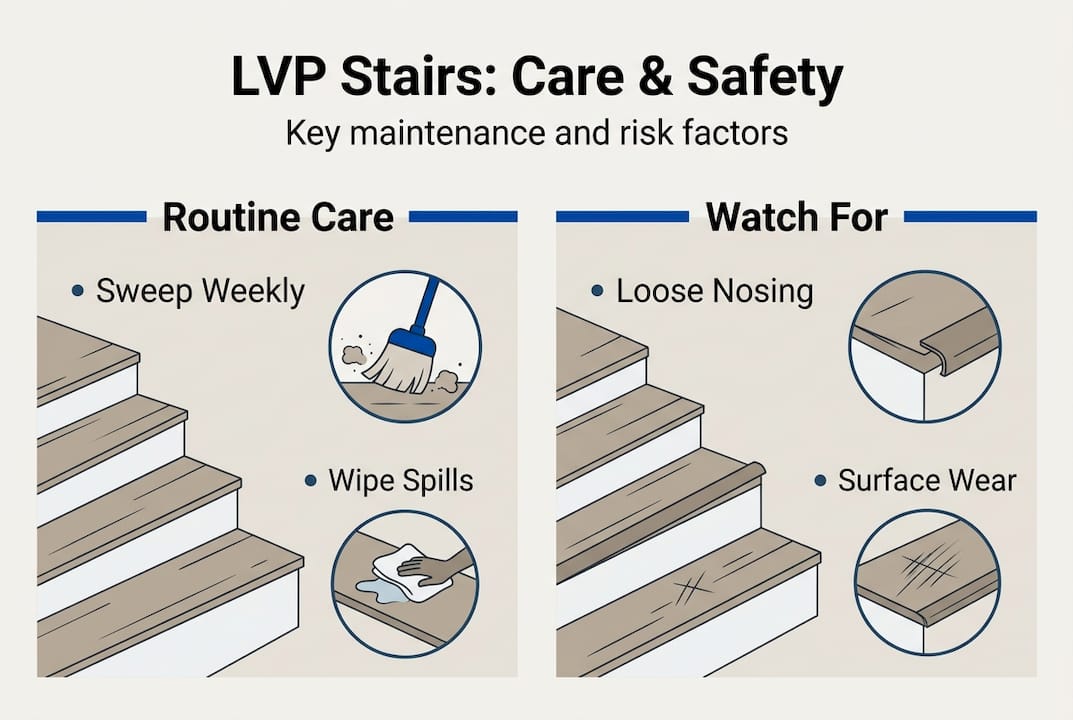
Even the best-installed LVP staircase needs consistent care to perform well over time. The good news is that quality LVP with a 20-mil wear layer can last 15 to 25 years in residential settings with proper maintenance. The failures that shorten that lifespan are almost always preventable.
Maintenance habits that protect your investment:
Clean up spills right away. Even though SPC LVP is waterproof, standing water around stair nosing and edges can work under seams over time and weaken adhesive bonds.
Use a damp mop, not a wet one. Excess water is the enemy of any glued-down installation. A lightly damp microfiber mop is all you need for routine cleaning.
Avoid harsh chemicals. Bleach-based cleaners and ammonia products can dull the wear layer and reduce surface texture over time, lowering slip resistance.
Check nosing and adhesive regularly. Inspect each stair nosing piece every few months. Any that feel loose or produce a hollow sound when tapped should be re-secured immediately. A lifting nosing is a trip hazard.
Add rugs or grip strips in high-traffic periods. During peak use seasons, such as back-to-school months with kids running up and down constantly, a small non-slip stair runner adds an extra safety layer.
“Slip resistance on LVP stairs is improved significantly by surface texture and carborundum-style grip features. The most common failure points are poor surface prep before installation, glossy finish selection, and edge impact over time.”
When LVP may not be the right choice for your stairs:
Very steep staircases with an angle greater than 45 degrees pose greater slip risk with any smooth-surface material, including LVP.
Open-riser stairs (stairs with no vertical back piece) are not ideal candidates for LVP because the material lacks the structural support needed at the tread edges.
Outdoor or semi-outdoor stairs in Gulf Coast Alabama face extreme UV and moisture exposure that most LVP products are not rated to withstand long-term.
If any of these apply to your staircase, talk with a flooring professional about alternative solutions before committing to LVP.
Our take: What most LVP guides get wrong about stairs
After covering the details, let’s look at what most guides miss about LVP stair projects.
Most online articles about LVP on stairs treat it as a straightforward weekend project. Install, glue, add nosing, done. What they skip over is the number of small decisions that actually determine whether the result is safe or becomes a liability.
The finish choice alone is underestimated by a wide margin. Homeowners browse LVP in a well-lit showroom, pick a color they love in a polished finish, and never think about DCOF ratings. Then six months later they are dealing with a near-slip every morning in socks. The glossy look that looks great on flat floors is genuinely risky on stairs, particularly in humid Alabama homes where barefoot traffic is common.
Another gap in most guides is the reality of older homes. If your staircase has years of uneven wear, settled steps, or soft spots in the subfloor, no amount of quality LVP will compensate for a poor base. Pre-formed LVP stair tread kits can help, but you still need to level first. Skipping prep work on uneven stairs is the single biggest reason for premature failures.
We also think guides undersell when to call a pro. Not because homeowners cannot handle the project, but because the consequence of a mistake on stairs is a fall, not just a floor that looks bad. Checking permits and local requirements before starting is a step many skip entirely. Reviewing a under stairs storage renovation alongside your stair flooring project is a smart way to tackle both at once while a professional is already on-site.
Our honest take: LVP stairs done right are a genuinely good upgrade for Alabama homes. But done wrong, they create safety problems that are hard to fix after the fact. Invest in the right product, prepare the surface properly, and do not cut corners on nosing or adhesive.
Next steps: Get expert help for your stairs
When you’re ready to tackle your staircase, or want peace of mind about the results, partnering with local pros is the smartest move.
A flooring upgrade on your stairs is an investment in safety and home value. Before you start, or after the work is done, having a professional set of eyes on the project can catch issues you might not notice until they become real problems. At Trinity Home Inspections, we serve homeowners across Baldwin, Mobile, Escambia, and surrounding Gulf Coast Alabama counties with InterNACHI-certified inspections backed by same-day reports and free thermal imaging.
If you are buying or selling a home and want to know whether stairs and flooring meet safety standards, our pre-sale home inspection covers structural and safety details in plain language. You can also run a home permit search to confirm any renovation work was properly permitted. And if moisture is a concern near your staircase, our mold inspection services can identify hidden issues before they become costly. Reach out today and let us help you make a confident, informed decision.
Frequently asked questions
Is it safe to install LVP on stairs in Alabama homes?
Yes, it is safe when you use glue-down methods with nosing and confirm the surface meets slip-resistance standards. Skipping any of those steps increases the risk of falls.
What should I look for in LVP for stairs?
Prioritize a 20-mil wear layer, SPC core, and a textured surface with a DCOF rating above 0.5. Glossy finishes are not appropriate for stair use regardless of how attractive they look in the store.
How long will LVP last on my stairs?
With proper installation and routine care, LVP lasts 10 to 20 years on stairs. Products with a 20-mil or higher wear layer and rigid core construction tend to perform at the higher end of that range.
Can you use floating LVP planks on stairs?
No. Floating planks can shift and lift under the stress of stair use, creating a serious trip hazard. Always remove click-lock edges and glue each plank directly to the stair substrate.
How much does it cost to install LVP on stairs?
Typical costs range from $70 to $200 per stair including professional labor. The final cost depends on stair width, product choice, and whether old flooring needs to be removed first.
Recommended