Microbial Growth in the Attic: What Homebuyers Need To Know

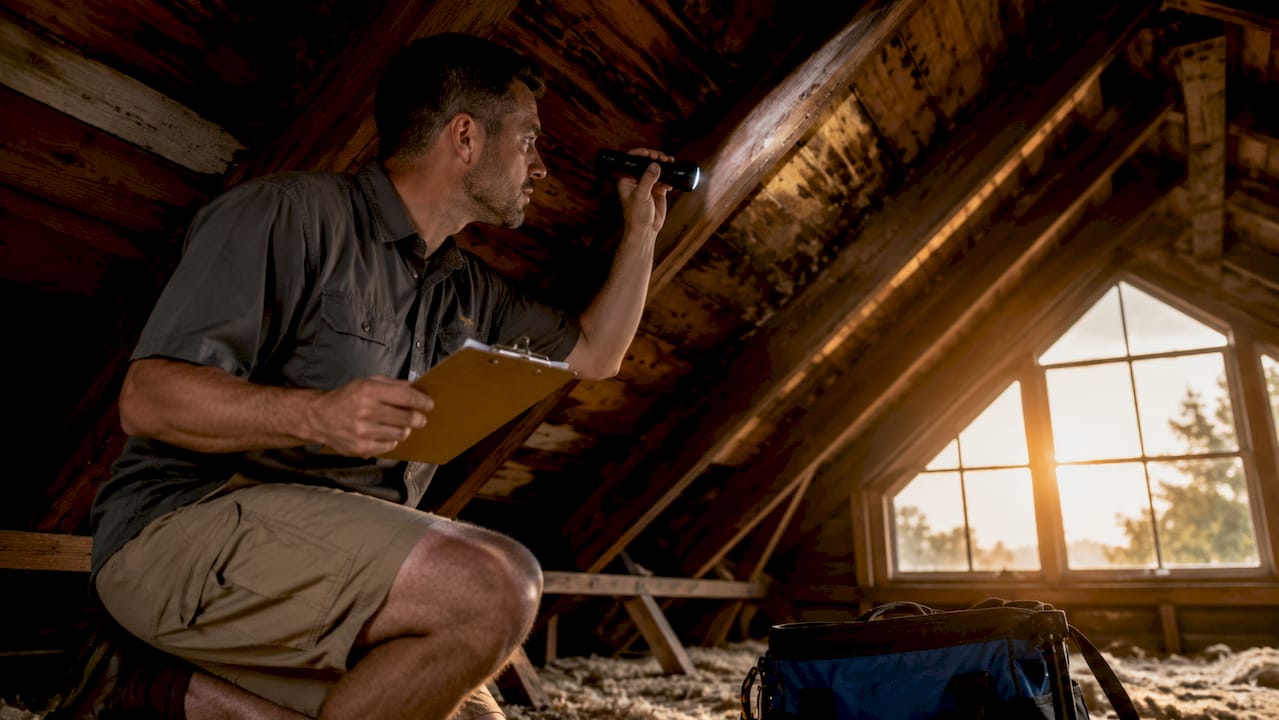
Microbial growth in the attic is defined as the colonization of mold, mildew, and related fungi on wood sheathing, rafters, and insulation when moisture, warmth, and organic material combine in an enclosed space. For Alabama homebuyers, this is not a rare edge case. The Gulf Coast’s year-round humidity creates near-perfect conditions for attic mold to develop quietly, often long before a seller lists the home. Understanding microbial growth in the attic, what homebuyers need to know before closing, starts with recognizing that the attic is the single most overlooked space in a standard home walkthrough. Common attic safety issues extend well beyond mold, but microbial contamination ranks among the costliest to fix after purchase.
What causes microbial growth in attics?
Attic mold grows when three things exist at the same time: a moisture source, a food source, and warmth. Wood sheathing and insulation supply the food. Alabama’s climate supplies the warmth. Moisture is the variable you can control, and it almost always comes from one of four places.
The most common causes of attic microbial growth are:
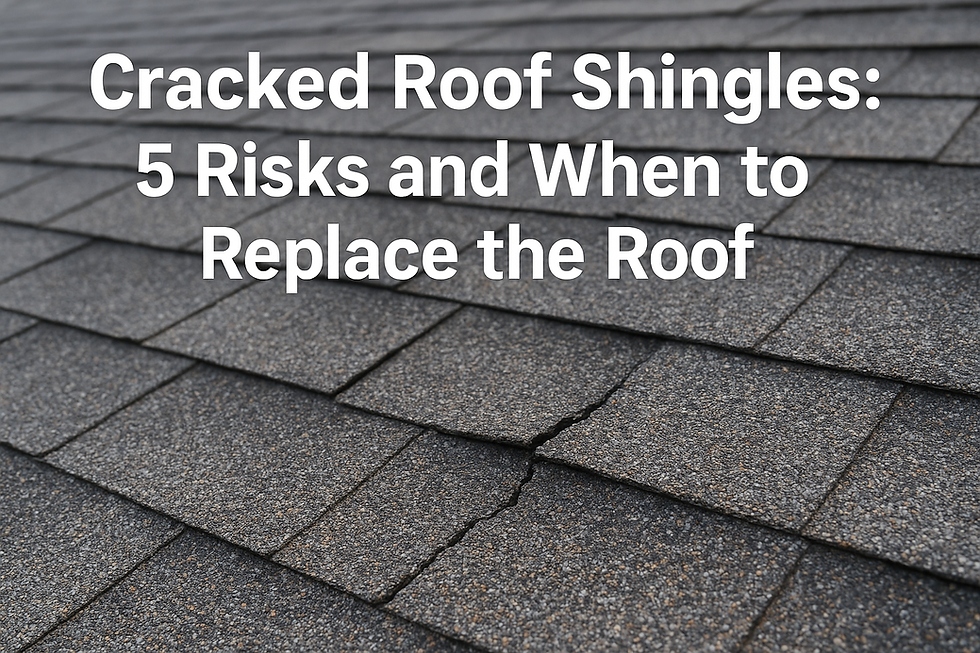
Roof leaks. Even a small gap around a flashing or a cracked shingle allows water to drip onto sheathing repeatedly. Over weeks, that moisture feeds a growing colony.
Bathroom and kitchen exhaust fans vented into the attic. This is one of the most frequent code violations found in Alabama homes. Builders or previous owners sometimes terminate exhaust ducts inside the attic rather than routing them through the roof. Every shower sends warm, humid air directly onto wood surfaces.
Vapor intrusion from below. Warm, humid air from the living space rises and enters the attic through gaps around light fixtures, attic hatches, and unsealed penetrations. In summer, this is a constant process in homes without proper air sealing.
Inadequate ventilation. Attics need a balance of intake air at the soffits and exhaust air at the ridge or gable vents. When that balance is off, heat and moisture build up and never escape.
Alabama’s climate makes every one of these problems worse. Mobile and Baldwin counties regularly see summer humidity levels that keep attic air saturated for months at a time. A small leak that might dry out in a drier climate stays wet here, giving mold the time it needs to establish.
Pro Tip: During any home showing, ask the listing agent whether the bathroom exhaust fans are vented to the exterior. If they cannot confirm it, add a note for your inspector to verify. This one detail catches a surprising number of attic mold situations before they become your problem.
What are the signs of microbial growth in an attic?
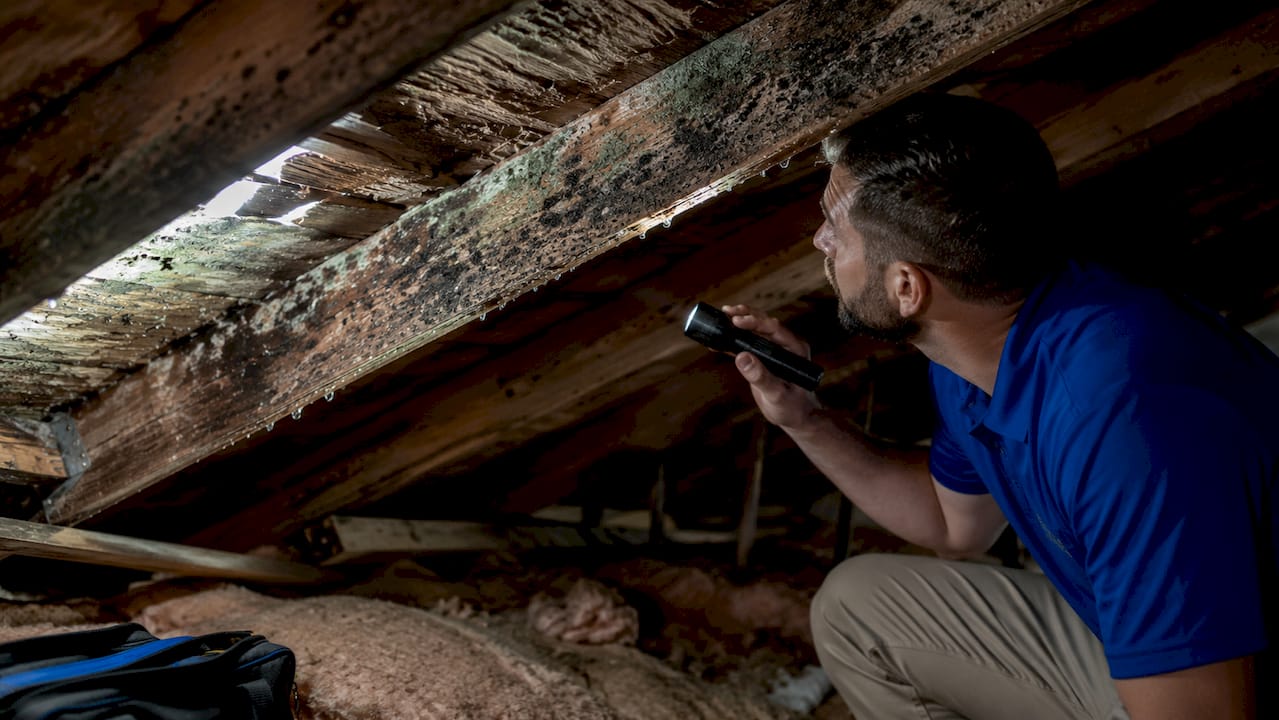
Visible mold in the attic is often accompanied by a set of secondary signals that you can detect during a standard showing, even before a professional sets foot in the space. Knowing what to look for gives you a real advantage as a buyer.
The key warning signs include:
Dark staining or discoloration on roof sheathing and rafters. Black, gray, or greenish patches on the underside of the roof deck are the clearest visual indicator. Fresh wood is tan or light brown. Stained wood has been wet.
Damp or compressed insulation. Insulation that looks matted, discolored, or darker than surrounding batts has absorbed moisture. Healthy insulation is fluffy and uniform in color.
Rusted nail heads. Metal fasteners in the sheathing will rust when exposed to sustained moisture. Rusted nails visible from below the sheathing confirm a chronic moisture problem.
Musty odors near the attic hatch or in upstairs rooms. Mold produces volatile organic compounds as it grows. That earthy, stale smell near a ceiling or attic access panel is a direct signal worth taking seriously.
Unexplained allergy or respiratory symptoms. If you or family members notice throat irritation or sneezing during a home tour, elevated mold spores in the air may be the cause.
Pro Tip: At any showing, stand directly under the attic hatch and take a slow breath. If you detect a musty or earthy smell, mention it to your inspector and request a closer look at the attic space. Your nose is a legitimate diagnostic tool.
A basic attic check during a showing does not require climbing in. Look at the hatch itself for water stains on the surrounding drywall. Check the ceiling in the rooms directly below the attic for brown rings or bubbling paint. These surface clues often point to moisture that has been present long enough to support microbial growth.
Why does professional attic inspection matter for homebuyers?
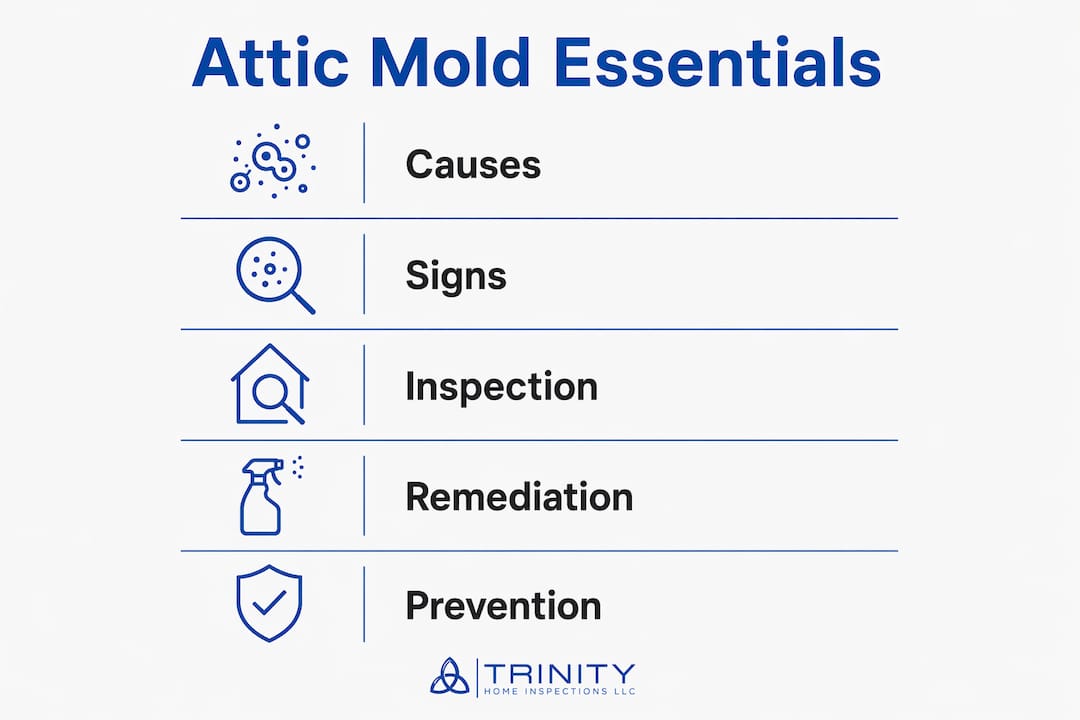
A visual walkthrough gives you clues, but a professional inspection gives you answers. Attic inspections in Alabama focus specifically on ventilation adequacy, roof integrity, exhaust vent termination points, and moisture indicators. These are not items a casual observer can evaluate reliably.
Standard home inspections in 2026 typically cost between $300 and $500, with mold testing and indoor air quality sampling priced as additional services. That cost is modest compared to the price of remediating a large mold problem after closing.
Inspection type | What it covers | When to use it |
Standard home inspection | Visual check of attic structure, ventilation, and moisture indicators | Every home purchase |
Mold swab test | Identifies specific mold species on a surface sample | When visible staining is present |
Indoor air quality (IAQ) test | Measures airborne spore counts vs. outdoor baseline | When mold is suspected but not visible |
Thermal imaging | Detects moisture behind surfaces using infrared | When leaks are suspected but walls are dry |
Indoor air quality testing works differently than most buyers expect. The goal is not simply to detect mold spores, since spores are naturally present both indoors and outdoors. The test compares indoor spore levels to an outdoor baseline sample taken at the same time. When indoor counts are significantly higher than outdoor counts, that gap points to a hidden moisture source feeding active microbial growth somewhere in the structure.
IAQ testing is especially valuable for buyers with allergies, asthma, or other respiratory conditions. It is also the right call when a home has a musty smell but no visible mold. Mold can grow inside wall cavities, beneath insulation, and on the back side of sheathing where no one can see it without specialized equipment.
The EPA recommends professional remediation for mold areas larger than 10 square feet. That threshold matters for buyers negotiating repairs. If an inspector documents contamination beyond that size, you have a clear basis to request professional remediation as a condition of sale, not just a paint-over.
Understanding why a pre-purchase inspection covers the attic in detail is straightforward. The attic is where roof leaks show up first, where exhaust fans terminate incorrectly, and where ventilation failures accumulate over years. Catching these issues before closing puts the cost and responsibility where it belongs.
How do you prevent and remediate attic microbial growth?
Prevention and remediation follow the same core principle: fix the moisture source first. Cleaning mold off wood without correcting the underlying problem guarantees mold will return. This is the most common and costly mistake homeowners make.
For Alabama buyers taking ownership of a home with known attic moisture issues, the correct sequence is:
Repair the roof. Any active leak must be sealed before any other work begins. Have a licensed roofing contractor inspect and repair flashing, shingles, and penetrations. Document the repair with photos and a written receipt.
Reroute exhaust fans to the exterior. Every bathroom and kitchen exhaust fan must terminate through the roof or a gable wall, not into the attic space. This is a straightforward fix for a licensed HVAC or general contractor.
Improve attic ventilation. A qualified contractor can assess whether your soffit and ridge vents provide adequate airflow. In many Alabama homes, soffit vents are blocked by insulation pushed too close to the eaves. Baffle inserts correct this quickly and inexpensively.
Address air sealing below the attic floor. Sealing gaps around recessed lights, attic hatches, and plumbing penetrations reduces the volume of humid air entering the attic from the living space. This step is often skipped but delivers lasting results.
Remediate confirmed mold growth. For areas under 10 square feet, the EPA allows homeowner remediation after the moisture source is corrected. Use an N-95 respirator, gloves, and eye protection. For larger areas, hire a licensed mold remediation contractor. Get a clearance test after work is complete to confirm the problem is resolved.
Install a humidity monitor. A simple digital hygrometer placed in the attic lets you track conditions over time. Attic relative humidity above 70% for extended periods creates mold risk. Knowing your numbers lets you act before a problem develops.
Alabama’s coastal areas add one more consideration. Salt air accelerates corrosion on metal fasteners and flashing, which creates small gaps that allow water intrusion over time. Homes within a few miles of the Gulf in communities like Gulf Shores, Orange Beach, and Dauphin Island deserve extra scrutiny on roof penetrations and flashing details during any inspection.
For buyers who want guidance on removing mold inside walls, the same moisture-first principle applies. Attic remediation and wall remediation share the same logic: the surface is a symptom, and the moisture source is the disease.
Key takeaways
Attic microbial growth in Alabama homes is a moisture problem first and a mold problem second. Fixing the source is the only path to a permanent solution.
Point | Details |
Moisture drives mold | Roof leaks, misdirected exhaust fans, and poor ventilation are the three most common causes in Alabama attics. |
Signs are detectable early | Stained sheathing, rusted nails, musty odors, and damp insulation are visible signals during a standard showing. |
Professional testing finds hidden growth | Indoor air quality testing compares indoor spore counts to outdoor levels, revealing hidden moisture problems. |
EPA sets the remediation threshold | Contamination larger than 10 square feet requires a licensed professional, not a DIY cleanup. |
Fix moisture before cleaning | Surface scrubbing without correcting the moisture source leads to mold recurrence every time. |
What I see in Alabama attics that buyers miss
I have inspected homes across Mobile, Baldwin, and Escambia counties for years, and the attic is the space that surprises buyers most often. Not because the problems are exotic, but because they are so easy to overlook when you are focused on countertops and square footage.
The most common situation I find is a bathroom exhaust fan that terminates directly into the attic. The fan works fine. The bathroom smells fine. But every shower for the past ten years has been pumping humid air onto the roof sheathing. By the time I get up there, the staining is significant and the wood has started to soften in spots. The buyer had no idea. The seller may not have known either.
The second thing I see regularly is blocked soffit vents. Insulation gets pushed to the edges during installation or over time, and it covers the intake vents completely. The attic cannot breathe. In Alabama summers, that means temperatures and humidity levels that no wood should sustain for months at a time.
What buyers often overlook is the connection between attic health and the home’s indoor air quality. Spores do not stay in the attic. They move through gaps in the ceiling into the living space. Families with children or anyone with respiratory sensitivities feel this before they see it.
My honest advice is this: never skip the attic. Ask your inspector to go in, not just peek through the hatch. Ask whether they use a moisture meter and thermal camera. Ask what they found on the sheathing and whether ventilation looks adequate. A good inspector will have clear answers and photos to back them up. If the attic shows any signs of past or current moisture, add an indoor air quality test to your inspection order. The cost is small. The information is worth far more.
— Matt
Trinity Home Inspections is ready to check your attic
If you are buying a home in Mobile, Baldwin, or the surrounding Gulf Coast Alabama area, your attic deserves a thorough look before you sign anything.
[

Trinity Home Inspections provides InterNACHI-certified inspections with free thermal imaging, same-day reports packed with photos and video, and add-on mold testing services that include certified lab results and chain of custody documentation. If mold is suspected but not visible, indoor air quality sampling gives you the data you need to negotiate or walk away with confidence. Call 251-210-7376 or visit TrinityInspectionsLLC.com to schedule your inspection today.
FAQ
What is microbial growth in an attic?
Microbial growth in an attic is the colonization of mold, mildew, or related fungi on wood and insulation surfaces when sustained moisture combines with warmth and organic material. It is the industry-standard term for what most homebuyers call attic mold.
How does Alabama’s climate affect attic mold risk?
Alabama’s high year-round humidity keeps attic air saturated for extended periods, which prevents moisture from drying naturally and gives mold the conditions it needs to grow faster than in drier climates.
Can a standard home inspection detect attic mold?
A standard inspection identifies visible signs such as staining, damp insulation, and rusted nails, but hidden mold requires indoor air quality testing or a mold swab to confirm and quantify.
What does the EPA say about attic mold remediation?
The EPA recommends professional remediation for any mold contamination larger than 10 square feet. Smaller areas may be handled by a homeowner after the moisture source is corrected.
Does attic mold affect home value?
Confirmed attic mold gives buyers documented grounds to negotiate repair credits or price reductions. Unresolved microbial growth can also complicate financing and resale, making early detection and remediation a sound financial decision.
Recommended