
New Construction Defects in Foley, Daphne, and Fairhope Homes
- Matt Cameron
- Jun 23
- 9 min read

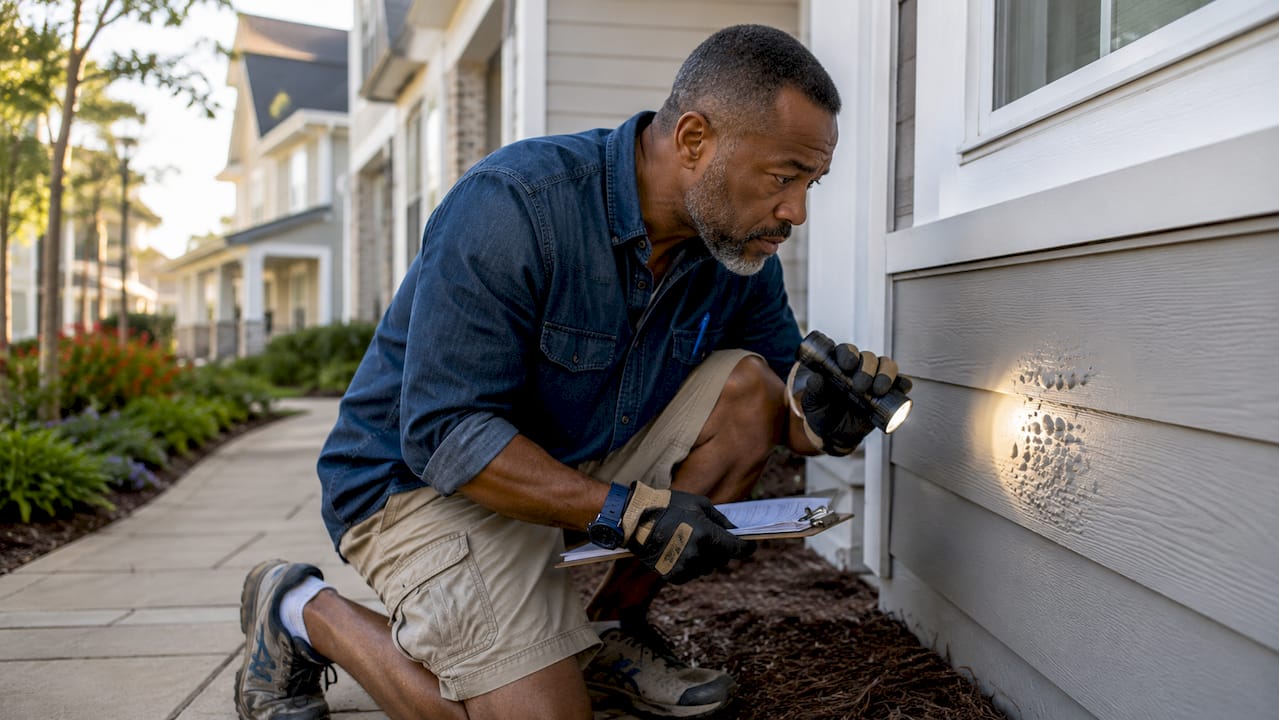
Common new construction defects found in Foley, Daphne, and Fairhope homes include foundation cracks, concealed plumbing leaks, faulty wiring, roofing installation errors, and HVAC system failures. These issues, collectively known in the industry as latent construction defects, often stay hidden until drywall and finishes cover them permanently. Baldwin County’s rapid growth means builders are under pressure to close homes fast, and that speed creates real risk for buyers. Knowing what to look for, and when to look, is your best defense before you sign closing documents. A professional new construction inspection gives you documented proof and negotiating power when defects surface.
1. What are the most common new construction defects in Foley, Daphne, and Fairhope?
Structural defects are the most costly and the most frequently missed category in new homes across these three Baldwin County cities. Foundation cracks, framing errors, and improper site grading each threaten the long-term safety and value of your home. Foundation repairs average $5,166, according to industry data. That figure does not include secondary damage to flooring, drywall, or plumbing caused by settling.
The most common structural problems to watch for include:
Foundation cracks or uneven settling visible at slab edges, garage floors, or exterior corners
Framing errors such as missing hangers, improperly cut joists, or notched load-bearing studs
Improper site grading that directs rainwater toward the foundation instead of away from it
Gaps between framing members that compromise wall rigidity and insulation performance
Missing or misplaced anchor bolts connecting the framing to the foundation slab
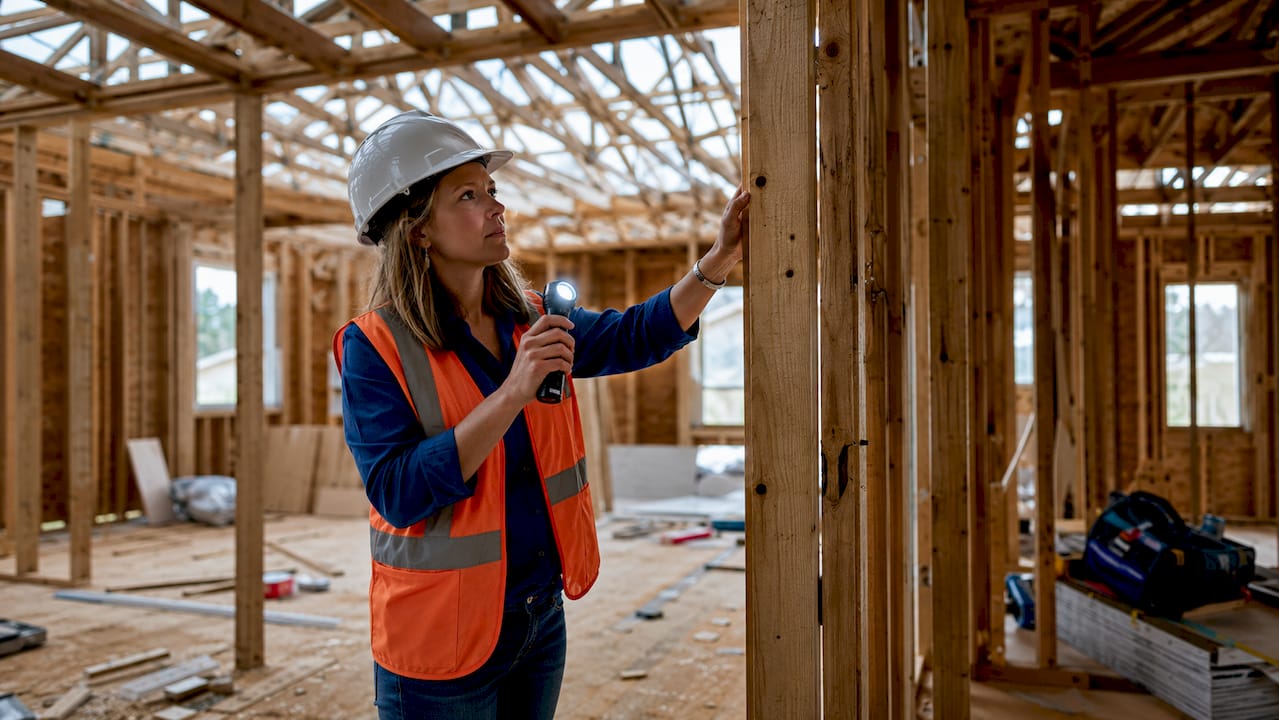
Structural defects often become hidden once drywall, insulation, and exterior finishes are installed. That is why the pre-drywall stage is the single best window to catch framing and mechanical conflicts before they disappear behind walls.
Pro Tip: Attend your pre-drywall inspection in person. Ask the inspector directly about any framing member that looks cut, notched, or missing a connector. Builders are far more responsive to documented findings before drywall goes up than after.
2. Which plumbing and water intrusion problems affect new homes here?
Plumbing defects in new construction frequently go undetected until significant water damage has already occurred. Latent plumbing defects arise from rapid construction schedules where overlapping trades work simultaneously, leading to damaged concealed pipes, misdriven nails through supply lines, and fittings that weaken under thermal cycling. In Foley, Daphne, and Fairhope, where summer heat puts constant stress on PVC and PEX lines, these weaknesses show up faster than in cooler climates.
Common plumbing and water intrusion defects include:
Slow or blocked drains caused by debris left in lines during construction
Pinhole leaks from nails or screws driven through supply pipes during framing
Improper slope on drain lines causing standing water and recurring clogs
Flashing failures at windows, doors, and roof penetrations allowing water intrusion behind exterior walls
Missing or incomplete waterproofing at shower pans, tub surrounds, and exterior wall assemblies
Water intrusion from flashing and waterproofing errors is especially serious because moisture trapped inside wall cavities creates ideal conditions for mold growth. Mold testing services can confirm whether hidden moisture has already triggered biological growth before you close. A moisture meter reading during inspection is the fastest way to flag suspect wall sections without opening drywall.
3. What electrical system defects should buyers watch for in new homes?
Electrical defects are among the most dangerous new construction issues because they pose fire and shock hazards that are not always visible. Faulty wiring, exposed connections, and circuit breaker problems are common findings in newly built homes across Baldwin County. These defects often result from subcontractors working under tight schedules without adequate supervision or final checks.
Electrical problems to identify before closing include:
Flickering lights or dead outlets indicating loose wire connections or improper terminations
Breakers that trip repeatedly under normal household loads, pointing to undersized circuits
Reversed polarity at outlets where hot and neutral wires are swapped, creating shock risk
Missing GFCI protection at bathrooms, kitchens, garages, and outdoor receptacles
Open junction boxes left without covers inside attics, crawl spaces, or utility rooms
Improperly bonded electrical panels or missing grounding conductors at the main service
Any electrical finding from an inspection warrants a licensed electrician’s follow-up before closing. Electrical defects also affect your homeowner’s insurance. Some carriers will deny coverage or increase premiums when inspection reports document unresolved wiring issues. Getting these items corrected and documented protects both your safety and your policy.
4. How do roofing and exterior finish defects show up in new homes?
Roofing defects in new construction are often invisible from the ground and go unreported until the first heavy Gulf Coast rainstorm. Overdriven nails, improper flashing, and poorly nailed roof decking cause leaks and water damage that can reach interior ceilings, attic insulation, and wall framing. Baldwin County’s coastal weather makes proper roofing installation non-negotiable.
Inspectors look for overdriven roofing nails that break through the shingle surface instead of holding it flat. That single error reduces a shingle’s wind resistance rating significantly and voids manufacturer warranties. Flashing at chimneys, skylights, roof-to-wall transitions, and valleys must be correctly lapped and sealed. When it is not, water finds a path inside within months.
Pro Tip: Ask your inspector whether they physically walked the roof or used a drone. Trinity Home Inspections walks every roof that is safely accessible and uses FAA-licensed drone equipment for steep or unsafe pitches. You deserve eyes on every surface, not just a view from the ground.
Exterior wall finishes common in Fairhope and Daphne, including stucco and fiber cement siding, require correct installation clearances and sealant at all penetrations. Stucco applied without a proper drainage plane traps moisture against the sheathing. That moisture causes wood rot and mold long before any visible staining appears on the interior.
5. What HVAC and mechanical system defects are common in new Baldwin County homes?
HVAC defects in new construction are frequently overlooked because systems appear to run during a basic walkthrough. Poor duct balancing, inadequate ventilation, and lack of proper commissioning lead to comfort problems, high energy bills, and humidity issues that are especially problematic in tightly insulated new homes. Baldwin County’s hot, humid climate makes HVAC performance a health and comfort issue, not just a convenience one.
Common HVAC and mechanical defects include:
Unbalanced duct systems leaving some rooms too hot or too cold regardless of thermostat settings
Undersized return air causing negative pressure that pulls humid outside air into the home
Improperly sealed duct connections in attics that dump conditioned air into unconditioned space
Missing or incorrect refrigerant charge reducing system efficiency and cooling capacity
Exhaust fans vented into attic space instead of to the exterior, creating moisture buildup
A system that was never properly commissioned is a system that was never verified to work correctly. Ask your inspector to run the HVAC through a full cycle and check supply and return temperatures. If the builder cannot provide commissioning documentation, that gap belongs in your warranty request before closing.
6. Why the 11-month warranty inspection is your most important protection
Builder warranties on new homes in Alabama typically cover workmanship defects for one year from closing. That window is your legal leverage, and most homeowners let it expire without a formal inspection. An 11-month warranty inspection documents every defect that has surfaced during your first year of ownership and gives you a written record to present to the builder before the warranty closes.
Documenting all defects with photos immediately upon discovery during the one-year warranty period is the most effective way to hold builders accountable. Verbal reports get forgotten. Written, photo-documented inspection reports do not. Builders are far more likely to honor repair commitments when the request is backed by a professional inspection report from an InterNACHI-certified inspector.
Construction defect disputes can escalate to expensive litigation when defects are not addressed promptly. Proactive inspections and early repair negotiations save time and money for everyone involved. Scheduling your 11-month inspection at month ten gives the builder time to complete repairs before the warranty expires.
7. How to use your homebuyer inspection checklist before closing
A homebuyer inspection checklist is a written record of every system and component verified before you close. Professional home inspections for single-family homes typically cost $300–$500 and last 2–4 hours. That cost is a fraction of what a single undetected defect can cost to repair after closing.
Your pre-closing checklist should confirm the following have been inspected and documented:
Foundation and slab condition with no active cracks or settling
All framing visible at pre-drywall stage with hangers and connectors in place
Plumbing pressure tested and drain lines properly sloped
Electrical panel labeled, all circuits tested, GFCI protection confirmed
Roof inspected from the surface with flashing sealed at all penetrations
HVAC system run through a full cycle with supply and return temperatures recorded
All windows and doors tested for operation, sealing, and locking function
Exterior grading verified to slope away from the foundation
Pre-drywall inspections are the best opportunity to catch defects before they are concealed by finishes. Attending this inspection gives you direct access to the inspector’s observations and the chance to ask questions while the evidence is still visible. Never skip this step on a new build.
Key takeaways
New construction defects in Foley, Daphne, and Fairhope homes are best caught through pre-drywall inspections, 11-month warranty inspections, and documented defect reporting before the builder warranty expires.
Point | Details |
Pre-drywall inspection is critical | Most structural and mechanical defects are visible only before drywall covers framing and pipes. |
Document everything with photos | Written, photo-backed reports are the most effective tool for holding builders to warranty repairs. |
Foundation repairs average $5,166 | Catching foundation issues before closing is far less costly than addressing them after. |
HVAC commissioning must be verified | Systems that were never tested correctly cause comfort and humidity problems from day one. |
The 11-month warranty window is your legal leverage | Schedule a professional inspection at month ten to document defects before the builder warranty closes. |
What I’ve learned after inspecting new builds across Baldwin County
I’ve walked through hundreds of new construction homes in Foley, Daphne, and Fairhope. The defect that surprises buyers most is not the dramatic foundation crack or the obvious roof leak. It’s the quiet ones. A duct connection that dumps conditioned air into the attic. A drain line with barely enough slope to function. A nail driven through a supply pipe that won’t leak for six months.
The conventional wisdom is that new homes are safe homes. That is not what I see on the job. New homes are built fast, by multiple subcontractors who rarely communicate with each other, under schedules that prioritize closing dates over quality checks. The builder’s own walkthrough is not an inspection. It is a sales process.
What I tell every buyer I work with is this: never close on a new home before major structural, mechanical, or safety issues are verified as resolved or secured by an escrow holdback. That is not pessimism. That is the standard practice recommended by real estate professionals across Alabama. You have one window before closing where the builder is legally and financially motivated to fix things. Use it.
The 11-month warranty inspection is equally important and equally ignored. Most homeowners assume that because nothing has fallen apart in the first year, everything is fine. What I find at month ten tells a different story. Nail pops, settling cracks, HVAC performance gaps, and moisture readings that were not there at closing. These are not catastrophic findings. They are exactly the kind of documented defects that builders are required to address under warranty, and they are exactly what gets missed when homeowners skip the inspection.
My advice is simple. Inspect before drywall. Inspect before closing. Inspect at month ten. Each inspection costs a fraction of what a single missed defect will cost you after the warranty expires.
— Matt
Trinity Home Inspections serves new construction buyers across Foley, Daphne, and Fairhope
Trinity Home Inspections provides InterNACHI-certified inspections for new builds at every critical stage, from pre-drywall to pre-closing to 11-month warranty reviews. Same-day photo and video reports give you documented proof to present to your builder. Free thermal imaging is included with every inspection to help identify hidden moisture, insulation gaps, and electrical hot spots.
[

Trinity Home Inspections also offers mold testing and inspection, permit and deed searches, and pre-listing inspections for sellers who want fewer surprises at closing. Every report is delivered the same day of the inspection. Call 251-210-7376 or visit TrinityInspectionsLLC.com to schedule your inspection today.
FAQ
What are the most common defects in new homes in Foley and Daphne?
Foundation settling, plumbing leaks behind walls, electrical wiring errors, roofing flashing failures, and unbalanced HVAC systems are the most frequently documented defects in new construction homes across Foley, Daphne, and Fairhope.
When should I schedule a new construction home inspection?
Schedule a pre-drywall inspection before framing is covered, a final inspection before closing, and an 11-month warranty inspection at month ten of ownership to document any defects before the builder warranty expires.
Does a new home still need a professional inspection?
Yes. Builder walkthroughs are not independent inspections. A professional InterNACHI-certified inspector evaluates structural integrity, electrical systems, plumbing, roofing, and HVAC with tools and training that a builder’s representative does not provide.
How much does a new construction home inspection cost in Baldwin County?
Professional home inspections for single-family homes typically cost $300–$500 and take 2–4 hours. That cost is significantly less than the average foundation repair, which runs $5,166, or the cost of remediating mold from an undetected plumbing leak.
What is an 11-month warranty inspection?
An 11-month warranty inspection is a professional inspection conducted near the end of your builder’s one-year workmanship warranty. It documents all defects that have developed since closing and gives you a written record to submit to the builder for repairs before the warranty period ends.
Recommended
