
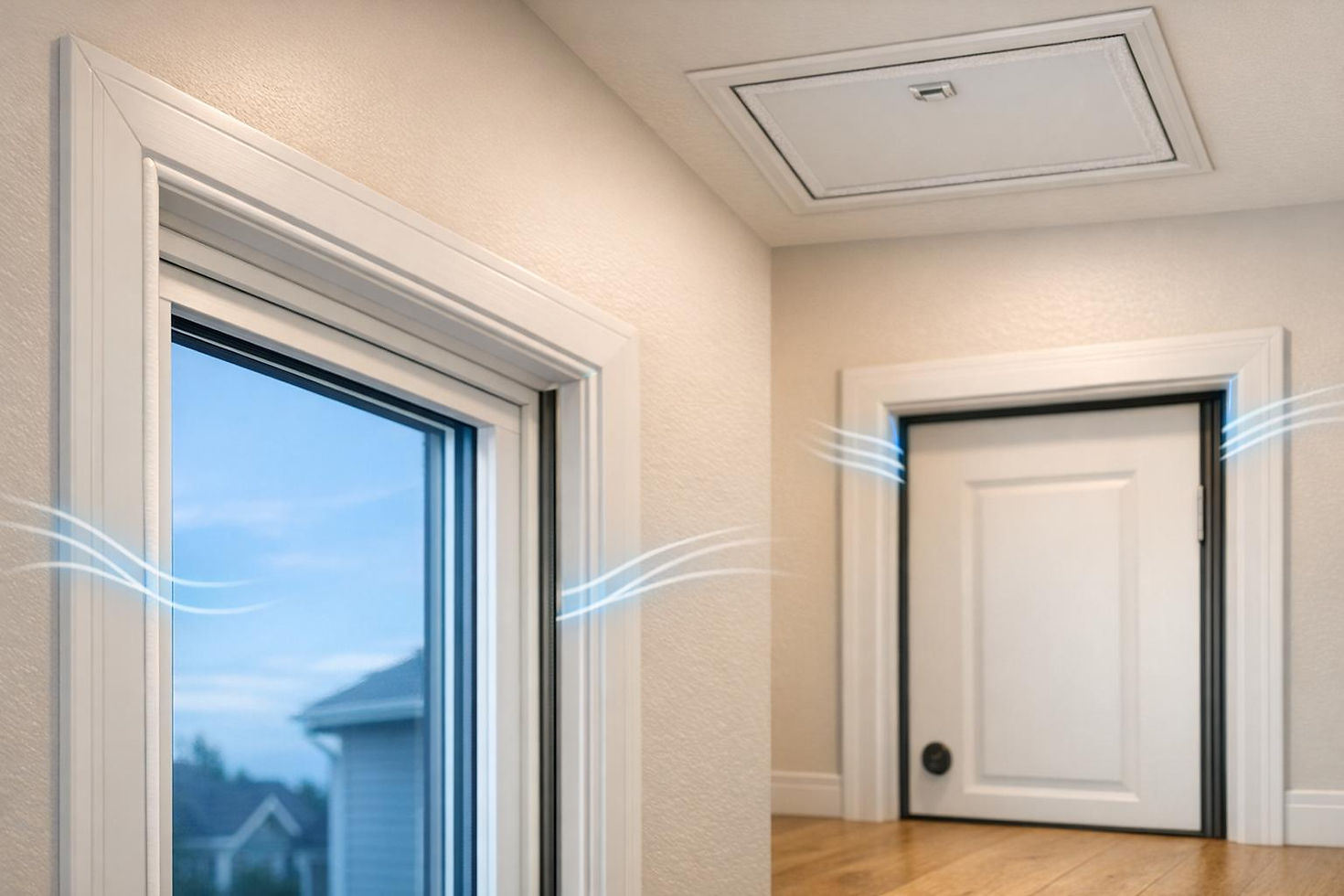
Why Sealing Improves HVAC Efficiency

Updated: May 5
Sealing gaps and cracks in your home can drastically improve your HVAC system's performance. Here's why it matters:
Lower Energy Bills: Preventing air leaks means your HVAC system doesn't need to run as often, cutting heating and cooling costs by up to 20%.
Extended Equipment Life: Less strain on your system reduces wear and tear, saving money on repairs and replacements.
Improved Comfort: Eliminating drafts and cold spots helps maintain consistent indoor temperatures.
Reduced Energy Waste: Air leaks can equal leaving a window open year-round. Sealing stops this unnecessary energy loss.
Simple fixes like caulking and weatherstripping can make a big difference. For hidden leaks, professional tools like thermal imaging and blower door tests ensure a thorough seal. By addressing air leaks, you protect your HVAC system, save money, and enjoy a more comfortable home.
How Air Leaks Affect HVAC Systems
How Air Leaks Work
Air leaks happen when conditioned air escapes through cracks and openings, allowing outside air to flow in. This uncontrolled exchange disrupts your HVAC system's efforts to maintain a comfortable indoor environment.
During colder months or windy conditions, chilly outdoor air seeps in through these gaps, forcing your heating system to work harder and run longer cycles. In the summer, the reverse happens - cooled air escapes while warm, humid air enters, causing your air conditioner to work overtime.
This constant exchange of air creates drafts, making it harder to achieve consistent indoor temperatures. As Mark Crawford from Crawford Mechanical Services puts it:
"When your furnace is forced to work harder due to drafts, it puts extra strain on your system, which can lead to malfunctions or breakdowns over time."
The cumulative effect of these leaks can be surprisingly large. In fact, the total gaps in many homes can equal the size of an open window left unattended. That’s a lot of conditioned air - and money - literally going out the window.
Energy Loss Data
The numbers paint a clear picture of the cost of air leaks. According to the U.S. Department of Energy, sealing air leaks and adding proper insulation can cut heating and cooling expenses by up to 20%. That’s a significant amount of savings that could remain in your wallet instead of disappearing through unseen gaps.
Research from the Environmental Protection Agency and DOE backs this up, showing that comprehensive air sealing can reduce energy loss by 20-40%, depending on the home's condition and climate zone. Techniques like caulking and weatherstripping are particularly effective, often paying for themselves within a year.
The benefits go beyond just saving money. By minimizing air leaks, your HVAC system doesn’t have to work as hard to maintain comfortable temperatures. This reduces energy consumption, shortens HVAC cycles, and decreases wear and tear on components. Over time, this means fewer repairs, longer-lasting equipment, and lower overall costs. Sealing air leaks isn’t just about comfort - it’s a smart way to protect your HVAC investment while cutting energy bills.
sbb-itb-3aaca89
Benefits of Sealing Windows and Doors
Lower Energy Bills
Sealing windows and doors can significantly reduce energy costs by keeping conditioned air inside and preventing outside air from sneaking in. With fewer air leaks, your heating and cooling systems don’t have to work as hard, which means they use less energy. This not only lowers your monthly bills but also helps your HVAC system run more efficiently over time.
Longer HVAC System Life
By sealing up air leaks, you’re also giving your HVAC system a break. When your system doesn’t have to constantly cycle to maintain the desired temperature, its components - like compressors, blower motors, and heat exchangers - experience less stress. This reduced wear and tear means your system can last longer, saving you money on repairs and replacements. Plus, a well-sealed home ensures your system runs smoothly while keeping you comfortable.
Better Indoor Comfort
Drafts and cold spots can make certain areas of your home feel uncomfortable. Sealing windows and doors helps keep indoor temperatures steady, creating a more comfortable living environment. By reducing air leakage, you’ll notice fewer temperature fluctuations and a more even distribution of warmth or coolness throughout your home.
"Sealing cracks and openings reduces drafts and cold spots, improving comfort." - U.S. Department of Energy
Sealing Methods for Windows and Doors
Caulking and Weatherstripping
Caulking and weatherstripping are practical solutions for stopping leaks around windows and doors. Caulk is best suited for sealing cracks and gaps in stationary areas, like where a window frame meets the wall. On the other hand, weatherstripping is ideal for sealing moving parts, such as door sashes or operable windows. According to the U.S. Department of Energy, these simple fixes are highly cost-effective and can often recoup their costs through energy savings within a year.
For larger gaps, low-expansion spray foam can provide a more thorough seal compared to traditional caulk. Additionally, replacing old door thresholds with models that feature flexible sealing gaskets can help eliminate drafts. Don't forget smaller areas like electrical outlets - installing foam gaskets behind electrical plates can make a noticeable difference in reducing airflow. While these DIY methods address many issues, certain tools can take leak detection and sealing to the next level.
Professional Sealing Tools
Basic sealing methods are great for visible leaks, but professional tools can uncover hidden inefficiencies that are harder to detect and can strain your HVAC system. For instance, thermal imaging cameras are excellent for spotting temperature differences, which can reveal where conditioned air is escaping. Companies like Trinity Home Inspections use thermal imaging during inspections to locate moisture problems, insulation gaps, and concealed air leaks.
Another advanced technique is the blower door test, which measures your home's overall air tightness. By creating a controlled pressure difference, this test pinpoints exact locations of air leaks, ensuring that sealing efforts focus on the most critical areas instead of guesswork. Experts agree that ensuring a home is well-sealed is essential for maintaining an efficient air conditioning system. Combined with professional energy assessments, these tools provide a detailed profile of air leakage, allowing for precise repairs that can significantly improve efficiency.
Research on Sealing and HVAC Efficiency
Government and Lab Study Results
Studies from government agencies and laboratories highlight that properly sealing a home can significantly boost HVAC system efficiency. According to the U.S. Department of Energy:
"Reducing the amount of air that leaks in and out of your home is a cost-effective way to cut heating and cooling costs, improve durability, increase comfort, and create a healthier indoor environment."
Techniques like caulking and weatherstripping often recoup their costs within a year. These findings build on earlier research demonstrating how sealing reduces energy consumption and lessens the workload on HVAC systems.
Additional studies reveal that eliminating air leaks throughout a home can slash energy bills by up to 30%. As of April 2026, the Department of Energy stresses that air sealing is essential for maximizing the performance of modern high-efficiency HVAC systems and heat pumps. Key insights show that sealing not only enhances heat pump efficiency but also prevents uncontrolled air exchange and lowers heating and cooling expenses.
Sealing offers benefits beyond just energy savings. It shields HVAC systems from unnecessary wear and tear. When air leaks force the system to work harder to maintain desired temperatures, components wear out faster. Moreover, sealing prevents airborne pollutants from entering through gaps, keeping HVAC systems cleaner and reducing maintenance needs.
The Department of Energy also cautions against relying on air leaks for ventilation, noting:
"Relying on air leakage for natural ventilation is not recommended. During cold or windy weather, too much air may enter the house. When it's warmer and less windy, not enough air may enter, which can result in poor indoor air quality."
This underscores that uncontrolled air leakage compromises both energy efficiency and indoor air quality, reinforcing the importance of proper sealing.
Why Air Sealing Your Attic Saves So Much Money (Most Homes Are Leaking!) 🔥❄️
Conclusion
Sealing windows and doors is a smart and affordable way to boost HVAC efficiency. Studies show that proper air sealing can lower heating and cooling bills, ease the strain on HVAC systems, and create a cozier indoor environment. Simple fixes like caulking and weatherstripping often pay for themselves quickly by reducing energy waste. Plus, these methods help extend the life of HVAC equipment by minimizing unnecessary wear and tear.
But the benefits go beyond energy savings. Sealing your home also eliminates drafts, prevents cold spots, reduces moisture issues, and improves indoor air quality. It’s not just about fixing the obvious gaps around windows and doors - addressing hidden leaks is just as important. These can be found in areas like plumbing penetrations, attic hatches, electrical wiring, and recessed lighting, all of which can leak conditioned air year-round. Tackling these gaps reduces energy use and lightens the load on your HVAC system.
While DIY sealing can handle the more visible gaps, a professional evaluation can uncover the leaks you can’t see. Tools like thermal imaging cameras detect temperature differences, pinpointing exactly where air is escaping. This allows for precise, targeted repairs that make a noticeable difference. For example, Trinity Home Inspections offers thermal imaging as part of their services to identify hidden air leaks, insulation gaps, and even moisture problems.
Whether you’re maintaining your home or preparing to buy or sell along Alabama's Gulf Coast, understanding and improving your home’s thermal envelope is a smart way to protect your investment. A well-sealed home not only keeps your property in great shape but also ensures your HVAC system operates at its best - lowering energy costs and keeping your family comfortable all year long.
FAQs
How do I find hidden air leaks in my home?
To find those sneaky air leaks in your home, start by inspecting common culprits like windows, doors, electrical outlets, plumbing entry points, and recessed lighting. Look for gaps, cracks, or worn-out weatherstripping. A simple trick is to use a smoke pencil or an incense stick - hold it near these areas, and if the smoke flickers or moves, you've likely found a leak. For a deeper dive, consider hiring a professional to perform a blower door test. This test measures airflow changes in your home, making it easier to pinpoint even the most elusive leaks.
Will air sealing lead to poor ventilation or indoor air quality problems?
Proper air sealing doesn't lead to poor ventilation or indoor air quality problems when paired with controlled ventilation systems. In fact, sealing minimizes uncontrolled drafts and restricts the entry of pollutants, all while promoting a healthier indoor environment. This approach boosts energy efficiency without sacrificing air quality.
Which leaks should I seal first for the biggest HVAC savings?
To maximize your HVAC savings, begin by sealing up leaks around windows and doors where drafts are most obvious. Pay special attention to gaps and cracks that let cold air seep in or allow your heated or cooled air to escape. These areas significantly affect both your energy efficiency and the performance of your HVAC system.

