
Site Inspection Report Sample: Your Complete Writing Guide
- Matt Cameron
- 14 hours ago
- 10 min read

What Is a Site Inspection Report and How Do You Write One?
A site inspection report is the formal, written record of an onsite assessment. It captures location details, inspector observations, identified hazards, corrective actions, and sign-offs in one organized document. Whether you are working on a residential build, a commercial renovation, or a safety audit, this report serves as your legal paper trail and your communication tool with every stakeholder involved.

According to the U.S. Fish and Wildlife Service Construction Inspection Handbook, daily logs are the primary reference for resolving contract disputes and must be detailed, accurate, and sequential from the start of work through final acceptance. That standard applies directly to any site inspection report you write: vague or incomplete records create liability gaps.
At a high level, writing an effective report comes down to four steps:
Prepare before you arrive: Review prior reports, project plans, and known hazards.
Document everything onsite: Observations, photographs, worker conversations, and hazard locations.
Organize and draft promptly: Structure your notes into the standard report sections while details are fresh.
Review and distribute: Confirm accuracy, attach photos, get signatures, and share with the right people.
The report’s role goes beyond compliance. It protects you professionally, informs project managers about real conditions, and gives clients a clear picture of what was found and what needs to happen next. For a deeper look at how these reports are structured across different property types, the inspection report examples from Trinity Home Inspections show what a thorough, photo-rich document looks like in practice.
The Essential Elements Every Site Inspection Report Needs
A well-organized report is not just easier to read. It holds up under legal scrutiny, satisfies regulatory requirements, and gives contractors and owners a clear action path. According to a standard site inspection report template, the core elements found across professional formats include:
Site and project information: Project name, address, contract number, and the date and time of the inspection.
Inspector details: Full name, credentials, certifying body (such as InterNACHI), and contact information.
Weather and site conditions: Temperature, precipitation, and any environmental factors affecting work.
Observations and findings: Specific, descriptive notes on each area inspected. Avoid vague language like “looks okay.” Write “concrete footing at grid line B4 shows no visible cracking or settlement.”
Photographs and video: Timestamped images tied to specific observations. Visual documentation is not optional on professional reports.
Hazard identification: Each hazard listed with its location, nature, and severity level.
Corrective actions: Who is responsible, what action is required, and the deadline for completion.
Regulatory references: Applicable OSHA standards, local building codes, or project specifications that the observation relates to.
Signatures: Inspector, site supervisor, and contractor sign-off for accountability.
Tailoring the layout for different inspection types
A safety inspection report prioritizes hazard categories and OSHA compliance references. A structural inspection report leans heavily on material conditions, load-bearing observations, and engineering tolerances. An environmental site assessment report focuses on soil conditions, drainage, and contamination indicators. The core sections stay the same across all three; what changes is the emphasis and the regulatory framework you reference.
Checklists are a useful organizing tool, but experienced inspectors treat them as a starting point, not a ceiling. The FHWA Construction Program Management and Inspection Guide notes that experienced inspectors adapt their scope based on project activity and verify findings through field observation and file review, not checklist completion alone.
How to Write a Site Inspection Report, Step by Step
Step 1: Pre-inspection preparation
Pull the project documents before you set foot on the site. Review the contract plans, specifications, prior inspection reports, and any known hazard records. The FHWA guide specifically recommends familiarizing yourself with prior results to focus your attention on areas where problems have already appeared or are most likely to develop.
Confirm your PPE requirements for the site. Gather or customize your checklist for the specific inspection type. If you are working from a building inspection report template, verify it reflects the current project phase.
Step 2: Onsite observation and documentation
Work through the site systematically. For construction sites, starting at the perimeter and moving inward ensures you do not miss access points, drainage conditions, or exterior structural elements. Take photographs as you go, not after. Timestamped photos tied to specific locations are far more defensible than a batch of images taken at the end of the walkthrough.
Note conditions precisely. “Exposed rebar at column base, northeast corner, approximately 6 inches above grade” is a usable observation. “Some rebar issues near columns” is not.
Step 3: Talk to workers on the site
This step is where many inspectors leave value on the table. OSHA recommends collaborative walk-throughs with workers to identify operational risks that static checklists cannot capture. Workers know which tasks are most hazardous, which equipment has been acting up, and where near-misses have happened. Ask open-ended questions: “What is the most hazardous part of your job today?” You will often uncover conditions that no checklist would have flagged.
Pro Tip: When workers seem hesitant to talk, assure them directly that you are there to find and fix problems, not to assign blame. That one sentence changes the conversation.
Step 4: Post-inspection drafting and review
Draft the report the same day. Memory fades, and details that seem obvious at 3 PM are fuzzy by the next morning. Organize your notes into the standard sections, attach your photos with captions, and cross-reference any regulatory standards that apply to your findings.
Before you finalize, review for completeness: every observation should have a location, a description, and either a corrective action or a notation that no action is needed. Then route the draft to the site supervisor for signature before distribution.
Digital tools like GoAudits, iAuditor (by SafetyCulture), and Procore’s inspection module let you build and complete reports on a mobile device in real time, which cuts drafting time significantly and keeps photos automatically linked to the correct observation fields.
A Practical Site Inspection Report Sample You Can Use Today
The table below presents a ready-to-use site inspection report sample organized by section. Adapt the fields to your project type and regulatory requirements.
Report Section | What to Include | Example Entry |
Project Information | Project name, address, contract number, inspection date and time | “Riverside Commons Phase 2, 1400 Harbor Blvd, Mobile, AL 36604. Inspected March 12, 2026, 9:00 AM” |
Inspector Details | Full name, certification (e.g., InterNACHI), license number, contact | “Jane Doe, InterNACHI Certified Inspector, License #12345, 251-555-0100” |
Weather and Site Conditions | Temperature, precipitation, visibility, any environmental factors | “Partly cloudy, 68°F, no precipitation, site accessible and dry” |
Observations | Area-by-area findings with precise location and condition descriptions | “Roof decking at northwest corner shows delamination over approx. 4 sq. ft.; no active leak visible” |
Photographs | Timestamped images with captions tied to each observation | Photo 003: Roof decking delamination, northwest corner |
Hazards Identified | Hazard type, location, severity (high/medium/low) | “Unsecured scaffolding brace, west elevation, Level 2. Severity: High” |
Corrective Actions | Responsible party, required action, completion deadline | “Site supervisor to secure scaffolding brace before work resumes. Deadline: same day” |
Regulatory Reference | Applicable OSHA standard, building code, or spec section | “OSHA 29 CFR 1926.451(g)(1) — scaffolding fall protection” |
Inspector Signature | Signed and dated by inspector | Jane Doe, date recorded |
Site Supervisor Signature | Signed and dated by site supervisor | John Smith, date recorded |
Filling out the template accurately
Every field matters. Leaving the regulatory reference blank on a hazard observation weakens the report’s authority and makes it harder for management to prioritize the fix. Leaving the corrective action deadline blank means nothing gets done on a schedule.
For photos, always include a caption that states the location and what the image shows. “Photo 003: Roof decking delamination, northwest corner” is far more useful than “Photo 003.”
When working on environmental site assessments, add a section for soil and drainage observations and reference EPA or state environmental standards alongside OSHA codes. For home inspection report formats, the structure is similar but shifts emphasis toward systems like HVAC, plumbing, and electrical.
Digital signatures and cloud-stored photo attachments are now standard on professional reports. If you are still printing and scanning, consider moving to a platform that keeps everything in one searchable file.
Professional Standards That Separate Good Reports from Great Ones
Legal standing and daily log discipline
Site inspection reports are legal documents. The U.S. Fish and Wildlife Service Construction Inspection Handbook is explicit: logs must be numerically sequenced from Notice to Proceed through final acceptance, including days when no work occurred. If no work happened on a given day, the log entry should state that and give the reason. Gaps in the sequence create ambiguity that can cost you in a dispute.
Going beyond the checklist
The best reports do more than confirm compliance. According to ASHI Standards of Practice, reports should educate clients on what is standard, what the expected lifespan of components is, and what maintenance steps will prevent future problems. A report that says “water heater is functional” is less useful than one that says “water heater is functional; unit is 11 years old with a typical lifespan of 8–12 years; recommend budgeting for replacement within 1–2 years and flushing the tank annually to extend service life.” That level of detail builds trust and gives the client something they can actually act on.
Punch lists and final acceptance
Final inspection reports require a formal punch list documenting every outstanding deficiency. The report certifies that all required inspections have been completed and all corrective actions resolved before the project is accepted. Skipping this step or leaving items vaguely noted as “in progress” creates legal exposure for everyone involved.
Modern tools that strengthen your report
Thermal imaging cameras identify insulation gaps, moisture intrusion, and overheated electrical components that are invisible to the naked eye. Moisture meters confirm suspected leak areas before they become structural problems. FAA-licensed drones provide roof and elevated structure views when physical access is unsafe. When these tools are used and their findings documented with images and readings in the report, the result is a richer, more defensible document. Trinity Home Inspections includes thermal imaging at no extra charge and uses FAA-certified drone technology for roof inspections, with same-day digital reports that integrate all of this documentation.
Sharing findings with management effectively
Post-inspection, OSHA guidance recommends prioritizing hazards by severity and probability, then presenting that prioritized list to management with an estimate of what remediation involves. A report that buries a high-severity hazard on page 8 with no priority flag is not doing its job. Color-coded severity levels, a summary table at the front of the report, and a clear corrective action deadline for each item all help management understand what needs resources immediately versus what can wait.
For ongoing maintenance awareness after an inspection, resources like pipe maintenance habits offer practical guidance that complements what a thorough inspection report recommends.
Professional credentials as a trust signal
An inspector’s credentials belong in the report header, not just on their business card. InterNACHI certification, completion of the National Home Inspectors Exam, FAA drone licensing, and professional liability insurance coverage all signal to clients and stakeholders that the report was produced by someone held to a defined standard. Trinity Home Inspections carries $1M in Errors and Omissions coverage and a $2M general liability policy, both of which exceed Alabama’s minimum requirements. That level of coverage protects clients directly if something goes wrong.
Get a Same-Day Report That Actually Tells You the Truth
[

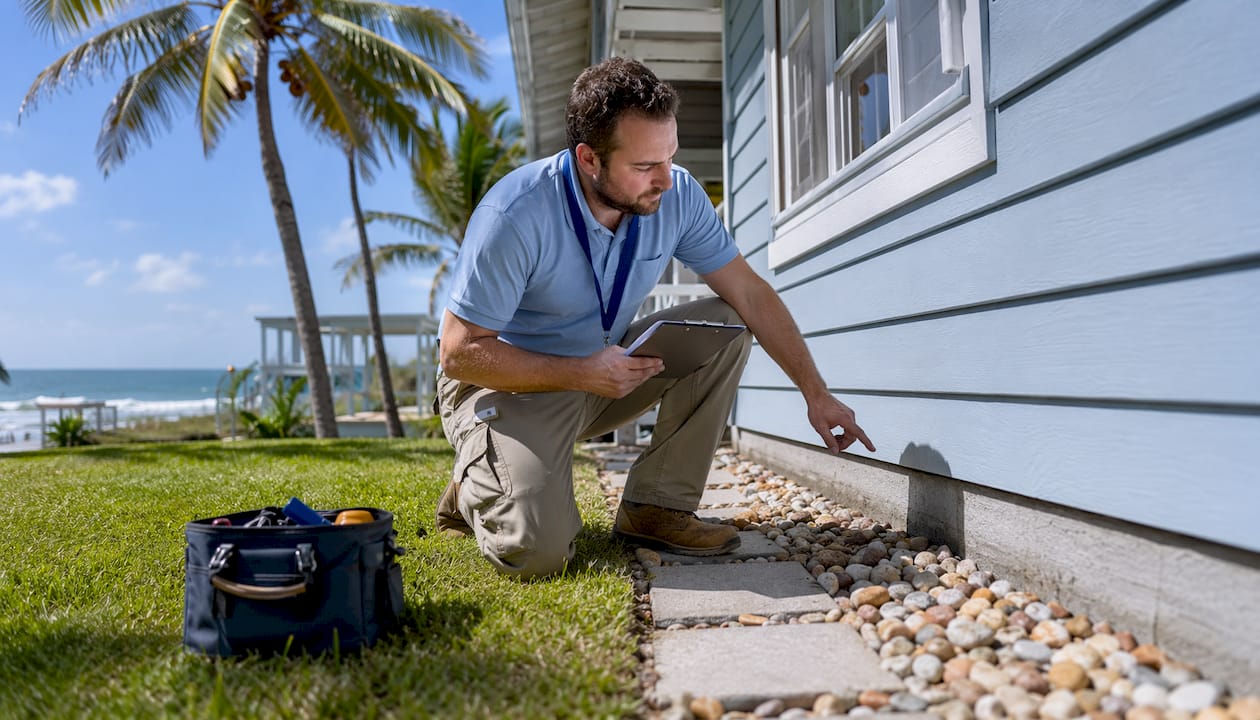
Alt text: Trinity Home Inspections certified inspector in khaki pants and blue shirt reviewing a site inspection report on a tablet in Mobile, Alabama.
If you are a homebuyer, seller, or investor in the Gulf Coast Alabama area and you need a report that goes beyond a checklist, Trinity Home Inspections delivers exactly that. Every inspection includes free thermal imaging, FAA-certified drone roof coverage, moisture meters, and gas detection. Reports are color-coded by severity so you know immediately what is urgent, what can wait, and what you can handle yourself.
Trinity Home Inspections is InterNACHI-certified, holds a $2M general liability policy, and delivers 99% of reports the same day of the inspection. For sellers preparing to list, a pre-listing inspection gives you the documentation you need to price confidently and avoid surprises at closing. Need to verify permits or property records before the inspection? The property and permit search tool is a practical first step.
Call 251-210-7376 or visit TrinityInspectionsLLC.com to schedule your inspection.
Key Takeaways
A site inspection report is only as useful as the detail, structure, and follow-through behind it. Vague observations and missing signatures are the fastest way to lose credibility and legal standing.
Point | Details |
Legal standing requires continuity | Logs must be sequenced from start to final acceptance, including no-work days with documented reasons. |
Checklists are a starting point | Supplement every checklist with field observation, worker conversations, and document review. |
Reports should educate, not just record | Include component lifespan estimates and maintenance advice, not just pass/fail findings. |
Modern tools improve report quality | Thermal imaging, drones, and moisture meters produce findings that visual inspection alone cannot capture. |
Trinity Home Inspections | InterNACHI-certified, same-day reports with free thermal imaging and FAA-certified drone coverage across Gulf Coast Alabama. |
FAQ
How do I write a site inspection report?
Start with a pre-inspection review of project documents and prior reports, then conduct a systematic onsite walkthrough with photos, worker conversations, and precise written observations. Draft the report the same day, organize findings by section, attach timestamped photos, note corrective actions with deadlines, and collect required signatures before distributing.
What does a good inspection report look like?
A strong report includes specific, location-based observations (not vague summaries), timestamped photographs tied to each finding, hazard severity ratings, corrective actions with assigned responsibility and deadlines, regulatory references, and signed acknowledgment from both the inspector and site supervisor.
How do you write a summary of an inspection?
Place a brief summary at the front of the report that lists the highest-priority findings, their severity, and the required next steps. Keep it to one page or less. Management and clients read the summary first, so it should reflect the most critical information from the full report without requiring them to read every page to understand what needs attention.
What credentials should an inspector have?
Look for certifications from recognized bodies like InterNACHI, completion of the National Home Inspectors Exam, and relevant specialty credentials such as FAA drone licensing for roof inspections. Professional liability (Errors and Omissions) insurance and general liability coverage are also non-negotiable indicators of a credible inspector.
Can Trinity Home Inspections produce this type of detailed report?
Yes. Trinity Home Inspections delivers same-day digital reports with color-coded severity sections, embedded photos and video, thermal imaging findings, and drone roof documentation, all produced by an InterNACHI-certified inspector with $2M in general liability coverage.
Recommended

