
What A Home Inspector Looks For After A Major Storm

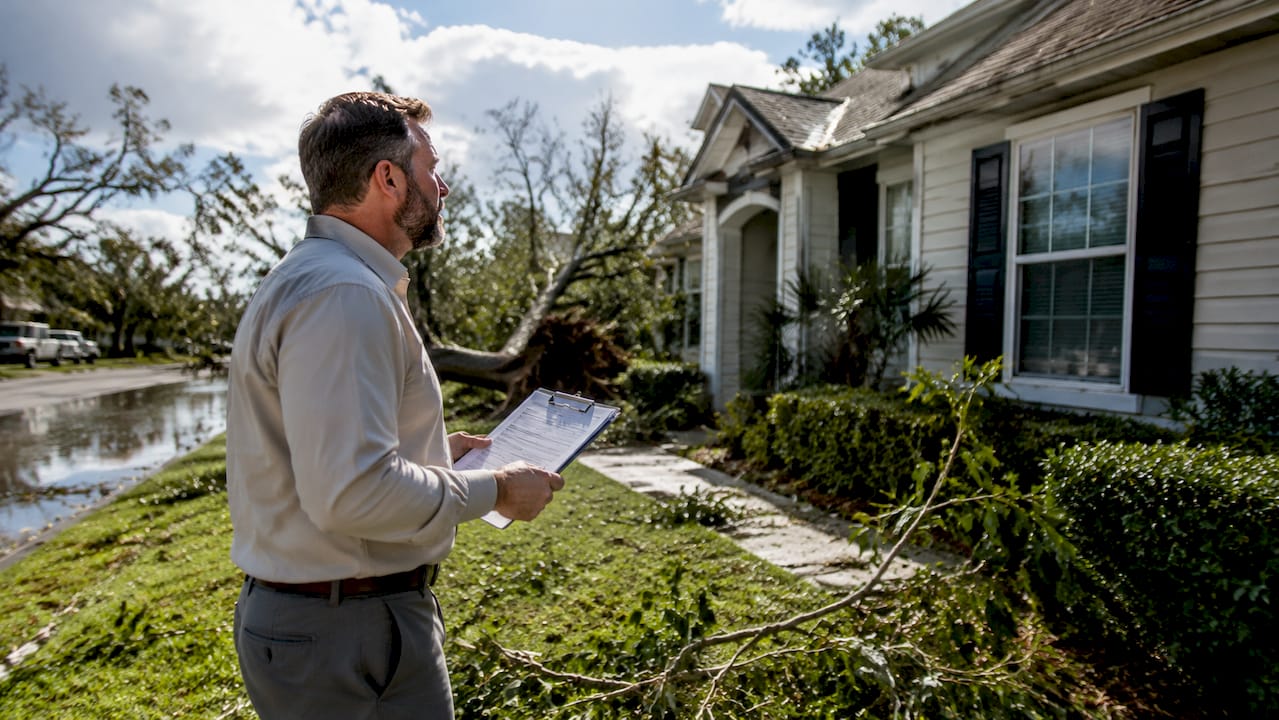
A post-storm home inspection is a systematic evaluation of a property’s structural integrity, water intrusion points, and safety systems to determine the full impact of storm damage. For homeowners and buyers across coastal Alabama, from Gulf Shores to Mobile, understanding what a home inspector looks for after a major storm can mean the difference between a safe return home and a costly oversight. This type of inspection goes beyond a standard pre-purchase walkthrough. It is a forensic process that documents new damage, identifies hidden hazards, and builds the evidence you need for insurance claims and repair planning. Getting it done quickly and by a qualified professional protects your investment and your family.
What do inspectors check first: exterior structure and roof damage after storms?
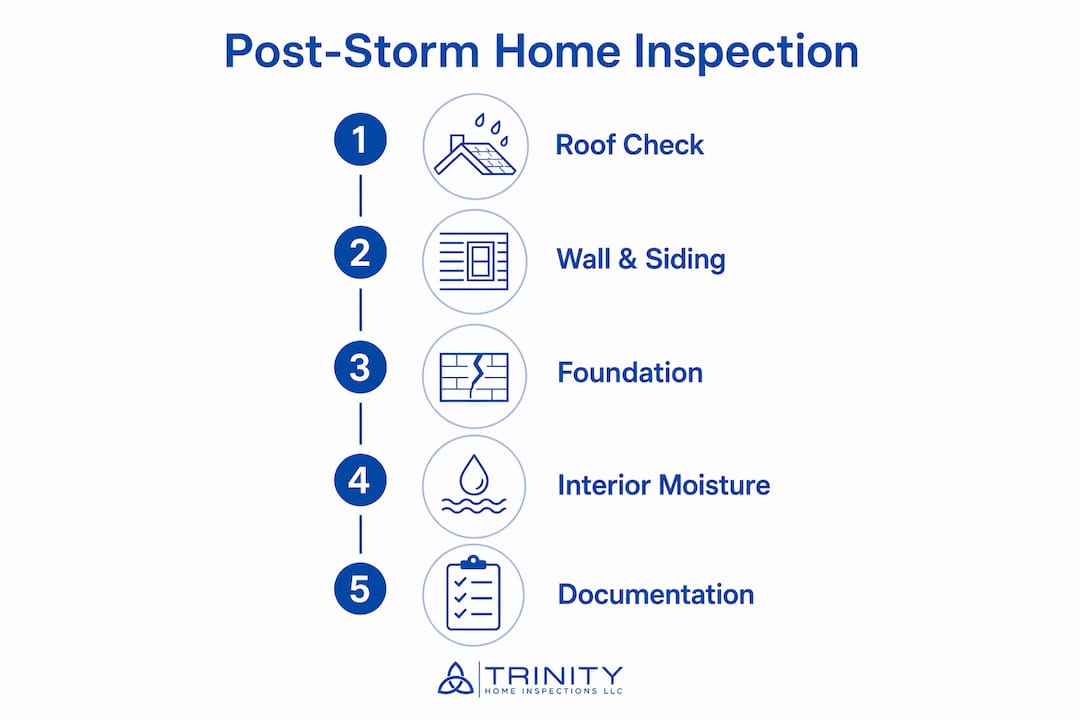
Roof damage after storms is the most common and most costly finding in a post-storm home assessment. A trained inspector starts at the top and works down, because water follows gravity and roof failures drive the majority of interior damage.
Roof inspection priorities
A thorough roof evaluation covers every component that storm winds and debris can compromise:
Shingles and ridge caps: Missing, cracked, or lifted shingles are the primary entry point for water. Ridge caps are especially vulnerable to high winds along the Gulf Coast.
Flashing and valleys: Metal flashing around chimneys, skylights, and roof valleys separates and channels water. Storm winds peel flashing away from the substrate, creating hidden gaps.
Underlayment exposure: When shingles are torn away, the felt or synthetic underlayment beneath is exposed. Inspectors check whether it remains intact or has been punctured by debris.
Debris impact zones: Falling tree limbs and wind-driven objects leave impact marks that crack decking and compress insulation below.
Gutters and downspouts: Detached or crushed gutters redirect water against the foundation rather than away from it.
Pro Tip: If your inspector cannot safely walk the roof, ask whether they use an FAA-licensed drone. Trinity Home Inspections carries FAA drone certification and uses high-resolution aerial cameras to inspect every roof surface, even when foot access is unsafe.
Wall and siding assessment
Storm-driven water patterns reveal themselves in diagonal cracks at door and window corners, bowed siding panels, and shifted framing. Inspectors look for gaps where siding has pulled away from corner trim, which allows wind-driven rain to soak wall cavities. Vinyl siding common in Baldwin County homes can crack or buckle under sustained wind pressure, and the damage is not always visible from the ground.
Foundation and grading checks
Foundation checks after a major storm focus on new cracks, soil erosion, and changes in grading that redirect water toward the home. Washout around pier foundations, common in coastal Alabama construction, can undermine structural support. Inspectors also examine the roof-to-wall and wall-to-foundation connections because these are the critical failure points where storm forces concentrate. A failure at either connection can compromise the entire structure, not just the surface material.
How do inspectors identify interior water intrusion and moisture damage?
Hidden water damage is the most dangerous outcome of a major storm because it is invisible until it becomes expensive. Mold growth begins within 24 to 48 hours of water intrusion. That timeline means a delayed inspection is not just inconvenient. It is a direct risk to your health and your home’s structural materials.
A systematic room-by-room approach is the standard method for finding concealed moisture. Inspectors do not just scan open floor space. They move furniture, open closets, and check behind appliances adjacent to exterior walls.
Ceilings and upper walls: Water stains, bubbling paint, and soft drywall indicate active or recent roof leaks. Brown rings on ceilings often mean water has pooled and dried multiple times.
Flooring: Warped hardwood, buckled laminate, and soft spots in subfloor material point to water that has soaked through from above or wicked up from below.
Closets and interior corners: Hidden water intrusion accumulates in closets and behind furniture along exterior walls. These spots are missed in casual walkthroughs and are prime locations for mold colonies to establish within 48 hours.
Electrical systems: Inspectors check for tripped breakers, warm or sparking outlets, and water exposure to panels. Electrical damage post-storm is often hidden inside walls and is dangerous without professional evaluation.
Plumbing and water heaters: Storm surge and flooding can shift supply lines, crack water heater connections, and introduce sewage backflow into drain lines. Inspectors run fixtures and check under sinks for active seepage.
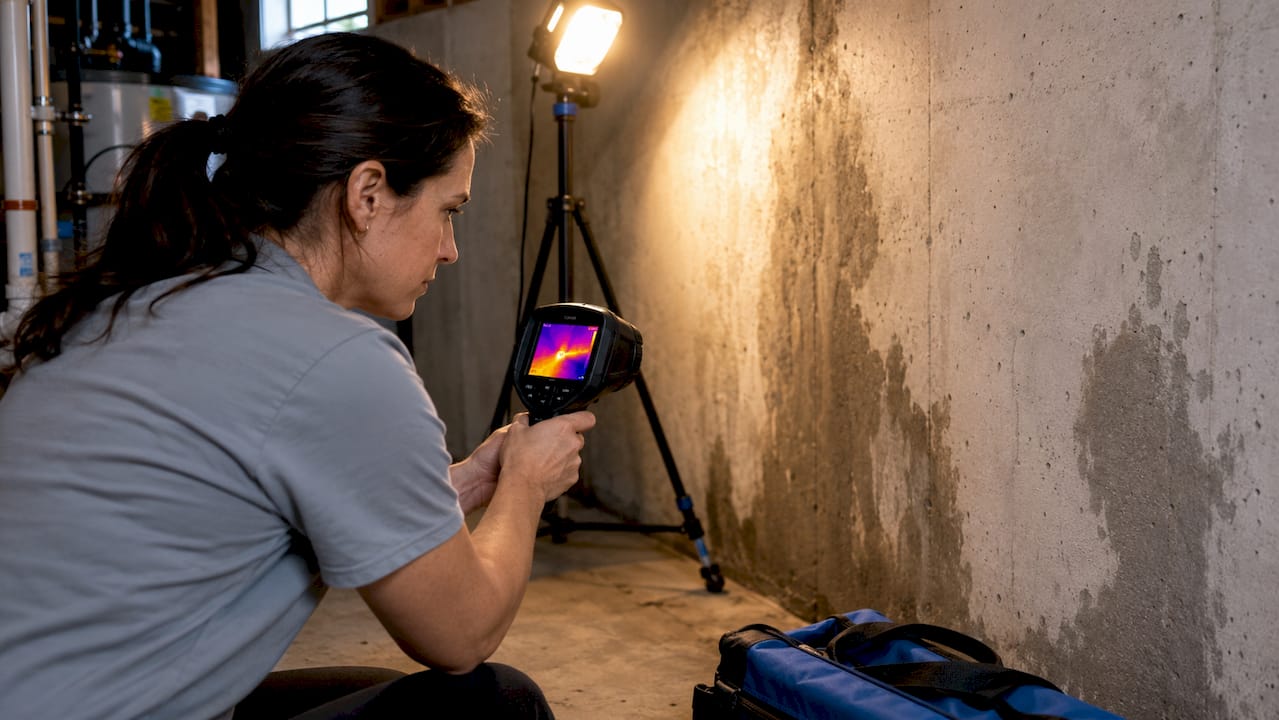
Pro Tip: Trinity Home Inspections includes free thermal imaging with every inspection. Infrared cameras detect temperature differences behind walls and under floors that indicate moisture pockets invisible to the naked eye, at no extra charge.
Tools like moisture meters confirm what thermal imaging flags. An inspector who relies only on visual observation will miss the water sitting inside your wall cavity right now. The room-by-room inspection method, including moving furniture and checking difficult spots, is the only reliable way to find concealed storm damage before it becomes a mold remediation project.
What forensic techniques separate new storm damage from pre-existing wear?
Post-storm inspections are forensic investigations. The goal is not just to find damage. The goal is to prove when and how that damage occurred. This distinction matters enormously for insurance claims, where adjusters may attribute new damage to pre-existing wear to reduce settlement amounts.
Independent forensic-style inspections protect homeowners by building a documented case that stands up against partial settlements and low contractor estimates. Here is how trained inspectors build that case:
Weathering pattern analysis: Old shingle damage shows oxidized edges, granule loss across the entire surface, and brittle material. New storm damage shows clean breaks, fresh granule displacement concentrated in impact zones, and exposed bright substrate.
Flashing and underlayment progression: Forensic inspectors analyze whether water intrusion follows a fresh breach or a chronic leak path. Fresh breaches show clean water staining without layered mineral deposits. Chronic leaks leave stacked stain rings and deteriorated substrate.
Wind direction mapping: Storm damage follows a directional pattern consistent with the storm’s approach. Inspectors document which faces of the home took the most impact and verify that damage aligns with recorded wind direction data.
Debris impact documentation: Impact marks from wind-driven objects have a distinct appearance: concentrated force points, radial cracking, and fresh material exposure. These differ from the gradual surface wear of aging materials.
Photo documentation before cleanup: Photographing damage immediately before any repairs or cleaning is the single most important step a homeowner can take. Wide-angle shots establish context. Close-up detail shots capture material condition. Both are critical evidence.
Damage Type | New Storm Damage Signs | Pre-Existing Wear Signs |
Shingle condition | Clean breaks, fresh granule loss at impact points | Oxidized edges, uniform granule loss across surface |
Water staining | Single-layer stain, no mineral deposits | Layered stain rings, mineral buildup |
Flashing | Pulled away cleanly, bright metal exposed | Corroded edges, old sealant failure |
Wood framing | Fresh splits, bright wood fiber | Dark staining, soft rot, prior repair marks |
Independent inspection reports provide a definitive damage record that prevents adjusters from attributing storm losses to normal aging. Homeowners who rely solely on an insurance adjuster’s assessment after a major storm often receive partial settlements. An independent report from a qualified inspector changes that dynamic.
Why does inspection timing matter and how are findings documented?
Speed is the most underrated factor in post-storm home safety. FEMA-level disaster inspections cover damaged and undamaged areas, personal property inventories, and structural soundness verification. Acting quickly preserves your evidence and limits secondary damage.
The case for immediate action after authorities clear the area is straightforward:
Mold colonies establish within 24 to 48 hours of water intrusion, and remediation costs rise sharply once growth begins.
Structural materials like OSB sheathing and engineered lumber lose strength rapidly when wet, increasing collapse risk.
Insurance adjusters begin processing claims immediately after a storm event. An independent report filed early carries more weight than one submitted weeks later.
Contractor demand spikes after major storms across Baldwin and Mobile counties. Documented damage gives you a clear scope of work before you accept any estimate.
A thorough post-storm inspection covers the full property: roof, exterior walls, foundation, all interior rooms, electrical panel, plumbing, HVAC, and detached structures. Photographic evidence protocols require wide-angle context shots and close-up detail shots of every damage point, taken before any materials are moved or cleaned. Inspectors also note the date, time, and weather conditions at the time of inspection to establish a clear timeline.
The inspection report itself functions as a third-party record. Independent reports prevent partial settlements by providing a systematic catalog of all damage that adjusters overwhelmed with claims after a major event may miss or minimize. For buyers considering a property in a post-storm market, this documentation also reveals whether a seller has disclosed all known damage.
Pro Tip: Do not wait for your insurance company to schedule an inspection. Schedule your own independent inspection first. You can share the report with your adjuster, but you control the documentation.
Key Takeaways
A post-storm home inspection is a time-sensitive forensic process that protects your safety, your insurance claim, and your repair budget.
Point | Details |
Start with the roof | Shingles, flashing, ridge caps, and underlayment are the primary storm damage entry points. |
Act within 48 hours | Mold growth begins within 24 to 48 hours of water intrusion, making speed critical. |
Inspect room by room | Hidden moisture in closets and behind furniture causes mold and structural decay if missed. |
Document before cleanup | Wide-angle and detail photos taken before repairs are your strongest insurance evidence. |
Get an independent report | Independent inspection reports prevent partial insurance settlements after major storms. |
What I have learned inspecting Gulf Coast homes after storms
After inspecting homes across Mobile, Baldwin, and Escambia counties following major storm events, the pattern I see most often is not the damage itself. It is the delay. Homeowners wait for their insurance company to send an adjuster. They wait for a contractor to give a free estimate. They wait until the smell gets bad enough to call someone. By that point, what started as a manageable roof leak has become a mold remediation project that costs three to five times more than the original repair.
The second mistake I see consistently is trusting the first report. Insurance adjusters are professionals, but they are also handling dozens or hundreds of claims after a major storm. They work fast. That speed sometimes means a partial assessment. I have walked properties where an adjuster’s report noted shingle damage but missed flashing failure, water intrusion in a wall cavity, and a compromised electrical panel. Each of those items was documented in my independent report and ultimately included in the final settlement.
Coastal Alabama homes face conditions that inspectors in other parts of the country rarely encounter. High humidity means moisture problems escalate faster here than in drier climates. Pier and beam foundations common in older Mobile and Baldwin County neighborhoods are more vulnerable to storm surge washout than slab construction. And the combination of wind and rain in a Gulf Coast storm is different from a Midwest hail event. The damage patterns are different, and recognizing them requires local experience.
My advice to any homeowner or buyer in this region is simple. Schedule an independent inspection as soon as authorities clear the area. Photograph everything before you touch it. And choose an inspector who knows the difference between a fresh storm breach and a ten-year-old leak. That knowledge is what protects you.
— Matt
Trinity Home Inspections is ready when the storm clears
After a major storm, you need answers fast. Trinity Home Inspections serves homeowners and buyers across Gulf Shores, Orange Beach, Daphne, Fairhope, Mobile, and the surrounding Gulf Coast Alabama area with InterNACHI-certified post-storm assessments, same-day photo and video reports, and free thermal imaging included with every inspection.
[

Alt text: Trinity Home Inspections inspector in khaki pants and blue shirt with white Trinity Home Inspections logo conducting a post-storm home assessment in coastal Alabama.
When mold risk is a concern after flooding or water intrusion, Trinity also offers professional mold testing and inspection services with certified lab reports and chain of custody documentation. For Mobile-area homeowners specifically, the Mobile mold inspection service provides fast, local response when time matters most.
Call 251-210-7376 or visit TrinityInspectionsLLC.com to schedule your post-storm assessment today.
What’s included in a Trinity post-storm inspection
Full exterior evaluation: roof, walls, foundation, and connections
Interior room-by-room moisture and water damage assessment
Electrical, plumbing, and HVAC system checks
Free thermal imaging for hidden moisture detection
FAA-licensed drone roof inspection when foot access is unsafe
Same-day digital report with photos and video
Mold testing add-on available with certified lab results
FAQ
What does a home inspector look for after a major storm?
A home inspector examines the roof, exterior walls, foundation, interior rooms, electrical panel, plumbing, and HVAC system for storm damage, water intrusion, and safety hazards. The inspection distinguishes new storm damage from pre-existing wear to support insurance claims and repair planning.
How soon should I get a home inspection after a storm?
Schedule an inspection as soon as authorities clear the area for re-entry. Mold growth begins within 24 to 48 hours of water intrusion, and delaying the inspection increases both health risk and repair costs.
Can a home inspection report help with my insurance claim?
An independent inspection report provides a systematic, third-party damage record that prevents partial insurance settlements by documenting all damage before cleanup or repairs begin. It is one of the strongest tools you have when negotiating with an adjuster.
How do inspectors tell new storm damage from old wear and tear?
Inspectors analyze weathering patterns, material aging, stain layering, and wind direction damage patterns to determine whether damage is fresh or chronic. New storm damage shows clean breaks and fresh material exposure, while pre-existing wear shows oxidized edges, layered staining, and prior repair evidence.
Should I photograph damage before the inspector arrives?
Yes. Photographing damage immediately before any cleanup or repairs, using both wide-angle and close-up shots, creates critical evidence that supports your inspection report and insurance claim. Do not move materials or begin cleanup before documenting everything.
Recommended
