
Homeowners: 15 minute Diagnostic Before Fixing Gaps in Hardwood Floors

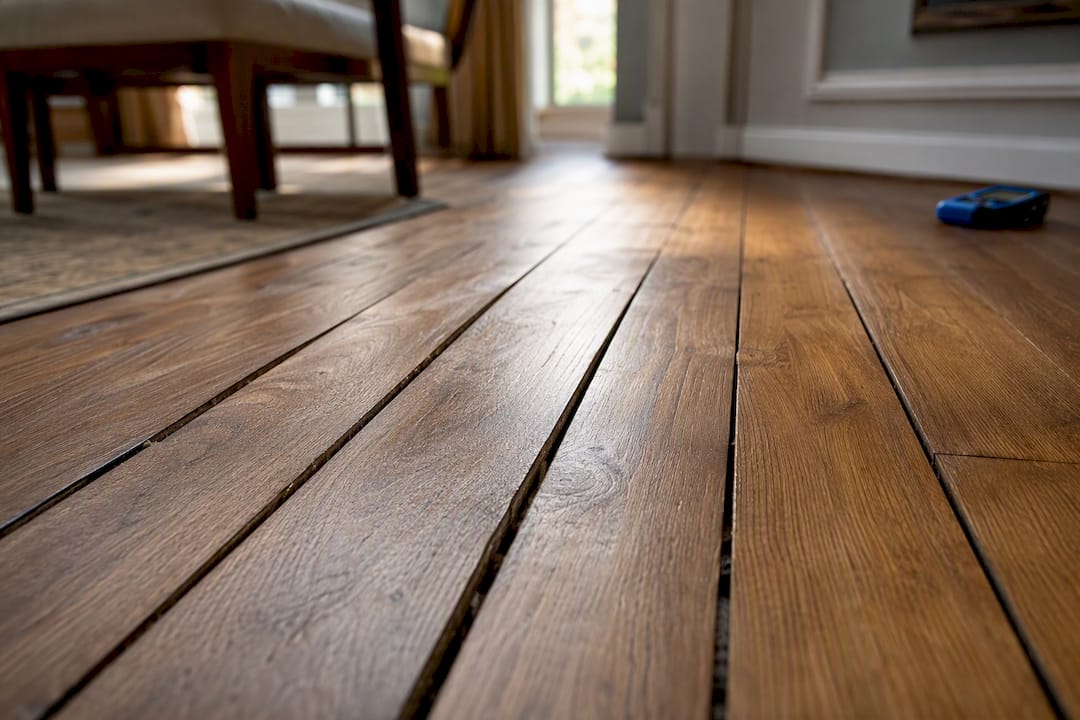
Most gaps between hardwood boards come from seasonal humidity loss, which shrinks wood planks during dry winter months. Other common causes include improper acclimation before installation, moisture problems under the floor, and normal structural movement. The triage rule is simple: gaps that open in winter and close by summer are typically normal, while gaps that stay open year round or keep growing deserve a closer look.
TL;DR:
Gaps that open in winter and close by summer are normal seasonal movement caused by changes in indoor humidity, especially in dry months.
Larger or persistent gaps, especially those that stay open all year or are linked with moisture signs, often indicate underlying issues like moisture under the floor or installation errors.
Controlling indoor humidity with a humidifier and ensuring proper acclimation before installation can prevent most seasonal gaps.
Using flexible, color-matched filler is suitable for small, stable gaps, while larger gaps may require wood slivers or board replacement depending on cause and size.
Professional inspections with moisture meters and thermal imaging are recommended to diagnose causes accurately before attempting repairs.
What Causes Gaps Between Hardwood Boards
Wood is hygroscopic, meaning it constantly absorbs and releases moisture from the air around it. When indoor humidity drops in the winter heating season, boards give up moisture and shrink slightly in width. That shrinkage shows up as thin, uniform gaps running the length of your floor, and it’s the single most common reason gaps appear between hardwood boards, according to the National Wood Flooring Association.
Several other factors contribute to gapping, sometimes on their own and sometimes stacked together:
Improper acclimation. Boards installed straight off the truck, without time to adjust to the home’s humidity, shrink unevenly after the fact.
Missing expansion space. Flooring installed tight against walls or cabinets has nowhere to move, forcing gaps to open between boards instead.
Moisture under the floor. A slow plumbing leak, a damp crawlspace, or a subfloor that was never properly dried can pull moisture out of boards from below.
Hot spots. Floor registers, radiant heat lines, and sunny windows dry out nearby boards faster than the rest of the room.
Board width. Wider planks move more in absolute terms than narrow strip flooring, since movement is proportional to width — an 80mm board can shrink or swell by roughly 0.25mm for every 1% change in moisture content.
Installation mistakes, subfloor defects, and inadequate acclimation are consistently flagged in industry technical guidance as the leading causes of gaps that don’t follow a normal seasonal pattern. That distinction, seasonal versus persistent, is the whole ballgame when deciding whether to worry.
Are Gaps Normal in Hardwood Flooring?
Gaps that open in winter and close by summer are a normal part of how wood behaves, not a defect. The wood absorbs humidity in warmer, wetter months and swells back together, which is exactly the pattern the NWFA points to when separating ordinary seasonal movement from an actual problem.
A few guideposts help you judge what you’re looking at:
Size. Gaps considered within the normal seasonal range are commonly small on solid hardwood.
Pattern. Gaps changing size seasonally generally indicate normal movement. Gaps that remain constant year-round may signal a problem.
Company. Look for signs like cupping, buckling, soft spots, musty odors, or staining near the gaps, which indicate moisture intrusion rather than normal dryness.
Timing. Check gaps during your region’s driest stretch and again during a humid month. If the change tracks with the season, that’s a good sign.
Pro Tip: Keep a cheap hygrometer near your floor and jot down the reading whenever you notice a gap. A pattern of low humidity lining up with wider gaps tells you far more than a single measurement ever will.
Diagnostic Checklist Before You Repair Anything
Before you reach for filler or call a contractor, spend fifteen minutes gathering facts. It saves you from fixing the wrong problem.
Photograph and date the gaps at two or three spots in the room, so you can compare seasons later.
Measure gap width with a small ruler or feeler gauge at several points along the same board run.
Check indoor relative humidity with a hygrometer and compare it to the recommended range for hardwood floors.
Look for local moisture sources nearby, appliances, plumbing lines, exterior walls, or a crawlspace access point.
Inspect the subfloor where accessible for staining, softness, or a musty smell.
Bring in a moisture meter if gaps are wide, isolated to one area, or paired with cupping, or request a professional inspection if you’re not confident reading the results.
This short routine does what a documented inspection does on a larger scale: it turns a guess into a record you can act on, which matters if gaps ever become part of a home sale negotiation.
Fixes and Repairs by Gap Size and Cause

The right fix depends entirely on whether the gap is seasonal or permanent, and how wide it’s gotten.
For seasonal gaps, the best move is often no filler at all. Running a humidifier during winter to bring relative humidity back into a normal range lets the wood swell and close the gap on its own. Filling a gap that’s going to close anyway risks trapping the filler and cracking the finish when the wood expands again.
For small, persistent gaps up to roughly 3/32 inch, a flexible, color matched filler applied after the floor has stabilized works well. Industry guidance is clear that rigid or hard putty products should be avoided, since they can crush wood fibers when the boards swell back.
Medium gaps sometimes call for wood slivers, thin strips cut to match the board and glued into place, followed by a touch up finish. Large or structural gaps, especially ones tied to subfloor damage or a moisture source that hasn’t been resolved, usually mean board replacement or subfloor repair.
Pro Tip: If a gap is wide enough to catch a coin on its edge, skip the DIY filler and get the subfloor checked first. Filling over an unresolved moisture problem just hides it.
Preventing Gaps in Hardwood Flooring
Prevention comes down to controlling humidity and getting the details right before the floor ever goes down. The National Wood Flooring Association recommends acclimating flooring for three to seven days before installation and keeping indoor relative humidity in a consistent target band, commonly cited between 35 and 55%, year round.
A few habits go a long way toward keeping gaps to a minimum:
Run a humidifier during heating season to avoid the sharp humidity swings that cause shrinkage.
Check your crawlspace and subfloor for excess moisture at least once a year, especially in coastal climates.
Keep a hygrometer somewhere visible and check it monthly, not just when a gap catches your eye.
Address drainage and ventilation issues under the home before they show up as flooring problems.
Homeowners along the Gulf Coast face a particular challenge here, since humidity swings between seasons tend to be sharper than in drier climates.
What a Home Inspection Adds When You See Gaps
A trained eye brings tools most homeowners don’t have on hand. During an InterNACHI certified inspection, moisture meters check subfloor and board readings directly, rather than relying on a visual guess. Thermal imaging can spot hidden moisture or missing insulation behind walls and under floors when conditions allow, and every finding gets documented with photos and video.
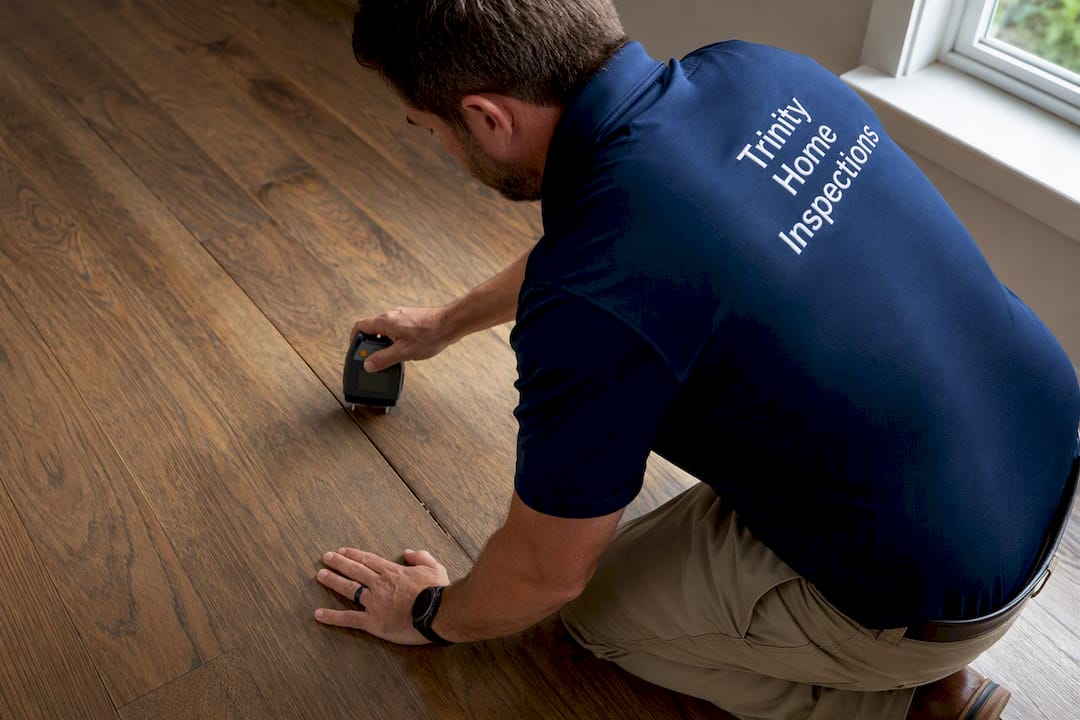
That documentation matters because it separates a normal seasonal pattern from something that needs attention, without alarming language or guesswork. An inspection typically ends in one of three places: a simple humidity fix you can do yourself, a referral to a trusted flooring contractor, or in less common cases, a recommendation for structural repair if the subfloor itself is compromised.
What Homeowners Get Wrong About Floor Gaps
Most homeowners either panic at the first sign of a gap or ignore it entirely, and both reactions miss the point. Wood is supposed to move. A floor that never shows any seasonal gap at all is either engineered flooring in a very stable climate or a floor nobody has looked at closely in a few winters.
Where I think conventional advice falls short is the rush to filler. Plenty of guides treat filling gaps as step one, when step two, sometimes step three, would leave you with a cleaner floor and less wasted product. If a gap closes every summer, filling it in January just means you’re fighting the wood’s natural cycle instead of working with it.
The bigger blind spot is moisture underneath the floor. Homeowners check the room they’re standing in and rarely think about the crawlspace or the subfloor, even though that’s where a lot of the abnormal gaps actually start. A hygrometer costs less than a filler kit and tells you more. A moisture meter reading from a real inspection tells you even more than that. Prioritize the diagnosis over the cosmetic fix, and the right repair usually becomes obvious.
— Matt
Get a Documented Diagnosis, Not a Guess
Trinity Home Inspections gives you a documented answer instead of a guess, at no extra cost for the tools that actually settle the question. A moisture meter reading and a thermal image tell you in minutes whether a gap is dry winter air or something under the floor that needs attention, and you get that answer the same day.
[

Every inspection from Trinity Home Inspections includes moisture meter checks at suspect areas, thermal imaging when conditions allow, and a color coded report that separates safety issues from minor, DIY-friendly items. If gaps or other concerns turn up, you’ll also get a list of trusted local contractors for quotes, so you’re not left searching on your own. Sellers preparing to list often catch flooring issues early with a pre-listing inspection, avoiding surprises during a buyer’s walkthrough. Call 251-210-7376 or visit TrinityInspectionsLLC.com to schedule an inspection and get a same-day report with the answers you need.
Sources
FAQ
How Do I Fix Gaps Between Hardwood Floor Boards?
For seasonal gaps, run a humidifier to restore normal indoor humidity and let the wood swell back together on its own. For gaps that don’t close, use a flexible, color matched filler for small gaps or wood slivers for medium ones, and consider board replacement for large or structural gaps.
Is It Normal to Have Gaps in Hardwood Floors?
Yes, small gaps that open in dry winter months and close in humid months are a normal result of wood’s natural moisture cycle. Gaps that stay open all year, keep growing, or show up alongside cupping or staining are not part of that normal pattern.
What Should I Use to Fill Gaps Between Floor Boards?
Use a flexible, color matched wood filler rather than a rigid putty, since hard fillers can crack or crush wood fibers when the boards expand again. Wood slivers, or Dutchman repairs, work better for medium sized gaps than filler alone.
What Is the Best Hardwood Floor Gap Filler?
The best choice is a flexible, color matched filler designed for hardwood, applied only after you’ve confirmed the gap has stabilized. Rigid or hard putty products should be avoided since they resist the wood’s natural expansion.
When Should I Call a Professional About Floor Gaps?
Call a professional if gaps are wide, isolated to one area, paired with cupping or buckling, or if you notice odors or staining nearby. An InterNACHI-certified inspection with a moisture meter and thermal imaging can confirm whether the cause is seasonal or something under the floor.
Recommended

