
What Is an HVAC Float Switch? a Homeowner's Guide

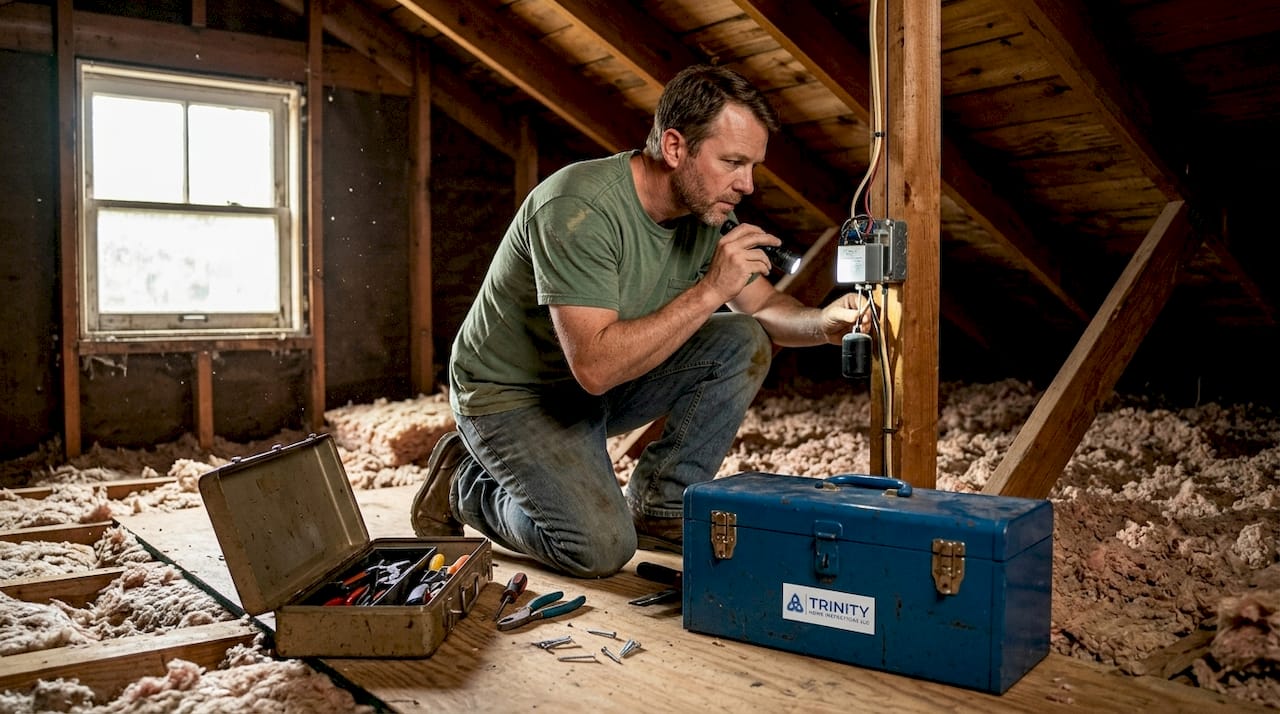
Most homeowners spend zero time thinking about their HVAC float switch — until water is dripping through a ceiling or pooling on the floor. A float switch for HVAC systems is a small safety device that monitors water levels in your condensate drain pan and shuts the system down before overflow causes serious damage. Your air conditioner produces condensate every time it runs, and without proper drainage, that water has nowhere to go. This guide breaks down how an HVAC float switch works, why it matters, what goes wrong, and what you can do to protect your home.
Key takeaways
Point | Details |
Float switches prevent water damage | A float switch shuts your HVAC off before condensate overflow damages ceilings, walls, and floors. |
Many systems lack this protection | Older or budget installs often have no float switch, making inspection and upgrades worthwhile. |
Low cost, high protection | Professional installation runs $150 to $300, while water damage repairs can exceed $15,000. |
Maintenance keeps switches working | Regular drain line cleaning prevents the clogs and slime buildup that cause float switch failures. |
Gulf Coast homes face higher risk | High humidity and year-round AC use in Alabama make float switch reliability especially critical. |
What is an HVAC float switch?
A float switch is a small but critical safety device installed in your HVAC system to detect rising water levels and trigger a shutdown before overflow occurs. It sounds simple because it is. That simplicity is actually what makes it so reliable — and what makes neglecting it so costly.
How the mechanism works
The core of a float switch is a buoyant housing with internal contacts that open or close a circuit at a specific water level. Most residential units use a tilt-activated or reed switch design. When water rises and lifts the float, the internal contacts shift position and break an electrical circuit. That circuit break is what tells your HVAC system to stop running.
These switches operate on 24V low-voltage control circuits. When the float trips, it interrupts the thermostat or air handler circuit. The compressor, supply fan, and heating functions all stop until the water level drops and the circuit resets. Think of it as a built-in kill switch for your entire cooling system.
Where float switches are installed
You will typically find float switches in one of three locations:
The primary drain pan, located directly beneath the evaporator coil inside the air handler
The secondary or auxiliary drain pan, which sits below the entire air handler unit to catch overflow from a failed primary drain
The secondary drain line, where a switch monitors water flow through a backup condensate line
Float switches in auxiliary pans or secondary lines provide a second layer of protection when the primary drain is blocked. This placement is often required by local mechanical codes, especially in areas where attic-mounted air handlers could dump water into living spaces.
Types of float switches in residential systems
Not all float switches are built the same. The two most common types you will encounter are:
Inline float switches, which mount directly inside the condensate drain line and shut off the system when water backs up in the line itself
Pan-mounted float switches, which sit inside the drain pan and activate when the water level in the pan rises too high
Some newer systems also use electronic water sensors instead of mechanical floats. These sensors detect moisture contact and function similarly to a float switch, though they have no moving parts and can be less prone to mechanical failure over time.
Pro Tip: If your HVAC system is older than 10 years and you are not sure whether it has a float switch, check the drain pan beneath the air handler. If the pan is dry and clean, you likely have good drainage. If it shows signs of staining or mineral deposits around the edges, the pan has held water before and a float switch should be verified or added.
Why float switches matter for your home
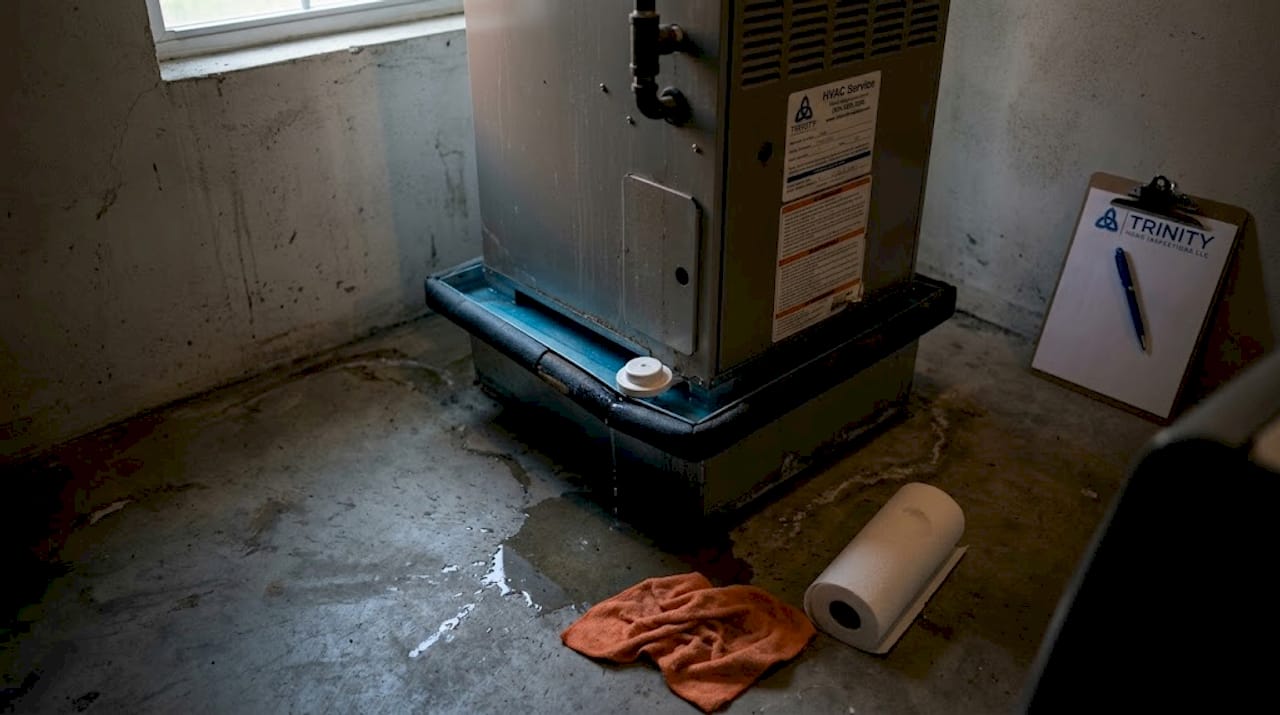
Your HVAC system produces a significant amount of condensate on a hot, humid day. A typical central air conditioner can generate one to two gallons of water per hour during peak cooling. All of that water needs somewhere to go, and when the drain line clogs, the only direction left is over the edge of the drain pan and into your home.
The cost gap between a switch and a repair
Professional float switch installation costs between $150 and $300, which is a minor expense compared to what happens without one. Water damage repairs involving drywall, insulation, flooring, and mold remediation can easily exceed $15,000. That is not a worst-case exaggeration. That is a realistic estimate for a single attic air handler that overflows without any protection.
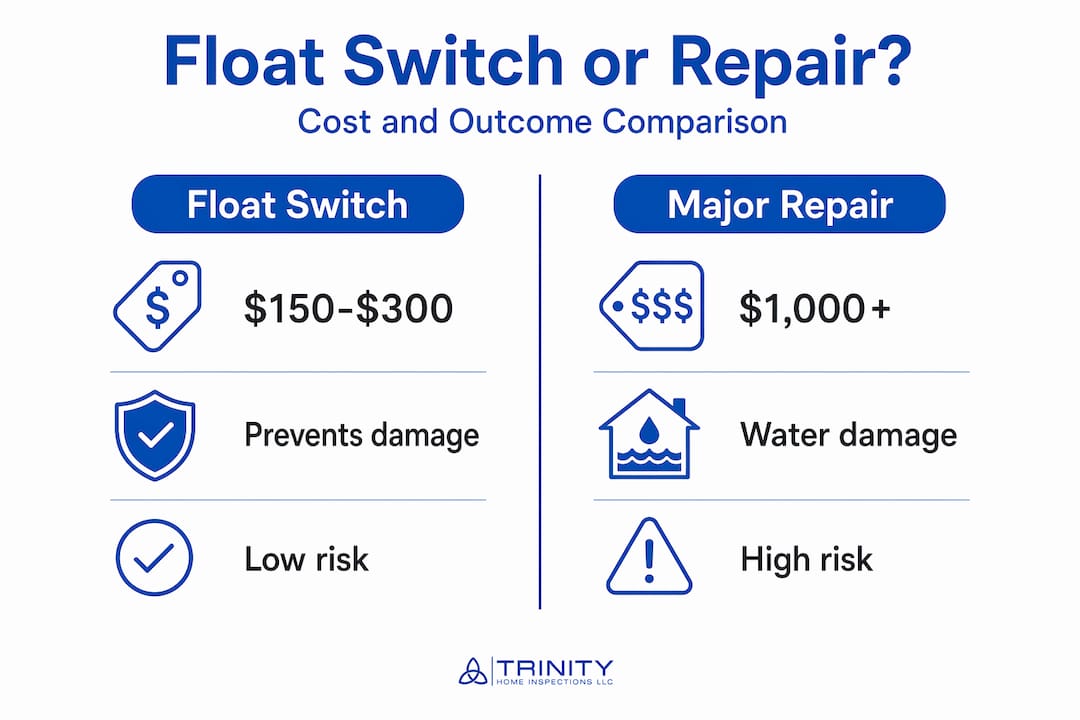
Float switches act as a reactive safety device that stops overflow before it becomes a structural problem. One tripped float switch on a summer afternoon can save you weeks of contractor work and a major insurance headache.
Common misconceptions homeowners have
Many people assume their HVAC system already has complete water protection built in. Here are the most common false beliefs worth clearing up:
“My drain pan catches everything.” A drain pan has a limited capacity. If the drain line is blocked, the pan fills and overflows.
“My unit is new, so it is protected.” New does not always mean a float switch was included. Budget installations sometimes skip it.
“My HVAC shuts off when something is wrong.” Not without a float switch. A clogged drain does not automatically stop the system.
“I would notice if there was a problem.” By the time you see water damage, the harm is already done. Float switches catch the issue before it becomes visible.
Codes and insurance considerations
Local mechanical codes and insurance carriers increasingly require or strongly recommend float switches, particularly for attic-mounted systems where gravity-fed overflow goes directly into the structure. In Alabama and much of the Gulf Coast, the combination of high humidity, long cooling seasons, and elevated installation heights makes this device less optional and more expected.
Protection level | Without float switch | With float switch |
Water overflow risk | High | Low |
System auto-shutdown | None | Triggers immediately |
Water damage exposure | $5,000 to $15,000+ | Near zero with timely response |
Code compliance (attic units) | May not meet requirements | Meets auxiliary drain protection requirements |
Insurance claim potential | High | Significantly reduced |
Recognizing and troubleshooting float switch problems
A float switch that is not working correctly causes one of two opposite problems: your system shuts off when it should not, or it keeps running when it absolutely should stop. Knowing which problem you have is the first step toward fixing it.
Symptoms that signal a float switch issue
System will not turn on at all. If your HVAC stopped working and you cannot figure out why, a tripped float switch is one of the most common causes. Check the drain pan first.
Standing water in the drain pan. Water in the pan that is not draining signals a clog. The float may have tripped in response, or it may be about to.
System runs but water is visibly overflowing. This means the float switch failed to trip when it should have. A stuck or missing switch is the likely cause.
System cycles on and off repeatedly. A float that is borderline tripped due to a slow drain will cause short cycling as water levels rise and fall.
No float switch is present at all. Many HVAC systems lack a float switch entirely, especially older or contractor-grade installs. Absence is itself a problem.
What causes float switches to fail
Clogged or stuck float switches are the most common failure mode. Algae, slime, and mineral deposits build up inside the drain pan and around the float mechanism over time. A float coated in biofilm may not rise freely, which means it will not trip when water levels rise. The opposite can also happen: a float stuck in the raised position keeps the system locked off even after the water drains away.
Physical obstructions are less common but worth checking. A stray piece of debris or a shift in the unit’s leveling can hold the float in place. In Gulf Coast homes where systems run nearly year-round, this kind of buildup happens faster than in cooler climates.
Pro Tip: Some float switch failures are completely silent. The float can be stuck in the off position, allowing water to build up without triggering any alarm or shutdown. A quick visual check of the drain pan during your regular HVAC maintenance is the only way to catch this before it turns into a water damage event.
Simple DIY checks you can do
Before calling a technician, try these basic checks:
Look at the drain pan and see if water is present or if there are stain rings indicating past overflow
Gently lift and release the float by hand to see if it moves freely
Pour a small amount of water into the pan to test whether the float trips the system
Check the condensate drain line for visible blockage at the exterior drain point
If the switch is visibly corroded, cracked, or does not move freely, replacement is the right call. A new inline float switch costs as little as $10 to $30 at a hardware store, though you will want a technician to verify proper wiring.
Maintenance and installation best practices
Keeping a float switch functional is less about the switch itself and more about keeping the drain system clean. The switch is a backup. Your goal should be to prevent it from ever needing to trip.
Routine maintenance steps for homeowners
Cleaning condensate drain lines regularly prevents the algae and biofilm buildup that clogs drains and prematurely activates float switches. Here is what a solid maintenance routine looks like:
Flush the drain line quarterly with a cup of diluted white vinegar or a condensate drain treatment tablet to prevent algae growth
Inspect the drain pan at the start of every cooling season for staining, standing water, or debris
Check the float switch during each inspection by verifying it moves freely and is positioned correctly
Clear the exterior drain line opening to make sure nothing is blocking the discharge point
Schedule annual HVAC service with a licensed technician to include condensate system inspection
Maintaining algae-free drain lines directly extends float switch life and keeps your entire system running more efficiently. When the drain flows freely, the float switch never needs to act. That is exactly the outcome you want.
Installing or upgrading a float switch
If your system currently lacks a float switch, installation is a relatively straightforward job for a qualified HVAC technician. The switch wires into the low-voltage control circuit, and the float sits in the drain pan or inline on the secondary drain line. Most technicians can complete the work in under an hour.
For homeowners with basic electrical comfort, inline float switches are available at HVAC supply stores and some home improvement retailers. The wiring involves two wires in the 24V control circuit. That said, if you are not confident working around your air handler’s wiring, professional installation is the safer and smarter choice.
Upgrade option | Cost estimate | Best for |
DIY inline float switch | $15 to $40 (parts only) | Experienced DIYers with basic HVAC knowledge |
Professional pan-mount install | $150 to $250 | Most homeowners; older systems without protection |
Professional inline install | $175 to $300 | Attic units; systems with secondary drain lines |
Electronic water sensor upgrade | $200 to $350 | Newer systems; preference for no-moving-parts design |
You should also verify your HVAC system’s overall condition before investing in a float switch upgrade. If the air handler itself is near end of life, a full system evaluation may be worth scheduling alongside the float switch check.
Float switch costs and when they are required
The math on float switches is straightforward. You are spending a small amount now to avoid spending a large amount later. Installation costs are modest, and the protection they provide is disproportionately valuable relative to that cost.
For most Gulf Coast homeowners, a float switch is not optional anymore. Local mechanical codes in many Alabama jurisdictions require auxiliary drain protection for attic-installed equipment. Even where it is not strictly mandated, your insurance carrier may view its absence as a risk factor during a claim review.
The long-term cost picture looks like this: a professionally installed float switch at $150 to $300 can prevent water damage claims that commonly run $5,000 to $15,000 or more. Beyond the direct repair cost, an unchecked water event can introduce mold within 24 to 48 hours, adding remediation costs and potential health concerns on top of the structural damage.
A note on proactive timing: The best time to add or verify a float switch is during routine HVAC maintenance in early spring, before the peak cooling season starts. You never want to discover a drainage problem in July when your system is running 12 hours a day and a technician’s schedule is packed.
My perspective on float switches after years of inspections
I will be honest: float switches come up in more inspections than most homeowners would expect. In my experience inspecting homes across the Gulf Coast, I have walked into more than a few attics where the drain pan was stained, the drain line was partially blocked, and there was no float switch anywhere in sight. Some of those systems had been running that way for years without incident. Others had left water marks on ceilings that the owners had simply painted over.
What I have learned from that is that Gulf Coast homeowners face a compounding risk that homeowners in drier climates do not. When your AC runs from March through October, your condensate system is under constant load. A drain line that might stay clear in a moderate climate will grow algae in weeks here. A float switch that never trips in a dry climate becomes a critical safeguard in Mobile or Daphne.
The misconception I hear most often is that a tripped float switch means something is seriously wrong with the HVAC unit. Most of the time, it just means the drain line needs cleaning. The switch did exactly what it was supposed to do. The real problem is when homeowners ignore the trip, reset the system manually, and never address the underlying drainage issue.
My honest recommendation is this: if you do not know whether your system has a float switch, find out today. It takes five minutes to check the drain pan. If there is no switch, the HVAC DIY maintenance guide has solid guidance on what to look for. And if you are buying a home, make sure your inspector checks for it specifically. A missing float switch on an attic air handler is not a minor finding.
— Matt
Get a professional HVAC check before problems start
[

If you are not sure whether your HVAC system has a float switch, or if you have seen signs of past water intrusion near your air handler, a professional inspection is the clearest way to get answers. Trinity Home Inspections checks HVAC systems for exactly these kinds of issues, including condensate drain condition, float switch presence, and signs of water damage that may not be immediately visible.
A pre-listing or buyer inspection includes a thorough review of the HVAC system and drainage setup, so you know what is protected and what is not before making a major decision. If water intrusion from a failed drain system is suspected, Trinity also offers mold testing services to assess whether moisture has already created a secondary problem.
Call or text 251-210-7376, or visit TrinityInspectionsLLC.com to schedule your inspection today. Same-day reports, certified inspectors, and honest findings every time.
FAQ
What does an HVAC float switch do?
An HVAC float switch monitors water levels in the condensate drain pan and shuts the system off when water rises too high, preventing overflow and water damage to your home.
Where is the float switch located in an HVAC system?
Float switches are typically found in the primary drain pan beneath the evaporator coil, in the auxiliary drain pan below the air handler, or inline on the secondary condensate drain line.
How do I know if my float switch is bad?
If your HVAC system will not turn on and there is standing water in the drain pan, the float switch has likely tripped. If the system runs while water visibly overflows, the switch may have failed to trip and needs inspection or replacement.
Can I install a float switch myself?
A basic inline float switch is a DIY-accessible project for homeowners comfortable with low-voltage wiring, with parts costing $15 to $40. For most homeowners, professional installation at $150 to $300 is the safer choice and guarantees proper integration with the control circuit.
How often should a float switch be checked?
Inspect your float switch at least once per year, ideally at the start of the cooling season. In high-humidity climates like the Gulf Coast, a quick visual check every three months alongside drain line flushing is a practical approach.
Recommended