
Why Choose Accredited Inspectors for Your Home Purchase
- Matt Cameron
- 2 hours ago
- 9 min read

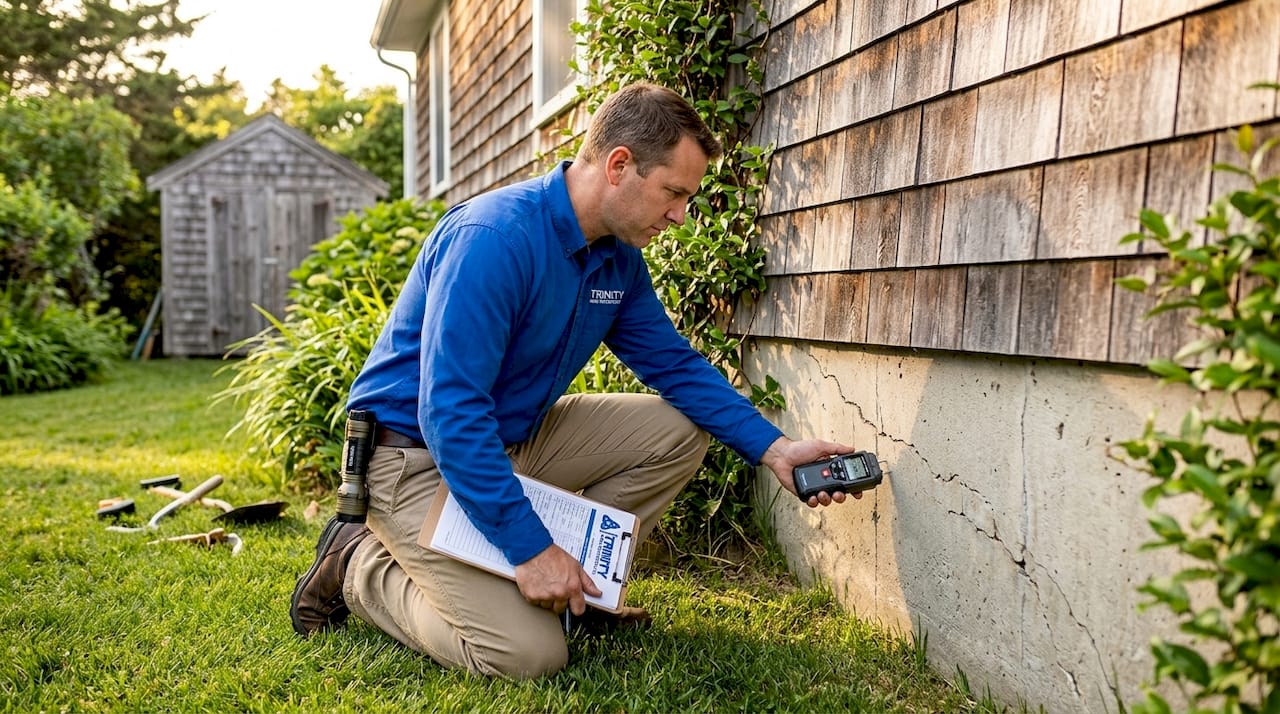
Accredited home inspectors are qualified professionals who meet verified standards of practice, pass national examinations, and follow a recognized code of ethics, making them the most reliable choice for property evaluations. The industry term for this credential is “certified home inspector,” recognized by bodies like InterNACHI and ASHI, and understanding why choose accredited inspectors over uncertified alternatives can protect you from costly surprises after closing. Whether you are buying your first home in Fairhope, selling a property in Mobile, or managing investment rentals across Baldwin County, the inspector you hire directly affects the quality of information you receive. This article explains what accreditation means in practice, how it protects you financially and legally, and what questions to ask before you sign any inspection agreement.
Why choose accredited inspectors over uncertified alternatives
Accreditation is not a marketing badge. It is a documented pathway that requires passing specific exams, adhering to a standards of practice, and completing ongoing education. Arkansas requires home inspectors to register by meeting ASHI Standards of Practice and passing both the National Home Inspector Examination (NHIE) and ASHI’s ethics exam. That means the state itself uses accreditation as the benchmark for competency, not just a professional preference.
The NHIE is a nationally standardized test covering building systems, inspection methodology, and professional practice. Passing it confirms that an inspector understands roofing, structural components, electrical panels, plumbing, HVAC, and more at a tested, documented level. An inspector who has not passed this exam has no verified baseline of knowledge, regardless of how many years they claim to have worked in construction.

Ongoing education requirements reinforce this further. InterNACHI, one of the largest and most recognized accreditation bodies in the country, requires certified inspectors to complete continuing education every year. This keeps inspectors current on building science, new materials, and updated codes. States that tie registration to ASHI standards and ethics create a consumer-protection mechanism that ensures inspectors meet both competency and honesty benchmarks. That is a meaningful distinction when you are making a six-figure purchase decision.
Here is what to look for when verifying an inspector’s credentials:
InterNACHI or ASHI certification: Both are nationally recognized and require passing exams and ethics training
NHIE completion: Confirms a standardized knowledge baseline across all major building systems
Annual continuing education: Signals the inspector stays current, not just initially trained
FAA drone certification: Required for safe, legal aerial roof inspections
State license or registration: Confirms the inspector meets your state’s minimum legal requirements
Pro Tip: Ask any inspector you consider: “Which standards of practice do you follow, and can you show me your current certification?” A credentialed inspector will answer immediately and without hesitation. If they cannot, that tells you everything you need to know.
How accreditation protects you from financial and legal risk
Accreditation and insurance are directly connected, and that connection protects you as much as it protects the inspector. Utah requires home inspectors to hold current active certificates from recognized bodies like ASHI or InterNACHI and maintain at least $500,000 in general liability insurance and $500,000 in Errors and Omissions (E&O) coverage during licensure. That combination of credential and coverage is the standard that serious inspectors meet.
Errors and Omissions insurance is specifically designed to cover claims that arise when an inspector misses a defect. E&O insurance covers defense costs and settlements in cases like a $15,000 foundation crack claim that was not identified during the original inspection. Without E&O, you as the buyer may have no financial recourse if a significant defect surfaces after closing.
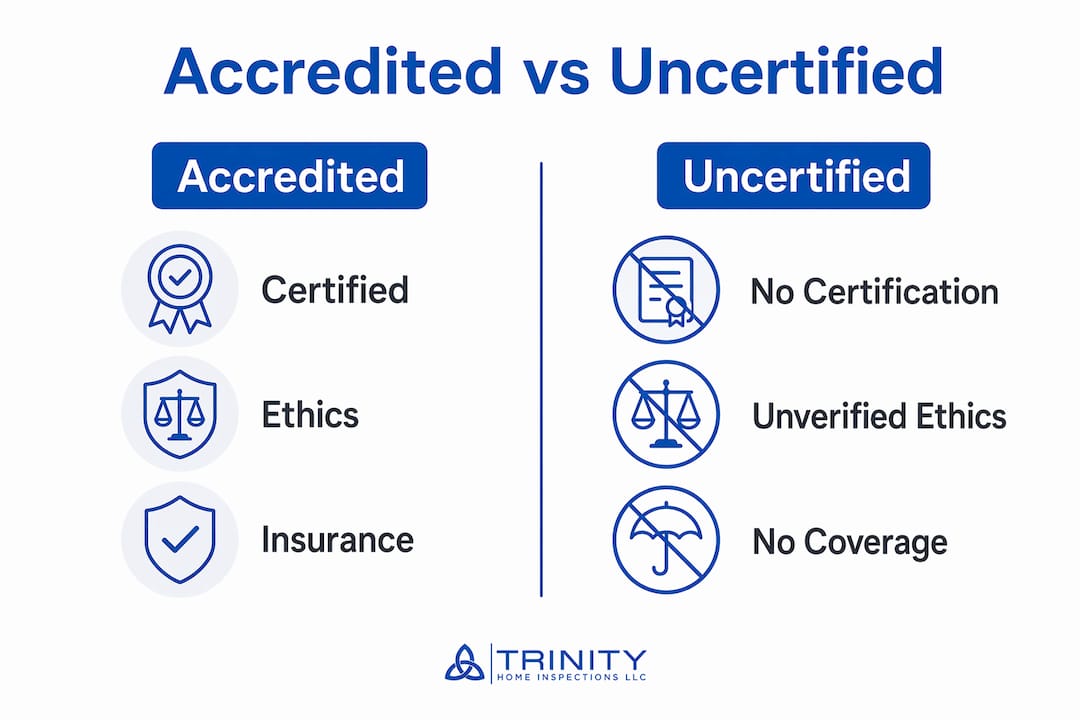
General liability insurance covers a different but equally real risk. Inspectors are inside your future home running water, testing appliances, and accessing the roof. If a ladder tips onto a vehicle or a tub overflows, the damage is real and the cost falls somewhere. Most purchase contracts place that responsibility on the buyer if the inspector is uninsured. Insurance requirements alongside accreditation reflect an inspector’s readiness to assume financial responsibility for errors or omissions, which directly enhances your trust in the process.
The relevant insurance types to ask about include:
Errors and Omissions (E&O) insurance: Covers missed defects and professional liability claims
General liability insurance: Covers physical damage to the property during the inspection
Inland marine insurance: Covers inspection equipment in transit or on-site
“Requiring national credentials and specific insurance minimums reflects industry principles that accreditation demands both expertise and financial responsibility.” This is not optional coverage for a professional inspector. It is the baseline of accountability.
Trinity Home Inspections carries $1M in E&O coverage and $2M in general liability, both well above Alabama’s minimum requirements. That level of coverage means you are protected even in scenarios the state does not require inspectors to prepare for.
Accredited inspectors vs. general contractors: what the difference costs you
The most common mistake buyers make is assuming a contractor friend or a handyman can substitute for a certified home inspector. Certified home inspectors provide standardized, unbiased reports following an inspection process that is fundamentally different from a contractor’s repair assessment. Inspectors document visible conditions objectively. Contractors evaluate what needs to be fixed and how much it will cost them to fix it. Those are two different goals, and they produce two different types of information.
Here is a direct comparison of what each professional delivers:
Category | Accredited home inspector | General contractor |
Primary purpose | Objective condition assessment | Repair and construction work |
Credential requirement | ASHI, InterNACHI, or state license | Trade license (varies by state) |
Conflict of interest | None. No financial stake in repairs | May benefit financially from findings |
Report format | Standardized written report with photos | Verbal assessment or repair estimate |
Insurance type | E&O and general liability | General liability and workers’ comp |
Inspection scope | Whole-home systems evaluation | Specific trade or repair area |
Objectivity | Required by code of ethics | Not required |
The conflict-of-interest issue is the one most buyers overlook. A contractor who identifies a problem has a financial incentive to describe it in terms of the repair they can sell you. An accredited inspector has no such incentive. Their job ends with the report. That separation is built into the ethics requirements of bodies like InterNACHI and ASHI, and it is one of the clearest advantages of certified home inspectors in a real estate transaction.
Accreditation also defines the scope of what an inspector evaluates. Inspections focus on visible property evaluations, not hidden defects or specialist diagnostics. This is not a limitation of skill. It is a defined, honest scope that tells you exactly what the report covers and when to call in a specialist. Knowing the scope prevents you from over-relying on a general inspection and under-investing in specialist follow-up when conditions warrant it.
Pro Tip: If your general inspection reveals signs of moisture intrusion, active roof wear, or unusual electrical behavior, ask your inspector whether a specialist, such as a licensed electrician, structural engineer, or mold testing professional, should be involved. A good accredited inspector will tell you directly rather than guess outside their scope. You can also learn more about what to look for in a home inspector before you hire.
Practical benefits of certified inspectors for buyers, sellers, and investors
The benefits of certified inspectors extend well beyond the inspection day itself. Here is how accreditation creates real, measurable value at each stage of a property transaction:
Negotiation leverage for buyers. A standardized report from an accredited inspector carries weight in price negotiations. Sellers and their agents recognize that findings from a credentialed professional are documented, defensible, and harder to dismiss than informal observations.
Fewer surprises for sellers. A pre-listing home inspection from an accredited inspector gives sellers a clear picture of their property’s condition before buyers start making offers. Sellers who know their home’s condition can price accurately, disclose confidently, and avoid last-minute renegotiations that kill deals.
Consistency for real estate investors. Accreditation ensures consistency in reporting and ethical standards, which simplifies property comparisons and due diligence across multiple acquisitions. If you are evaluating three rental properties in Gulf Shores, reports from the same accredited inspector using the same standards give you a reliable basis for comparison.
Clear documentation for due diligence. Accredited inspectors produce written reports with photos, video, and color-coded priority levels. That documentation becomes part of your transaction record and can be referenced months or years later if a dispute arises.
Confidence for out-of-state buyers. Buyers purchasing remotely in Baldwin or Mobile County need an inspector they can trust to be their eyes on the ground. Accreditation provides a verified standard of practice that holds regardless of whether you are present at the inspection.
Verified credentials you can check. Both InterNACHI and ASHI maintain public directories where you can confirm an inspector’s current certification status. This is something you cannot do with an uncertified inspector, no matter how confident they sound on the phone.
Verifying accreditation status takes about two minutes. Go to the InterNACHI or ASHI website, search by name or location, and confirm the inspector’s certification is active. If an inspector’s name does not appear, that is a clear signal to keep looking. The importance of accredited inspectors becomes most obvious when something goes wrong after closing and you need a documented, credentialed report to support your position.
Key takeaways
Accreditation is the single most reliable indicator that a home inspector has the training, ethics, and insurance coverage to deliver a trustworthy property evaluation.
Point | Details |
Accreditation confirms competency | Inspectors must pass the NHIE and ethics exams to earn recognized credentials from ASHI or InterNACHI. |
Insurance protects your investment | E&O and general liability coverage give you financial recourse if defects are missed or damage occurs. |
Objectivity separates inspectors from contractors | Certified inspectors follow a code of ethics that prohibits conflicts of interest in their findings. |
Consistency benefits investors and sellers | Standardized reports make property comparisons and pre-listing disclosures more reliable and defensible. |
Credentials are publicly verifiable | Both InterNACHI and ASHI maintain searchable directories to confirm an inspector’s active certification. |
What I’ve learned after hundreds of inspections across the Gulf Coast
After inspecting homes from Mobile to Orange Beach, the pattern I see most often is not a structural problem or a failing HVAC system. It is a buyer or seller who hired someone based on price alone and is now dealing with the consequences of an incomplete report. I have walked through homes where a previous “inspection” missed active moisture intrusion behind a bathroom wall, a double-tapped breaker panel, or a gas line with a slow leak. Those are not obscure findings. They are the kind of things a trained, accredited inspector catches because the standards of practice require a systematic evaluation of every accessible system.
What surprises people most is how much the code of ethics matters. Accreditation is not just about technical knowledge. It is about the commitment to tell you what is actually there, not what is convenient for the transaction. I have had agents push back on findings. I have had sellers express frustration. My job is not to make the deal go smoothly. My job is to give you an accurate picture of the home so you can make a decision with real information.
The other thing I want buyers to understand is that accreditation does not mean an inspector sees through walls. Inspections cover visible, accessible conditions, and a good inspector will tell you clearly when a finding warrants a specialist. That honesty is part of what accreditation requires. You are not paying for certainty about every hidden condition. You are paying for a thorough, documented evaluation of everything that can be seen and tested, delivered by someone who is trained, insured, and accountable.
The value of hiring a certified home inspector is not just in what they find. It is in knowing the process was done right.
— Matt
Schedule your accredited home inspection with Trinity Home Inspections
[
Trinity Home Inspections is InterNACHI certified, carries $1M in E&O coverage and $2M in general liability, and delivers same-day photo and video reports across Baldwin, Mobile, Escambia, Washington, Monroe, and Clarke counties. Every inspection includes free thermal imaging, testing of all accessible outlets, switches, windows, and doors, and post-inspection support by phone or text. For sellers, a pre-listing inspection prepares your property before buyers arrive. Add-on services include mold testing, sewer scope, indoor air quality sampling, and pool inspections. Call 251-210-7376 or visit TrinityInspectionsLLC.com to schedule today.
FAQ
What does it mean for a home inspector to be accredited?
An accredited home inspector has passed national examinations like the NHIE, completed ethics training, and earned certification from a recognized body such as InterNACHI or ASHI. Accreditation confirms the inspector meets verified standards of practice and is held accountable to a professional code of conduct.
Why hire licensed inspectors instead of using a contractor?
Certified inspectors provide unbiased written reports with no financial stake in the repairs they identify, while contractors evaluate conditions through the lens of work they can perform. For objective due diligence in a real estate transaction, an accredited inspector is the appropriate professional.
How do I verify an inspector’s accreditation status?
Both InterNACHI and ASHI maintain public online directories where you can search by name or location to confirm active certification. This verification takes under two minutes and is the most direct way to confirm an inspector’s credentials before hiring.
What insurance should an accredited home inspector carry?
Accredited inspectors should carry Errors and Omissions insurance to cover missed defects and general liability insurance to cover physical damage during the inspection. Utah’s licensing standards require a minimum of $500,000 in each category, though leading inspectors carry significantly more.
Are accredited inspectors worth the cost for sellers?
A pre-listing inspection from an accredited inspector gives sellers documented knowledge of their property’s condition before buyers make offers, reducing the risk of last-minute renegotiations or deal failures. The cost of the inspection is typically far less than the price reduction a buyer will request after discovering an undisclosed defect.
Recommended