
Why GFCI Outlets Matter in Older Gulf Coast Homes

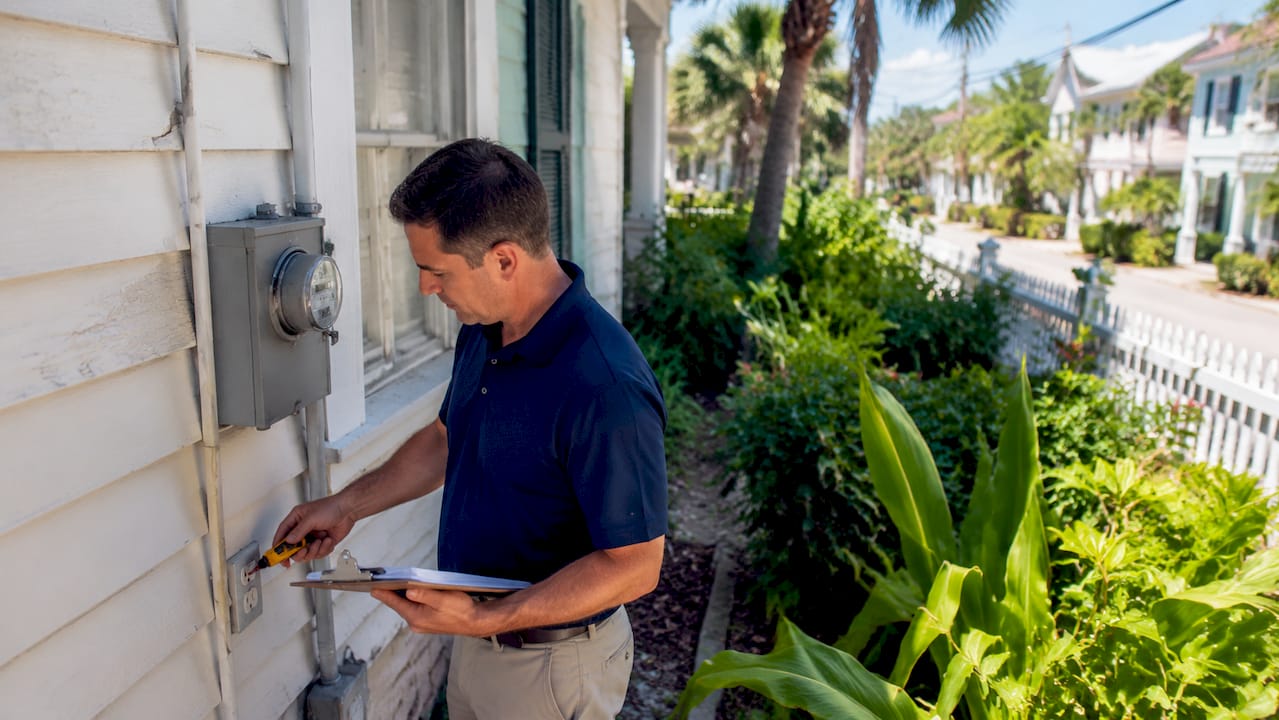
Ground Fault Circuit Interrupter (GFCI) outlets are defined as safety devices that detect tiny electrical current imbalances and cut power within milliseconds to protect people from shock and fire. Understanding why GFCI outlets matter in older Gulf Coast homes starts with one fact: the region’s humidity, salt air, and storm exposure create electrical hazards that standard outlets simply cannot handle. Homes built before the 1970s often lack GFCI protection entirely, and the National Electrical Code (NEC) has expanded GFCI requirements significantly since then. Trinity Home Inspections inspects every accessible outlet in Gulf Coast homes across Baldwin, Mobile, and Escambia counties, because a missed GFCI deficiency is never a minor issue here.
Why GFCI outlets matter in older Gulf Coast homes: the climate factor
The Gulf Coast creates a combination of electrical risk factors that most other regions never face at the same intensity. High humidity, salt air, frequent tropical storms, and aging wiring all converge in homes that were built long before modern electrical safety standards existed. Understanding each factor helps you see why standard outlets are not enough.
High humidity and internal condensation are the first problem. When warm, moist Gulf Coast air contacts cooler metal components inside an outlet, condensation forms on terminals and wiring. That moisture creates a path for electrical current to travel where it should not. Over time, repeated moisture exposure degrades insulation and increases the risk of a ground fault.
Salt air corrosion is the second and often more damaging factor. Salt air causes corrosion that increases resistance and heat, leading to intermittent grounding problems, nuisance tripping, and eventual outlet failure. That increased resistance generates heat inside the outlet body, which raises fire risk even before a visible fault occurs.
Storms drive the third risk. Tropical systems and heavy Gulf Coast rains push water into wall cavities, attic spaces, and outlet boxes through gaps in siding, windows, and roofing. Water intrusion directly into an outlet box creates an immediate ground fault condition. Older homes with original wiring and no GFCI protection have no automatic shutoff when this happens.
The combined effect is what makes the Gulf Coast uniquely demanding. The Gulf Coast climate creates maintenance demands that require proactive electrical safety inspections far beyond typical national averages. That is not an exaggeration. It is the reality of owning or buying an older home in this region.
Humidity above 60% accelerates insulation breakdown in aging wiring
Salt deposits on terminals raise contact resistance and generate heat
Storm-driven water intrusion can reach outlet boxes inside walls
Older aluminum or cloth-wrapped wiring corrodes faster than modern copper with modern insulation
Corrosion causes intermittent faults that are hard to trace without professional tools
Pro Tip: If you notice a GFCI outlet tripping repeatedly after a storm or during humid weather, do not just reset it and move on. That tripping is the outlet doing its job. Have a licensed electrician check for moisture intrusion or wiring damage before assuming the outlet is faulty.
What safety protections do GFCI outlets provide over standard outlets?
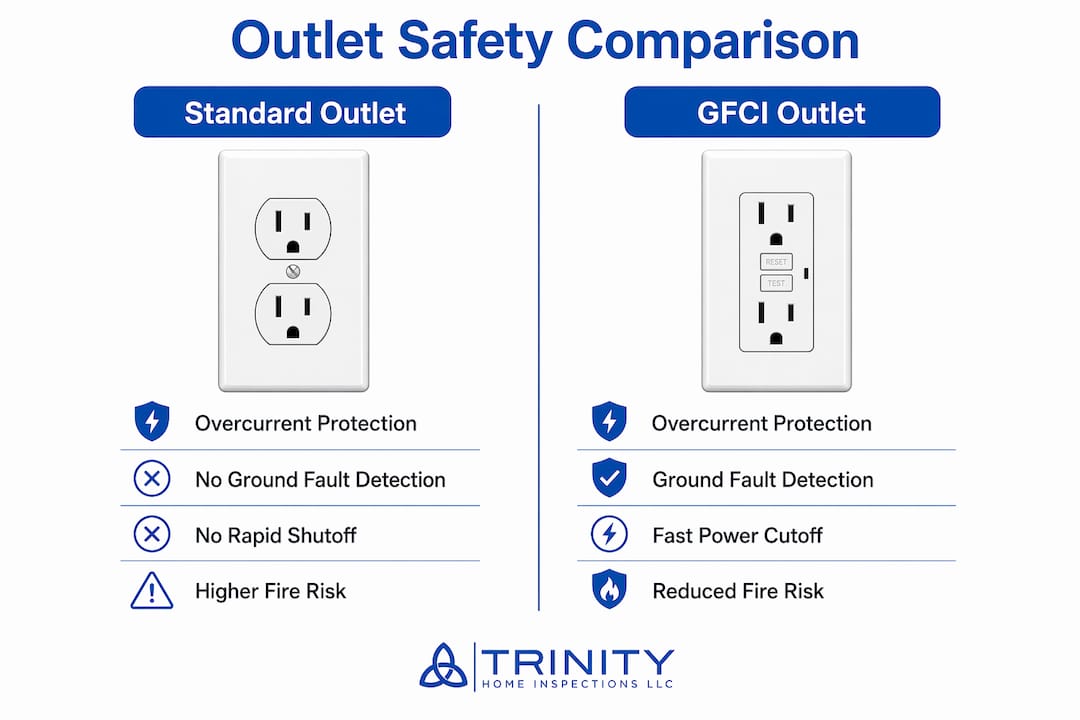
GFCI outlets detect current imbalances as small as 4–6 milliamps and shut off power in as little as 0.025 seconds. That 25-millisecond response time is faster than the human nervous system can react to a shock. Standard circuit breakers, by contrast, are designed to trip only when current exceeds the circuit’s rated capacity, which is typically 15 or 20 amps. A lethal shock can occur at a fraction of one amp, so a standard breaker offers no meaningful protection against electrocution.
The difference between a GFCI and a standard outlet is not just technical. It is the difference between a device that protects the wiring and a device that protects the person. Standard breakers guard against overcurrent and short circuits. GFCIs guard against the specific fault pattern that kills people: current leaking through a person to the ground.
GFCIs also reduce fire risks by cutting power immediately when they detect abnormal current or arc conditions. That matters in older Gulf Coast homes where corroded wiring can create arcing faults that generate heat long before a breaker trips.
Feature | Standard outlet | GFCI outlet |
Overcurrent protection | Yes | Yes (via breaker) |
Ground fault protection | No | Yes |
Response time | Seconds to minutes | 0.025 seconds |
Shock protection | No | Yes |
Fire risk reduction | Limited | Significant |
Required in wet locations | No | Yes (per NEC) |
Three types of GFCI protection exist for residential use. A GFCI receptacle is the most common: the outlet itself contains the sensing and shutoff mechanism, identifiable by its Test and Reset buttons. A GFCI circuit breaker installs in the electrical panel and protects every outlet on that circuit. A portable GFCI plugs into any standard outlet and provides temporary protection, useful for power tools or outdoor equipment.
The NEC specifies where GFCI protection is required in dwellings. Kitchens, bathrooms, garages, outdoor receptacles, crawl spaces, unfinished basements, and any outlet within 6 feet of a sink all require GFCI protection. Older homes built before these rules took effect were never retrofitted in many cases, which is exactly why a professional electrical safety inspection is so valuable before buying or selling.
Pro Tip: A single upstream GFCI receptacle can protect multiple downstream outlets if wired correctly using the “Load” terminals. This is a cost-effective approach for older homes where running new wiring to every outlet is not practical.
What are the NEC requirements for GFCI outlets in older homes?
The NEC sets the national standard for electrical safety in residential construction, and its GFCI requirements have expanded significantly over the past five decades. Knowing where the code stands today helps you understand what your older Gulf Coast home may be missing.
Bathrooms (1975). The NEC first required GFCI protection in bathroom receptacles in 1975. Any home built before that year has no code-mandated GFCI protection in bathrooms unless it was added later.
Garages (1978). Garage receptacles became subject to GFCI requirements in 1978. Detached garages and carports on older Gulf Coast properties are frequently unprotected.
Outdoor receptacles (1978). Any outlet exposed to weather requires GFCI protection. Older homes with original outdoor outlets almost never have it.
Kitchens (1987). Kitchen countertop receptacles within 6 feet of a sink were added to the GFCI requirement list in 1987. Homes built before that date commonly have standard outlets at every counter position.
Crawl spaces and unfinished basements (1990). These locations were added in 1990. Gulf Coast homes with pier-and-beam construction or partial crawl spaces are frequently unprotected.
NEC 2023 expansions. The 2023 NEC expanded GFCI requirements to include kitchen appliance outlets and laundry areas. This is the most significant expansion in years. It means even homes updated to 2020 code may now fall short of current standards.
Retrofit obligations. The NEC does not automatically require older homes to be brought up to current code unless a renovation or repair triggers a permit. However, sellers in many Gulf Coast markets face disclosure obligations when known safety deficiencies exist. A permit and compliance search can reveal whether past work was permitted and inspected.
The practical implication is clear. A home built in 1965 and never significantly renovated may have zero GFCI protection anywhere in the house. That is not unusual on the Gulf Coast. It is the norm for homes of that era. Buyers and sellers both benefit from knowing exactly where the gaps are before a transaction closes.
The NEC GFCI code updates also affect insurance. Some carriers now ask about GFCI compliance during underwriting for older homes. A home with documented GFCI upgrades is a lower-risk property, and that can translate directly to better coverage terms.
How should homeowners maintain GFCI outlets in a coastal environment?
GFCI outlets require active maintenance, especially in coastal environments where salt air and moisture accelerate wear. The good news is that basic upkeep is straightforward and takes only a few minutes each month.
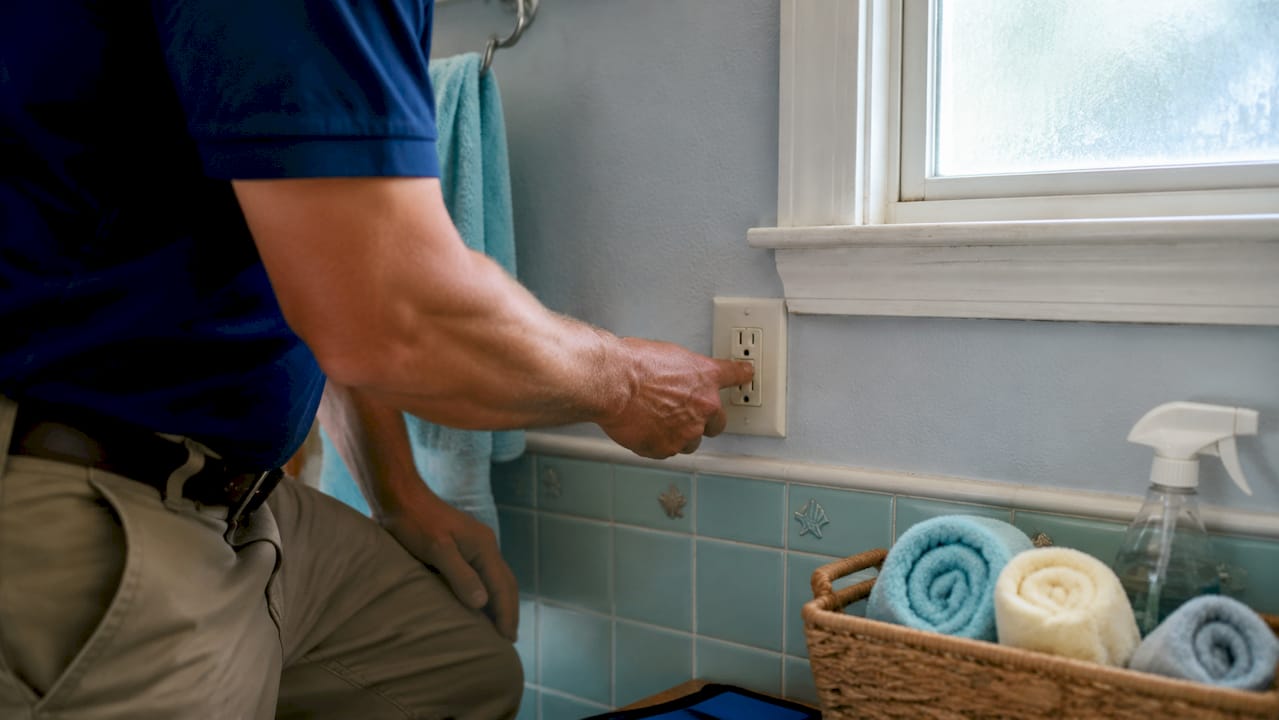
Monthly GFCI testing is the single most important maintenance habit for Gulf Coast homeowners. Press the Test button on each GFCI outlet. The outlet should lose power immediately. Press Reset to restore power. If the outlet does not respond correctly, it needs replacement. This test confirms the internal sensing mechanism is still functional, which matters because GFCI outlets can appear normal while the fault-detection circuit has failed.
Common causes of nuisance tripping in coastal homes include:
Moisture intrusion into the outlet box or downstream wiring
Faulty appliances drawing uneven current
Long circuit runs with multiple outlets sharing one GFCI
Corroded terminals creating intermittent resistance
Aging GFCI units that have reached the end of their service life
Frequent tripping in Gulf Coast areas is often due to moisture intrusion, faulty appliances, or downstream wiring issues, not necessarily outlet failure. That distinction matters. Replacing a GFCI that is actually detecting a real fault does not solve the problem. It just removes the protection while the underlying fault continues.
Salt air shortens GFCI lifespan. Outlets in garages, outdoor locations, and coastal-facing walls face the most exposure. Replacing these units every 10 years is a reasonable practice even if they appear functional. The internal components degrade over time, and a GFCI that passes the button test may still have reduced sensitivity to small current imbalances.
Pro Tip: When troubleshooting a tripping GFCI, unplug every device on that circuit before resetting. If the outlet holds, plug devices back in one at a time. The appliance that triggers the trip is your fault source. This saves a service call in many cases.
Signs that a GFCI outlet needs professional attention or replacement include:
The Reset button will not stay engaged
The outlet trips immediately after reset with nothing plugged in
Visible discoloration, burn marks, or a burning smell near the outlet
The outlet has no power but the Reset button does not pop out
The outlet is more than 15 years old and has never been replaced
If you are buying an older home in Mobile, Fairhope, Gulf Shores, or anywhere along the Alabama Gulf Coast, a professional inspection that tests every accessible outlet is the only way to know your actual exposure. Coastal moisture risks compound over years, and the damage is often invisible until a fault occurs.
Key takeaways
GFCI outlets are the most critical electrical safety upgrade in older Gulf Coast homes because the region’s humidity, salt air, and storm exposure create ground fault conditions that standard outlets cannot detect or stop.
Point | Details |
GFCI response speed | GFCI outlets shut off power in 0.025 seconds, far faster than any standard breaker. |
Gulf Coast climate risk | Salt air and humidity accelerate corrosion and moisture intrusion, increasing ground fault frequency. |
NEC code gaps in older homes | Homes built before 1975 may have zero GFCI protection; the 2023 NEC expanded requirements further. |
Monthly testing is required | Press Test and Reset on every GFCI outlet monthly to confirm the fault-detection circuit still works. |
Tripping signals a real fault | Frequent GFCI tripping usually means moisture or a faulty appliance, not a bad outlet. |
What I see in Gulf Coast homes that most homeowners miss
I have inspected homes across Baldwin and Mobile counties where the original outlets from the 1960s are still in place, including in bathrooms and kitchens. Homeowners often tell me the outlets “work fine” because they power devices without issue. That is true. But a standard outlet that powers a lamp will also fail to protect you if a hairdryer falls into a sink full of water. Those are two completely different functions, and only one of them keeps you safe.
The misconception I encounter most often is that GFCI protection is a new construction requirement that does not apply to older homes. That thinking is understandable, but it is wrong in a practical sense. The NEC does not force you to retrofit your 1958 home overnight. But the physics of electricity and the chemistry of salt air do not care about your home’s age. The risk is real regardless of what the code technically requires.
What I have also learned is that homeowners who do their monthly GFCI tests catch problems early. I have walked into inspections where a homeowner told me a bathroom outlet had been tripping for months. When we traced it back, there was active moisture intrusion behind the wall from a slow roof leak. The GFCI was doing exactly what it was designed to do. Without it, that moisture could have caused a fire or a serious shock before anyone noticed the leak.
My honest advice: do not wait for a renovation to address GFCI gaps. The cost of adding GFCI protection to a kitchen, bathroom, or garage is modest compared to the cost of a fire or an injury. And if you are buying an older Gulf Coast home, make sure your inspector tests every outlet, not just a representative sample. At Trinity Home Inspections, we test every accessible outlet because that is the only standard that actually protects you.
— Matt
Trinity Home Inspections and your Gulf Coast electrical safety
Older Gulf Coast homes deserve a thorough look at every outlet, panel, and circuit before you buy, sell, or settle in for another year.
[

Trinity Home Inspections provides InterNACHI-certified inspections across Mobile, Baldwin, Escambia, and surrounding Alabama counties, with same-day photo and video reports delivered the day of your inspection. Every inspection includes free thermal imaging to help identify overheated electrical components and hidden moisture, two of the biggest GFCI-related risks in coastal homes. For sellers, a pre-listing inspection documents your GFCI compliance and electrical condition before buyers find issues at closing. You can also run a permit and deed search to verify whether past electrical work was properly permitted.
Call us at 251-210-7376 or visit TrinityInspectionsLLC.com to schedule your inspection today.
FAQ
What is a GFCI outlet and how does it work?
A GFCI outlet is a Ground Fault Circuit Interrupter that monitors current flow and shuts off power in 0.025 seconds when it detects an imbalance as small as 4–6 milliamps. That rapid response protects people from electrical shock in wet or humid locations.
Are older Gulf Coast homes required to have GFCI outlets?
The NEC does not automatically require older homes to retrofit GFCI outlets unless a renovation triggers a permit, but homes built before 1975 typically have no GFCI protection at all. Buyers and sellers should treat GFCI gaps as safety deficiencies regardless of code enforcement status.
How often should I test GFCI outlets in a coastal home?
Monthly testing is recommended for all GFCI outlets, especially in moisture-prone coastal environments. Press the Test button to cut power, then press Reset to restore it. Any outlet that does not respond correctly needs replacement.
Why does my GFCI outlet keep tripping near the Gulf Coast?
Frequent tripping is usually caused by moisture intrusion, a faulty appliance, or corroded downstream wiring, not a defective outlet. Unplug all devices on the circuit, reset the outlet, and plug devices back in one at a time to identify the fault source.
Does a GFCI outlet replace a circuit breaker?
No. A GFCI outlet and a circuit breaker serve different purposes. Circuit breakers protect against overcurrent and short circuits. GFCI outlets protect against ground faults and shock hazards. Both are needed for complete electrical protection in a home.
Recommended

