
Homeowners: Clear Leaves by October to Protect Roof Shingles

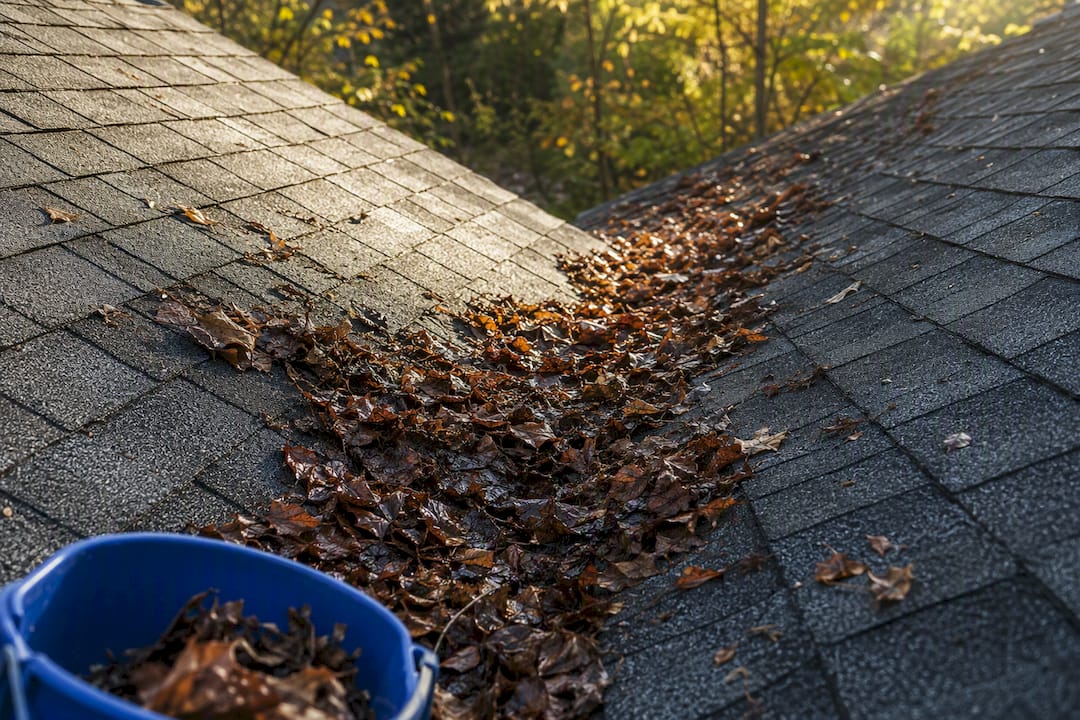
Yes, leaves and tree debris can damage roof shingles, and the damage is usually gradual rather than sudden. Wet leaves trap moisture against the shingle surface, decomposing organic matter releases acids that erode protective granules, and falling branches cause direct impact damage. The fix is straightforward: clear debris regularly, keep gutters flowing, and inspect the roof after major storms.
TL;DR:
Regularly cleaning debris from valleys, gutters, and low-slope areas before winter minimizes moisture retention and acid erosion that damage shingles over time.
Heavy leaves and organic matter clog gutters, leading to ponding and ice dams that can push water under shingles, causing interior leaks and structural issues.
Falling branches and limbs can directly crack or strip shingles, especially when weighted with ice or snow, and are most dangerous near valleys and gutter edges.
Visible early warning signs include granule loss in gutters, streaks on siding, sagging gutters, moss patches, and cracked shingles, while interior signs indicate more serious damage.
Homeowners should perform October inspections and cleanups, use gentle tools, and seek professional help for steep or heavily damaged roofs, especially after major storms.
How Leaves, Needles, and Twigs Actually Damage Shingles
The damage falls into two categories: slow chemical erosion and sudden physical impact. Both start with the same culprit, debris that has nowhere to go.
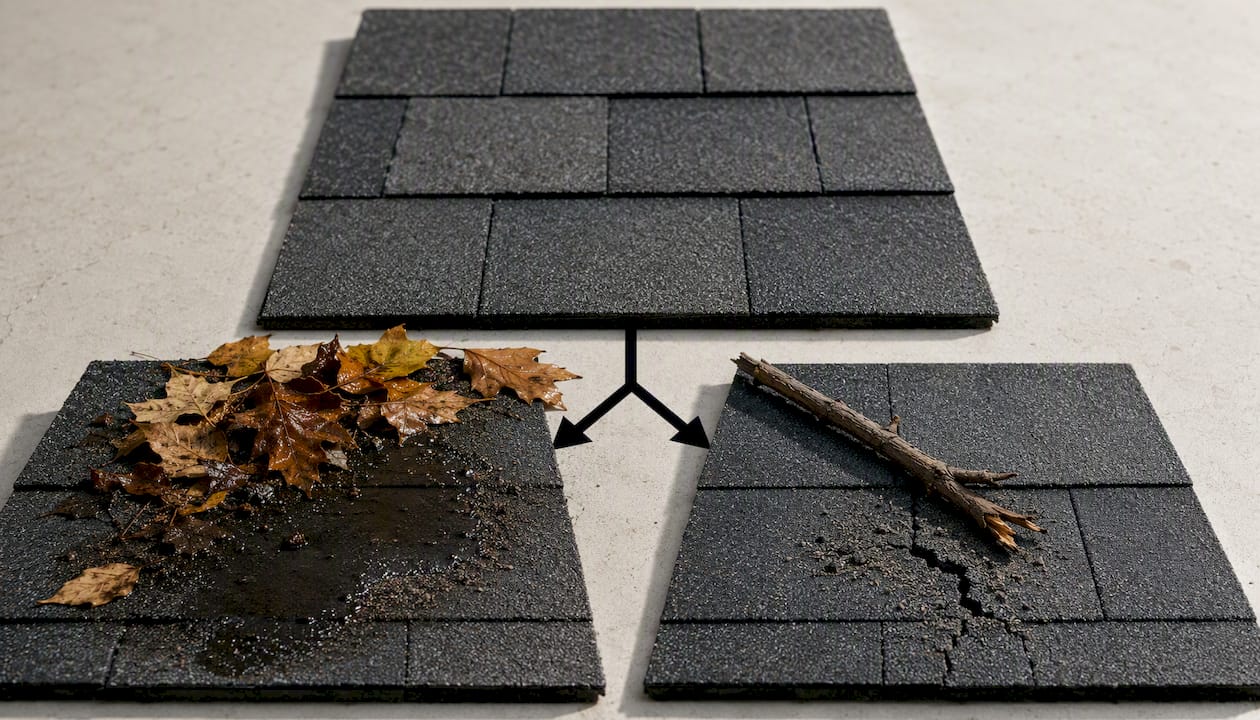
When leaves pile up in valleys or along the lower edge of a roof, they hold moisture against the shingle surface far longer than open air would allow. That prolonged dampness creates ideal conditions for moss and algae, and it keeps the shingle’s asphalt layer wet when it should be drying out between rain events. GAF notes that fallen leaves, nuts, and needles accumulating in valleys and gutters create the kind of moisture that leads to moss, algae, and a shortened roof lifespan.
Decomposing leaves are not chemically neutral, either. As organic matter breaks down, it releases mild acids, generally in the pH 4.5 to 5.5 range, that slowly strip away the granules that shield shingles from ultraviolet light and weather. That erosion is cumulative. It builds over weeks and seasons, and it hits hardest wherever wet leaves sit the longest.
Low-slope sections drain slower and collect standing debris.
Valleys funnel water and leaves into a single channel, concentrating the damage.
Gutters and downspouts clog first, backing water up under the shingle edge.
Areas under heavy tree canopy get repeat deposits after every windy day.
Clogged gutters and valleys create a second problem beyond moisture retention: ponding. When water cannot drain, it sits, and in colder months that standing water can freeze. The National Weather Service explains that debris-clogged gutters contribute to ice dams by blocking snowmelt drainage, and ice dams force water back under shingles, often causing interior damage.
Then there is the blunt-force problem. Falling branches and limbs that rub against the roof can strip granules and crack shingles outright, and even a modest branch becomes dangerous once it is weighted with ice or snow. Leaf buildup tends to concentrate in low-slope areas, valleys, and near gutters, and those hotspots stay wet longer than the rest of the roof, which accelerates deterioration exactly where you least want it.
What Debris Damage Actually Looks Like on Your Home
You do not need to climb a ladder to catch the early warning signs. Most of them show up at eye level if you know where to look.
Granules in the gutters. If your gutters look like they are filled with coarse black or gray sand, that is shingle granule loss, and it is often the first visible clue that erosion has started.
Streaking or staining on siding. Runoff carrying grit and organic debris often leaves dark streaks below the roofline.
Sagging gutter sections. Wet leaf mats are heavy. A gutter that has pulled away from the fascia may be carrying more weight than it was built for.
Moss or dark green and black patches on the shingles. This confirms moisture has been sitting somewhere on the roof surface for an extended stretch.
Curling, cupping, or cracked shingles, especially clustered near valleys and flashing, where debris naturally collects.
Damp insulation, ceiling stains, or a musty smell in the attic. These interior signs suggest water has already found a way past the shingle layer.
Most of these are early-stage warnings, not emergencies. But if you notice active dripping, a sagging roof deck, or insulation that is visibly wet, that has moved past routine maintenance and into repair territory that deserves a prompt professional look.
Seasonal Prevention: Cleaning, Gutter Care, and Tree Management
Fall is the single best window to get ahead of debris damage, and October in particular gives you a sweet spot: most leaves have dropped, but freeze-thaw cycles and winter storms have not started yet. Removing leaves before winter weather sets in reduces the acid exposure and moisture retention that erode granules over time. Homes with heavy tree canopy may need more than one October cleaning, since a single pass rarely catches everything that comes down over a few windy weeks.
Cleaning method matters as much as timing. A soft brush or a leaf blower removes debris without stripping the granules that a scraper or pressure washer would tear loose. Save the pressure washer for the driveway.
Gutters deserve their own routine:
Clean gutters at least twice a year, more often if you live under mature oaks or pines.
Gutter guards cut down on debris volume but do not eliminate the need for occasional cleaning. Fine pine needles and seed pods still slip through most designs.
Check downspouts for clogs, since a blocked downspout can back water up into the gutter even after you have cleared the trough.
Inspect fasteners and brackets for strain. Waterlogged leaf mats add real weight, and loose gutters are a sign that weight has been sitting there a while.
Tree management is the piece homeowners skip most often. Keep branches trimmed back at least 10 feet from the roofline where possible, since that clearance limits both rubbing damage and the risk of a limb landing on the shingles during a storm. If a tree is diseased, leaning toward the house, or dropping large limbs regularly, it may be time to consult an arborist about removal rather than repeated trimming.
Attic ventilation plays a supporting role here too. Good airflow helps the roof deck dry out faster after wet weather and reduces the temperature swings that contribute to ice dams in colder months.
Our Alabama roof maintenance checklist walks through a full seasonal schedule if you want the complete rundown. For debris removal specifically, a licensed contracting service like Calder Roofing & Renovations can handle seasonal cleanup on roofs that are too steep or too tall for a homeowner to safely manage alone.
Pro Tip: Do your main cleanup in October, then walk the yard after every major storm to check for fresh branches or leaf mats before they have a chance to sit for weeks.
When Debris Damage Calls for a Professional Inspection
Some situations are worth a homeowner’s judgment call. Others are not.
A branch larger than your wrist has struck the roof.
You can see cracked, lifted, or missing shingles from the ground.
Water is ponding repeatedly in the same spot after every rain.
You have noticed an ice dam forming along the eaves in winter.
Interior water stains have appeared on ceilings or upper walls.
Hinkle Roofing recommends a professional inspection after any significant storm or branch strike, since visible damage on the surface is often only part of the actual problem. That is exactly where the right tools make a difference. Drone roof imagery lets an inspector examine steep or fragile sections without foot traffic that could crack aging shingles further. Moisture meters confirm whether a stain is old or active. Thermal imaging can catch trapped moisture and insulation gaps that are invisible to the naked eye.
Concealed damage rarely announces itself. A drone pass over a valley clogged with wet leaves, paired with a moisture meter reading in the attic deck below it, often turns up problems that a ground-level glance would completely miss.
That combination of tools is why a same-day photo and video report matters. It documents exactly what an inspector found, in plain language, so you know what is urgent and what can wait. Our roof inspection checklist breaks down what a thorough inspection actually covers, from flashing to fasteners.
What You Can Safely Handle Yourself
Plenty of debris maintenance is well within a homeowner’s ability, provided you stay realistic about your roof’s pitch and your comfort with ladders.
Clean gutters from the ground using a ladder-stabilized scoop or a garden hose attachment rather than climbing onto the roof itself.
Broom light, dry debris off low-slope, single-story roofs with a soft-bristled roof broom, working from the eave upward.
Use a telescoping tool from the ground or eave to knock loose leaves out of valleys you cannot safely reach otherwise.
Skip the pressure washer entirely. It strips granules faster than any storm will, and it can force water under shingle edges.
Never attempt to remove a fallen branch yourself if it is large, tangled in power lines, or resting on a steep section of roof.
Time your main cleanup for October, then do a quick visual check after any storm that drops branches or heavy leaf litter. Our guide to DIY gutter cleaning covers safe technique in more detail. The moment a task requires a steep roof, a second story, or a branch heavier than you can lift with one hand, that is your cue to call a professional instead of improvising.
Why Fall Prevention Beats Reactive Roof Repair
Most homeowners treat roof debris as a cosmetic annoyance until a leak forces the issue. That is backwards. The acid erosion from decomposing leaves and the ice-dam risk from clogged gutters both build quietly over months, which means the cheapest fix is almost always the one applied in October, not the one applied after a February leak shows up on the ceiling.

The conventional advice to “clean your gutters twice a year” undersells what heavy canopy actually requires. If oak or pine debris is a constant presence on your roof, twice a year is a floor, not a target. What matters more than frequency is timing relative to weather: get the roof clear before the first hard freeze, not after.
If you take one thing from this, prioritize the valleys and low-slope sections first. That is where moisture sits longest, where granule loss concentrates, and where a $20 leaf blower pass does more good than almost any other maintenance task on the property.
— Matt
Trinity Home Inspections brings drone imaging, moisture meters, and free thermal imaging to every roof evaluation, with a same-day photo and video report so you know exactly where debris has already caused wear. If you are buying, selling, or just want peace of mind before winter, our pre-listing and seller inspection services cover the roof along with the rest of the home. Call 251-210-7376 or visit Trinityinspectionsllc to schedule.
Sources
FAQ
Does Insurance Cover Roof Damage From Trees?
Most homeowners insurance policies cover sudden tree damage, like a branch falling in a storm, but they typically exclude gradual deterioration from years of leaf buildup or neglected maintenance. Check your specific policy language, since coverage varies by carrier and state.
Is It Bad for Tree Branches to Touch Your Roof?
Yes. Rubbing branches abrade shingles and strip granules with every gust of wind, and they give pests an easy bridge onto your roof. Keeping at least 10 feet of clearance between branches and the roofline limits both risks.
What Do Damaged Roof Shingles Look Like?
Damaged shingles often show curling or cupped edges, bare patches where granules have worn away, cracking near valleys and flashing, or a mottled dark appearance from moss and algae growth.
What Roof Shingles Should You Watch More Closely for Debris Damage?
Any shingle can be affected, but sections in valleys, low-slope areas, and spots under heavy tree canopy wear fastest because debris and moisture linger there longest. Older shingles with already-thinning granule coverage are also more vulnerable to the acids released by decomposing leaves.
Recommended