
Homeowners: Aim for R-49. Measure Attic Insulation in 4 Steps

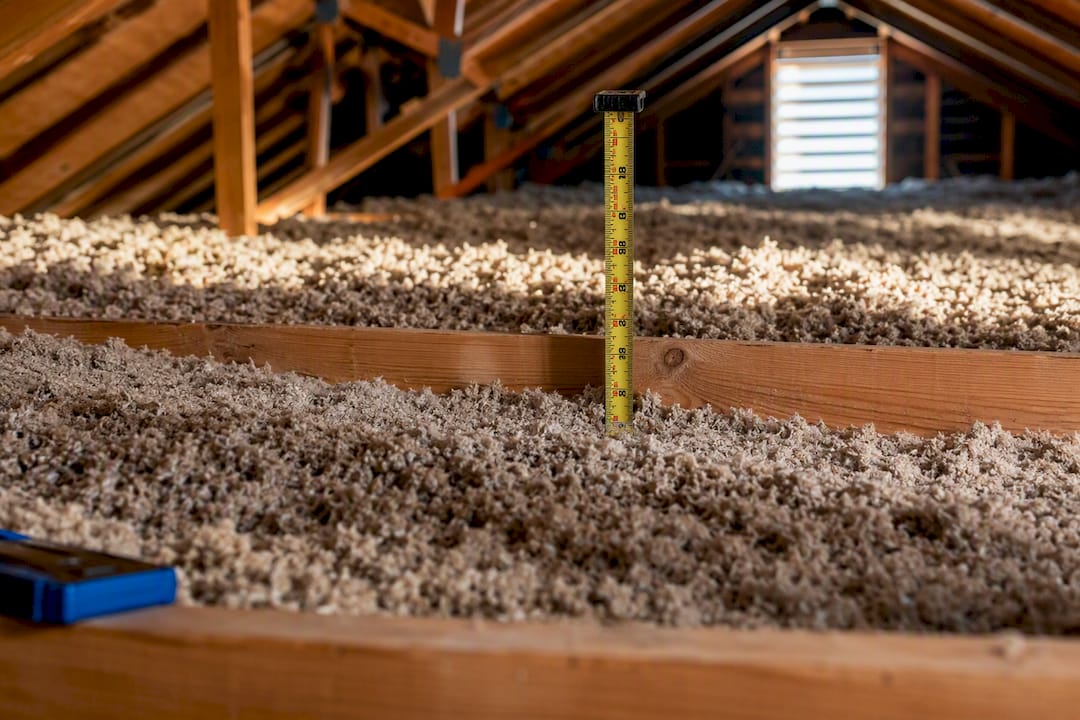
Most homes need attic insulation between R-30 and R-60, depending on climate, with R-49 being the common target across much of the country. In practical terms, that’s roughly 10 to 18 inches of blown-in or batt material, though closed-cell spray foam reaches the same R-value in far less depth. The right number always depends on your material and how much you already have, so measuring first matters more than guessing.
TL;DR:
Homes in colder climates generally need at least R-49 attic insulation, covering roughly 12 to 18 inches of material, with higher R-values necessary in very cold zones.
To assess your attic’s current insulation, measure depth in several spots and compare it to zone-specific targets, accounting for settling and material type.
Insulation materials vary in efficiency: cellulose requires about 15-16 inches for R-49, while closed-cell spray foam needs only 6 to 8 inches for similar performance.
Before adding insulation, seal air leaks, insulate attic hatches, and ensure soffit vents remain unobstructed to maximize energy efficiency.
DIY insulation projects cost roughly $0.60 to $2.50 per square foot, but professional inspection is advisable if moisture issues or hidden damage are suspected.
How Much Attic Insulation Should a House Have in Your Climate Zone?
The Department of Energy and ENERGY STAR publish attic R-value targets by climate zone, and they’re the closest thing the industry has to a national standard. Along the Gulf Coast, where winters are mild, the target sits lower than it would in Minnesota or Maine. Here’s how it generally breaks down:
Warmest zones (Zone 1): R-30
Mixed and moderate zones (Zones 2 to 3): R-49
Cold and very cold zones (Zones 4 through 8): R-49 to R-60
R-value measures resistance to heat flow. The higher the number, the harder it is for heat to move through that material, which matters most in extreme climates where the temperature difference between your attic and your living space is largest. Even along the coast, though, R-49 isn’t overkill. It’s simply the sweet spot where added insulation still pays for itself in comfort and lower energy bills according to ENERGY STAR’s R-value recommendations.
Think of R-49 as roughly a foot of loose-fill material sitting evenly across your attic floor. R-60 is closer to 16 to 18 inches. Both numbers assume the insulation is undisturbed, fully covering the joists, and not compressed in corners or storage areas. For homeowners weighing whether their current attic even comes close, our insulation R-value guide for Gulf Coast Alabama homes breaks down what’s realistic for our specific climate.
How Do You Measure and Calculate Your Attic Insulation?
Before you climb up there, put on long sleeves, a dust mask, and gloves. Attic insulation, especially older fiberglass, irritates skin and lungs, and loose-fill can hide nails, low-clearance wiring, or thin spots in the ceiling drywall that won’t hold your weight. Bring a flashlight, a tape measure or ruler, and a smartphone for photos.
Walk the attic floor on the joists, never directly on insulation, and check depth in at least four to six spots, avoiding areas near vents or storage that get compressed.
Identify the material. Loose cellulose looks like gray shredded paper. Blown fiberglass is white or pink and fluffy. Batts come in defined pink or yellow rolls.
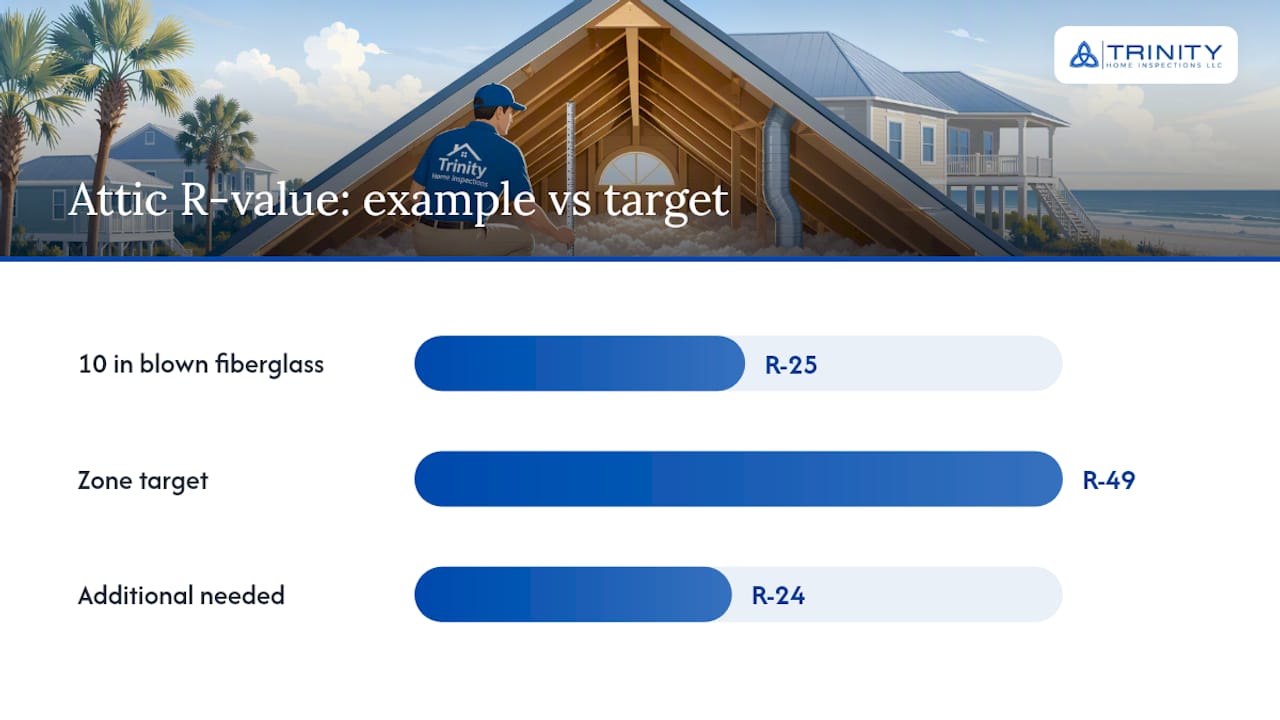
Multiply depth by R-per-inch for that material to estimate your current R-value. Ten inches of blown fiberglass at roughly R-2.5 per inch gives you about R-25, well under most targets.
Subtract from your zone’s target to find how many more inches you need, then add a little extra if you’re using cellulose, since it settles over time.
Pro Tip: Keep a printed depth chart or ruler-marked stick near the attic hatch. It takes thirty seconds to double-check depth after a windstorm or renovation, and it saves you from relying on memory next time you’re up there.
If your existing insulation sits level with or below the tops of your floor joists, ENERGY STAR generally considers that a sign you’re 4 to 6 inches short of a reasonable target and due for a top-off.
Which Attic Insulation Material Fits Your Attic and Budget?
Not every material performs the same per inch, and that changes how much depth you actually need to hit a target like R-38, R-49, or R-60.
Blown-in cellulose: roughly R-3.2 to R-3.8 per inch. About 12 inches gets you near R-38; 15 to 16 inches reaches R-49. Cheap, good for filling irregular joist bays, but it settles 5% to 10% over time, per HUD’s insulation guidance.
Blown fiberglass: roughly R-2.2 to R-2.7 per inch. You’ll need 15 to 18 inches for R-38 to R-49. It resists moisture better than cellulose but is less dense, so it’s more prone to wind-washing near soffits.
Fiberglass batts: roughly R-2.9 to R-3.4 per inch. Straightforward for DIY installation over open joists, though gaps and compression around wiring or framing are common if you’re not careful.
Closed-cell spray foam: roughly R-6 per inch. You’d need only about 6.5 to 8 inches for R-38 to R-49, and it air-seals as it insulates, according to Theroofingbrief.
Loose-fill and batts work well for standard vented attic floors, and they’re the usual retrofit choice because they’re affordable and easy to add to. Spray foam earns its higher cost when you’re insulating the roofline itself to create a conditioned attic, which is common when finishing attic space or protecting HVAC ductwork that runs through it. As the University of Massachusetts’ cellulose research points out, there’s no single best material. It depends on whether your attic is vented storage space or living space you’re bringing into the conditioned envelope.
What Should You Check Before Adding More Insulation?
Insulation without air sealing is like wearing a heavy coat with the zipper open; complementing insulation improvements with how new interior doors can improve energy efficiency is also important to consider, as explained by One Day Doors & Closets. The Department of Energy is blunt about this: seal gaps first, or your new insulation won’t perform anywhere near its rated value. Common leak points include the attic hatch, recessed light housings, plumbing stacks, and the top plates of interior walls.
A few things to check before you add a single bag of insulation:
Never cover soffit vents. Blocking them starves your attic of airflow, which can trap moisture and shorten your roof’s life. Baffles keep insulation away from the vent opening.
Insulate and weatherstrip the attic hatch itself. An uninsulated hatch is a direct hole straight through your ceiling insulation, no matter how deep the rest of the attic is.
Skip non-IC-rated recessed lights unless you build a proper barrier around them. Covering them with insulation is a fire hazard.
Don’t lay radiant barrier directly on top of loose insulation or on the attic floor. Dust and debris quickly kill its reflectivity, per ENERGY STAR’s insulation fact sheet.
Pro Tip: If you’re stacking new insulation over old, dense material compresses whatever is underneath it. Add roughly an extra half inch to a full inch of new material to compensate for that squeeze. If you’re unsure whether your ventilation is already struggling, our post on signs of poor attic ventilation walks through the warning signs before you add anything on top.
What Does It Cost to Insulate an Attic?
Installed costs for blown-in and batt insulation typically run $0.60 to $2.50 per square foot, while spray foam runs $2.00 to $4.50 per square foot, according to Build-construct. For a 1,500 square foot attic, that puts blown-in somewhere between $900 and $3,750, with spray foam landing higher. Removing old, damaged, or contaminated insulation and sealing air leaks first adds to the bill, but skipping that step wastes money on new material that never performs to spec.
Adding batts over an already-vented attic floor is a reasonable DIY weekend project, and renting a blower for loose-fill from a hardware store isn’t much harder. Spray foam, moisture damage, or insulation tangled around ductwork is where hiring a professional makes more sense. If you’re not sure what’s up there or suspect hidden moisture, a thermal imaging scan can spot cold spots and missing coverage that a flashlight simply can’t.
When Should You Call a Professional Inspector?
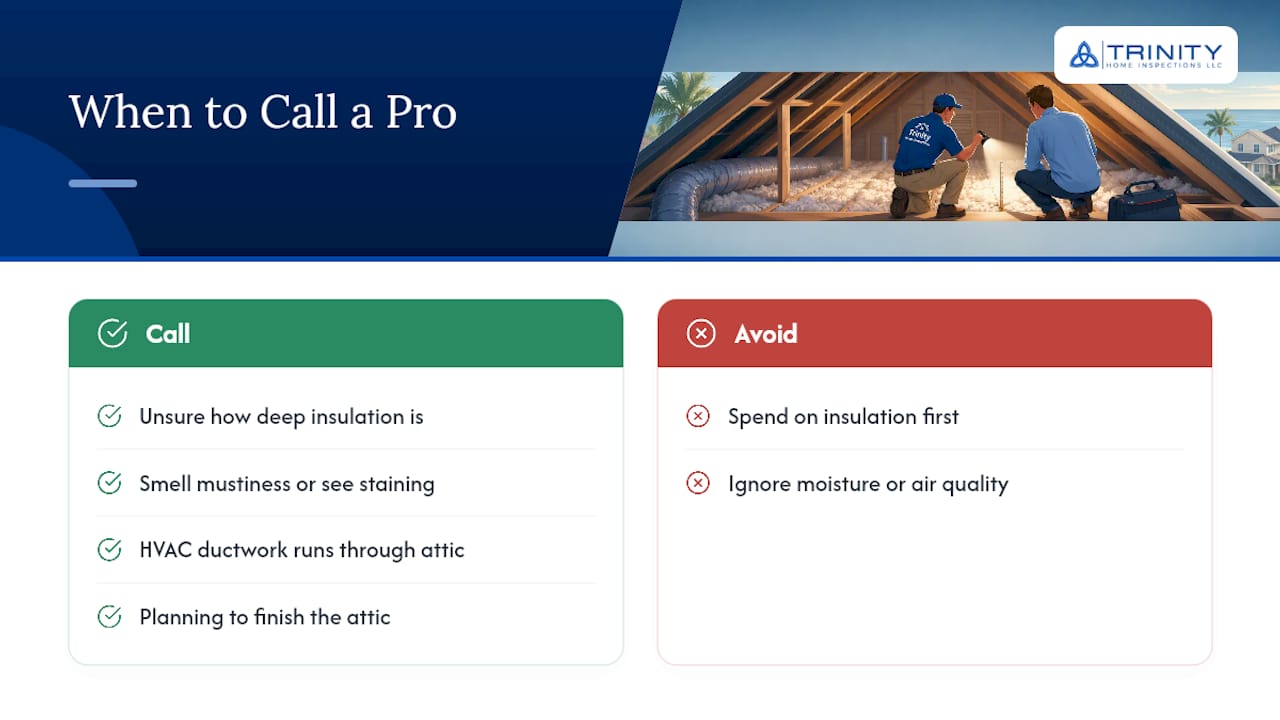
Some attic questions are hard to answer alone. If you’re not sure how deep your insulation really is, if you smell mustiness or see staining that hints at a leak, if HVAC ductwork runs through the attic, or if you’re planning to finish that space into living area, it’s worth getting a second set of eyes before you spend money on insulation.
Trinity Home Inspections is InterNACHI-certified, which means our training meets a standard recognized by the U.S. Department of Education. Every inspection includes free thermal imaging to catch insulation gaps and moisture issues that visual checks miss, along with a same-day photo and video report, and we walk you through the findings so you know exactly what to prioritize.
If you want a clear picture of your attic’s condition before you spend on insulation, call Trinity Home Inspections at 251-210-7376 or visit TrinityInspectionsLLC.com. If moisture or air quality concerns turn up during that inspection, our indoor air quality testing service can confirm whether it’s something to address before you insulate.
— Matt
Sources
FAQ
What Is the 7 and 7 Rule for Attics?
It’s a rough field rule some inspectors use: roughly 6 inches of loose-fill insulation paired with roughly 6 inches of clearance for attic airflow, though it’s not an official code standard. Always check your specific climate zone’s R-value target rather than relying on this shortcut alone.
Can You Put Too Much Insulation in Your Attic?
Yes, in a practical sense. Going far beyond your climate zone’s target usually costs more than it saves, and overstuffing can block soffit vents or bury the attic hatch and wiring access.
How Much Does It Cost to Insulate a 2,000 Square Foot Attic?
Using typical installed rates of $0.60 to $2.50 per square foot for blown-in material, a 1,500 square foot attic runs roughly $900 to $3,750. Spray foam at $2.00 to $4.50 per square foot would run higher.
Is 6 Inches of Attic Insulation Enough?
Generally not for most of the country. Six inches of blown fiberglass or cellulose only gets you well below the R-30 minimum recommended even in the mildest climate zones.
Why Should Soffit Vents Not Be Covered by Attic Insulation?
Blocking soffit vents cuts off the airflow your attic needs to prevent trapped moisture and heat buildup, which can shorten your roof’s lifespan and encourage mold. Baffles installed at the eaves keep insulation back while still letting air flow freely.
Recommended