
Dauphin Island Rental Safety Inspections: 2026 Guide
- Matt Cameron
- Jun 15
- 9 min read

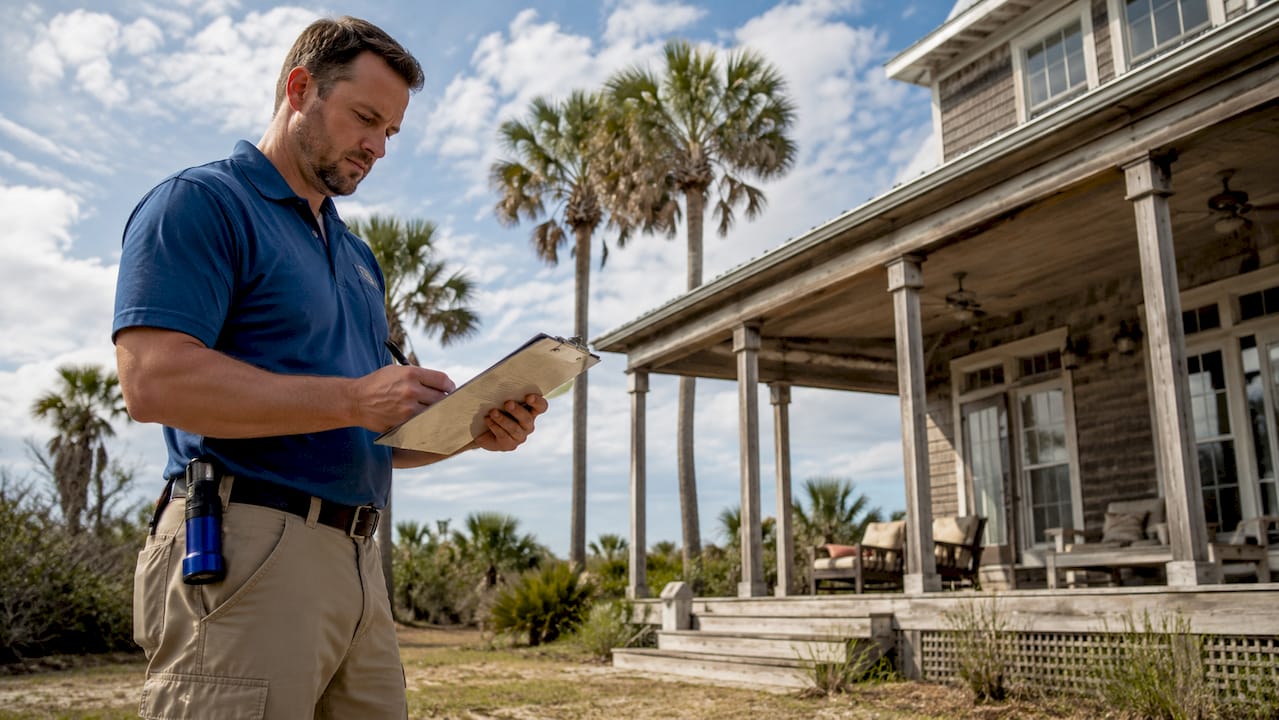
Dauphin Island safety inspections for short and long-term rentals are defined as mandatory triennial property evaluations required by the Town of Dauphin Island, Alabama, beginning January 1, 2026. Every rental property on the island, whether you rent by the night or by the year, must pass a certified safety inspection once every three years to maintain an active rental business license. This requirement applies equally to short-term vacation rentals and long-term residential rentals. Failing to comply means you cannot renew your annual license, which puts your entire rental income at risk. Understanding exactly what the town requires, who can inspect your property, and how to stay prepared is the clearest path to protecting your investment.
What does dauphin island require during safety inspections?
Dauphin Island rental safety checks cover specific physical safety features and a defined set of documents. Knowing both categories in advance removes guesswork from your compliance process.
Required safety equipment inside every unit
The town mandates that every rental property maintain the following inside the unit at all times:
Functional smoke detectors in required locations throughout the property
Carbon monoxide detectors in areas near sleeping spaces and fuel-burning appliances
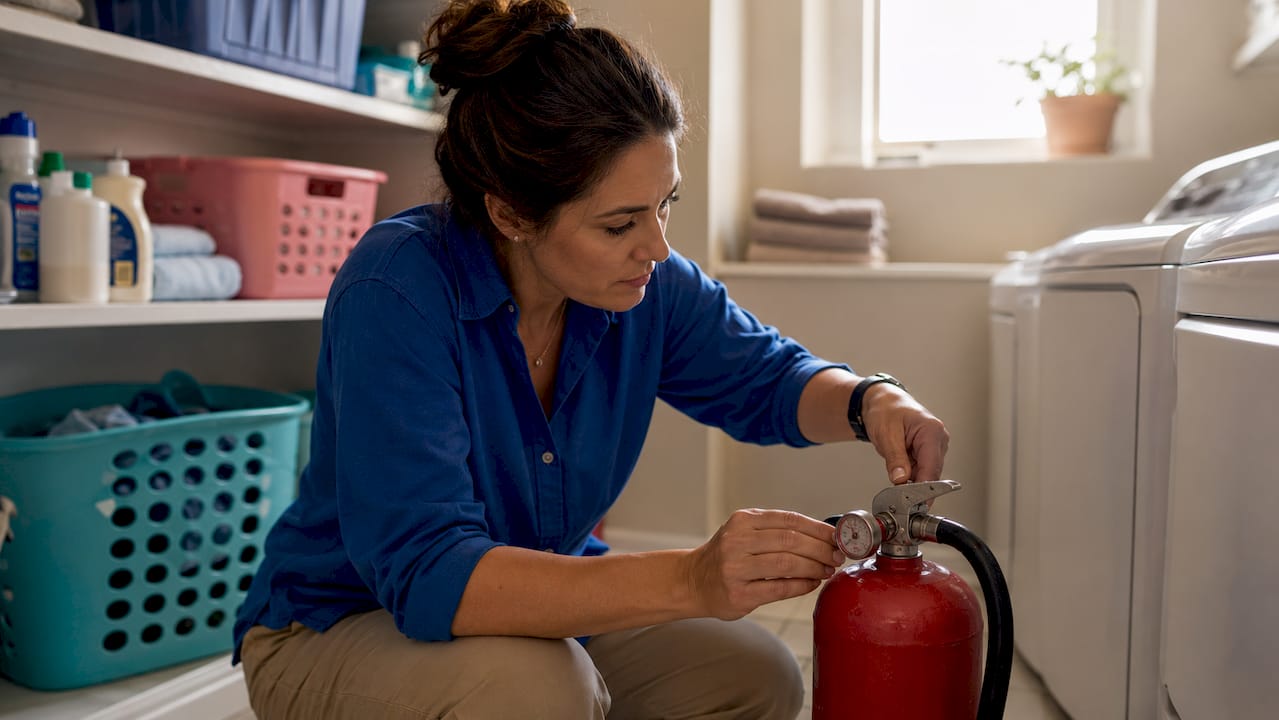
Fire extinguishers accessible inside the unit
Posted emergency contacts visible to guests upon arrival
Maximum occupancy notice displayed inside the property
Rip current warnings posted as part of the Good Neighbor Policy protecting guests and the island community
Parking limits posted clearly for guests
These are not suggestions. They are conditions of your license. A missing smoke detector or an outdated fire extinguisher can trigger a failed inspection and block your license renewal.
Pro Tip: Walk through your property as if you are a first-time guest. If you cannot immediately find the emergency contact list, the occupancy notice, or the rip current warning, your guests cannot find them either. Reposition signage at eye level near entry points.
Required documents for license renewal
Passing the physical inspection is only part of the process. The annual license renewal requires you to submit a complete documentation package to Dauphin Island Town Hall. Missing even one document delays your renewal.
Document Required | Purpose |
Completed safety checklist | Confirms all required safety features are present and functional |
Floor plan with room dimensions | Verifies occupancy calculations and layout compliance |
Detailed parking plan | Documents available parking per the town’s requirements |
Signed hold harmless agreement | Protects the town from liability related to rental operations |
Rental acknowledgment form | Confirms owner awareness of local rental regulations |
Safety inspection results | Proof that a certified professional completed the triennial inspection |
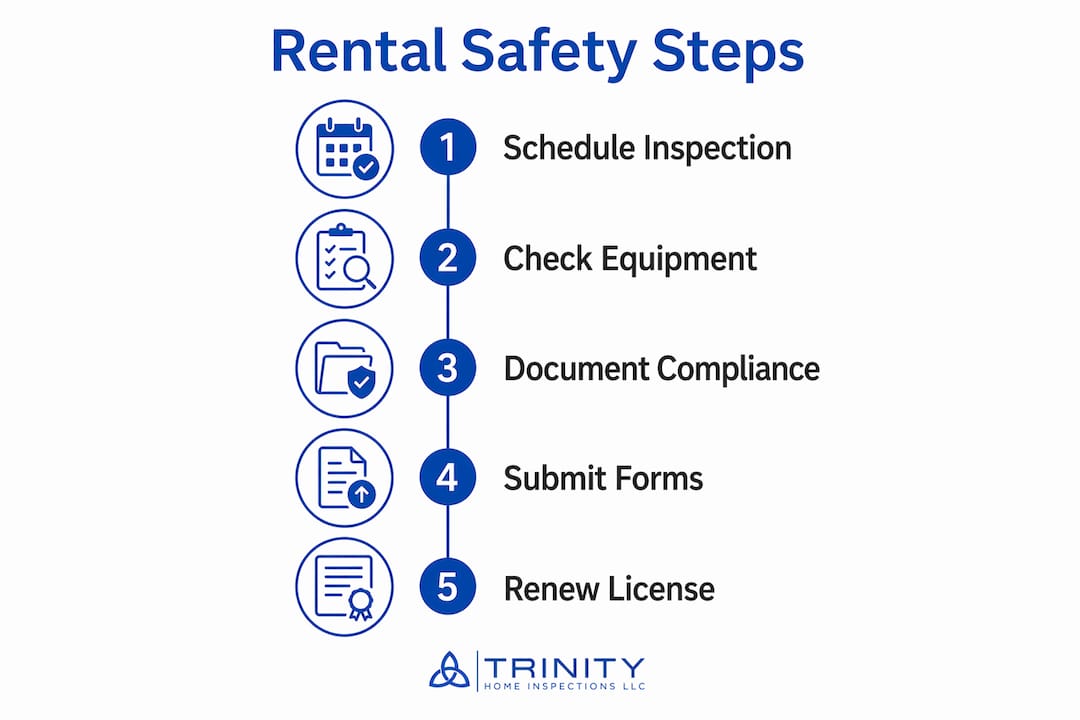
License fees are based on gross rental receipts. The minimum fee is $125 for properties earning under $50,000 annually, plus a $10 issuance fee. That fee structure means even modest rental income triggers the full compliance requirement.
Pro Tip: Create a digital folder for your Dauphin Island rental property that holds every required document. Label each file clearly and update it after every inspection cycle. When renewal season arrives, you submit the package in minutes rather than scrambling to locate paperwork.
Who is authorized to inspect dauphin island rental properties?
Not every home inspector qualifies to perform the triennial safety inspection required by Dauphin Island. The town specifies exactly which credentials an inspector must hold for the results to count toward your license renewal.
Authorized inspectors fall into these categories:
Certified Alabama Home Inspectors who hold recognized state credentials
Certified Safety Property Managers with documented safety management qualifications
Licensed General Contractors holding an active Alabama contractor’s license
Licensed professional tradespeople including licensed plumbers and licensed electricians
This list matters for one practical reason. If you hire someone who does not hold one of these credentials, the town will not accept the inspection results. You would need to schedule and pay for a second inspection with a qualified professional. That costs time and money you do not need to spend.
Trinity Home Inspections holds InterNACHI certification, which is recognized by the U.S. Department of Education as the gold standard in the home inspection industry. InterNACHI-certified inspectors meet and exceed the qualifications Dauphin Island requires. When you work with a certified inspector, you get a report that the town accepts and that you can trust.
Pro Tip: Before scheduling any inspection, ask the inspector directly: “Are you a Certified Alabama Home Inspector, a Licensed General Contractor, or do you hold a professional trade license?” A qualified inspector will answer that question without hesitation. If they pause or redirect, keep looking.
Choosing the right inspector also protects you beyond the paperwork. A thorough inspector using tools like thermal imaging, moisture meters, and carbon monoxide detectors will catch issues that a checklist-only review misses. Those hidden problems, left unaddressed, become guest safety incidents and negative reviews. You can learn more about what a thorough rental safety inspection covers on the Trinity Home Inspections resource page.
Short-term vs. long-term rentals: how do the rules compare?
One of the most common questions from Dauphin Island property owners is whether short-term and long-term rentals face different safety inspection requirements. The answer is mostly no, with one notable exception.
Requirement | Short-Term Rentals | Long-Term Rentals |
Triennial safety inspection | Required every 3 years | Required every 3 years |
Certified inspector | Required | Required |
Smoke and CO detectors | Required | Required |
Fire extinguisher | Required | Required |
Posted safety signage | Required | Required |
Annual business license | Required | Required |
Documentation package | Required | Required |
Minimum stay rules | 2–3 nights depending on overlay district | Not applicable |
Rip current warning posting | Required | Required |
The minimum stay requirements for short-term rentals vary by overlay district, ranging from 2 to 3 nights. Long-term rentals do not face minimum stay restrictions. Outside of that distinction, both rental types carry identical safety inspection obligations, documentation requirements, and licensing conditions.
This matters practically because some owners manage both rental types across a portfolio of properties. You cannot apply a lighter standard to your long-term units and assume they are exempt from the triennial inspection cycle. Both properties go on the same three-year clock, and both require the same documentation package at renewal.
Alabama lacks a statewide short-term rental law, which means every municipality sets its own rules. Dauphin Island’s requirements are distinct from those in Gulf Shores, Orange Beach, or Mobile. Compliance in one town does not transfer to another. Owners managing properties across multiple Gulf Coast markets need separate compliance tracking for each location.
Best practices for ongoing rental safety between inspections
The triennial inspection is the town’s minimum standard. It is not a substitute for the ongoing safety management that protects your guests and your property between official inspection cycles.
Proactive property managers perform internal safety checks after every guest stay. This practice reduces guest safety incidents and prevents the kind of negative reviews that damage a rental’s reputation and booking rate. Here is a practical framework for staying ahead of compliance year-round:
Conduct a post-checkout walkthrough after every guest stay. Check that smoke detectors are functional, fire extinguishers are in place, and all posted signage is still visible and intact. Guests sometimes remove or relocate posted notices without realizing it.
Test smoke and carbon monoxide detectors monthly. Battery-powered detectors need fresh batteries at least once a year. Hardwired units need functional testing. A detector that fails during a guest stay is both a safety risk and a liability.
Inspect fire extinguishers at the start of every rental season. Check the pressure gauge and confirm the unit has not been discharged or tampered with. Replace any extinguisher that shows damage or low pressure.
Audit your posted signage before each season opens. Emergency contact numbers change. Occupancy rules may be updated. Rip current warning formats may be revised. Confirm every posted notice reflects current, accurate information.
Build a relationship with a trusted housekeeping team. A reliable housekeeping crew is your eyes inside the property between your own visits. Train them to flag missing signage, damaged detectors, or any safety concern they notice during turnover.
Schedule your triennial inspection before the busy season, not during it. Booking an inspector in January or February means you have time to address any findings before peak summer rental weeks. Scheduling during peak season means potential downtime and rushed repairs.
Pro Tip: Keep a simple paper checklist inside a kitchen drawer at your rental property. After each guest checkout, your housekeeping team checks off every safety item before marking the property ready for the next booking. This takes less than five minutes and creates a paper trail that protects you if a guest ever disputes a safety concern.
Staying current on HVAC maintenance for short-term rentals is another layer of ongoing safety that the triennial inspection alone will not catch. HVAC systems in Gulf Coast beach rentals work harder than average, and a failing system affects both guest comfort and indoor air quality.
My take on managing dauphin island rental compliance
What three years of local inspections have taught me
I want to be direct with you about something I see regularly. Property owners treat the triennial inspection as the finish line. They pass it, file the paperwork, and consider the safety obligation complete for the next three years. That mindset creates real risk.
A smoke detector can fail six months after an inspection. A fire extinguisher can be discharged by a curious guest and never replaced. A rip current warning can blow off the wall during a storm and sit behind a piece of furniture for the rest of the season. None of those failures show up on a three-year inspection cycle. They show up when something goes wrong.
The owners I respect most on the Gulf Coast treat the official inspection as a baseline, not a ceiling. They build internal checklists, they train their housekeeping teams, and they schedule pre-season walkthroughs every year regardless of where they are in the three-year cycle.
I also want to flag something that experts consistently emphasize: Dauphin Island has its own regulatory environment. Owners who manage properties in Gulf Shores or Orange Beach sometimes assume the rules transfer. They do not. The documentation package, the fee structure, the overlay district rules, and the inspector qualification requirements are specific to Dauphin Island Town Hall. Verify every checklist item directly with the town clerk and planning department. Do not rely on what worked in a neighboring market.
One more thing. The inspector you choose matters beyond the credential check. An inspector who uses thermal imaging, moisture meters, and carbon monoxide detection tools will find things a visual-only inspection misses. Hidden moisture behind a bathroom wall, an overheated electrical component, a slow CO leak from an aging water heater. Those are the findings that protect your guests and your property value. Choose an inspector who brings the tools and the training to back them up.
— Matt
Ready to schedule your dauphin island rental inspection?
Trinity Home Inspections serves Dauphin Island and the surrounding Gulf Coast Alabama region with InterNACHI-certified inspections built for rental property owners and real estate investors. Our reports are delivered the same day of the inspection, color-coded for priority, and packed with photos and video so you know exactly what needs attention before you submit your license renewal package.
[
We help you manage permits and compliance documents so nothing falls through the cracks at renewal time. Whether you need a triennial safety inspection, a pre-season walkthrough, or a full property evaluation before listing, we are ready to help. Call us at 251-210-7376 or visit TrinityInspectionsLLC.com to book your inspection today.
FAQ
How often are safety inspections required for dauphin island rentals?
Safety inspections are required once every three years starting in 2026 for all rental properties on Dauphin Island, both short-term and long-term.
What safety equipment must be present during a dauphin island inspection?
Every rental unit must have functional smoke detectors, carbon monoxide detectors, and fire extinguishers, along with posted emergency contacts, maximum occupancy notices, and rip current warnings.
Can any home inspector perform the triennial safety inspection?
No. The town requires inspections to be performed by a Certified Alabama Home Inspector, Certified Safety Property Manager, Licensed General Contractor, or a licensed professional tradesperson such as a plumber or electrician.
Do short-term and long-term rentals face different inspection rules?
The triennial inspection requirement, safety equipment standards, and documentation package apply equally to both rental types. The only distinction is that short-term rentals face minimum stay rules of 2–3 nights depending on the overlay district.
What happens if i do not pass the safety inspection?
Failing to comply with safety inspection requirements means you cannot renew your annual rental business license. Without a valid license, you cannot legally operate your rental property on Dauphin Island.
Key takeaways
Dauphin Island requires certified safety inspections every three years for all rental properties, and compliance with equipment, signage, and documentation standards is the only path to annual license renewal.
Point | Details |
Triennial inspection requirement | All short-term and long-term rentals must pass a certified safety inspection every three years starting in 2026. |
Certified inspectors only | Only Certified Alabama Home Inspectors, Licensed General Contractors, and licensed tradespeople qualify to perform accepted inspections. |
Documentation package required | Owners must submit a safety checklist, floor plan, parking plan, hold harmless agreement, and rental acknowledgment to Town Hall at renewal. |
Safety equipment is non-negotiable | Smoke detectors, CO detectors, fire extinguishers, and posted safety signage must be present and functional at all times. |
Proactive checks protect your investment | Internal safety walkthroughs after every guest stay reduce risk and protect your property between official inspection cycles. |
Recommended
