
Texas First Time Buyers: Stack TSAHC to Lower Rate, Book Inspection
- Matt Cameron
- 1 hour ago
- 7 min read

The fastest way for a Texas first-time buyer to lower a mortgage interest rate is stacking state assistance with smart lender tactics: use TSAHC or TDHCA down payment assistance and a Mortgage Credit Certificate to improve qualification, then push your down payment past 20%, consider buying discount points, and shop at least three approved lenders including credit unions before you lock.
TL;DR:
Combining down payment assistance with a Mortgage Credit Certificate can significantly improve qualification and cash flow for first-time Texas buyers.
Pushing your down payment past 20% eliminates private mortgage insurance and allows for more aggressive loan pricing from lenders.
Comparing at least three approved lenders, including credit unions, using APR and considering discount points can reduce your interest rate effectively.
Securing an early home inspection and negotiating repairs or credits can prevent delays that risk losing your rate lock advantage.
Proper sequencing of credit, income, and inspection steps within a 90-day window is essential to locking in the lowest possible mortgage rate.
First Time Home Buyer Lower Interest Rate Programs In Texas
Texas runs two major channels for first-time buyers looking to shrink their monthly payment, and they work differently enough that it’s worth understanding both before you talk to a loan officer.
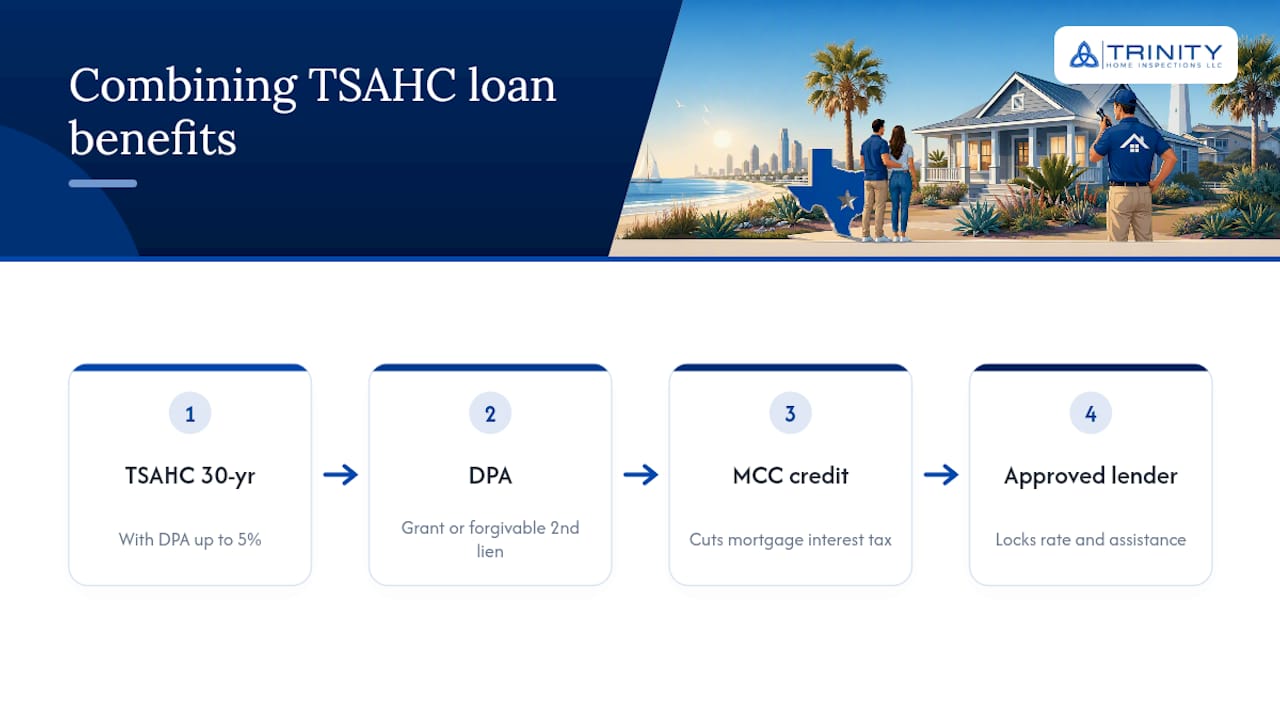
The Texas State Affordable Housing Corporation (TSAHC) offers Home Sweet Texas and Homes for Texas Heroes, two 30-year fixed-rate loan programs that pair with down payment assistance worth up to 5% of the loan amount. That assistance arrives either as a straight grant or as a deferred, forgivable second lien, meaning you don’t repay it if you stay in the home long enough to satisfy the forgiveness period. TSAHC also administers the Mortgage Credit Certificate (MCC), which isn’t a discount on your rate at all. It’s a dollar-for-dollar federal tax credit on the mortgage interest you already pay, which frees up cash flow that lenders often factor into how much house you can qualify for.
The Texas Department of Housing and Community Affairs (TDHCA) runs My First Texas Home, offering its own 30-year low-rate mortgages plus up to 5% down payment assistance. Borrowers choose between assisted and unassisted rate options, and both carry residency and income eligibility rules that vary by county.
Statistic to know: Down payment assistance through either agency is available up to a modest percentage of your loan amount, whether delivered as a grant or a second lien.
Combine an MCC with either agency’s DPA and you’re attacking the problem from two directions at once. The DPA reduces what you need in cash at closing. The MCC lowers your effective debt-to-income ratio by shrinking your real tax liability, which can be the difference between a maybe and a yes from underwriting. Keep in mind that posted rates and assistance percentages shift, so you’ll need to work through an approved program lender to lock in a specific reservation rather than applying to the state directly.
Lender Tactics That Actually Lower Your Rate
Programs get you in the door. What you do with your lender afterward often decides the number on your note.
Push your down payment past 20%. Beyond the obvious equity benefit, crossing that threshold eliminates private mortgage insurance, which functions like an extra monthly fee stacked on top of your rate. Lenders also tend to price loans more aggressively for buyers who show up with more skin in the game.
Consider buying discount points. One point typically costs about 1% of your loan amount and buys roughly a 0.25 percentage point reduction on your rate, according to Freedom Mortgage. Run the break-even math before you commit. If you’re planning to sell or refinance within a few years, points can cost you more than they save.
Weigh a 15-year term against the standard 30-year. Shorter terms carry lower rates and dramatically less lifetime interest, though the trade-off is a bigger monthly payment.
Shop at least three lenders, including credit unions. Credit unions are member-owned and frequently undercut big banks on rates and fees, yet a lot of first-time buyers never call one. Compare APR, not the note rate, since APR bakes in fees and gives you an apples-to-apples number.
Understand your rate lock, and ask about a float-down. A rate lock protects you from increases while your loan processes. A float-down option, available with some lenders for an added fee, lets you capture a lower rate if the market drops before closing, according to AmeriSave.
Pro Tip: Get soft-pull pre-qualifications from your shortlist of lenders before authorizing hard credit checks. A soft pull shows you roughly where you’ll land on pricing without dinging your score, which matters if you’re comparing five lenders instead of one.
What Underwriters See When You Use A State Program
Applying with DPA or an MCC changes the shape of your file, and it helps to know what a lender is actually checking.
Texas defines a first-time buyer as someone who hasn’t owned a primary residence in the past three years, per TSAHC’s eligibility rules. That look-back is waived for qualified veterans and for buyers purchasing in certain targeted census tracts, so don’t assume you’re disqualified just because you owned a home a decade ago.
If your DPA arrives as a deferred forgivable second lien, selling or refinancing before the forgiveness period ends can trigger repayment, so plan your timeline before you commit to that structure.
MCCs don’t show up as cash at closing. They lower your ongoing federal tax bill, which underwriters can factor into your qualifying income and effective DTI.
Both agencies require you to work through an approved lender who publishes daily rate notices and manages your reservation. You generally can’t jump to a different lender mid-process just to chase a marginally lower published rate, according to TDHCA’s lender guide.
Income and residency documentation gets verified against county limits, so pull your paperwork together early rather than scrambling once you’re under contract.
Your 90-Day Path To A Lower-Rate Mortgage
A little sequencing goes a long way toward protecting your rate and your sanity.
Pull your credit report and address any errors or high balances first, roughly 10 to 12 weeks out.
Gather income, asset, and residency documents, and complete any required homebuyer education course.
Contact two or three TSAHC- or TDHCA-approved lenders about DPA and MCC eligibility.
Request soft-pull pre-qualifications, then move to 3 or more full pre-approvals for real comparison.
Compare APR and fee sheets side by side, not just the headline rate.
Decide whether points or a 15-year term make sense for your timeline.
Schedule your home inspection early enough to negotiate before your rate lock window closes.
Lock your rate, using a float-down if your lender offers one and the market looks likely to soften.
Statistic to know: Discount points buy roughly a 0.25 percentage point rate reduction per 1% of loan amount, so run the break-even numbers before deciding.
Watch for a few red flags along the way: too many hard credit pulls in a short window, missing documentation that delays underwriting, or a surprise repair discovered too late to negotiate. Each one can push your closing date past your rate lock and cost you money.
How A Solid Inspection Protects Your Rate-Saving Plan
An inspection isn’t just a box to check. It’s leverage. When you find a problem early, that finding is your leverage to ask the seller for repairs or a credit, keeping more of your own cash for the down payment or discount points you decided to buy.
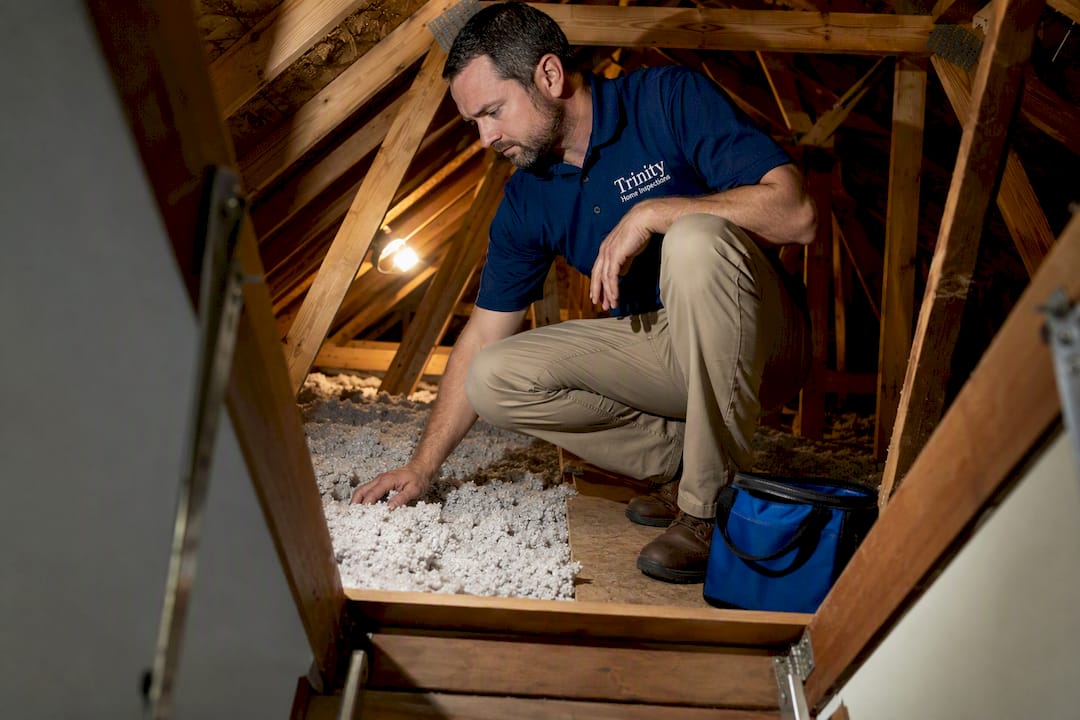
Scheduling a same-day, photo and video-rich inspection report early in your timeline means you can negotiate quickly instead of watching your rate lock expire while you wait on paperwork. Trinity Home Inspections delivers InterNACHI-certified reports the same day, includes free thermal imaging to catch hidden moisture or insulation gaps, and can bring in drone roof views, sewer scope cameras, and lab-backed air testing when a property calls for it.
Same-day reports mean findings are ready before your contingency deadline, not after.
Free thermal imaging often catches issues a visual walkthrough misses.
Drone roof inspections and sewer scopes give you negotiating facts, not guesses.
If you’re weighing your first purchase, our first-time homebuyer inspection guide walks through exactly what to expect during the process.
A Local Inspector’s Take On What Buyers Miss
Most first-time buyers focus so hard on the interest rate that they forget the inspection contingency has its own clock, and that clock can quietly wreck a good rate lock if it runs out at the wrong time. Here’s what actually moves the needle, in order.
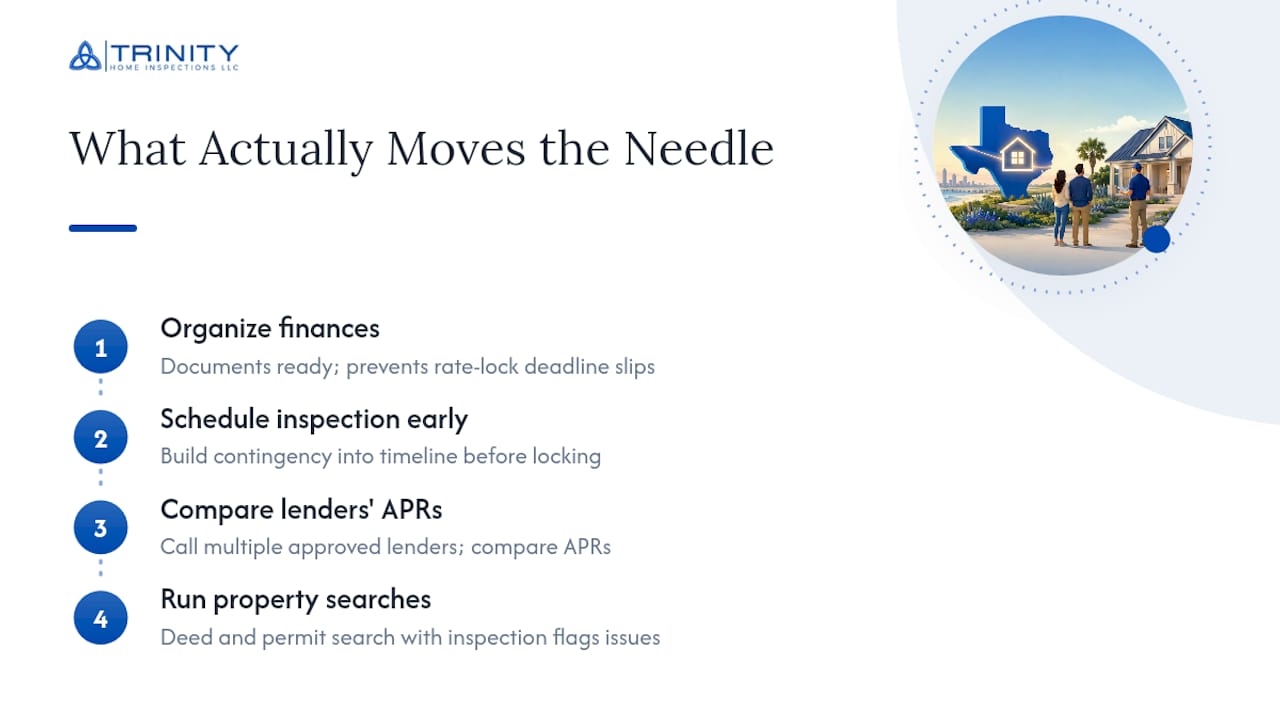
Get your credit and financial documents in order first. It sounds obvious, but disorganized paperwork is the number one reason closings slip past a rate lock deadline. Second, build your inspection contingency into your timeline before you ever schedule the lock, not after. Third, actually call more than one approved lender and compare APR, not just the rate they quote you on the phone.
None of this requires panic or a rush to close before you’re ready. It requires sequencing. A property, deed, and permit search alongside your inspection can also flag issues a walkthrough won’t, giving you one more piece of leverage before you sign anything. If you’re buying anywhere across Coastal Alabama and want a same-day report in hand while your rate lock is still running, call Trinity Home Inspections at 251-210-7376 or visit Trinityinspectionsllc.
— Matt
Sources
FAQ
Do First-Time Buyers Get A Lower Interest Rate?
Not automatically. State programs like TSAHC and TDHCA offer down payment assistance and tax credits rather than a guaranteed lower note rate, though their assisted-rate options can come close to market rates while easing your cash-to-close burden.
What Is The Lowest Interest Rate Available To First-Time Buyers?
There’s no single fixed number since rates move daily and vary by lender, credit profile, and program choice. The best way to find your lowest available rate is comparing APR across at least three approved lenders, including credit unions.
How Much Do First-Time Home Buyers In Texas Have To Put Down?
TSAHC and TDHCA both offer down payment assistance up to 5% of the loan amount, delivered as a grant or a deferred forgivable second lien, which can bring your out-of-pocket cash close to zero depending on the program.
What Is The $7,500 First-Time Home Buyer Program?
Assistance amounts vary by program, lender, and loan size rather than a fixed assistance amount; check directly with an approved TSAHC or TDHCA lender for the specific dollar amount tied to your loan.
Recommended

