
What To Expect From A Home Inspection: First-Time Buyer Guide

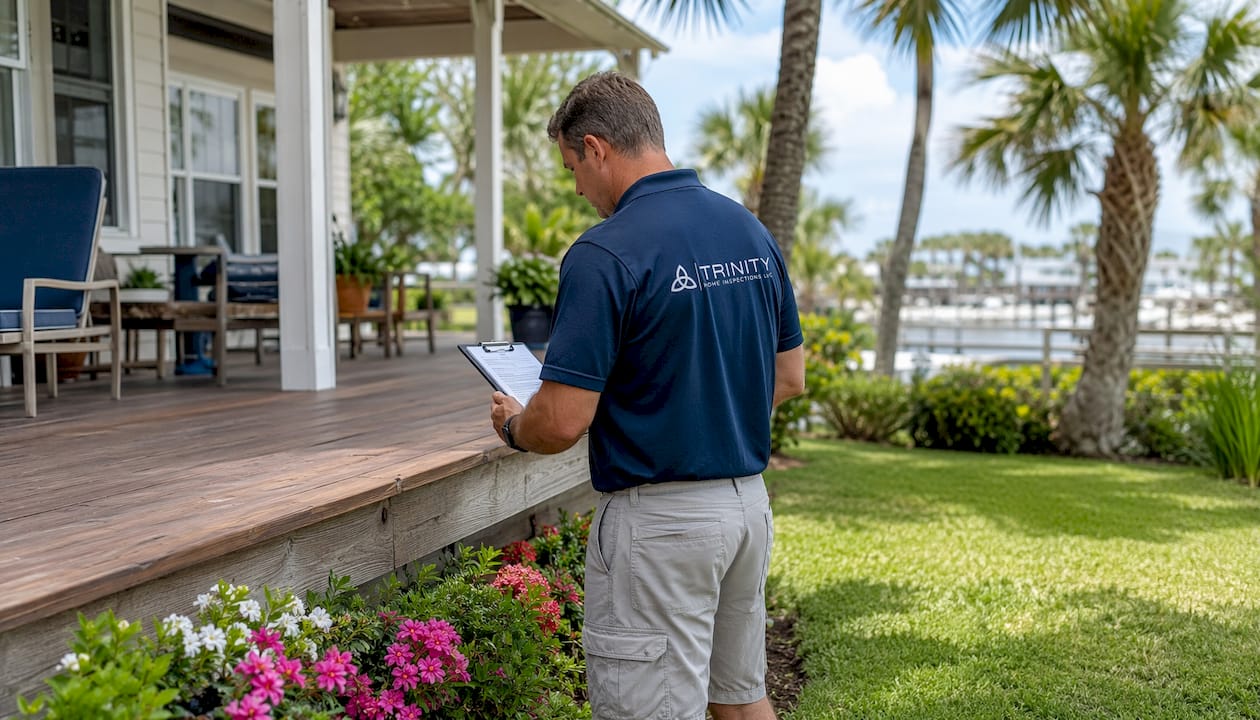
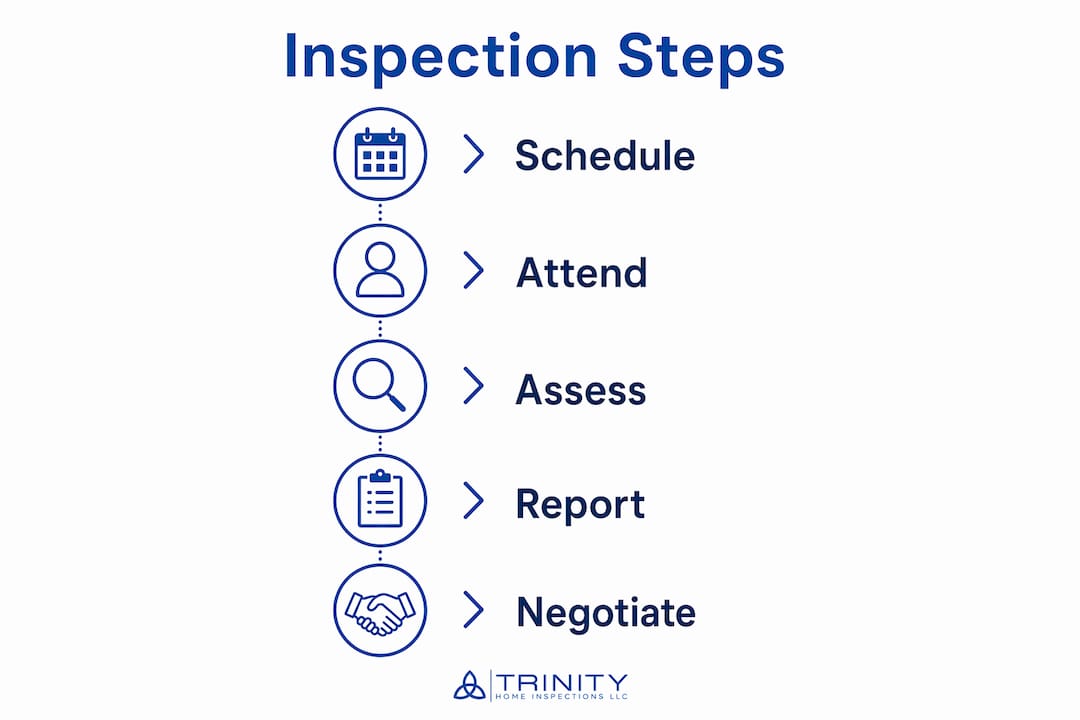
A home inspection is a non-invasive, visual evaluation of a home’s readily accessible systems and components, conducted by a trained professional following ASHI or InterNACHI Standards of Practice. As of June 2024, a typical home inspection takes 2–4 hours on site, followed by delivery of your written report within the same day or up to a few days, depending on the inspector. The National Association of Realtors recommends every buyer obtain one before closing. Here is what to do with it:
Attend the inspection so the inspector can show you issues in person, not just describe them in a report.
Read the report the same day while details are fresh, focusing on safety and structural findings first.
Prioritize red flags like foundation movement, active water intrusion, and electrical hazards before cosmetic items.
Decide your next step: negotiate repairs or credits, order specialist evaluations, or exercise your inspection contingency.
Trinity Home Inspections serves Baldwin, Mobile, and surrounding Gulf Coast Alabama counties with InterNACHI-certified inspections and same-day photo/video-rich reports.
What Does A Home Inspection Actually Cover?
A comprehensive home inspection evaluates the visible, accessible systems and components of a home — not cosmetic finishes or market value. Here is what inspectors examine, system by system.
Exterior and roof
Roof covering condition: shingles, flashing, gutters, and visible penetrations
Chimneys, fascia, soffits, and siding
Grading and drainage around the foundation perimeter
Driveways, walkways, and visible retaining structures
Structure and foundation
Visible foundation walls, footings, and piers
Signs of settlement, cracking, or movement
Load-bearing members, floor and ceiling planes
Visible framing in accessible areas
Attic, insulation, and ventilation
Insulation type and coverage
Ventilation adequacy (ridge, soffit, gable vents)
Visible roof sheathing condition and evidence of past or active leaks
Plumbing
Visible supply and drain piping
Water heater condition and age
Fixture operation and visible leaks
Water pressure where accessible
Electrical
Service entry and panel condition
Visible wiring hazards, double-tapped breakers, and improper connections
GFCI protection in kitchens, bathrooms, and exterior outlets
Presence and accessibility of smoke and CO alarms
HVAC
Furnace and air conditioning visible components
Filter condition, distribution vents, and flue connections
System operation when utilities are on and temperature permits
Interior finishes and appliances
Stairs, railings, and guardrails
Visible moisture stains on ceilings, walls, and floors
Built-in appliance operation (dishwasher, range, oven, exhaust fans)
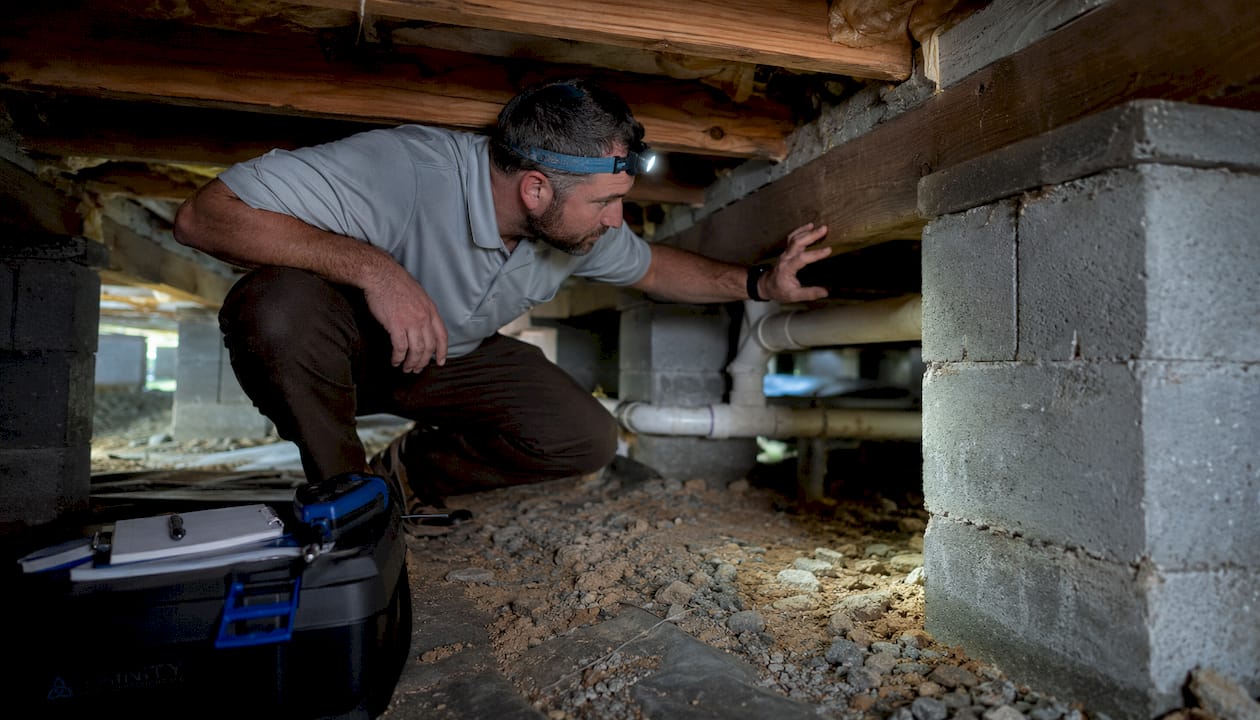
Basement and crawlspace
Moisture evidence, standing water, and efflorescence
Crawlspace venting and vapor barrier condition
Exposed framing for wood decay or pest damage
Insulation and structural members
Common access limits: Inspectors cannot inspect behind sealed attic panels, inside locked areas, or beneath personal property. Finished ceilings, walls, and floors conceal what cannot be seen without destructive testing, which falls outside the inspection scope.
Pro Tip: Ask the inspector to walk you through each area as they go, not just hand you the report at the end. Seeing a stain on a ceiling joist in person tells you far more than a photo alone.
How Long Does An Inspection Take, and What Does It Cost?
On-site time
A standard single-family home inspection typically takes a few hours. Larger homes, finished attics or basements, accessory structures, and add-on services all extend that window. For a detailed breakdown of what affects duration, see how long a home inspection takes.
Report delivery
Same-day report delivery is available from providers using digital platforms, which helps buyers meet tight contingency deadlines. Most inspectors deliver reports within a few days, but Trinity Home Inspections delivers 99% of reports the same day of the inspection.
Cost expectations
Item | Typical Range | Notes |
Standard home inspection | — | Varies by home size, age, and region |
Radon testing | — | Add-on; recommended in higher-risk areas |
Sewer scope | — | Add-on; older homes or recurring backups |
Mold/IAQ testing | — | Add-on; triggered by moisture findings |
Termite/WDO inspection | — | Often required by lenders in humid climates |
Regional variation is real. Gulf Coast Alabama markets can see different pricing than the national midpoint, and busy spring and summer buying seasons may affect scheduling availability. Book early when possible.
What Inspectors Do Not Do — And When You Need A Specialist
The ASHI Standard of Practice is explicit: inspections are non-invasive and not technically exhaustive. Understanding those limits protects you from expecting something the inspection was never designed to deliver.
Inspectors are not required to:
Remove finishes, insulation, or personal property to access concealed areas
Determine the remaining useful life of any system or component
Identify the cause of a defect, only its presence
Estimate repair costs or recommend specific contractors
Enforce building codes or determine code compliance
Appraise market value or advise whether to purchase the property
Test for environmental hazards (lead paint, asbestos, radon, mold) unless specifically ordered as add-ons
This is also not the same as an appraisal. An appraisal determines market value for the lender. An inspection evaluates physical condition for you. The two serve completely different purposes, and confusing them is one of the most common first-time buyer mistakes. For a clear breakdown, see the difference between an appraisal and an inspection.
When to call a specialist:
Structural engineer: when the inspector flags significant foundation movement, bowing walls, or major framing concerns
Licensed electrician: for unsafe panels, aluminum wiring, or extensive DIY wiring
Licensed plumber: for hidden sewer line issues or suspected main-line problems
Radon or mold testing professional: when the general inspection reveals moisture, musty odors, or elevated readings
Pest control operator: for wood-destroying organism evidence in humid or termite-prone areas
Pro Tip: Before you negotiate repairs with the seller, get at least two contractor estimates for any major item. Raw inspection language (“evidence of moisture intrusion”) can sound alarming; a plumber’s $400 repair quote puts it in perspective.
Which Red Flags Should You Take Most Seriously?
Not every finding in a report carries the same weight. A long list of items can feel alarming, but most are routine maintenance. The ones below are the exceptions — issues that affect safety, insurability, or carry significant repair costs.
Major foundation cracks or movement. Horizontal cracks in basement or crawlspace walls, stair-step cracks in brick, bowing walls, and noticeably sloping floors all point to structural stress. Foundation repair costs vary widely, and a licensed structural engineer’s evaluation is the right next step before any negotiation. See key signs of foundation issues for what to look for.
Active water intrusion. Water stains on ceilings or walls, soft flooring near bathrooms or exterior walls, standing water in a crawlspace, and musty odors in basements all signal moisture problems. The visible damage is often a fraction of what is happening behind walls or under floors. Moisture leads to mold, framing rot, and poor air quality — all of which compound over time.
Serious electrical hazards. Federal Pacific or Zinsco panels have known defect histories and are considered fire hazards by many insurers. Aluminum wiring (common in homes built between 1965 and 1973), double-tapped breakers, and ungrounded outlets in kitchens and bathrooms all require a licensed electrician’s evaluation. These findings can affect your homeowner’s insurance eligibility, not just safety.
Major roof failure. Missing or curling shingles, sagging roof decking, and active attic leaks mean water is entering or will enter the structure. A roof near or past its expected service life needs to be factored into your budget or negotiated before closing.
HVAC systems affecting habitability. A non-functioning furnace in winter or an AC system that cannot cool the home in a Gulf Coast Alabama summer is not a minor finding. Age, condition, and operational status all matter.
For a deeper look at how these findings play out locally, the home inspection red flags every buyer should know post covers the most common findings in this region. Use the inspection report as a negotiation tool to convert findings into specific repair requests or credits.
How To Prepare For Inspection Day
Good preparation on both sides makes the inspection more complete and your report more useful.
If you are the seller (or your agent is coordinating access):
Confirm all utilities are on, including gas, electricity, and water
Turn on pilot lights for furnaces and fireplaces
Clear access to the attic hatch, crawlspace entry, electrical panel, and water heater
Label the main electrical shutoff and gas shutoff locations
Unlock all outbuildings, gates, and storage areas the inspector needs to access
Remove stored items blocking the furnace, water heater, or crawlspace entrance
If you are the buyer attending the inspection:
Bring a notebook and your phone for photos and notes
Plan to arrive at or shortly after the inspector starts, not at the very beginning when they are setting up
Ask the inspector to demonstrate issues rather than just point to them — watching a door that won’t latch or a GFCI that won’t reset tells you more than a photo
Focus your questions on severity and urgency, not just presence of an issue
Top questions to ask during the walkthrough:
Is this a safety concern or a maintenance item?
How urgent is this, and what type of contractor should I call?
Is this something I should get a specialist to evaluate before closing?
What should I budget for this repair?
If utilities are off or areas are blocked, the inspector may be unable to test key systems and may need to note those limitations in the report — or in some cases, return for a re-inspection. That costs time and money, so preparation matters.
Pro Tip: Take your own photos during the walkthrough alongside the inspector’s. Your photos capture context the report may not — like how close a water stain is to a window or how a crack runs across a wall. That context helps when you are reviewing the report later.
How To Read Your Inspection Report and Use It To Negotiate
A well-structured inspection report is one of the most useful documents in your home purchase. Here is how to work through it.
Report layout
Most modern reports follow a system-by-system format with:
An executive summary highlighting safety hazards and major defects at the top
System-by-system findings with photos and descriptions
Priority color-coding (safety/major, issues/defects, DIY/minor) to separate urgent items from routine ones
Recommended next steps and specialist referrals for items needing further evaluation
Your workflow after receiving the report
Step | Action |
1. Review with the inspector | Walk through the summary together, in person or by phone, before drafting any requests |
2. Prioritize safety and structural items | Foundation, electrical, moisture, and roof findings come first |
3. Get contractor estimates | For any major item, get two or more bids before negotiating a number |
4. Draft your repair request or credit | Use specific findings and estimates, not general language |
5. Decide on additional testing | Order specialist evaluations before finalizing requests when warranted |
The NAR consumer guide on home inspections notes that buyers can request repairs, a price reduction, or a closing credit based on findings. Each approach has tradeoffs: seller-completed repairs are harder to verify for quality, while a credit lets you control the work after closing.
Pro Tip: Bring the full inspection report to every contractor estimate appointment. Contractors who see the inspector’s photos and descriptions give more accurate bids than those working from a verbal summary. Better estimates mean better negotiations.
Which Add-On Inspections Are Worth Ordering?
The general inspection is the foundation, but several add-on tests address things a visual inspection cannot detect. Here is a simple decision guide.
Add-On | What It Detects | Order When… |
Radon testing | Radioactive gas accumulation below living areas | Home has a basement or is in a known radon-risk area |
Sewer scope | Blockages, root intrusion, pipe collapse in main sewer line | Home has mature trees near the line or has had backups |
Termite/WDO inspection | Wood-destroying organisms and active infestation | Humid climates (Gulf Coast Alabama is high-risk), older homes, visible wood damage |
Mold/IAQ testing | Mold spore counts, airborne contaminants, VOCs | Inspector finds moisture, musty odors, or visible mold; buyer has respiratory concerns |
Pool/spa inspection | Mechanical, structural, and safety condition of pool systems | Property includes a pool or spa |
Timing matters. Order add-ons at the same time as the general inspection when possible so results arrive before your contingency deadline. In Gulf Coast Alabama, termite and moisture add-ons are worth serious consideration on nearly every older home given the regional climate. Mold testing and indoor air quality sampling are available as add-ons through Trinity Home Inspections, with certified lab reports and chain of custody documentation.
What You Get With A Trinity Home Inspections Inspection
Trinity Home Inspections is an InterNACHI-certified inspection company serving Mobile, Baldwin, Escambia, Washington, Monroe, and Clarke counties across Gulf Coast Alabama, including Daphne, Fairhope, Spanish Fort, Foley, Gulf Shores, Orange Beach, and Mobile.
What is included with every inspection:
Same-day digital report with high-quality photos and video (99% of reports delivered the same day)
Color-coded findings organized into Safety/Major, Issues/Defects, and DIY/Minor categories
Thermal imaging at no extra charge (when conditions allow) to help identify hidden moisture, insulation gaps, and overheated electrical components
Moisture meter readings to verify suspected leaks
CO and combustible gas detector checks
Testing of all accessible outlets, switches, windows, and doors (not just a representative sample)
Trusted contractor referral list included with the report
Post-inspection walkthrough in person or by phone/text
Add-on services available through Trinity:
Sewer scope (main line camera)
Mold swab testing and mold inspection in Mobile, AL
Indoor air quality sampling with certified lab reports
Pool and spa inspections
Detached structure inspections
Annual maintenance inspections
Trust signals:
InterNACHI Certified Home Inspector (certifications recognized by the U.S. Department of Education)
FAA drone-certified for roof inspections when walking the roof is unsafe
$1M Errors and Omissions insurance (Alabama mandates $250K; Trinity carries four times that)
$2M General Liability insurance
5-star Google reviews, with responses to every review
Thermal imaging is included at no extra charge, which is not standard across the industry. Many providers charge separately for infrared scans. Trinity includes it because it meaningfully improves the chance of catching hidden moisture paths and thermal anomalies without destructive testing.
Booking: Call 251-210-7376 or visit TrinityInspectionsLLC.com to schedule. Trinity asks that utilities be on, access panels be unlocked, and pilot lights be lit before the inspector arrives so the inspection can be completed fully in one visit.
Key Takeaways
A home inspection is a non-invasive visual evaluation that typically takes 2–4 hours on site, with report delivery usually the same day or within a few days, covers every major system in the home, and provides a written report you can use to negotiate repairs, request credits, or walk away with your earnest money protected.
Point | Details |
Attend the inspection | Buyers who attend get far more context than those who only read the report afterward. |
Prioritize safety and structure | Foundation, electrical, moisture, and roof findings come first — cosmetic items come last. |
Use the report to negotiate | Get contractor estimates for major items before making repair requests or accepting credits. |
Order add-ons when indicated | Radon, sewer scope, mold, and termite tests address what a visual inspection cannot detect. |
Verify inspector credentials | Look for ASHI or InterNACHI certification, E&O insurance, and a same-day reporting capability. |
Trinity Home Inspections | InterNACHI-certified, same-day reports, free thermal imaging, serving Gulf Coast Alabama — call 251-210-7376. |
What Gulf Coast Buyers Often Get Wrong About Inspections
Most first-time buyers come to an inspection looking for a pass or fail verdict. That is not how it works, and that framing can actually hurt you. A long report does not mean a bad house, and a short report does not mean a clean one. What matters is the nature of the findings, not the count.
The Gulf Coast Alabama market has its own set of recurring patterns. Moisture is the dominant concern here, not because homes are poorly built, but because the climate is relentless. Humidity, heavy rain events, and the proximity to the coast create conditions where crawlspace moisture, roof wear, and wood-destroying organism activity show up more often than in drier climates. Buyers relocating from other regions are sometimes caught off guard by how much a termite bond and a sewer scope matter here. They are not optional extras in this market — they are standard due diligence.
The other mistake buyers make is skipping the walkthrough to save time. Reading a report in isolation, without having seen the inspector point to a stain on a joist or demonstrate a soft spot in a floor, leaves too much open to interpretation. Attending the inspection and asking clarifying questions turns a document into a conversation, and that conversation is where the real value is. Integrity in communication — saying what is actually there, not softening it or overstating it — is what makes that conversation useful. That is the standard Trinity Home Inspections holds itself to on every job.
Ready To Schedule Your Gulf Coast Alabama Inspection?
Trinity Home Inspections gives first-time buyers something most inspection companies do not: a same-day photo and video report, free thermal imaging, and a certified inspector who walks every accessible roof and tests every outlet, switch, window, and door rather than a representative sample.
[

Trinity serves Mobile, Baldwin, Escambia, Washington, Monroe, and Clarke counties, including Daphne, Fairhope, Foley, Gulf Shores, and Orange Beach. Add-on services including mold inspection and indoor air quality testing are available so you can handle everything in one appointment. After your inspection, a trusted contractor referral list comes with the report to make repair estimates straightforward.
Call 251-210-7376 or visit TrinityInspectionsLLC.com to book your inspection. Spots fill quickly during peak buying season, so scheduling early keeps your contingency timeline on track.
This article is general information about the home inspection process and is not a substitute for advice from a licensed inspector, contractor, or real estate professional for your specific property and situation.
Useful Sources and Further Reading
These primary sources back the standards and guidance covered in this article. Each one is worth bookmarking as you move through the buying process.
Source | What It Covers | Why It Matters |
ASHI Standard of Practice | Inspection scope, required systems, and limitations | The foundational industry standard for what inspectors must and must not do |
InterNACHI Standards of Practice | Non-invasive visual inspection definition and material defect standards | Parallel standard used by InterNACHI-certified inspectors like Trinity |
NAR Home Inspections Consumer Guide | Buyer guidance on using inspection results in negotiation | Practical advice on repair requests, credits, and contingency use |
Redfin: How Long Does a Home Inspection Take | On-site duration factors and preparation tips | Helps buyers plan their schedule and understand what affects inspection length |
System-by-system scope and exclusions | Clear consumer-facing explanation of what is and is not included | |
Checklist format and seller preparation guidance | Useful reference for both buyers and sellers preparing for inspection day |
For specialist follow-up, contact licensed structural engineers, electricians, plumbers, or certified industrial hygienists in your area. For Gulf Coast Alabama properties, ask your real estate agent for referrals to local licensed contractors familiar with regional construction and climate conditions.
FAQ
What is the biggest red flag in a home inspection?
Major foundation movement, active water intrusion, and serious electrical hazards are consistently the most consequential findings because they affect safety, insurability, and carry the highest repair costs. Any of these warrants a specialist evaluation before you finalize your negotiation.
What should be included in a home inspection?
A standard inspection covers the roof, exterior, foundation, structure, attic, insulation, ventilation, plumbing, electrical, HVAC, interior finishes, built-in appliances, and basement or crawlspace, per ASHI and InterNACHI Standards of Practice. Environmental tests like radon, mold, and sewer scope are add-ons ordered separately.
Can I attend my home inspection?
Yes, and you should. Buyers who attend get a real-time explanation of findings from the inspector, which provides far more context than reading the report alone. Any inspector who discourages attendance is worth reconsidering.
How soon will I get the inspection report?
Turnaround varies by provider. Many inspectors deliver reports within a few days, but Trinity Home Inspections delivers 99% of reports the same day of the inspection, which is important when your contingency deadline is tight.
Does a home inspection pass or fail a house?
No. An inspection is an informational report, not a pass/fail test. The inspector identifies material defects and safety concerns; you decide what to do with that information, whether that means negotiating repairs, requesting a credit, or walking away using your inspection contingency.
Recommended

