
House Inspector Training in Illinois: Your 2026 Licensing Guide

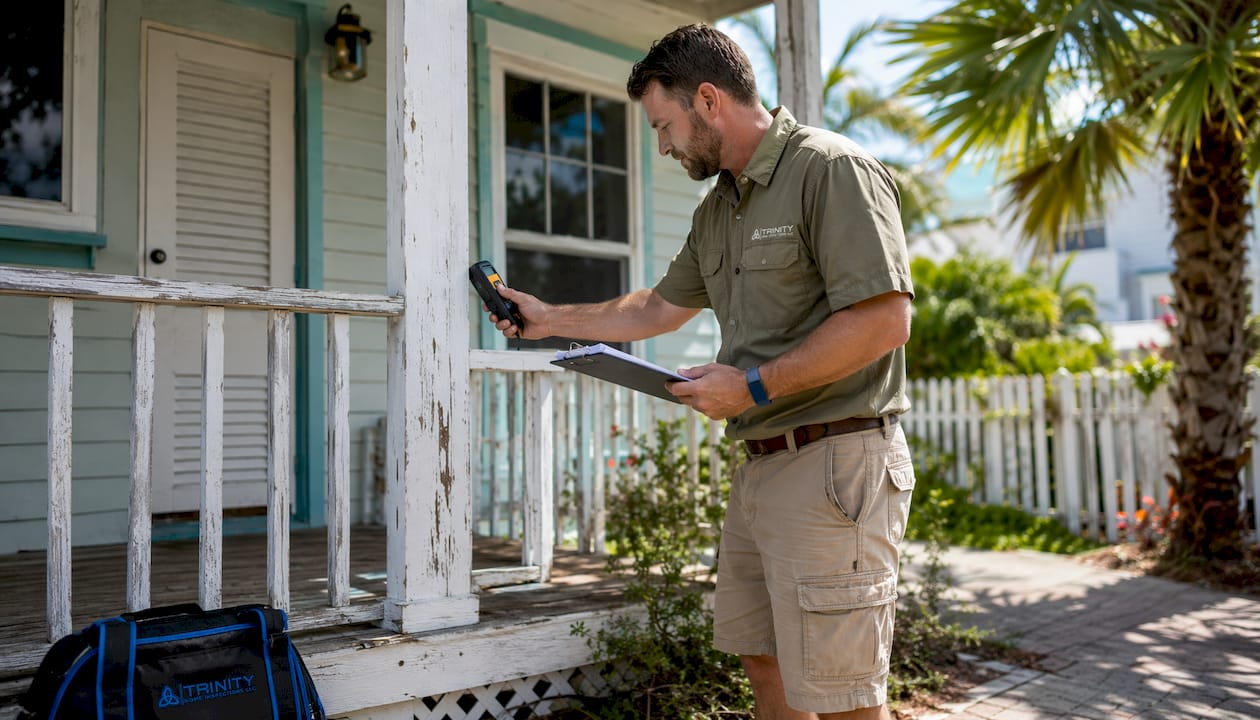
Becoming a licensed home inspector in Illinois requires completing a 60-hour state-approved pre-license course, five supervised field inspections, a final field exam, and passing the Illinois state licensure examination. Once you clear those steps, you submit your application with a $250 fee to the Illinois Department of Financial and Professional Regulation (IDFPR). Every requirement must be finished within a three-year window from your initial application date. Here is exactly what that process looks like from start to finish.
The core steps at a glance:
Complete a minimum 60-hour IDFPR-approved pre-license course
Complete field training: five supervised property inspections plus a final field exam
Pass the Illinois home inspector licensure examination
Submit your application, two transcripts, exam score report, proof of insurance, and $250 fee to IDFPR
File your full application within one year of passing the exam
Finish all requirements within the three-year application window
Maintain your license through 12 hours of continuing education every two years
What are the official Illinois home inspector license requirements?
Illinois sets clear eligibility standards before you can sit for the licensing exam. Meeting every one of them is not optional. Skipping even a single item stalls your application.
Eligibility checklist:
Age and education: You must be at least 18 years old and hold a high school diploma or its equivalent.
Pre-license education: Completion of a full IDFPR-approved 60-hour curriculum is required before you can register for the state exam.
Field training: Five hands-on field inspection events under a licensed Illinois inspector with at least five years of experience, plus a final field exam.
Proof of insurance: You must provide proof of general liability insurance coverage before IDFPR issues your license.
Exam passage: A passing score on the official Illinois home inspector licensure examination is required.
Application deadline: All requirements must be completed within three years of your initial application. Exam scores expire after one year, meaning you must submit your full application within 12 months of passing or retake the exam.
Legal standing: Practicing without a license is a Class A misdemeanor for a first offense and a Class 4 felony for any subsequent offense.
The insurance requirement catches many candidates off guard. You need to arrange coverage before your license is issued, not after you start working. Plan for that lead time when you build your schedule.
Which state-approved training programs should you consider?
The IDFPR approves specific education providers and course formats. Not every online course qualifies, so verifying a provider’s approval status before enrolling protects your time and money.

The 60-hour pre-license course
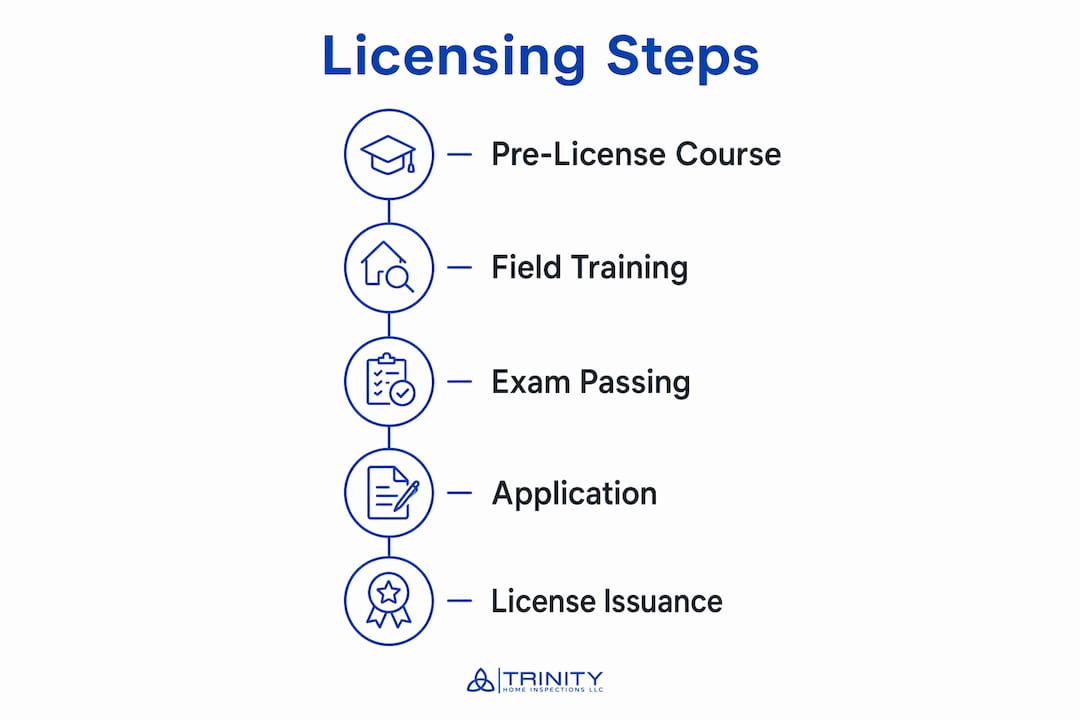
The pre-license curriculum covers a structured progression of topics including structural components, roofing, plumbing, electrical systems, HVAC, insulation, and interior and exterior elements. Approved providers may deliver this course in four formats: live classroom, interactive webinar, online distance education, or home-study with a proctored final exam. Home-study courses always require a proctored examination; live and online formats may or may not include a final exam depending on the provider.
Field training: the part that matters most
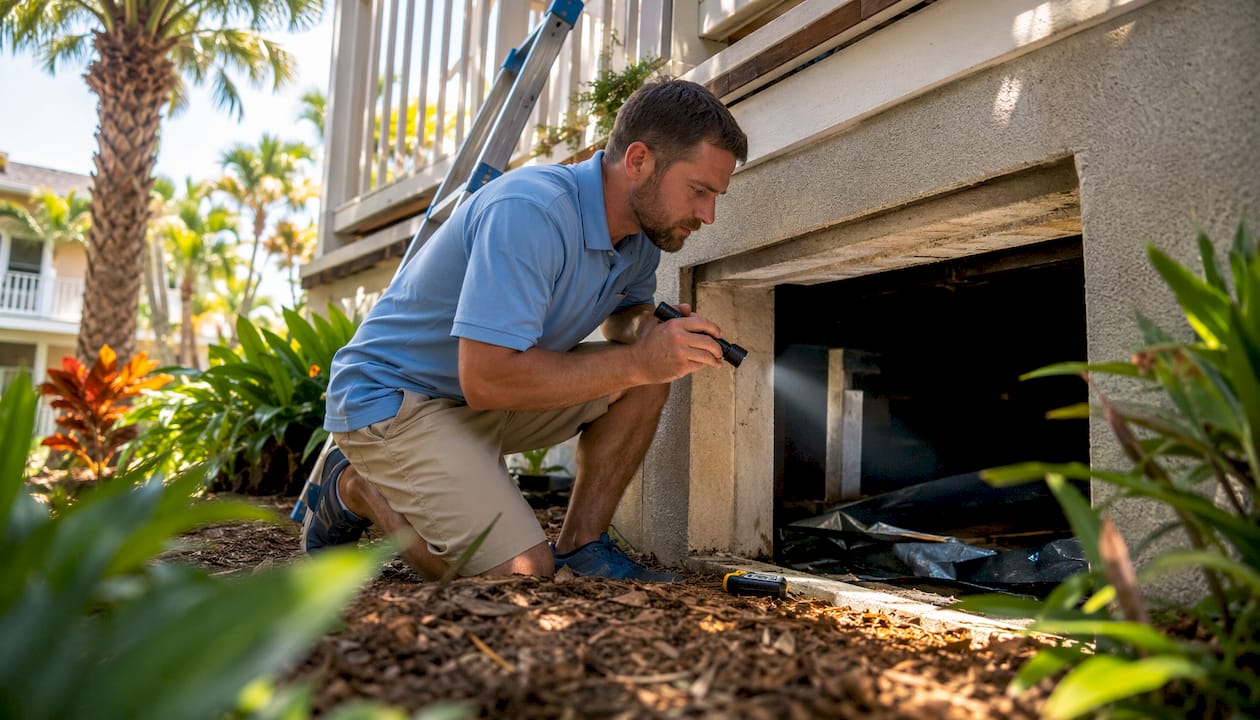
IDFPR treats field training as a verification of real-world competency, not just a box to check. The five field inspection events must be conducted on-site and in person under the direct supervision of an Illinois-licensed inspector with at least five years of experience. One supervising inspector may oversee a maximum of five candidates per event. After completing all five events, you take a final field examination administered by your education provider.
Recognized approved providers
IDFPR licenses specific schools to deliver both the 60-hour didactic course and the field training component. Among the recognized providers are:
ICA School — offers online and classroom formats with field training coordination
ATI Home Inspector Training — provides structured classroom and online property inspection courses
InterNACHI — a nationally recognized association offering online pre-license education and ongoing professional development resources
Before enrolling, confirm the provider appears on the current IDFPR approved provider list. Provider approval status can change, and using a non-approved school means your hours will not count toward licensure.
Cost considerations: Course fees vary by provider and delivery format. Registration costs, exam fees, and the $250 application fee are separate line items. Budget for all three when planning your timeline.
How do you apply for the Illinois home inspector license?
The application process is straightforward when your documents are organized. Disorganized paperwork is the most common reason applications stall.
Documents you need to gather
PSI Exam Score Report confirming you passed the Illinois Home Inspector Licensing exam
60-hour pre-license course transcript issued by your IDFPR-approved education provider
Field training transcript issued by your education provider confirming completion of five inspections and the final field exam
Proof of general liability insurance coverage
Completed application form from IDFPR’s Division of Real Estate
Submission steps
Complete the official application form fully and legibly.
Attach all four supporting documents listed above.
Submit a $250 non-refundable application fee via IDFPR’s ePay system or by check or money order payable to IDFPR.
Mail or submit everything to: IDFPR Division of Real Estate, PO Box 7570, Springfield, Illinois 62791.
Deadlines to track
You have three years from your initial application to complete the entire process. Miss that window and your application is denied with fees forfeited.
Your exam score is valid for one year. If you do not submit the full application within 12 months of passing, you must retake the exam.
Pro Tip: Keep physical copies of every transcript, score report, and receipt. IDFPR requires two separate transcripts, one for the 60-hour course and one for field training. Missing either one halts processing entirely. A simple folder with labeled sections for each document saves real headaches.
Understanding the inspector certification process in detail before you start helps you avoid the most common application errors.
How do you maintain and renew your Illinois home inspector license?
Earning your license is step one. Keeping it active requires ongoing attention to renewal deadlines and continuing education.
Renewal requirements:
Complete at least 12 hours of continuing education every two years through IDFPR-approved providers
Submit your renewal application and applicable fee before your license expiration date
Continuing education courses must be approved by IDFPR; not all industry courses qualify
Check the IDFPR CE course list to confirm a course counts before enrolling
Special provisions: Active military service members whose licenses expire during deployment may renew without late penalties or continuing education requirements, provided they furnish satisfactory evidence of service within two years of honorable termination.
Letting your license lapse creates real professional and legal exposure. An expired license means you cannot legally perform inspections for compensation, and any work done during a lapse period carries the same criminal penalties as unlicensed practice. Renewal is far simpler than reinstatement.
Expert insights for aspiring Illinois home inspectors
Passing the exam and filing paperwork gets you licensed. Building a career takes a few more deliberate choices.
Choose field training carefully. The quality of your five supervised inspections varies significantly by provider. Look for programs where the supervising inspector actively explains findings during the inspection, not just at the end. That real-time feedback is where most of the learning happens.
Shadow beyond the minimum. The state requires five field events. Experienced inspectors recommend attending additional inspections as an observer even after completing your required events. Each property type, whether a 1950s ranch or a new construction townhome, presents different systems and conditions.
Understand your liability exposure. Proof of general liability insurance is a licensing prerequisite, but the coverage amount matters as much as having a policy. Review what your policy covers before your first paid inspection. Understanding what clients look for in a home inspector also helps you set professional expectations from day one.
Keep your documentation organized throughout training. IDFPR requires two separate transcripts at application time. Many candidates discover too late that their field training provider issued an incomplete transcript. Request a draft copy from your provider before you finish the course so you can catch errors early.
Pro Tip: When preparing for the final field exam, practice writing your findings in plain language as you go through a property. Examiners evaluate both what you identify and how clearly you communicate it. The habit of clear, plain-language reporting also serves you well in every paid inspection afterward.
What topics appear on the Illinois home inspector exam?
The Illinois home inspector licensure exam covers the full scope of residential property systems. Knowing the subject areas lets you focus your study time where it counts most.
The pre-license curriculum, which mirrors the exam content, requires coverage of these topic areas at a minimum:
Structural components: Foundation types, framing methods, load-bearing elements
Roofing: Materials, drainage, flashing, penetrations, and ventilation
Exterior: Cladding, grading, driveways, walkways, and drainage
Plumbing: Supply and drain systems, water heaters, fixtures, and methods for identifying defects
Electrical: Service entrance, panels, wiring types, outlets, and techniques for identifying unsafe conditions
HVAC: Heating and cooling equipment, distribution systems, and controls
Insulation and ventilation: Attic, wall, and crawlspace insulation; vapor barriers
Interior: Walls, ceilings, floors, doors, windows, and stairways
Fireplaces and solid fuel burning appliances
Garages and carports
For exam preparation, work through your provider’s course materials systematically rather than skimming. The exam tests application of knowledge, not just recall. Practice identifying defects from photos and written descriptions, since that format appears frequently. InterNACHI’s online education platform offers supplemental study resources that many candidates find useful alongside their primary course.
Reviewing the Illinois Administrative Code Section 1410.520 gives you the official curriculum outline directly from the state, which is the clearest guide to what the exam covers.
What happens if your Illinois home inspector license expires?
License expiration is not a minor administrative issue. The consequences are immediate and can be career-ending if not addressed quickly.
When a license lapses:
You may not legally perform home inspections for compensation in Illinois.
Any inspection performed while unlicensed carries the same criminal penalties as never having been licensed: a Class A misdemeanor for a first offense and a Class 4 felony for subsequent offenses under the Illinois Home Inspector License Act.
Late renewal fees and penalties apply on top of the standard renewal fee.
If the lapse extends long enough, IDFPR may require you to reapply as a new applicant, which means repeating training and examination requirements.
The renewal process itself is simple when done on time. Complete your 12 hours of continuing education through an IDFPR-approved provider, submit your renewal application, and pay the renewal fee before your expiration date. IDFPR sends renewal notices, but the responsibility for tracking your expiration date is yours. Set a calendar reminder six months before your renewal date to give yourself time to complete continuing education without rushing.
One practical note: continuing education courses fill up, and IDFPR-approved options are not unlimited. Waiting until the final month before renewal to find a qualifying course is a common mistake that leads to last-minute scrambles or missed deadlines.
Ready to See What a Certified Inspector Looks Like in Practice?
[

Alt text: Trinity Home Inspections certified inspector in khaki pants and blue shirt with white pocket logo conducting a home inspection in the Gulf Coast Alabama area
At Trinity Home Inspections, we know exactly what goes into earning and maintaining a home inspector license because we have done it. Our inspector holds InterNACHI certification, has completed the National Home Inspectors Exam, and carries ongoing education requirements every year. That training shows up in every inspection we deliver across Mobile, Baldwin, and surrounding Gulf Coast Alabama communities.
Whether you are buying, selling, or just want to know what a fully trained inspector actually does on-site, we are here to help. Check out our pre-listing inspection services to see how professional training translates into real-world results for sellers.
Call us at 251-210-7376 or visit TrinityInspectionsLLC.com to schedule your inspection or ask any questions.
Key Takeaways
Becoming a licensed home inspector in Illinois requires completing a 60-hour approved course, five supervised field inspections, a final field exam, and passing the state licensure examination, all within a three-year window.
Point | Details |
60-hour pre-license course | Complete a state-approved course covering structural, electrical, plumbing, HVAC, and roofing systems before sitting for the exam. |
Five field inspections required | Field training must be supervised in person by an Illinois-licensed inspector with at least five years of experience. |
Three-year completion window | All licensing requirements must be finished within three years of your initial application or the application is denied and fees are forfeited. |
Exam score validity | Your passing exam score expires after one year; submit your full application within that window or retake the exam. |
12-hour continuing education | Renew your license every two years by completing 12 hours of IDFPR-approved continuing education. |
FAQ
What is required to be a home inspector in Illinois?
You must be at least 18 years old with a high school diploma, complete a 60-hour IDFPR-approved pre-license course, finish five supervised field inspections and a final field exam, pass the state licensure examination, and submit proof of general liability insurance with a $250 application fee to IDFPR.
Is becoming a house inspector hard?
The coursework and field training are manageable for most candidates, but the combination of classroom hours, hands-on inspections, a proctored exam, and strict documentation deadlines requires consistent effort and organization over several months.
How much do home inspectors make per house?
Inspection fees vary by region, property size, and services offered; the U.S. Bureau of Labor Statistics tracks earnings for construction and building inspectors broadly, and individual per-inspection rates depend on local market conditions and the inspector’s experience level.
How long does the Illinois licensing process take?
Most candidates complete the process in three to six months, depending on how quickly they finish the 60-hour course, schedule field inspections, and sit for the state exam. The three-year maximum window gives flexibility, but the one-year exam score deadline creates a firm internal deadline once you pass.
Can I complete Illinois home inspector training online?
Yes. IDFPR approves online distance education and home-study formats for the 60-hour pre-license course. Home-study courses require a proctored final examination. The five field inspection events must always be completed in person regardless of how you take the classroom portion.
Recommended

