
Mobile Home Skirting, Piers, and Tie Downs: What Inspectors Check

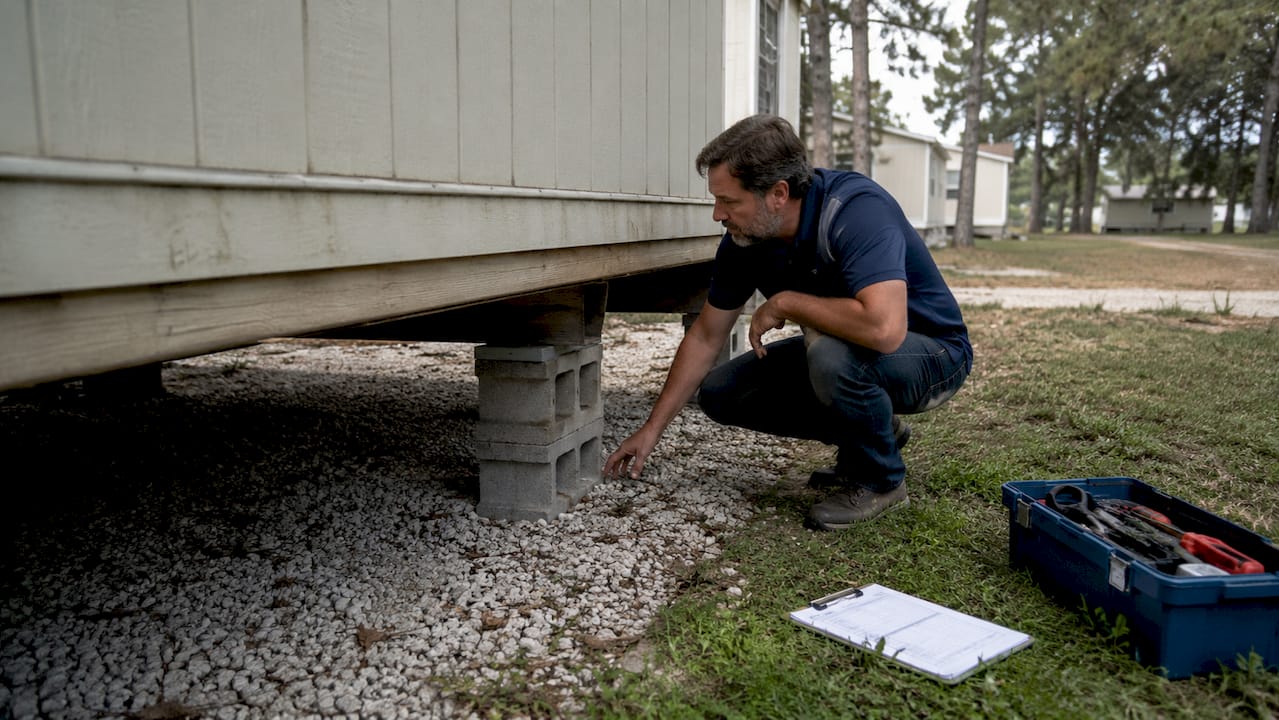
Mobile home skirting, piers, and tie-down systems are the three structural and protective components that inspectors evaluate to confirm a manufactured home is safe, stable, and certifiable. In Alabama’s Gulf Coast region, where high humidity, hurricane-force winds, and shifting soils are everyday realities, these components face more stress than in most parts of the country. Understanding mobile home skirting piers and tie downs and what inspectors look for gives you a real advantage before any inspection, loan approval, or closing. Whether you are buying in Daphne, selling in Foley, or maintaining a home in Mobile County, this guide walks you through every major checkpoint an inspector will cover.
What do inspectors look for in mobile home piers?
Mobile home piers are the vertical supports that carry the entire weight of the home down to the ground. Inspectors evaluate them for material type, condition, spacing, and shimming. A failed pier inspection can halt a loan approval and force costly repairs before closing.
Pier material and cap block integrity
Inspectors require concrete masonry blocks as the standard pier material. The cap block at the top of each pier stack must be a solid block, not a hollow open-cell block. Hollow cap blocks cannot bear the concentrated load from the home’s frame and will crack under pressure. Solid caps distribute weight evenly and hold up under the long-term load.
Shimming standards
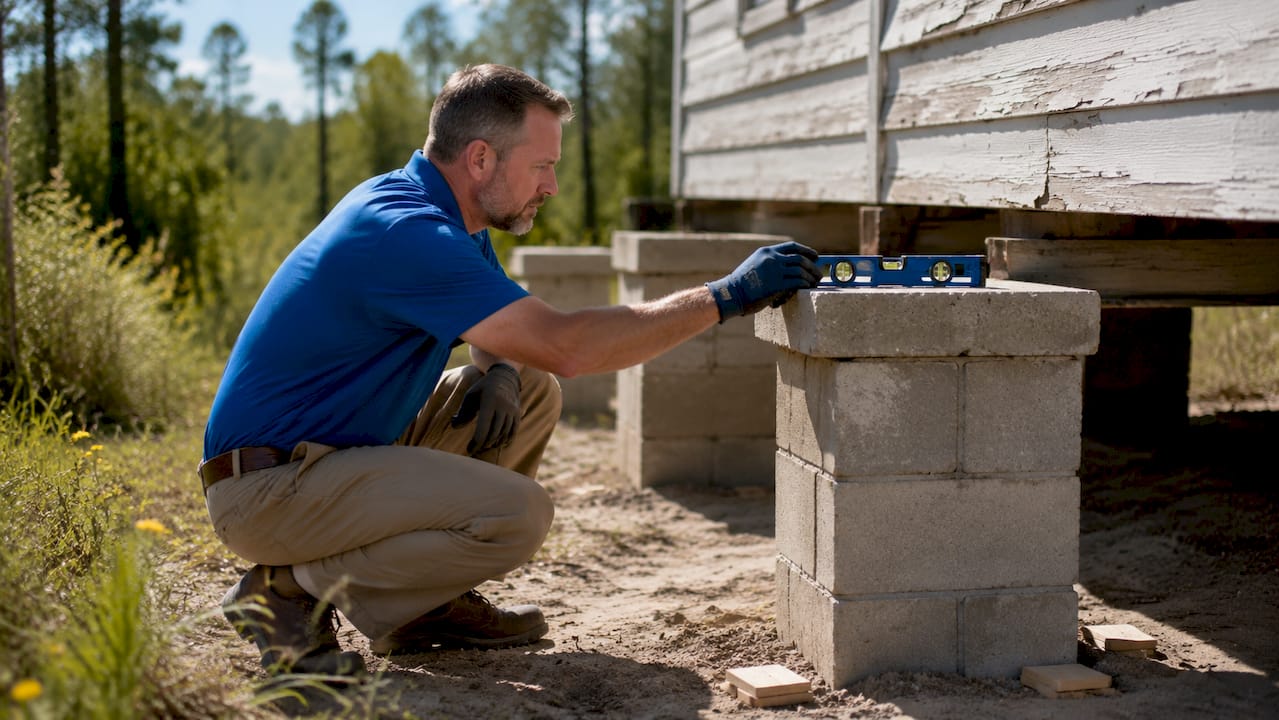
Shimming is one of the most commonly failed items in a mobile home pier inspection. Inspectors follow a strict rule: no more than two shims per pier stack are allowed. Shims must fit tightly with no gaps, and they must show no signs of crushing or splitting. Crushed or loose shims signal that the pier is already failing under load. This is a red flag that triggers a required repair before certification.
Pier spacing and footer requirements
Piers must be spaced according to the manufacturer’s installation guidelines, which are specific to each home’s weight and beam configuration. Footers beneath each pier must rest on soil with adequate bearing capacity. In Gulf Coast Alabama, where sandy or clay-heavy soils are common, inspectors pay close attention to signs of settlement. Gaps between the pier and the home’s frame, or visibly leaning stacks, indicate movement that must be corrected.
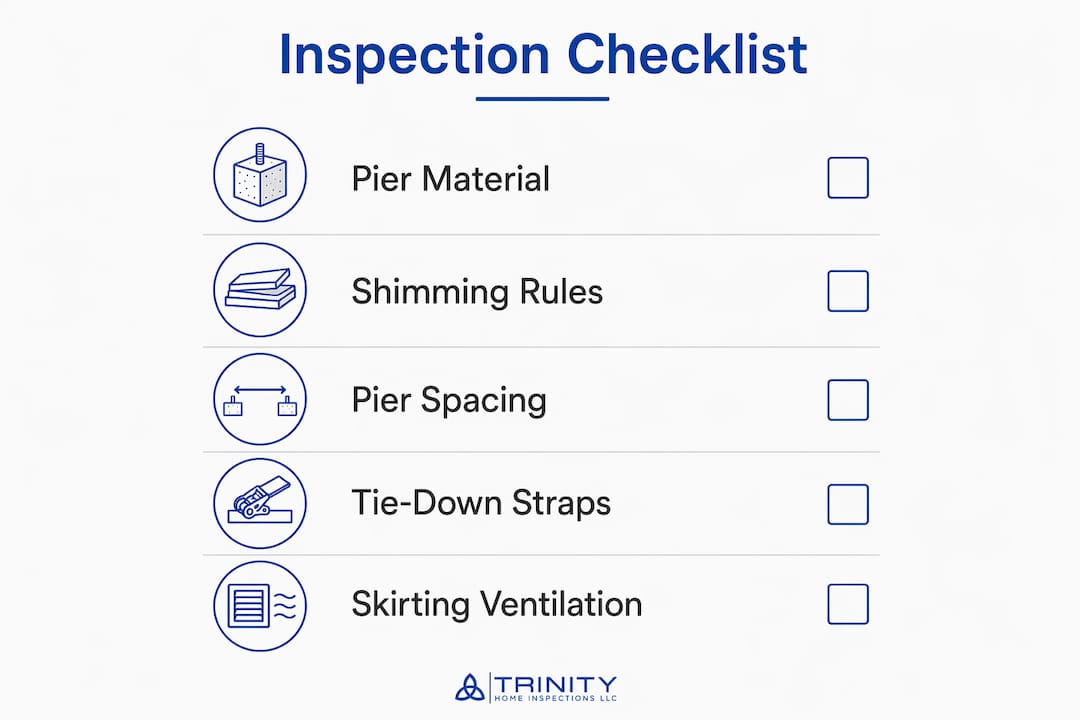
Pro Tip: Before your inspection, walk the perimeter of your home and look under the skirting at each pier. If any stack looks tilted, has visible gaps at the top, or shows cracked blocks, address it before the inspector arrives.
Here is a quick summary of what inspectors check at each pier:
Pier Component | What Inspectors Look For |
Cap block type | Solid block only; no hollow open-cell blocks |
Shim count | Maximum two shims per stack; must be tight and uncracked |
Block condition | No cracks, spalling, or visible shifting |
Pier spacing | Matches manufacturer guidelines for the home’s load |
Footer condition | Stable base; no signs of settlement or heaving |
Frame contact | No gaps between pier top and home frame |
How do tie-down systems hold up under inspector review?
Tie-downs, also called anchoring systems, are the straps and ground anchors that prevent a manufactured home from shifting or lifting during high winds. The HUD foundation certification process requires that tie-downs meet specific installation and condition standards. In Gulf Coast Alabama, where tropical storms and hurricanes are a real threat, this is not a formality.
Strap spacing and configuration
Tie-down straps must be spaced every 6–8 feet along the length of the home. They run over the main frame and connect to ground anchors driven into the soil. Inspectors check both frame anchors and over-the-top straps, depending on the home’s design. The configuration must match the manufacturer’s specifications for that specific model.
Anchor types and condition
Auger-style anchors are the most common type used in Alabama. They screw into the ground and provide strong resistance against uplift. Inspectors check that anchors are fully driven, not bent, and show no signs of pulling out of the soil. Strap condition is equally important. Inspectors look for:
Rust or corrosion on metal straps or connectors
Slack in the strap that reduces tension and wind resistance
Fraying or cuts in strap material
Missing hardware such as buckles, turnbuckles, or connecting bolts
Improper angle of the strap from the frame to the anchor
Any of these issues can cause an inspection failure. In the Gulf Coast’s humid, salt-air environment, corrosion develops faster than in inland areas. A strap that looks fine from a distance may show significant rust up close.
Maintenance tips for Gulf Coast conditions
The salt air and high humidity along Alabama’s coast accelerate metal corrosion. Inspecting your tie-down straps annually is the best way to catch problems before they become expensive. Check each strap for surface rust and apply a rust-inhibiting spray if you see early oxidation. Replace any strap that shows deep pitting or structural rust. Tighten any slack you find, since straps loosen over time as the home settles.
Pro Tip: Schedule a visual tie-down check every spring before hurricane season. Catching a corroded strap in april costs far less than replacing an anchor system after a failed inspection in july.
What does a skirting inspection actually cover?
Skirting is often misunderstood as purely cosmetic, but inspectors treat it as a functional system. Proper skirting protects the under-home space from moisture, pests, and freezing temperatures. It also controls the ventilation environment that directly affects your floor system, plumbing, and insulation.
Ventilation requirements
The standard ventilation requirement is 1 square foot of vent opening per 150 square feet of under-home floor area. Vents must be placed every 10–15 feet around the perimeter. This standard exists to prevent moisture buildup that leads to mold, wood rot, and pest infestation. On the Gulf Coast, where ground moisture levels are high year-round, under-ventilated skirting creates serious problems quickly. For more on managing moisture in coastal crawlspaces, coastal ventilation practices are worth reviewing before your inspection.
Skirting materials compared
Different materials perform differently in Alabama’s climate. Here is how the most common options compare:
Material | Durability in Gulf Coast Climate | Inspector Acceptance | Approximate Cost Range |
Vinyl | Moderate; can warp in extreme heat | Widely accepted | Lower cost |
Metal | Good; prone to rust near salt air | Accepted with proper venting | Moderate cost |
Concrete block | Excellent; permanent and solid | Accepted; must include vents | Higher cost |
Lattice | Low; not weather-resistant | Limited; often flagged | Lowest cost |
Rock or stone | Excellent; very durable | Accepted with proper venting | Higher cost |
Access panels and installation gaps
Inspectors require at least one accessible entry panel in the skirting. Permanent sealed skirting without an access panel invalidates a foundation certification because the inspector cannot complete the under-home review. The access opening must be large enough for a person to enter safely.
Proper installation also requires a 1.5 to 3-inch gap at the bottom of skirting panels. This gap allows for ground movement and prevents buckling from frost heave or soil shifting. Fasteners must allow for thermal expansion, meaning panels should not be screwed so tightly that they have no room to move with temperature changes.
Pro Tip: If your skirting has no visible access panel, add one before scheduling your inspection. A sealed skirt will stop the inspection before it starts and delay your closing.
Professional skirting installation costs between $1,500 and $4,000. DIY installation can cut labor costs by 30–50%, but only if the ventilation and access requirements are met correctly. A poorly installed DIY skirt that fails inspection costs more in the long run than hiring a professional from the start.
What causes inspection delays and complications?
Most closing delays on manufactured homes trace back to a small set of preventable issues. Knowing these in advance gives you time to fix them before they stall your transaction.
Here are the most common causes of inspection complications:
Sealed or blocked skirting. Skirting without an access panel delays certification and forces a reinspection after the panel is added.
Missing or unclear HUD data plates. The HUD data plate is the document inside the home that lists the manufacturer’s specifications. Missing HUD documentation can stall loan approvals entirely.
Improper additions. Enclosed porches, carports, and room additions must be independently supported and must not transfer load to the home’s main frame or anchoring system. Additions that compromise the main structure increase inspection complexity and risk certification delays.
Corroded or missing tie-down components. A single missing buckle or a fully rusted strap is enough to fail the anchoring portion of the inspection.
Failed or unsuitable pier materials. Hollow cap blocks, more than two shims per stack, or cracked pier blocks all require correction before certification.
Beyond the physical issues, documentation gaps create their own problems. If you have made repairs or additions to the home, keep written records with dates and contractor names. Inspectors and lenders both benefit from a clear paper trail. For a full checklist of what to verify before your inspection, the mobile home inspection checklist for Alabama homeowners covers the key documentation and physical items in one place.
Addressing these issues early in the transaction, rather than the week before closing, protects both buyers and sellers from last-minute surprises. The foundation certification process is straightforward when the home is properly maintained and documented.
How to prepare for a mobile home foundation inspection in Alabama
Preparation is the difference between a smooth closing and a two-week delay. The steps below apply whether you are a buyer, seller, or current homeowner scheduling a routine check.
Locate your HUD data plate and HUD label. The data plate is inside the home, usually in a cabinet or closet. The HUD label is a small metal tag on the exterior. Both must be present and legible.
Clear access to the under-home space. Remove any stored items blocking the skirting access panel. The inspector must be able to enter safely.
Check pier condition before the inspection. Walk the perimeter and look for cracked blocks, tilted stacks, or gaps between the pier top and the frame.
Inspect tie-down straps yourself. Look for rust, slack, or fraying. Tighten or replace any strap that shows wear.
Verify ventilation openings are clear. Make sure vent screens are not clogged with debris, dirt, or insect nests.
Document any recent repairs or additions. Gather receipts, permits, and contractor information for any work done on the home’s foundation, skirting, or structure.
Check for proper skirting installation gaps. Confirm the bottom gap is present and panels are not buckled or warped.
Pro Tip: If you are buying a home and the seller cannot produce the HUD data plate, contact the Institute for Building Technology and Safety (IBTS), which maintains a national database of manufactured home records. A replacement label can often be obtained before closing.
Scheduling your inspection well before your closing deadline gives you time to address any findings without pressure. Trinity Home Inspections delivers same-day reports, so you get your results fast and can act on them immediately.
Key Takeaways
A mobile home’s piers, tie-downs, and skirting must each meet specific material, spacing, and access standards for an inspector to issue a foundation certification in Alabama.
Point | Details |
Pier shimming rule | No more than two shims per stack; crushed or loose shims require immediate correction. |
Tie-down spacing | Straps must run every 6–8 feet and connect to properly driven ground anchors. |
Skirting ventilation | Provide 1 sq ft of vent per 150 sq ft of under-home area, placed every 10–15 feet. |
Access panel requirement | Sealed skirting without an entry panel invalidates the foundation certification. |
HUD documentation | Missing HUD data plates stall loan approvals and must be resolved before closing. |
What I see most often on Gulf Coast mobile home inspections
I have inspected manufactured homes across Baldwin, Mobile, and Escambia counties, and the same issues come up repeatedly. Skirting ventilation is the most underestimated problem. Homeowners install a fresh skirt to improve curb appeal, seal it up tight, and unknowingly create a moisture trap under the home. By the time an inspector gets under there, the floor joists are showing early signs of rot and the insulation is saturated.
Tie-down corrosion is the second issue I see constantly. The Gulf Coast salt air is hard on metal. A strap that was installed correctly ten years ago may now be too corroded to pass inspection. Homeowners rarely check them because the straps are out of sight. That is a mistake that shows up at the worst possible time, which is right before closing.
The third issue is documentation. Buyers and sellers both underestimate how much the HUD data plate matters. Lenders require it for FHA, VA, and conventional loans on manufactured homes. When it is missing, the transaction stops. Getting a replacement through IBTS takes time, and that time costs money when you are under contract.
My advice is simple. Do not wait for the inspector to find these problems. Walk your home, check your straps, look at your piers, and make sure your skirting has working vents and a clear access panel. A proactive homeowner almost always has a smoother inspection than one who is seeing the foundation for the first time alongside the inspector. Hire a qualified, certified inspector who knows manufactured homes specifically. Not every inspector has the training to evaluate HUD compliance, pier shimming standards, and tie-down configurations correctly. Make sure yours does.
— Matt
Schedule your mobile home inspection with Trinity Home Inspections
[
Trinity Home Inspections serves homeowners and buyers across Baldwin, Mobile, Escambia, and surrounding Gulf Coast Alabama counties with InterNACHI-certified inspections built for manufactured homes. Our same-day reports include photos and video of every pier, strap, and skirting panel we evaluate, so you have clear documentation for your lender and your own records. We also offer permit and deed research to help buyers confirm prior work was properly permitted before closing. If moisture or mold is a concern after finding ventilation issues, our mold inspection services are available as an add-on. Call us at 251-210-7376 or visit TrinityInspectionsLLC.com to schedule your inspection today.
FAQ
What are the pier shimming rules for mobile homes?
Inspectors allow no more than two wood shims per pier stack. Shims must fit tightly with no gaps, and any crushed or loose shims are flagged as a structural concern requiring correction.
How many tie-down straps does a mobile home need?
Tie-down straps must be spaced every 6–8 feet along the length of the home, running from the main frame down to ground anchors. The exact number depends on the home’s length and the manufacturer’s specifications.
Does skirting need ventilation to pass inspection?
Yes. The standard requires 1 square foot of vent opening for every 150 square feet of under-home floor area, with vents placed every 10–15 feet around the perimeter.
What happens if my skirting has no access panel?
Sealed skirting without an accessible entry panel prevents the inspector from completing the under-home review. This invalidates the foundation certification and delays any loan approval tied to the inspection.
Why does the HUD data plate matter for a mobile home inspection?
The HUD data plate contains the manufacturer’s specifications that inspectors and lenders use to verify the home’s compliance. A missing or illegible data plate can stall loan approvals for FHA, VA, and conventional financing on manufactured homes.
Recommended

