
Inspector's Steps to Detect Reverse Polarity at an Outlet for Homeowners

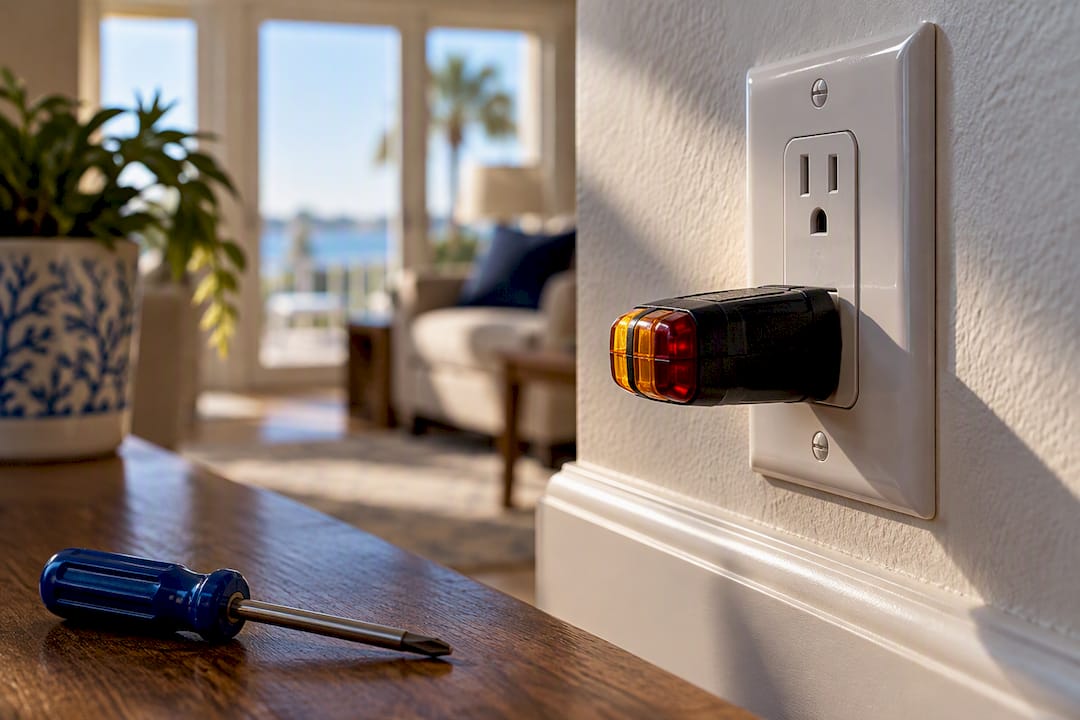
Reverse polarity means the hot and neutral wires at an outlet have been swapped, so parts of a switch, lamp, or appliance that should stay dead can carry live current instead. The main danger is that exposed metal, switched off components, or an appliance chassis may still be energized even when everything looks turned off. If a tester or a flickering suspicion tells you an outlet might be wired backward, stop using it and either test it properly or call a licensed electrician before you touch anything metal near it.
TL;DR:
Reversed polarity can leave appliance shells and metal parts energized even when switches are off, increasing shock and fire risks.
Many outlets and devices operate normally despite reversed wiring, concealing dangerous conditions until tested accurately.
Using a simple outlet tester flags potential reversed polarity, but verifying with a multimeter ensures accurate diagnosis, especially for neutral-ground issues.
Correcting a simple receptacle swap may be doable for confident DIYers, but upstream wiring problems require professional electrician intervention.
Replacing old non-polarized outlets with grounded, polarized, or GFCI receptacles significantly reduces the chance of wiring errors and safety hazards.
How Outlet Polarity Is Supposed To Work
Every standard 120 volt outlet in your home has two jobs split between its slots. The narrow slot carries the hot wire, usually black or red, and the wide slot carries the neutral wire, which is white. Inside the outlet, those wires land on different colored terminals so an electrician (or a careful DIYer) can tell them apart at a glance.
Brass or gold screw terminals connect to the hot wire
Silver or light colored screw terminals connect to the neutral wire
Green or bare copper terminals connect to the ground wire
This color coding exists so current flows in one predictable direction through your lamps, tools, and appliances. Here’s the part that catches people off guard: a lamp, a phone charger, or a power drill will usually work just fine even if the hot and neutral are reversed. The device still gets electricity, so nothing looks wrong on the surface. That’s exactly why reverse polarity is easy to miss for months or years, and why so many homeowners only find out during a home inspection or after a tester lights up in a pattern they don’t recognize.
Why Reversed Polarity Is Actually Dangerous
The real hazard isn’t that your lamp won’t turn on. It’s that reversed polarity changes which parts of a circuit stay “live” when something is supposedly switched off. In a normal wiring setup, a light switch interrupts the hot wire, so the fixture is fully dead when you flip it off. With reversed polarity, that switch may be interrupting the neutral instead, leaving the hot conductor connected straight through to the fixture even in the off position.
One outlet tells the story: research on reversed polarity outlets shows this swap can leave a lamp socket’s metal shell, an appliance’s exterior housing, or internal components energized even when the switch reads off, raising both shock risk and the odds of appliance damage.
Picture a few everyday moments that turn risky under this condition:
Changing a light bulb in a lamp that’s “off” but still has a hot metal socket
Reaching into a toaster to clear a stuck slice while it appears unplugged from use
Wiring a lamp with a pull chain switch that now controls the neutral instead of the hot wire
Beyond shock risk, reversed polarity can also strain sensitive electronics that expect current to flow a certain way, and prolonged exposure raises fire risk alongside the chance of premature appliance failure.
What Causes Reversed Polarity In A Home?
Most cases trace back to human error rather than a failing part. The wiring itself rarely “goes bad” on its own. Someone, at some point, connected the wrong wire to the wrong terminal.
A hot and neutral wire got crossed while installing or replacing a receptacle
An upstream splice, junction box, or another outlet on the same circuit was wired backward, pushing the error downstream
The home still has older, non-polarized two-slot outlets where there’s no forced orientation to guide correct wiring
A well-meaning DIY repair skipped proper wire identification during a swap
Older two-slot outlets are a common culprit because they lack the polarized slot design that makes miswiring obvious. If your home still has these anywhere, that’s worth flagging for replacement regardless of whether you suspect reversed polarity.
How To Detect Reversed Polarity Yourself
A $10 plug-in outlet tester is your fastest first check, and it’s a smart tool to own as a homeowner.
Plug the tester directly into the outlet, no extension cords or power strips
Read the light pattern against the chart printed on the tester itself
Look for the specific combination that indicates reversed polarity, distinct from the pattern for an open ground or open neutral
If the reverse polarity light shows, stop using that outlet for anything beyond low-risk devices until it’s corrected
Note whether nearby outlets on the same circuit show the same issue, which points to an upstream cause
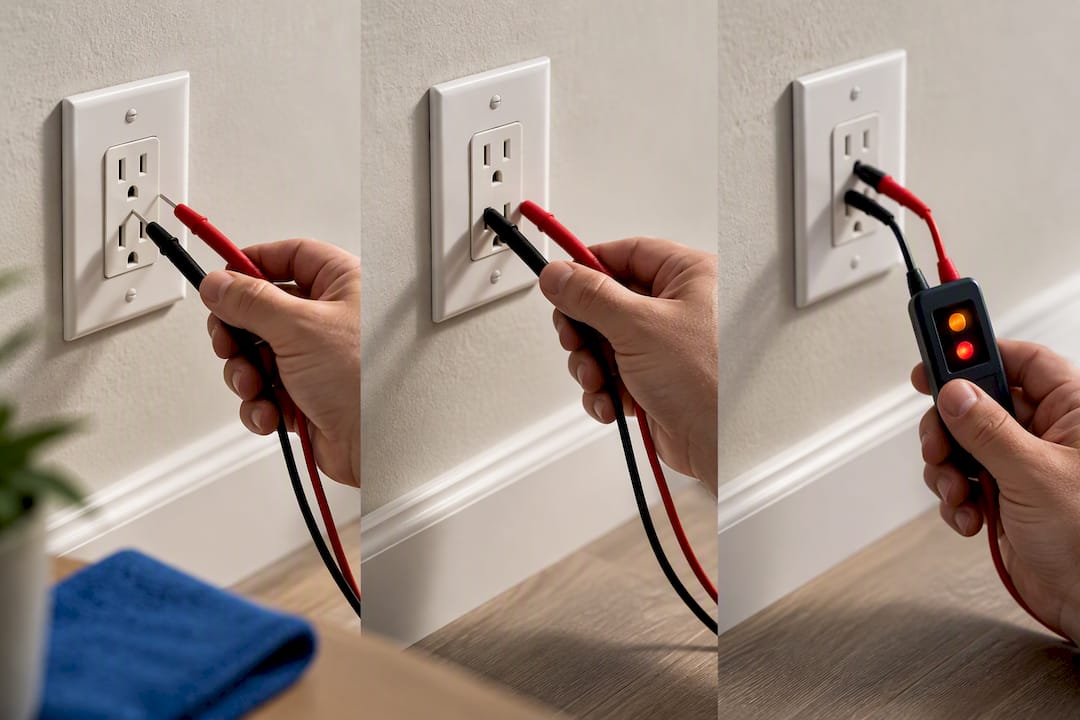
A basic tester has blind spots. It can occasionally show a fault pattern when there’s an unusual neutral-ground connection rather than a true hot/neutral swap, so professionals confirm with a multimeter, checking voltage from hot-to-ground and neutral-to-ground. A neutral-to-ground reading near 120 volts confirms the neutral is actually carrying hot current.
Pro Tip: If you’re not fully comfortable removing an outlet cover to test with a multimeter, don’t. Wear insulated gloves at minimum, and when in doubt, shut off the breaker before touching anything. A tester reading is a strong first clue, not a final verdict.
Fixing Reverse Polarity: DIY Limits And Electrician Costs
The moment you confirm reversed polarity, unplug sensitive devices from that outlet and avoid using it until it’s addressed. You don’t need to panic or shut off power to the whole house, just treat that specific outlet with caution.
Confident DIYers can sometimes correct a simple receptacle-level swap by matching hot to brass, neutral to silver, and ground to green
Tracing an upstream cause through a splice, junction box, or another outlet on the circuit is electrician territory, not a weekend project
If one reversed outlet turns up, the entire circuit often needs inspection since the real error may sit somewhere else entirely
Cost varies by region and complexity, but a licensed electrician’s service call plus labor for tracing and correcting one outlet can differ significantly depending on the situation, especially if multiple outlets or complex wiring are involved. Treat any number you hear as a starting estimate until an electrician sees the actual wiring.
Preventing Reverse Polarity Before It Starts
Routine attention beats a surprise finding during a sale or a shock at the toaster.
Replace old two-slot, non-polarized outlets with grounded, polarized receptacles, or GFCI outlets where code calls for them
Schedule an inspection after any DIY electrical work or renovation touches your wiring
Test outlets periodically with a plug-in tester and press the test button on GFCI outlets to confirm they trip properly
Check that terminal screws are tight and wires land on the correct color coded terminal during any panel or outlet work
A modern polarized outlet design makes it physically harder to wire backward, which is exactly why upgrading old two-slot outlets is one of the higher value, lower cost fixes a homeowner can make. Pairing that upgrade with a broader look at your panel and circuits, like the steps in our electrical safety checklist for Gulf Coast Alabama homes, catches related issues before they become a bigger repair.
Pro Tip: Label your electrical panel accurately when you replace outlets or run new circuits. A mislabeled breaker slows down every future troubleshooting step, including reverse polarity checks.
An Inspector’s View On Reverse Polarity Findings
As an InterNACHI certified inspector, I test every accessible outlet, not just a sample, because a single reversed outlet often means the whole circuit deserves a second look. We document what we find with same-day photos and video, flag whether it’s a simple fix or a wiring trace job, and point clients to a licensed electrician when the issue goes past the receptacle. Thermal imaging and circuit testing back up what the tester tells us, and our insurance and training standards mean you get a straight answer, not a guess.
— Matt
Get A Straight Answer On Your Home’s Wiring
If a tester lit up wrong or you just want peace of mind before closing on a house, Every accessible outlet in the home is tested, not just a sample, to help ensure a reversed polarity issue does not slip through on inspection day. Thorough inspections are often paired with thermal imaging and same-day photo and video reports, providing clear answers promptly.
[

Whether you’re buying, selling, or just want a professional set of eyes on your panel and outlets, our home inspection services cover the full electrical system, and our pre-listing inspections help sellers catch issues like reversed polarity before a buyer’s inspector does. Call 251-210-7376 or book online at Trinityinspectionsllc to schedule your inspection.
Sources
For binding code requirements, consult a licensed electrician or your local building department. Background research for this article included OSHA’s standard interpretation on grounded conductor identification and the ASHI Reporter’s coverage of outlet polarity.
FAQ
How Do I Fix An Outlet With Reverse Polarity?
Start by unplugging devices and stopping use of the outlet. A confident DIYer can sometimes correct a simple receptacle-level swap by rewiring hot to the brass terminal and neutral to the silver terminal, but if the cause traces upstream to a splice or another outlet, call a licensed electrician to trace and correct the circuit.
What Happens If You Reverse Polarity On An Outlet?
Devices generally still work, which is what makes reverse polarity easy to miss. The real risk is that switched off components, like a lamp socket or appliance housing, can remain energized, raising shock and fire risk even though nothing looks wrong from the outside.
How Much Does It Cost To Fix A Reverse Polarity Outlet?
Cost depends on whether the fix is a simple receptacle swap or a circuit-wide trace through walls and junction boxes, so a licensed electrician’s quote after seeing the wiring is the only reliable number. Current pricing for a Trinity Home Inspections inspection that catches issues like this is available on our website.
Does Polarity Matter On A 120 Volt Outlet?
Yes. Even though a 120 volt outlet will often power a device regardless of polarity, the hot and neutral wires are meant to carry current in a specific, predictable direction so switches and grounding work as designed. When they’re swapped, switched components can stay live instead of going dead as expected.
How Can I Tell If My Outlet Tester Is Giving A False Reading?
A plug-in tester can misread unusual neutral-ground connections as reverse polarity. Confirming with a multimeter check between hot-to-ground and neutral-to-ground rules out that blind spot before you assume the wiring is backward.
Recommended

