
What Is Radon Testing in Homes: A Gulf Coast Guide
- Matt Cameron
- Jun 6
- 10 min read

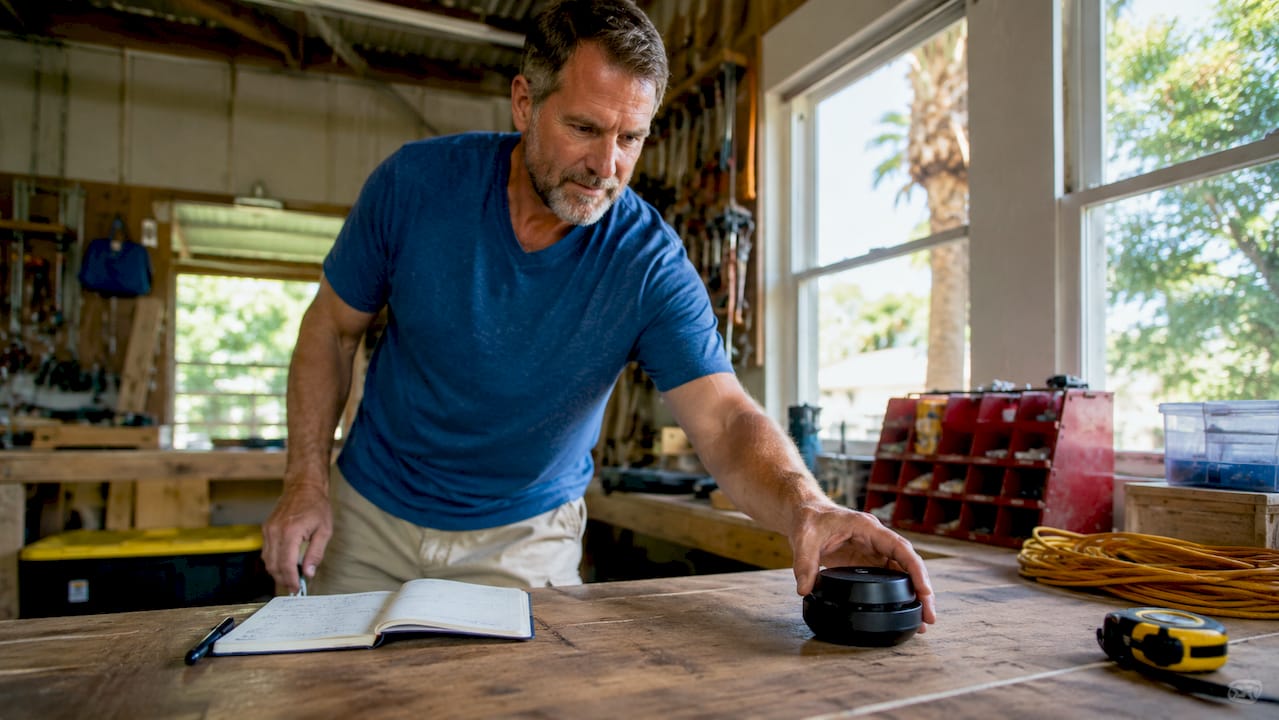
Radon testing in homes is the process of measuring the concentration of radon gas indoors to determine whether levels pose a health risk to occupants. Radon is a naturally occurring radioactive gas and the second leading cause of lung cancer in the United States, responsible for over 21,000 deaths annually. That number means radon kills more Americans each year than drunk driving. You cannot see it, smell it, or taste it, which is exactly why testing is the only reliable way to know whether your home has a problem. For homeowners and buyers across Baldwin County, Mobile County, and the surrounding Gulf Coast Alabama region, understanding radon testing is a straightforward step toward protecting your family.
What is radon testing in homes and how does it work?
Radon testing, also called a radon inspection, is the measurement of radon gas concentrations inside a structure using either passive collection devices or active electronic monitors. Radon forms when uranium in soil and rock breaks down naturally, and the gas seeps upward through foundation cracks, gaps around pipes, and other openings into the living spaces above. The standard unit of measurement is picocuries per liter, written as pCi/L. The EPA sets its action level at 4.0 pCi/L, meaning any reading at or above that threshold requires mitigation.
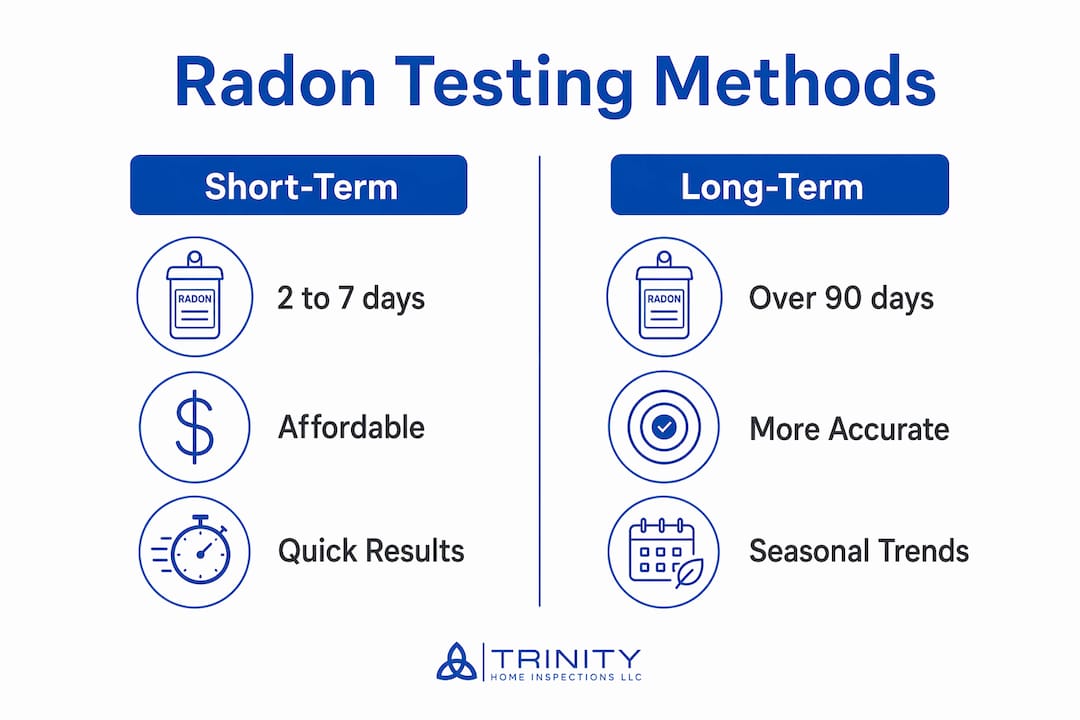
There are two broad categories of radon testing methods: short-term and long-term. Short-term tests run from 2 to 90 days and provide a quick snapshot of radon levels, which makes them practical for real estate transactions. Long-term tests run for at least 90 days and capture seasonal fluctuations that a 48-hour test would miss entirely. For the most accurate picture of your home’s average radon exposure, a long-term test is the better choice when time allows.
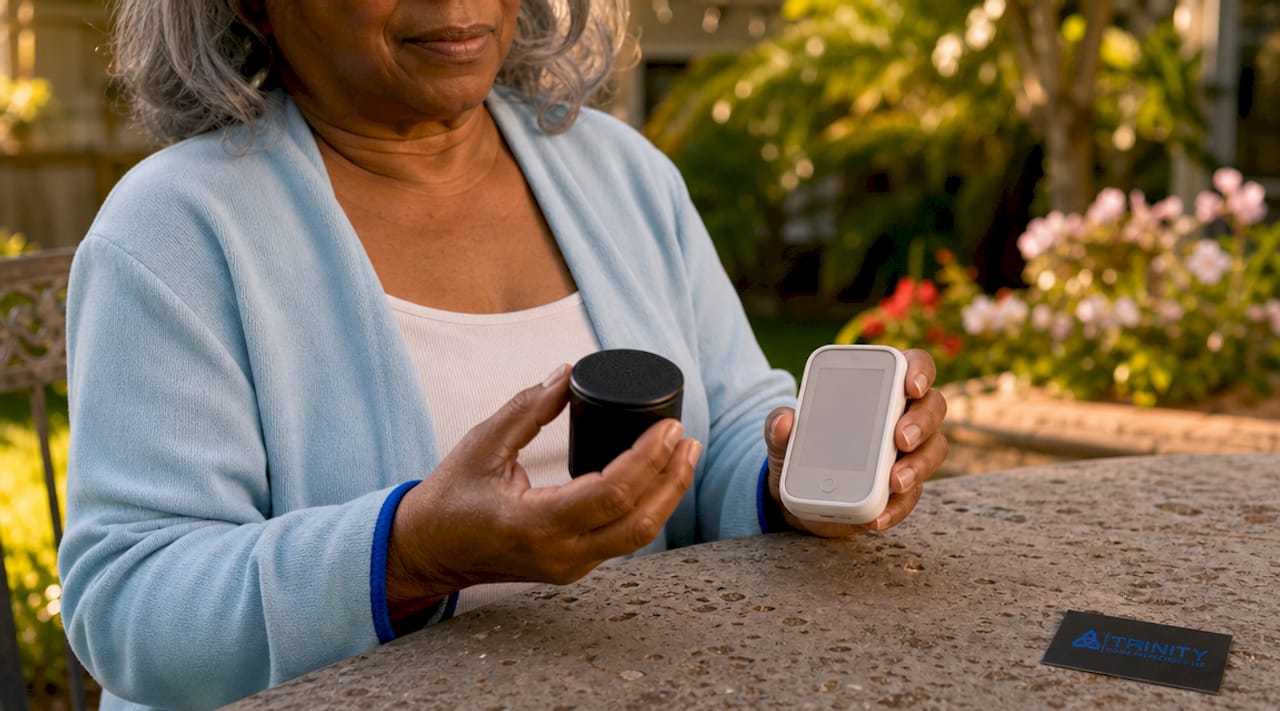
Short-term vs. long-term radon tests
Test Type | Duration | Best Use | Accuracy |
Short-term (charcoal canister) | 2 to 7 days | Real estate transactions, initial screening | Snapshot only; misses seasonal variation |
Short-term (electret ion chamber) | 2 to 90 days | Faster professional testing | More sensitive than charcoal |
Long-term (alpha track) | 90 days to 1 year | Ongoing residential monitoring | Most accurate average reading |
Digital continuous monitor | Ongoing | Real-time tracking, post-mitigation checks | High; shows hourly fluctuations |
DIY test kits vs. professional testing
Home radon test kits are widely available at hardware stores and online retailers. A charcoal canister kit typically costs between $15 and $50, and you mail it to a certified lab after the test period. These kits work, but they require careful placement and closed-house conditions to produce reliable results.
Professional radon testing uses calibrated equipment and follows EPA-compliant protocols. Professional testing delivers verified, legally defensible results that lenders and insurers often require for real estate transactions. A professional tester also removes the risk of improper placement or protocol errors that can skew DIY results. Digital continuous radon monitors, such as devices from Airthings or Sun Nuclear, record readings hour by hour and are particularly useful for confirming that a mitigation system is working correctly after installation.
Pro Tip: Place any radon test device on the lowest lived-in level of your home, at breathing height (roughly 2 to 6 feet off the floor), and away from drafts, exterior walls, and heat sources. Improper placement is the most common reason DIY test results are unreliable.
When and how often should you test for radon?
The right time to test for radon is before a problem develops, not after. The EPA and public health agencies recommend testing any home where radon levels are unknown, and specifically recommend testing when buying or selling a property, after renovations that affect the foundation or basement, and after installing a mitigation system to confirm it is working.
Here is a practical schedule for Gulf Coast Alabama homeowners to follow:
Test before closing on any home purchase. A short-term professional test during the inspection period gives you results quickly and positions you to negotiate repairs or price reductions if levels are elevated.
Retest every 2 to 5 years under normal conditions. Radon levels change over time as soil shifts, foundations settle, and home conditions evolve.
Retest after any significant renovation. Work that disturbs the foundation, adds a basement, or changes ventilation patterns can alter how radon enters your home.
Retest after mitigation system installation. Confirming the system reduced levels below 4.0 pCi/L is not optional. It is the only way to know the fix worked.
Retest if you add living space below grade. Converting a crawl space or basement into a finished room changes your family’s exposure significantly.
One detail many homeowners overlook is seasonal timing. Radon levels tend to be higher during colder months because homes are sealed tighter and the pressure differential between indoors and outdoors increases. Testing during fall or winter, when windows and doors stay closed, produces results that reflect your worst-case exposure. A summer test in a Gulf Coast home with the air conditioning running and windows sealed can also be valid, but a winter test is the gold standard for accuracy.
Pro Tip: If your initial short-term test comes back between 4.0 and 8.0 pCi/L, run a follow-up test before committing to mitigation. A single short-term reading can be influenced by temporary weather conditions. Two tests give you a much more reliable average.
What do radon test results mean and what should you do?
Radon is measured in picocuries per liter (pCi/L), and the number your test returns tells you exactly where you stand relative to EPA guidelines. The average indoor radon level in U.S. homes is approximately 1.3 pCi/L, and the average outdoor level is about 0.4 pCi/L. Here is how to interpret your results:
Result (pCi/L) | Risk Level | Recommended Action |
Below 2.0 | Low | No immediate action; retest in 2 to 5 years |
2.0 to 3.9 | Moderate | Consider mitigation; some risk remains at any level |
4.0 to 7.9 | Elevated | EPA recommends mitigation within a few months |
8.0 and above | High | EPA recommends mitigation as soon as possible |
The EPA action level is 4.0 pCi/L, but there is no known completely safe level of radon exposure. Even readings between 2.0 and 4.0 pCi/L carry measurable risk, and homeowners with health concerns or young children may choose to mitigate at lower thresholds. This is a personal decision worth discussing with a qualified professional.
Common radon mitigation techniques
When your results call for action, mitigation systems are the proven solution. The most widely used approach is sub-slab depressurization (SSD), which involves installing a pipe through the foundation floor and a fan that draws radon from beneath the slab and vents it outside before it can enter your living space. SSD systems are effective, relatively affordable, and usually installed within a day.
Other mitigation methods include:
Crawl space encapsulation and ventilation: Sealing the crawl space with a vapor barrier and adding a vent fan reduces radon entry through dirt floors and block walls.
Basement pressurization: Increasing air pressure inside the basement relative to the soil below discourages radon from seeping in.
Improved home ventilation: Heat recovery ventilators (HRVs) and energy recovery ventilators (ERVs) dilute indoor radon by increasing fresh air exchange.
Sealing foundation cracks: Caulking and sealing visible gaps in the foundation reduces entry points, though sealing alone rarely brings levels below 4.0 pCi/L without additional measures.
Professional mitigation contractors certified through the National Radon Proficiency Program (NRPP) or the National Radon Safety Board (NRSB) are the right choice for any home with confirmed elevated levels. Attempting to design a mitigation system without proper training can leave radon pathways unaddressed and give you a false sense of security.
Pro Tip: After any mitigation system is installed, schedule a post-mitigation radon test within 24 hours of the system running. This confirms the system is working before you close out the project.
Costs and practical considerations for Gulf Coast Alabama homeowners
Radon testing costs vary based on the method you choose and who performs the work. Here is what you can expect to pay in the Gulf Coast Alabama market:
Method | Typical Cost | Turnaround | Best For |
DIY short-term kit | 1 to 2 weeks (lab processing) | Initial screening, budget-conscious testing | |
DIY long-term kit | $25 to $75 | 90 days or more | Accurate average reading without professional fees |
Digital continuous monitor | $100 to $300 | Real-time | Ongoing monitoring, post-mitigation verification |
Professional short-term test | $150 to $800 | 48 to 72 hours | Real estate transactions, legally defensible results |
Several factors influence where your cost lands within those ranges. Home size matters because larger homes may require multiple test devices to cover all zones. Urgency matters too. A rush result for a closing deadline costs more than a standard turnaround. The type of foundation your home has, whether slab, crawl space, or basement, also affects both testing complexity and mitigation costs if remediation becomes necessary.
One cost comparison worth making is between testing and mitigation. A professional radon test in the $150 to $300 range is a small investment relative to the cost of a mitigation system, which typically runs between $800 and $2,500 depending on foundation type and system complexity. Detecting a problem early, before you close on a purchase, gives you the opportunity to negotiate the cost of mitigation into the sale price or request the seller address it before closing. Waiting until after you own the home means that cost is entirely yours.
For Gulf Coast Alabama homeowners, it is worth noting that radon levels vary significantly between neighboring properties due to differences in soil composition and foundation construction. Alabama as a whole is classified as a Zone 2 or Zone 3 radon risk area by the EPA, meaning predicted average indoor levels are generally lower than northern states. However, that classification reflects regional averages, not your specific home. Individual properties in Mobile, Daphne, Fairhope, and Foley have tested above the EPA action level despite the regional classification. Testing your specific home is the only way to know your actual risk.
You can learn more about testing indoor air quality broadly, including radon, VOCs, and other contaminants, to understand how radon fits into the larger picture of your home’s air safety. If you are also concerned about mold or other environmental hazards, Trinity Home Inspections offers bundled services that cover multiple concerns in a single visit.
Key takeaways
Radon testing is the only way to detect dangerous gas levels in your home, and acting on results above 4.0 pCi/L with professional mitigation is the most direct path to protecting your family’s health.
Point | Details |
Radon is a serious health risk | Radon causes over 21,000 lung cancer deaths annually and has no detectable odor or color. |
Testing methods vary by purpose | Short-term tests suit real estate deals; long-term tests provide the most accurate average exposure reading. |
EPA action level is 4.0 pCi/L | Any result at or above this threshold requires mitigation; levels above 2.0 pCi/L warrant consideration. |
Retest regularly and after changes | Retest every 2 to 5 years and after renovations, foundation work, or mitigation system installation. |
Professional testing adds credibility | Certified professional tests produce legally defensible results required by lenders and insurers in real estate transactions. |
What I’ve learned about radon testing after inspecting Gulf Coast homes
One thing I hear often from homeowners in Baldwin and Mobile counties is that radon is a northern problem. I understand why people think that. Most of the dramatic radon headlines come from states like Pennsylvania, Ohio, and Iowa. But that assumption has led more than a few local buyers to skip testing entirely, and that is a mistake I would not make for my own family.
The reality is that radon levels are driven by the specific soil and foundation conditions under your individual home, not by your zip code. I have seen neighboring homes in the same subdivision test at completely different levels. One comes back at 1.2 pCi/L and the other at 5.8 pCi/L. The only difference was how the foundation was constructed and where the soil vented. You simply cannot predict your result based on your neighbor’s.
What I advocate for every buyer I work with is this: treat radon testing the same way you treat a structural inspection. You would not skip checking the roof because the neighborhood looks fine. Do not skip radon testing because the region’s average sounds reassuring. A $150 to $300 test during the inspection period is one of the most cost-effective protections you can buy.
I also want to address the idea that one test is enough for life. Homes change. Foundations settle, HVAC systems get replaced, and renovations open new pathways for soil gas to enter. The experts at the Minnesota Department of Health and the EPA both recommend retesting every few years, and I agree completely. Radon is not a one-and-done concern. It is an ongoing part of responsible home ownership.
If your test comes back elevated, do not panic. Mitigation systems work. They are not complicated, they are not prohibitively expensive, and they are installed in a single day in most cases. The path from “elevated radon” to “problem solved” is shorter and more affordable than most people expect. The only thing that stands between you and that peace of mind is the decision to test.
— Matt
Get radon testing scheduled for your Gulf Coast home
[
Trinity Home Inspections offers radon testing as part of our full-service home inspection program across Mobile, Baldwin, Escambia, and surrounding Gulf Coast Alabama counties. Whether you are buying, selling, or simply want to confirm your home is safe, we use calibrated equipment and follow EPA-compliant protocols to deliver results you can trust. Our same-day reports are clear, photo-rich, and written in plain English so you know exactly what your numbers mean and what to do next.
What’s included in our radon testing service:
Calibrated radon test device placement following EPA guidelines
Closed-house condition verification
Lab-certified results with clear pCi/L readings
Written explanation of results and recommended next steps
Bundling available with full home inspection, pre-listing inspection, mold testing, and indoor air quality sampling
Call us at 251-210-7376 or visit TrinityInspectionsLLC.com to schedule your radon test or ask about bundling it with your next inspection. We serve Daphne, Fairhope, Spanish Fort, Foley, Gulf Shores, Orange Beach, Mobile, and all surrounding communities.
FAQ
What does radon testing involve for a typical home?
Radon testing involves placing a collection device on the lowest lived-in level of your home for a set period, then analyzing the device to measure radon concentration in pCi/L. Short-term tests take 2 to 7 days; long-term tests run 90 days or more for a more accurate average.
Is radon a real concern in Gulf Coast Alabama?
Yes. While Alabama is classified as a lower-risk region by the EPA, individual home levels vary significantly based on soil type and foundation construction, and properties across Mobile and Baldwin counties have tested above the 4.0 pCi/L action level.
How often should I retest my home for radon?
The EPA and public health agencies recommend retesting every 2 to 5 years and after any renovation, foundation work, or mitigation system installation to account for changing conditions.
Can I use a DIY kit or do I need a professional?
DIY kits work for initial screening and cost between $15 and $50, but professional testing is recommended for real estate transactions because it produces verified, legally defensible results that lenders and insurers may require.
What happens if my radon level is above 4.0 pCi/L?
A result at or above 4.0 pCi/L means you should hire a certified mitigation contractor to install a radon reduction system, most commonly sub-slab depressurization. Mitigation systems are effective, typically cost between $800 and $2,500, and are usually installed within one day.
Recommended

