Homeowners: Diagnose Moisture Between Panes Using Thermal Imaging

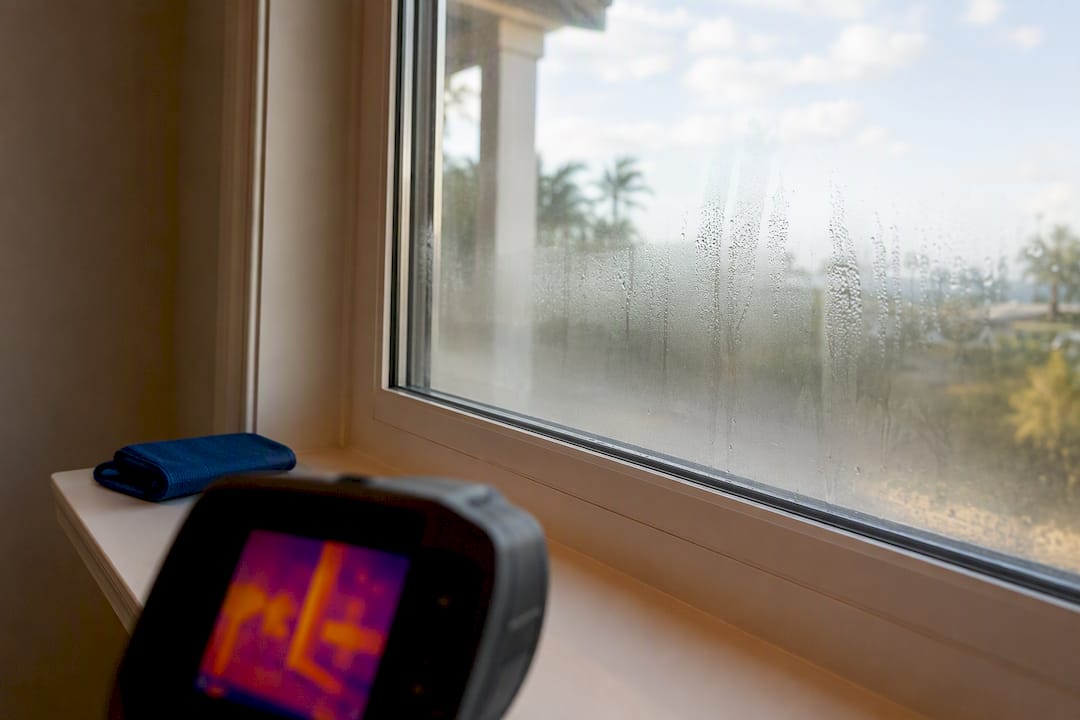
Moisture trapped between window panes almost always means the insulated glass unit’s seal has failed and the unit needs repair or replacement. This is not a humidity problem you can wipe away or fix with a dehumidifier. Once outside air breaches the hermetic seal, moisture and minerals accumulate inside the airspace permanently. The usual remedy is replacing the insulated glass unit (IGU) itself, or in some cases the full window, rather than chasing the fog with cleaning products.
TL;DR:
Seal failures are caused primarily by thermal pumping, UV exposure, frame movement, and mechanical impacts, which accelerate the breakdown of the hermetic seal.
Replacing the insulated glass unit is the only effective long-term solution to clear fogged windows, as cleaning cannot remove moisture trapped inside the sealed cavity.
The fog typically appears within weeks of seal breach and progresses from faint haze to permanent clouding, with early failure often indicating manufacturing defects or aging.
Costs for repairs vary based on window size, coatings, and complexity, with IGU replacement usually being more affordable than full window replacement.
Regular home maintenance, such as avoiding pressure washing near windows and keeping drainage clear, helps prolong seal life and prevent early failure.
Why Does a Window Have Moisture Between the Glass Panes Rather Than On the Surface?
Not all foggy glass means the same thing, and telling the two apart takes about thirty seconds. Wipe the inside surface of the glass. If the haze clears, you’re looking at ordinary surface condensation caused by indoor humidity meeting cold glass, not a seal problem. If the fog sits between the panes and no amount of wiping touches it, you’ve found interpane condensation from a compromised seal.
Timing matters too. Surface condensation tends to show up on cold mornings and burn off by afternoon. Interpane fog lingers regardless of the thermostat setting. Watch for these signals:
Milky or hazy film that never fully clears, even on warm days
White, chalky mineral streaks or water trails inside the glass unit
Sudden fogging right after a pressure wash, storm impact, or hard bump to the frame
Fog that has crept in gradually over months rather than appearing overnight
Pro Tip: Take a photo of the fogged window on a humid day and again on a dry day. If the pattern never changes, you’re dealing with a sealed unit that has already let moisture in for good.
Why Seals Fail: Thermal Pumping And Other Culprits
Every insulated glass unit relies on a hermetic seal built around an aluminum or foam spacer packed with desiccant, a drying agent that soaks up trace moisture trapped during manufacturing. The edge of that spacer gets sealed twice: a polyisobutylene (PIB) primary seal blocks moisture vapor, and a silicone secondary seal adds structural strength. When that system works, the airspace between the panes stays bone dry for decades. When it doesn’t, the desiccant eventually saturates and stops absorbing anything, and that’s when fog appears for good.
The biggest daily stress on that seal is thermal pumping. Daytime heat expands the trapped gas between panes, pressurizing the unit; nighttime cooling contracts it again. InterNACHI describes this as a bellows effect that repeats every single day, and over years it opens microfractures in the primary seal that let moisture bypass the desiccant faster than it can dry the air.
Several other factors speed up the same failure:
Factor | How it stresses the seal |
UV exposure | Breaks down sealant flexibility over time |
Frame movement | Flexes the spacer and cracks the seal edge |
Pressure washing | Forces water directly into the seal cavity |
Wind and storm loads | Repeated flexing fatigues the glass and frame joint |
Poor factory assembly | Uneven spacer alignment or sealant air pockets |
Seal breaches also differ by speed. Slow moisture diffusion through an aging seal builds fog gradually over seasons. A sudden mechanical breach, like a cracked spacer from an impact, can fog a window within days.
What Interpane Fogging Means For Your Home
A failed seal doesn’t just look bad. Most insulated units are filled with argon or another inert gas to boost insulation, and a broken seal lets that gas escape while letting moisture in. The window’s insulating performance drops, which can nudge heating and cooling costs upward, especially across a whole house full of aging units.
The visual damage progresses in a predictable order:
Faint, intermittent haze in the first weeks after the breach
Persistent fog that no longer clears with temperature swings
Mineral deposits and streaking as the desiccant fully saturates
Permanent, opaque clouding that no cleaning can reverse
Onset timing matters for your wallet, too. A window that fogs within the first few years often points to a manufacturing defect and may still fall under warranty. One that fails after a decade or more is closer to normal wear, and dual-seal designs generally last longer than single-seal units, though real-world sun exposure and frame flex still take their toll.
Fixing It: Realistic Options And Costs
Homeowners often try a dehumidifier, a heat gun, or a few days of open windows before calling anyone. None of that touches moisture sealed inside the glass cavity itself. Once the seal is breached, the only real fixes are:
IGU replacement. A glass shop pulls the fogged sealed unit and drops in a new one, keeping the existing frame and sash. This is usually the more affordable route and works well when the frame itself is sound.
Full window replacement. If the frame is warped, rotted, or the sash no longer holds glazing securely, replacing the entire window makes more sense than fitting a new unit into a failing frame.
Cosmetic cleaning (limited use). On older units with removable interior panes, a glass shop can sometimes clean the cavity and reseal it, but this is a stopgap, not a permanent repair, and it doesn’t work on modern sealed units.
Cost swings widely based on glass size, whether the unit includes Low-E coating or argon fill, custom shapes, and local labor rates. A standard rectangular IGU replacement tends to run less than a full window swap, while triple-pane, tinted, or oddly shaped units cost more to source and install. Get quotes from a couple of local glass shops before committing, since pricing varies by region more than most homeowners expect.
Protecting Your Window Seals For The Long Haul
Extending the life of an IGU seal comes down to a handful of habits, most of which cost nothing.
Skip the pressure washer on window exteriors. High-pressure water can force moisture directly into the edge seal and accelerate the exact failure you’re trying to avoid.
Keep weep holes and drainage channels clear of dirt, pollen, and paint so water doesn’t pool against the frame.
Check that flashing around each window stays intact, particularly on coastal homes where wind-driven rain tests every seam.
Walk your home twice a year and look for early haze, especially on sun-facing windows that see the most thermal cycling.
Pro Tip: On cold nights, leave blinds cracked open an inch or two instead of sealing them shut. Fully closed blinds trap a cold microclimate against the glass, which increases surface condensation and can make an already stressed seal work even harder.
If you’re dealing with older single-pane windows instead of failed sealed units, a different set of upgrades applies, and tightening up the whole envelope helps too, which you can read about in this air sealing guide.
How A Professional Inspection Clarifies What’s Really Going On
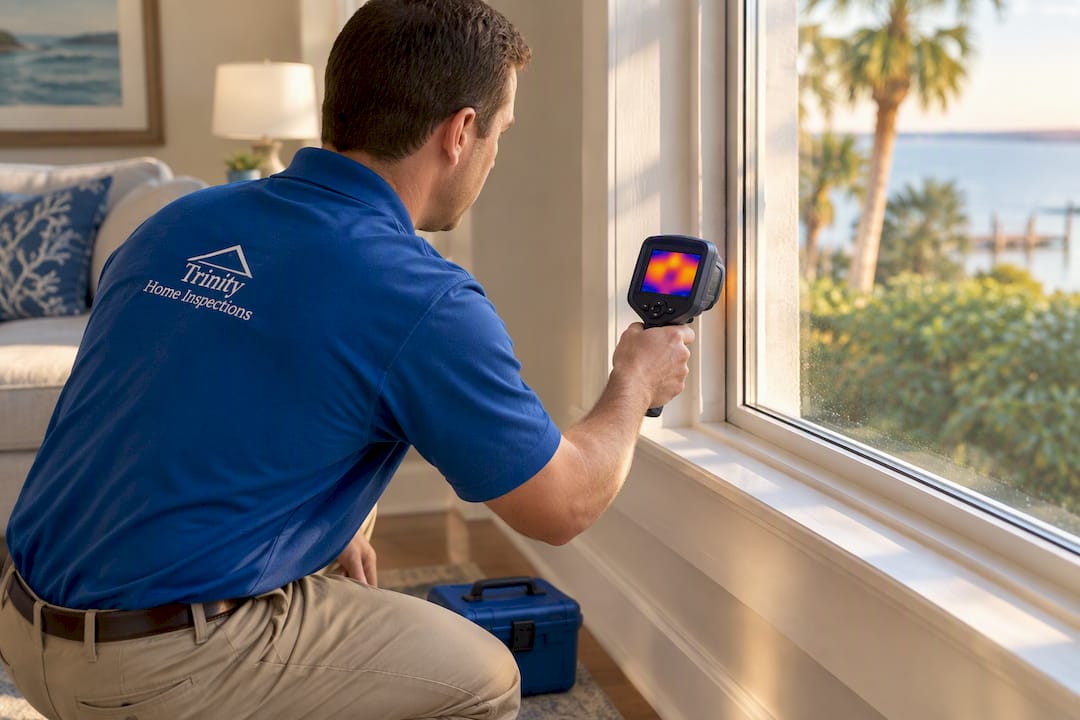
A trained eye catches details most homeowners miss on a quick glance. During a home inspection, we document seal condition window by window, note mineral staining patterns, check for frame deflection, and look for signs that water is getting in around the sash rather than just between the panes.
We back that visual check with real tools, not guesswork:
Thermal imaging to spot temperature differences that reveal hidden moisture or air leaks around the frame
Moisture meters to confirm whether water is actually present in the surrounding wall or sill
Drone views when upper-story or roofline windows need a closer look without a ladder
Every finding lands in a same-day photo and video report with priorities laid out in plain language, plus a list of trusted contractors if glass work is needed.
When To Call A Glass Shop vs. Book A Full Inspection
If a single window is fogging with obvious mineral staining, or the fog appeared right after a storm impact, call a glass shop directly. That’s a straightforward IGU swap. But if you’re seeing the same fog pattern across several windows, or there’s unexplained moisture on the wall below a window that doesn’t line up with the glass itself, that points to something bigger, possibly hidden water intrusion behind the trim. That calls for a full inspection.
Before anyone arrives, snap photos of each affected window and skip the pressure washer in the meantime. Good documentation saves everyone time and often clarifies the pattern before a single tool comes out.
— Matt
Trinity Home Inspections: How We Can Help And What’s Included
A professional home inspection gives you a clear answer instead of a guess when foggy windows show up during a purchase, sale, or routine home check. What’s included in a window and moisture diagnostic:
[

On-site visual inspection of every accessible window, not just a sample
Free thermal imaging to check for hidden moisture or air leaks around frames
Moisture meter readings on surrounding walls and sills when warranted
Same-day photo and video report with issues sorted by priority
Referrals to glass shops and contractors we trust for any repair work
Whether you’re buying a home with a few cloudy windows or a seller who wants to get ahead of the issue before it shows up on someone else’s inspection report, a full home inspection puts real documentation behind what you’re seeing. Sellers specifically benefit from a pre-listing inspection that catches window and moisture issues before a buyer’s inspector does. Call 251-210-7376 or visit Trinityinspectionsllc to schedule your inspection today.
Sources
For homeowners who want to dig deeper into seal mechanics and diagnosis, InterNACHI’s guide on double-pane condensation covers inspector-level detail, while InspectApedia’s breakdown of window condensation causes explains failure modes in depth. The PMC review of sealant materials covers the engineering side for readers who want the technical detail.
FAQ
Can Condensation Between Window Panes Be Fixed?
Yes, but not by clearing it. The fix is replacing the insulated glass unit itself, or the full window if the frame is compromised, since the seal cannot be restored once it has failed.
Will Condensation Between Glass Go Away On Its Own?
No. Once the seal breaches and the desiccant saturates, the moisture is trapped for good and will not clear with humidity changes or ventilation.
How Much Does It Cost To Fix Condensation Between Window Panes?
Cost depends on glass size, coatings like Low-E, gas fill, and local labor rates, with IGU replacement generally costing less than a full window swap. Get quotes from local glass shops for an accurate number for your specific windows.
What Causes Condensation Between Windows?
A breached hermetic seal lets outside air and moisture into the sealed airspace, where it saturates the desiccant packed into the spacer. Thermal pumping, UV exposure, frame movement, and pressure washing are the most common reasons that seal fails in the first place.
Recommended