
Bullet Boot Review: Durable Roofing Vent for Gulf Coast Homes

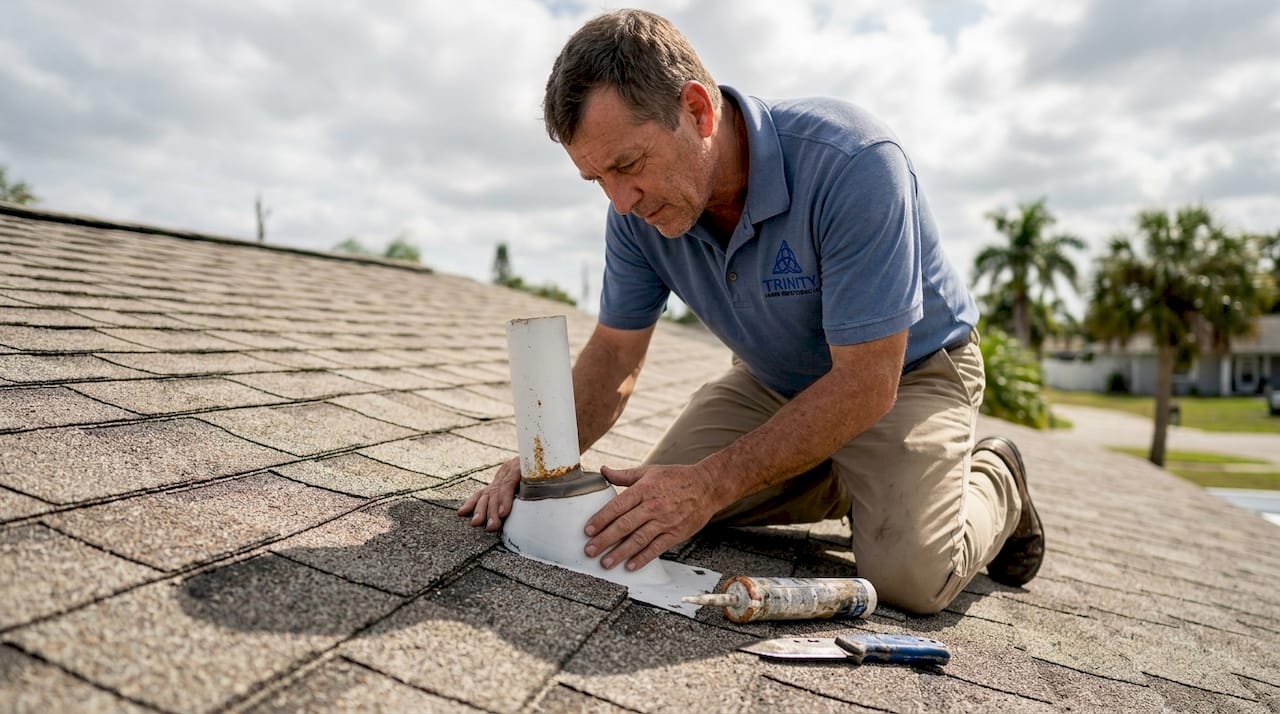
Most Gulf Coast homeowners don’t realize their plumbing vent boots are ticking time bombs. Traditional rubber pipe boots fail within 7 to 15 years, often cracking under relentless UV rays, humidity, and storms. When they fail, water seeps into your attic, rotting wood and damaging ceilings. The bullet boot offers a different approach: a one-piece mechanical seal that eliminates caulk and sealant failures, lasting 30 years or more. This review breaks down how bullet boots work, compares durability and costs against traditional and premium alternatives, and explains why they’re ideal for Alabama’s demanding coastal climate.
Key Takeaways
Point | Details |
One piece mechanical seal | The bullet boot uses a one piece mechanical compression seal that eliminates caulk and sealant failures. |
Simple tool free installation | Installation is simple and tool free, sliding over the pipe and seating under the shingles with a compression seal that seals automatically. |
Thirty year lifespan | It lasts thirty years or more, far longer than traditional boots that typically fail in seven to fifteen years. |
Lifetime value | Although upfront costs are higher, the longer lifespan and reduced maintenance make bullet boots cost effective over a roof’s life. |
Coastal climate fit | In Gulf Coast climates with strong sun and humidity, bullet boots are particularly well suited for coastal UV and storm exposure. |
What is a bullet boot and how does it work?
The Bullet Boot is a one-piece TPO or TPE flashing designed to seal plumbing vents on roofs using a mechanical compression seal without caulk or sealant. Unlike traditional rubber pipe boots that rely on flexible collars and messy caulking around the base, the bullet boot creates a tight seal through its engineered compression fit. This single-piece design eliminates the weak spots where traditional boots crack and separate over time.
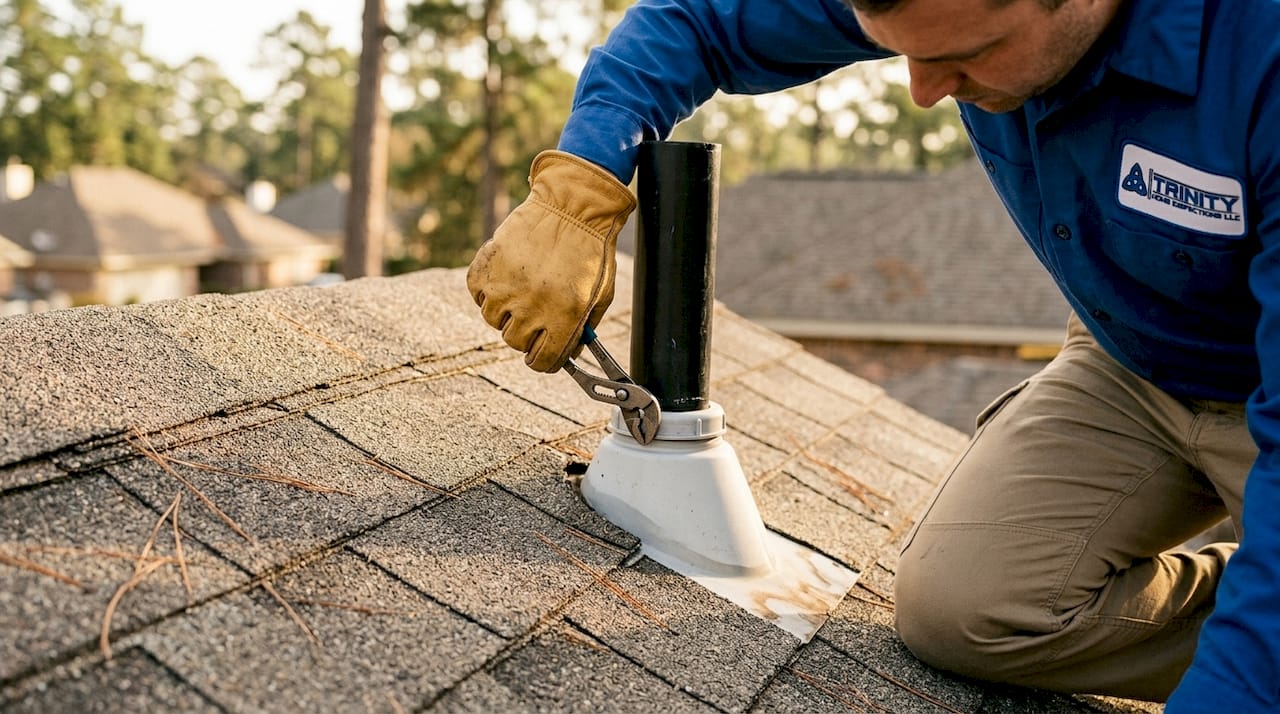
Traditional pipe boots combine a metal or plastic base flange with a rubber collar that wraps around the vent pipe. Installers must apply caulk or roofing cement around the base and collar to prevent water intrusion. Over time, UV rays degrade the rubber, causing it to harden and crack. The caulk dries out and separates from the pipe or flange, creating gaps where water can enter. Standard pipe boots leak issues often start with these material failures, especially in coastal climates where sun exposure and humidity accelerate deterioration.
The bullet boot’s TPO (thermoplastic polyolefin) or TPE (thermoplastic elastomer) materials resist UV damage far better than standard rubber compounds. The compression seal works by creating constant pressure around the pipe circumference, adapting to minor pipe movement from temperature changes without breaking the seal. Because there’s no caulk to dry out or separate, the most common failure mode of traditional boots simply doesn’t exist with bullet boots.
Installation errors contribute significantly to traditional boot failures. Roofers sometimes skip caulking steps, apply too little sealant, or fail to properly seat the rubber collar around the pipe. The bullet boot’s mechanical design reduces these human error risks. You slide it over the pipe, position the base flange under shingles, and the compression fit does the sealing work automatically.
Pro Tip: When evaluating your current plumbing vent boots, look for cracks in the rubber collar, separation between the collar and pipe, or dried caulk around the base. These are early warning signs that water intrusion may already be occurring or will begin soon.
Bullet boot vs traditional and other pipe boots: durability and cost comparison
Traditional rubber pipe boots fail due to UV degradation, cracking, and sealant drying out, typically lasting 7-15 years before leaking. This limited lifespan creates a maintenance cycle where homeowners must replace boots at least once during a typical 20 to 30 year roof life. In Gulf Coast Alabama, where intense sun and humidity are constant, traditional boots often fail closer to the 7 year mark.
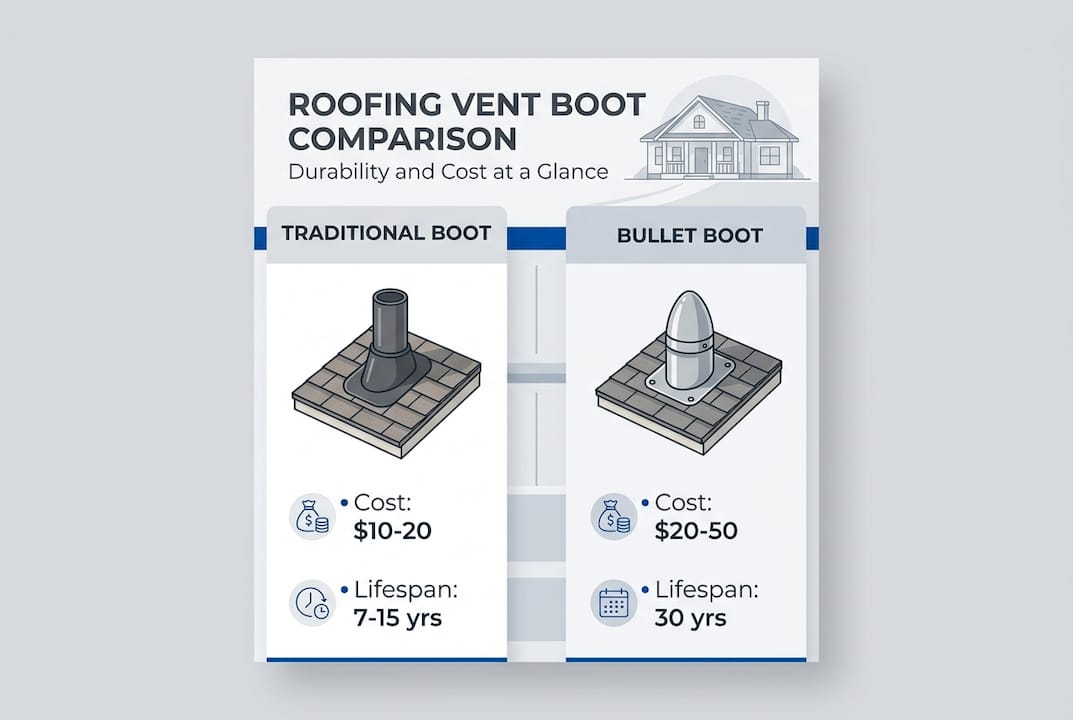
Bullet boots cost $20 to $50 per unit depending on pipe size and retailer, compared to $10 to $20 for standard rubber boots. At first glance, that’s two to three times more expensive. However, when you factor in the 30+ year lifespan and elimination of maintenance visits, the lifetime cost actually favors bullet boots. You buy once and forget about it until your next roof replacement.
Boot Type | Initial Cost | Typical Lifespan | Material | Sealant Required | Gulf Coast Durability |
Bullet Boot | $20-50 | 30+ years | TPO/TPE | No | Excellent UV and storm resistance |
Traditional Rubber | $10-20 | 7-15 years | EPDM rubber | Yes | Poor, rapid UV degradation |
Lifetime Boot | $50-70 | 25+ years | Premium rubber blend | Minimal | Very good but more expensive |
Oatey Standard | $12-18 | 10-15 years | Standard rubber | Yes | Fair, industry baseline |
Lifetime boots represent the premium tier, often costing $50 to $70 per unit. They use enhanced rubber compounds and reinforced construction to extend lifespan beyond standard boots. However, they still rely partly on sealants and don’t match the bullet boot’s pure mechanical seal. For homeowners prioritizing maximum durability without overpaying, bullet boots hit the sweet spot.
Oatey boots dominate the industry as the baseline standard. Most roofers stock them because they’re inexpensive and familiar. However, Oatey boots still require proper caulking and suffer from the same UV degradation issues as other rubber boots. They’re adequate for regions with mild climates but struggle in Gulf Coast conditions where heat and humidity accelerate material breakdown.
The bullet boot’s TPO and TPE materials were originally developed for commercial roofing membranes, where durability and weather resistance are critical. These materials maintain flexibility across temperature extremes, resist chemical exposure from roof runoff, and don’t become brittle under UV bombardment. This makes them particularly well-suited for long-term vent sealing performance in coastal environments.
Pro Tip: Calculate total cost over your roof’s expected life. A $30 bullet boot lasting 30 years costs $1 per year. Two traditional $15 boots over the same period cost $30 total, or $1 per year, but require a service call and labor for the second installation, often adding $100 to $200 in roofing contractor fees.
Installing bullet boots: ease, compatibility, and Gulf Coast suitability
Bullet Boot installation is simple, tool-free, sealant-free, with compression fit for 1.5-4 inch pipes, compatible with asphalt shingles. This wide size range covers virtually all residential plumbing vents, from bathroom exhaust stacks to main drain vents. The installation process takes about the same time as a traditional boot but eliminates the messy caulking step.
Here’s the basic installation sequence:
Remove shingles around the existing vent pipe to expose the roof deck.
If replacing an old boot, remove it completely and clean any remaining caulk or debris from the pipe and roof surface.
Slide the bullet boot over the pipe from above, ensuring the compression seal fits snugly around the pipe circumference.
Position the base flange so the upper portion slides under the shingles above the pipe and the lower portion sits on top of shingles below.
Secure the flange with roofing nails through the pre-drilled holes in the corners.
Replace and secure the shingles around the boot, ensuring proper overlap for water shedding.
No caulk gun, no roofing cement, no waiting for sealants to cure. The mechanical compression seal is active immediately upon installation. This simplicity makes bullet boots attractive for DIY homeowners comfortable working on roofs, though safety precautions and proper ladder use remain essential.
Gulf Coast Alabama presents unique challenges for roofing materials. UV-resistant TPO/TPE materials suitable for heat, sun, storms perform exceptionally well in this environment. Summer temperatures regularly exceed 90°F, with roof surface temperatures reaching 140°F to 160°F. Traditional rubber compounds soften and degrade under this constant heat stress. TPO and TPE maintain their structural integrity and sealing properties across these temperature ranges.
Hurricane season brings additional stress through high winds and driving rain. The bullet boot’s one-piece construction and mechanical seal resist wind uplift better than multi-piece traditional boots where separate components can separate under stress. The lack of caulk also eliminates a common failure point during storms, when wind-driven rain can force water under dried or improperly applied sealants.
Compatibility with asphalt shingles matters because they’re the dominant roofing material across Gulf Coast residential construction. The bullet boot’s flange design integrates seamlessly with standard three-tab and architectural shingles, maintaining proper water shedding without creating bumps or irregularities that could trap debris or water.
Pro Tip: Before installing a bullet boot, inspect the vent pipe itself for damage, rust, or deterioration. A perfect seal around a damaged pipe still allows water intrusion. If the pipe shows significant wear, replace it during the same service visit to avoid returning to the roof later.
Expert opinions and homeowner insights on bullet boot performance
Pros recommend bullet boot over cheap boots for longevity; Reddit roofer prefers Bullet for value vs premium Lifetime. Experienced contractors appreciate products that reduce callback visits for warranty work. When a boot fails prematurely, the roofer often eats the labor cost to maintain customer relationships. Bullet boots’ extended lifespan translates directly to fewer callbacks and happier clients.
Professional roofers highlight several practical advantages:
The mechanical seal reduces installation variables, making it harder for less experienced crew members to make costly mistakes.
Elimination of caulking saves time on each installation, improving crew efficiency on multi-vent homes.
The one-piece design simplifies inventory management compared to tracking separate flanges, collars, and sealant tubes.
Fewer warranty callbacks improve profit margins and customer satisfaction scores.
Homeowners who’ve installed bullet boots themselves report positive experiences with the DIY process. The tool-free installation appeals to weekend warriors who want professional results without professional tools. However, some homeowners note that bullet boots work best when installed during roof replacement or major repairs, rather than as standalone retrofits. Removing and replacing shingles around a single vent can be tricky without disturbing surrounding areas, potentially creating new leak points if not done carefully.
Cost perception varies among homeowners. Those focused solely on upfront price sometimes balk at paying double or triple the cost of traditional boots. However, homeowners who calculate lifetime value and factor in the hassle of future repairs typically view bullet boots as worthwhile investments. The peace of mind from knowing your vent seals will outlast your roof resonates strongly with homeowners who’ve dealt with common plumbing vent issues in the past.
One common pitfall involves pipe sizing. Bullet boots accommodate a range of pipe diameters, but you must verify your specific pipe size before purchasing. Most residential plumbing vents use 1.5, 2, or 3 inch pipes, but older homes or custom installations may have non-standard sizes. Measuring the outside diameter of your vent pipe before ordering prevents returns and delays.
Another consideration is pipe condition and material. Bullet boots seal best on smooth, round pipes in good condition. Severely corroded metal pipes or out-of-round plastic pipes may not achieve optimal compression seal. In these cases, addressing the pipe problem before installing the boot ensures long-term performance.
“I replaced all my old rubber boots with bullet boots during my last reroof. Three years later, zero issues while my neighbor’s traditional boots are already showing cracks. Worth every extra dollar.” - Mobile County homeowner
Check your home’s plumbing vent seals with Trinity Inspections
Your plumbing vent boots protect your home from water damage every day, yet most homeowners never inspect them until leaks appear. By then, water may have already damaged attic insulation, ceiling drywall, or structural framing. Trinity Home Inspections provides thorough roof and vent assessments as part of our InterNACHI-certified inspection services, using thermal imaging to detect moisture intrusion before it becomes visible damage.

Scheduling regular inspections helps catch vent boot failures early, when repairs cost hundreds instead of thousands. Our same-day digital reports include high-resolution photos of your vent boots, clearly showing any cracks, separation, or deterioration. For homeowners considering selling, our pre sale home inspection services identify issues buyers will find, giving you time to make cost-effective repairs before listing. We also offer home permit and deed searches and sewer line inspection services to provide complete property assessments.
Pro Tip: Schedule roof inspections every 10 to 12 years, aligning with the typical lifespan of traditional pipe boots. Even if you’ve installed bullet boots, periodic inspections verify that your entire roofing system remains in good condition and catch any unexpected issues before they escalate.
Frequently asked questions about bullet boots
What pipe sizes does the bullet boot fit?
Bullet boots accommodate residential plumbing vent pipes from 1.5 to 4 inches in outside diameter, covering virtually all standard residential installations. Always measure your specific pipe diameter before purchasing to ensure proper fit and optimal compression seal.
How long do bullet boots last compared to traditional boots?
Bullet boots typically last 30 years or more, often matching or exceeding the lifespan of the roof itself. Traditional rubber boots last 7 to 15 years before UV degradation and sealant failures cause leaks, requiring replacement at least once during a typical roof’s life.
Can I install bullet boots myself as a homeowner?
Yes, bullet boots feature tool-free, sealant-free installation that many DIY homeowners can complete successfully. However, working on roofs requires proper safety equipment and precautions. If you’re uncomfortable with ladder work or roof access, hire a professional roofer to ensure safe installation.
Are bullet boots suitable for Gulf Coast weather?
Bullet boots excel in Gulf Coast conditions because their TPO and TPE materials resist UV degradation, maintain flexibility in high heat, and withstand hurricane-force winds and rain. These materials were originally developed for commercial roofing in demanding climates, making them ideal for Alabama’s coastal environment.
What are signs I need to replace my plumbing vent boot?
Look for visible cracks in the rubber collar, separation between the collar and pipe, dried or missing caulk around the base, water stains on attic framing near the vent, or ceiling stains below the vent location. Any of these signs indicate current or imminent failure requiring immediate replacement to prevent water damage.
Recommended
