
Roof Ridge Vent Pros and Cons for Gulf Coast Alabama 2026

You’ve probably heard that roof ridge vents are essential for proper attic ventilation, but many Gulf Coast Alabama homeowners remain confused about whether they truly deliver on promises of energy savings and moisture control in our humid climate. The reality is more nuanced than simple yes or no answers. This guide breaks down exactly how ridge vents function, their specific advantages and limitations for coastal homes, and what you need to know about installation and maintenance to make a smart decision for your property. Understanding these factors protects your investment and keeps your home comfortable year round.
Key takeaways
Point | Details |
Continuous ventilation | Ridge vents run along the roof peak, allowing hot attic air to escape naturally through convection. |
Climate benefits | They reduce heat buildup and moisture accumulation, critical for preventing mold in humid Gulf Coast conditions. |
Installation matters | Proper setup with complementary soffit vents maximizes performance, while poor installation causes leaks or inefficiency. |
Maintenance required | Regular cleaning and post storm inspections keep ridge vents functioning correctly over time. |
Balanced approach | Weigh energy savings and roof longevity against potential clogging issues and installation costs. |
How roof ridge vents work and why they matter in Alabama homes
A roof ridge vent is a continuous opening installed along the peak of your roof, covered by a low profile cap that keeps rain out while letting air flow freely. Unlike box vents or turbines that cover small isolated areas, ridge vents span the entire length of your roofline. This design takes advantage of natural convection, the physical principle where warm air rises. As your attic heats up during Alabama’s scorching summers, that hot air naturally moves upward and exits through the ridge opening.
The benefits go beyond simple temperature control. Proper attic ventilation with ridge vents reduces heat buildup and moisture accumulation in hot, humid Alabama climates, protecting the roof and home interior. Here’s why that matters specifically for Gulf Coast properties:
Prevents moisture damage from humidity that seeps into attics and causes wood rot, mold growth, and insulation deterioration
Reduces extreme attic temperatures that can reach 150 degrees or higher without adequate ventilation
Extends shingle lifespan by preventing heat related warping and premature aging
Lowers cooling costs by reducing the thermal load your HVAC system must handle
Protects against hurricane season moisture intrusion when combined with proper sealing
Pro Tip: Ridge vents work best when paired with soffit intake vents along your roof’s eaves. This creates a complete airflow path where cool air enters low, pushes hot air up, and forces it out through the ridge. Without proper intake ventilation, ridge vents can’t function at full capacity.
The Gulf Coast climate presents unique challenges. Our combination of intense summer heat, year round humidity, and occasional severe weather means your attic ventilation system works harder than in drier or cooler regions. Salt air from coastal proximity can also accelerate corrosion on metal vent components if you don’t choose materials designed for marine environments. Understanding attic ventilation in Alabama homes helps you make choices that account for these local factors.
Pros of roof ridge vents: benefits for Gulf Coast homes
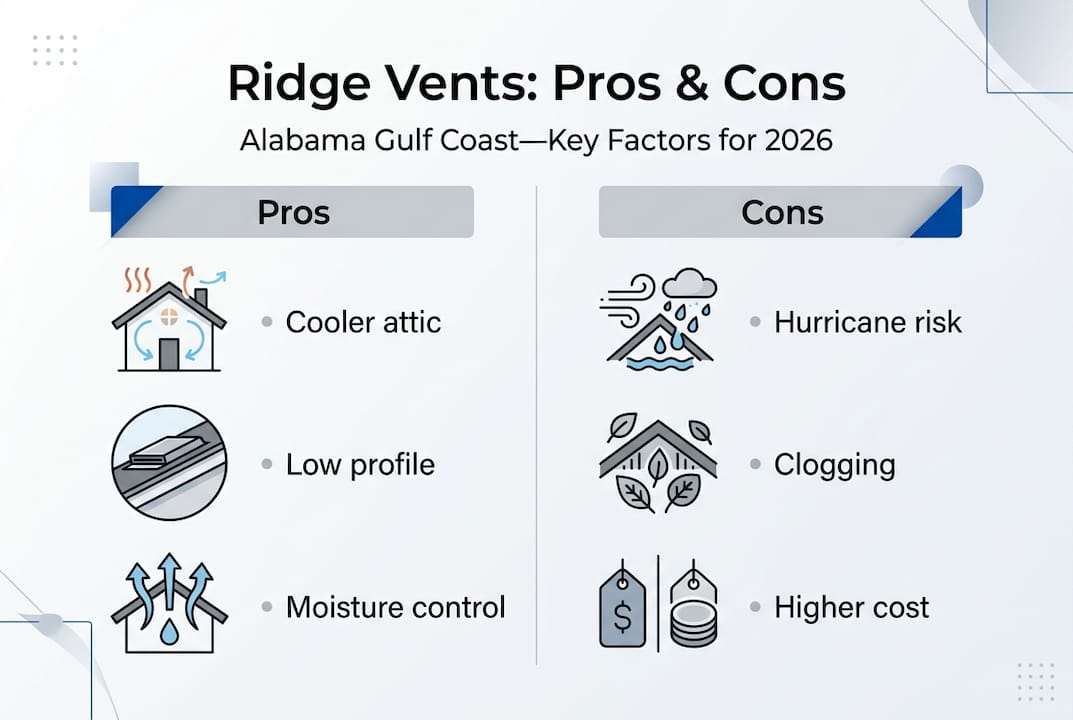
When installed correctly, ridge vents deliver measurable advantages that directly impact your comfort, energy bills, and home maintenance costs. Let’s break down the specific benefits you can expect:
Lower energy costs through reduced cooling demand, as your HVAC doesn’t fight against superheated attic spaces
Extended roof lifespan by preventing heat damage to shingles and underlying decking materials
Decreased mold and mildew risk since moisture vapor escapes instead of condensing on attic surfaces
Improved indoor air quality as proper ventilation reduces the chance of mold spores migrating into living spaces
Better temperature balance throughout your home, eliminating hot spots in upper floor rooms directly below the attic
The temperature difference is dramatic. Ridge vents can lower attic temperatures by up to 20 degrees, improving HVAC efficiency and reducing cooling costs. In practical terms, that means an attic that might hit 150 degrees on a July afternoon could stay closer to 130 degrees with proper ridge ventilation. Your air conditioning system runs less frequently, and upstairs bedrooms stay more comfortable.
Condition | Average Attic Temp | Impact on Cooling |
No ridge vent | 145-160°F | High HVAC strain, frequent cycling |
Ridge vent installed | 125-140°F | Reduced load, lower energy use |
Ridge vent plus soffit | 115-130°F | Optimal efficiency, minimal heat transfer |
Beyond temperature control, ridge vents provide aesthetic advantages. They sit low on the roofline and blend with your shingles, unlike bulky turbine vents or multiple box vents that interrupt your roof’s clean lines. This matters for resale value and curb appeal. Modern ridge vent designs also incorporate baffles and filters that block insects, birds, and wind driven rain while still allowing maximum airflow.
The moisture management benefit can’t be overstated for Gulf Coast homes. Our humidity levels regularly exceed 70%, and attics without proper ventilation become breeding grounds for mold colonies. These colonies damage structural wood, ruin insulation, and create health hazards. Proper ventilation keeps air moving so moisture never has a chance to settle and condense. This protection extends to preventing ice dams in the rare winter freezes we experience, though that’s less of a concern than in northern climates.
Pro Tip: Schedule annual inspections to verify your ridge vents remain clear of debris like leaves, wasp nests, or blown insulation. Blocked vents lose effectiveness quickly, and you might not notice the problem until moisture damage appears. You can also check how cold air vent returns energy waste impacts your overall home efficiency.
Cons and challenges of roof ridge vents for Alabama homeowners
Ridge vents aren’t perfect solutions, and honest assessment requires acknowledging their limitations and potential problems. Understanding these challenges helps you make informed decisions and avoid common pitfalls.
The most frequent issue stems from improper installation. Roofers who don’t specialize in ventilation might cut the ridge opening too narrow, install insufficient vent length, or fail to seal edges properly. Improper installation or lack of complementary intake vents can cause ridge vents to perform poorly or lead to moisture problems. When the ridge opening is undersized, hot air can’t escape efficiently. When intake vents are missing or blocked, the system creates negative pressure that can actually pull conditioned air from your living space into the attic, wasting energy.
Common homeowner mistakes to avoid:
Installing ridge vents without adequate soffit or gable intake vents
Choosing low quality vent caps that allow rain infiltration during storms
Failing to remove old ventilation when adding ridge vents, creating conflicting airflow patterns
Neglecting to clear insulation away from soffit vents, blocking the intake airflow path
Skipping regular maintenance inspections that catch problems early
Vent Type | Pros | Cons |
Ridge vents | Continuous coverage, invisible profile, no moving parts | Requires proper intake vents, can clog with debris |
Box vents | Simple installation, works independently | Limited coverage area, visible on roof, multiple units needed |
Turbine vents | Active ventilation when wind blows | Moving parts fail, noisy, highly visible |
Gable vents | Easy retrofit, good for certain roof styles | Less effective airflow, doesn’t ventilate entire attic |
Gulf Coast specific concerns add another layer. Hurricane force winds can drive rain sideways into ridge vents if they’re not designed with proper baffles. Salt air accelerates corrosion on aluminum or steel components, requiring you to choose marine grade materials or expect shorter lifespan. The combination of heat and UV exposure in our intense sun can degrade plastic vent caps faster than in northern climates.
Clogging presents an ongoing maintenance challenge. Pine needles, oak leaves, and Spanish moss can accumulate in the vent opening or the external cap’s filter media. Insects like wasps find the protected space attractive for nest building. Each blockage reduces airflow and diminishes the vent’s effectiveness. Some homeowners discover their ridge vents stopped working years ago due to gradual debris accumulation they never noticed. Understanding common attic safety issues helps you recognize warning signs before they become expensive problems.
Another consideration is cost. Ridge vent installation typically costs more upfront than adding a few box vents or a single turbine. You’re paying for the labor to cut a continuous opening along the ridge, install the vent product, and properly cap it with matching shingles. However, this higher initial investment usually pays off through better performance and lower maintenance over time. The key is ensuring you get quality installation from experienced professionals who understand ventilation principles, not just roofing basics.
Installing and maintaining roof ridge vents for lasting performance
Successful ridge vent installation requires careful planning and execution. Here’s how to ensure your system works correctly from day one and continues performing for decades:
Calculate your attic’s square footage and apply the 1:300 rule, which requires 1 square foot of ventilation for every 300 square feet of attic space, split evenly between intake and exhaust
Verify you have adequate soffit vents before installing ridge vents, or plan to add them simultaneously
Choose ridge vent products rated for high wind zones if you’re in hurricane prone coastal areas
Ensure the ridge opening extends along at least 75% of your roof’s ridge length for optimal coverage
Seal all edges and transitions with appropriate roofing cement to prevent leak pathways
Install proper baffles between rafters to maintain clear airflow paths from soffit to ridge
Proper installation and regular maintenance are key to preventing common ridge vent issues like leaks or blockages. Professional installers familiar with Alabama building codes understand local requirements and weather challenges. They know which products hold up best in salt air, how to flash ridge vents to prevent hurricane driven rain infiltration, and how to integrate vents with different roof styles common in Gulf Coast architecture.
Routine maintenance keeps your ridge vents functioning correctly:
Inspect vents twice yearly, ideally in spring and fall, checking for debris accumulation or damage
Clear any leaves, needles, or nests from the external cap and visible portions of the vent opening
After major storms, examine ridge vents for wind damage, displaced caps, or new leak signs
Check attic spaces for moisture stains, mold growth, or excessive heat that might indicate ventilation failure
Verify soffit vents remain unblocked by insulation, paint, or wasp nests
Pro Tip: Hire InterNACHI certified inspectors who use thermal imaging to verify your attic ventilation system works effectively. Temperature differentials visible in infrared cameras reveal whether hot spots indicate inadequate airflow or blocked vents. This technology catches problems you can’t see with visual inspection alone.
Signs your ridge vent needs repair or replacement include water stains on the ridge board inside your attic, daylight visible through gaps in the vent cap, persistent attic temperatures that seem too high despite ventilation, mold growth near the ridge area, or physical damage to the vent cap from falling branches or storm debris. Don’t ignore these warnings. Small problems become expensive repairs when moisture damage spreads to roof decking or structural framing.
For DIY enthusiasts wondering how to install roof vent systems, the honest answer is that ridge vent installation exceeds most homeowner skill levels. It requires cutting through your roof deck along the entire ridge, which risks structural damage or leaks if done incorrectly. You need specialized tools, safety equipment for working at height, and knowledge of proper flashing techniques. The potential cost of fixing botched DIY installation far exceeds paying professionals upfront. Focus your DIY efforts on maintenance tasks like clearing debris and monitoring performance, leaving installation to qualified roofers.
Regular professional inspections provide peace of mind. Following a comprehensive roof inspection checklist Alabama contractors use ensures nothing gets missed. These inspections also catch ridge vent problems early, before they cause interior damage. Consider scheduling inspections as part of broader home maintenance tips for ridge vents and other critical systems that protect your investment.
Get expert home inspection and ventilation services in Gulf Coast Alabama
Understanding ridge vent pros and cons is just the first step. Knowing whether your specific home needs ridge vents, has them installed correctly, or requires ventilation improvements demands professional assessment.
Trinity Home Inspections brings InterNACHI certified expertise to every attic and roof evaluation across Baldwin, Mobile, Washington, Monroe, Clarke, and Escambia counties. Our inspectors use thermal imaging included free with every inspection to identify ventilation problems, moisture issues, and insulation gaps that affect your comfort and energy costs. We deliver same day reports with detailed photos and videos so you understand exactly what’s happening in your attic and what steps make sense for your situation.

Whether you’re buying a home and want to verify the ventilation system works properly, selling and need a pre sale home inspection Alabama buyers will trust, or simply want to improve your current home’s performance, we provide the clarity you need. Our indoor air quality testing Alabama services also identify mold or moisture problems that inadequate ventilation might be causing. We even offer real estate permit and deed search services to verify any roof work was properly permitted. Our faith based, family owned approach means you get honest answers and straightforward recommendations, not sales pitches. Contact Trinity Home Inspections today to schedule your comprehensive inspection and ensure your Gulf Coast home stays comfortable, efficient, and protected for years to come.
Frequently asked questions
What is a roof ridge vent and how does it differ from other vents?
A roof ridge vent is a continuous ventilation opening installed along the entire peak of your roof, covered by a low profile cap that allows hot air to escape while blocking rain and debris. Unlike box vents or turbine vents that only ventilate small isolated areas, ridge vents provide consistent airflow along your roof’s full length. They work passively using natural convection where hot attic air rises and exits through the ridge while cooler air enters through soffit vents below. This creates superior ventilation compared to spot vents that leave dead air zones in your attic.
Are ridge vents effective in the humid Gulf Coast climate?
Yes, ridge vents are particularly effective in humid Gulf Coast conditions when properly installed with adequate intake ventilation. They continuously remove moisture laden hot air before it can condense on attic surfaces and cause mold, wood rot, or insulation damage. The key is ensuring your system has sufficient soffit or gable vents to create complete airflow from low to high. Regular maintenance to keep vents clear of debris ensures they continue performing despite our challenging climate. Many Gulf Coast homeowners see noticeable improvements in upstairs comfort and reduced cooling costs after proper ridge vent installation.
Can I install a ridge vent myself or should I hire a professional?
Professional installation is strongly recommended for ridge vents. The process requires cutting a continuous opening through your roof deck along the ridge, which risks serious structural damage, leaks, or improper ventilation if done incorrectly. Professionals understand how to calculate proper ventilation ratios, integrate ridge vents with existing roof structures, ensure weathertight sealing, and comply with local building codes. DIY installation errors often cost more to fix than hiring qualified roofers initially. Focus your DIY efforts on maintenance tasks like clearing debris and monitoring performance, leaving the precision work of how to install roof vent systems to experienced contractors who carry proper insurance and warranties.
How do I maintain my roof ridge vent to ensure longevity?
Maintain ridge vents by inspecting them twice yearly for debris accumulation, damage, or blockages. Clear leaves, pine needles, and any insect nests from the vent cap and visible openings. After hurricanes or severe storms, check for wind damage or displaced caps that could allow water infiltration. Inside your attic, verify that insulation hasn’t blocked soffit intake vents and look for signs of moisture or excessive heat that might indicate ventilation problems. Schedule annual professional roof inspections that include ventilation assessment to catch issues early. These simple maintenance steps prevent most ridge vent problems and ensure your system continues protecting your home effectively for decades.
Recommended

