
FSBO Paperwork Checklist: Start With 4 Docs and Prelisting Inspection
- Matt Cameron
- 7 hours ago
- 13 min read

Start by gathering four things this week: your deed, your mortgage payoff statement, a completed seller disclosure form, and a call to a licensed inspector for a pre-listing inspection. Everything else in the for-sale-by-owner process, pricing, marketing, offers, and closing, builds on those first steps. Rules on disclosures and closing procedures vary by state, so pair this checklist with your state’s real estate commission guidance and a title company or attorney at closing.
TL;DR:
Conduct a pre-listing inspection to identify and fix minor issues like HVAC deferred maintenance, roof flashing problems, and GFCI outlet failures that could delay or complicate a sale.
Gather key documents such as the deed, mortgage payoff statement, title report, HOA details, and permits early to streamline closing and reduce last-minute surprises.
Price your home based on recent comparable sales, avoiding sentimental or need-based pricing, and consider a professional appraisal if discrepancies among comps are significant.
Use a flat-fee MLS listing service to maximize exposure to buyers and their agents while understanding it does not handle negotiations or transaction management.
Require proof of funds, schedule showings with security measures, and carefully compare offers based on contingencies, timelines, and financial stability to choose the best deal.
Checklist for Selling a House by Owner: Paperwork to Gather First
Buyers, title companies, and appraisers will all ask for the same core documents. Pulling them before you list saves you from scrambling once an offer lands on your kitchen table.
Deed and proof of ownership. Your county recorder’s office or property appraiser’s site can issue a copy if you’ve misplaced the original.
Mortgage payoff statement. Call your loan servicer and request a payoff quote good through your anticipated closing date. This figure tells you and the closer exactly what has to be paid off before you walk away with proceeds.
Property survey or plat. If you never got one at purchase, a surveyor can produce a new one, though it’s an added cost worth weighing against buyer expectations in your area.
Preliminary title report. A title company can run a title search early, catching liens, judgments, or boundary disputes before a buyer’s attorney finds them for you.
HOA documents. Bylaws, current dues, special assessments, and rules need to go to any buyer whose home falls under an association. HOA management companies typically charge a small fee to release this packet.
Utility and property tax bills. Recent statements help buyers estimate carrying costs and confirm the parcel is current on taxes.
Permits and warranties. Pull permit records for any additions, roof replacements, or HVAC swaps, and gather warranty paperwork for major systems still under coverage.
If your home was built before 1978, federal law requires you to give buyers the EPA’s lead-based paint disclosure and the “Protect Your Family From Lead” pamphlet before they’re bound to the contract. This isn’t optional or negotiable, and skipping it can unravel a sale or expose you to liability well after closing. Most of these documents take a few days to a couple of weeks to obtain, so start requesting them the same week you decide to sell rather than after you’ve already accepted an offer.
How Do You Price a House You’re Selling Yourself?
Pricing is where most FSBO sellers either leave money on the table or scare off buyers entirely. Get it right by leaning on data, not emotion.
Pull three to five comparable sales from the past three to six months, homes within roughly a half-mile that match yours in square footage, bedroom and bathroom count, lot size, and condition. Public tax records and free real estate portals both list recent sale prices, though the numbers can lag by a few weeks. Adjust for differences: a comp with a renovated kitchen or a pool needs a downward adjustment if yours lacks one, and vice versa.
Statistic Callout: A professional appraisal typically runs $300 to $600 and gives you a defensible, third-party number, especially valuable when comps are sparse or your property has unusual features.
Common pricing mistakes to avoid:
Anchoring to what you paid or what you “need” to net, instead of what the market supports today.
Ignoring seasonal timing. Listing in late spring tends to produce faster sales and stronger offers in many markets.
Skipping the appraisal option entirely when comps disagree by more than a few percent.
Pricing round numbers ($300,000) instead of strategic numbers ($297,500) that show up in more buyer search filters.
Here’s how comps actually move a number: say three nearby homes sold for $285,000, $292,000, and $301,000 over the last four months. If yours has an updated roof and a finished garage that two of those three lacked, you have a reasonable case for pricing near the top of that range, not the middle.
Getting Your Home Market-Ready and Why a Pre-Listing Inspection Matters
A buyer’s first impression forms in the first ten seconds of scrolling through photos. Prioritize your prep time accordingly.
Declutter and deep clean every room, including closets buyers will open.
Handle small repairs such as leaky faucets, cracked outlet covers, and squeaky doors, the items a buyer’s inspector will flag anyway.
Apply touch-up paint in high-traffic areas and neutral tones where walls show wear.
Improve curb appeal with fresh mulch, trimmed shrubs, and a clean walkway. It’s the first thing a drive-by buyer sees.
Stage key rooms (living room, primary bedroom, kitchen) with minimal, neutral furnishings that let the space read larger.
Hire a professional photographer. Professional photos generate substantially more online views than smartphone shots, and in a listing where photos are your only agent, that difference matters. Ask for two dozen or more edited images covering every room, the exterior, and any standout features.
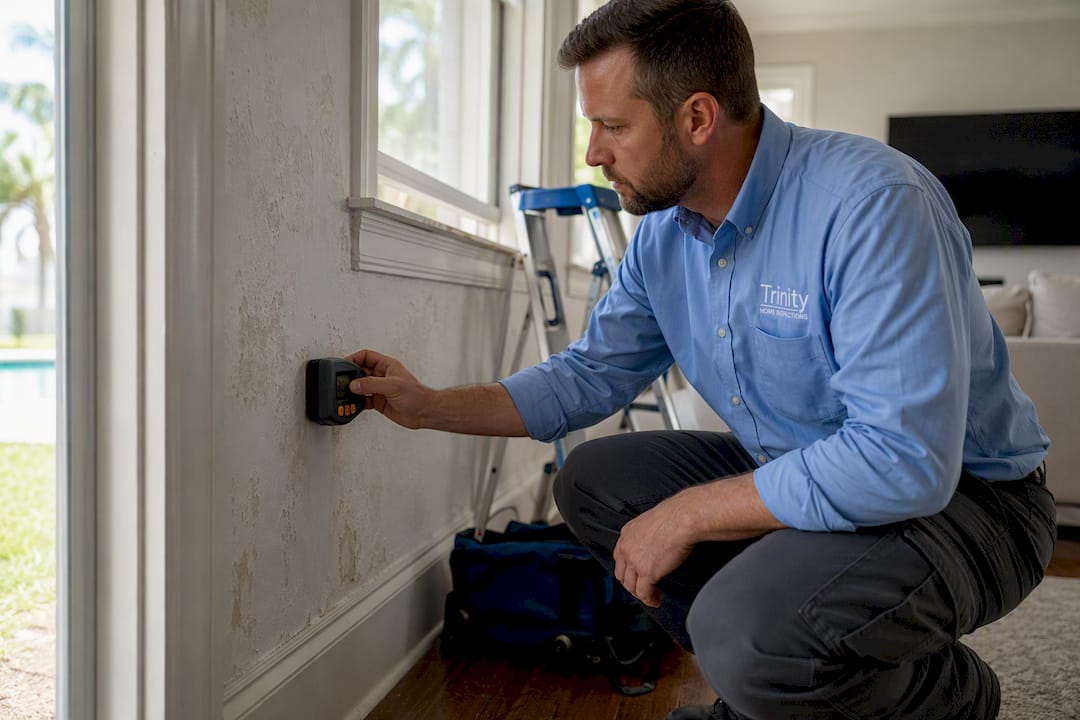
Pro Tip: Schedule your pre-listing inspection before your photographer, not after. If the inspector flags something like a moisture issue behind a wall, you’ll want to fix it before it’s the backdrop of your listing photos.
A pre-listing inspection, paid for by you, gives you the same information a buyer’s inspector will eventually surface, except you see it first and on your terms. That’s the real advantage: you choose whether to repair an issue, price around it, or disclose it plainly, instead of getting blindsided by a buyer’s inspector during a tight contingency window. Our home inspection checklist for sellers breaks down the seven areas that tend to matter most before you list.
Beyond the standard inspection, consider add-ons based on your home’s age and systems. A sewer scope makes sense for homes over 20 years old or on older clay pipe. Mold testing is worth ordering if you’ve had past water intrusion. An HVAC service call before listing avoids a buyer’s inspector flagging a unit that just needed a filter and a tune-up. If your roof has steep pitches or safety concerns, drone imaging documents its condition without anyone stepping on it.

Where and How to List a House for Sale by Owner
Getting the listing seen by the right buyers is the whole game once your home is ready.
A flat-fee MLS service puts your listing into the local Multiple Listing Service, which syndicates automatically to major real estate portals and puts your home in front of agents actively searching for their buyers. These services typically run $99 to $499 depending on the package. Free portals alone reach buyers browsing directly, but they don’t reach the buyer’s agents who are often the ones actually finding homes for their clients.
One thing to understand going in: a flat-fee MLS service lists your home but doesn’t manage the transaction. You’re still the one fielding calls, scheduling showings, and negotiating. It buys you visibility, not a project manager.
Listing essentials that make a real difference:
Accurate square footage, bedroom/bathroom count, and lot size pulled straight from your survey or tax record.
A description that leads with searchable features (updated kitchen, new roof, fenced yard) rather than vague adjectives.
Photos ordered logically: exterior first, then the rooms a buyer would walk through in person.
Optional extras worth considering depending on budget: a 3D virtual tour, a short drone flyover video, a boosted social media post targeting your zip code, printed flyers in a yard box, and a yard sign with your contact number. If you’re offering buyer-agent compensation, state it clearly in your listing since that single line often determines how many agents actively show your home to their clients.
Managing Showings Safely and Screening Serious Buyers
Not every person who requests a showing is ready to buy. Filtering early protects your time and your home.
Require proof of funds or a mortgage pre-approval letter before you confirm any showing appointment.
Use scheduled showing windows rather than open-ended access, and consider an electronic lockbox that logs entry times.
Secure valuables and personal documents before every showing, and consider being present or having a trusted person on-site for private showings.
Collect feedback after each showing with a simple text or email follow-up asking about interest level and any concerns.
Log every showing in a spreadsheet with the date, visitor name, agent (if any), and feedback, so you can spot patterns in objections.
Pro Tip: If three separate buyers mention the same concern, a dated kitchen, a musty smell in the basement, treat that as data, not coincidence. It’s telling you where to spend your next repair dollar.
For a broader sense of what buyers expect to see and ask during a walkthrough, this property viewing checklist offers a useful buyer-side perspective that can help you anticipate their questions.
What Should You Look For in an Offer Besides Price?
The highest offer isn’t always the best offer. Run every offer through the same checklist so you’re comparing apples to apples.
Purchase price relative to your target and recent comps.
Earnest money amount. A larger deposit signals a more serious, committed buyer.
Financing contingency. Cash offers close faster and carry less risk than financed ones, but a strong pre-approval from a reputable lender is still solid.
Inspection contingency terms. Note the length of the inspection period and whether the buyer can walk away for any reason or only for material defects.
Appraisal contingency. If the buyer is financing, a low appraisal can reopen price negotiations or kill the deal, so factor that risk in when comparing a financed offer to a cash one.
Proposed closing timeline. Match it against your own moving plans and your mortgage payoff timing.
When negotiating, you have more levers than just price. You can offer a seller credit toward closing costs instead of making a physical repair, shift the closing date to suit either party’s timeline, or ask for a higher earnest money deposit as reassurance that a buyer will follow through. As a general rule, respond to offers within 24 to 48 hours; buyers in an active market often move to the next listing if they don’t hear back quickly. If any contract language confuses you, particularly around contingency deadlines or default penalties, a real estate attorney’s hourly review fee is cheap insurance against a costly mistake.
What Happens Between Contract and Closing?
Once you accept an offer, the paperwork shifts from marketing documents to legal ones, and precision starts to matter more than persuasion.
The purchase agreement is the binding contract, and it should spell out price, contingencies, deadlines, included fixtures, and what happens if either party defaults. Watch closely for the inspection contingency window, the financing deadline, and any clause about who pays for what at closing. If your state has a standard form through its real estate commission, use it rather than drafting from scratch.
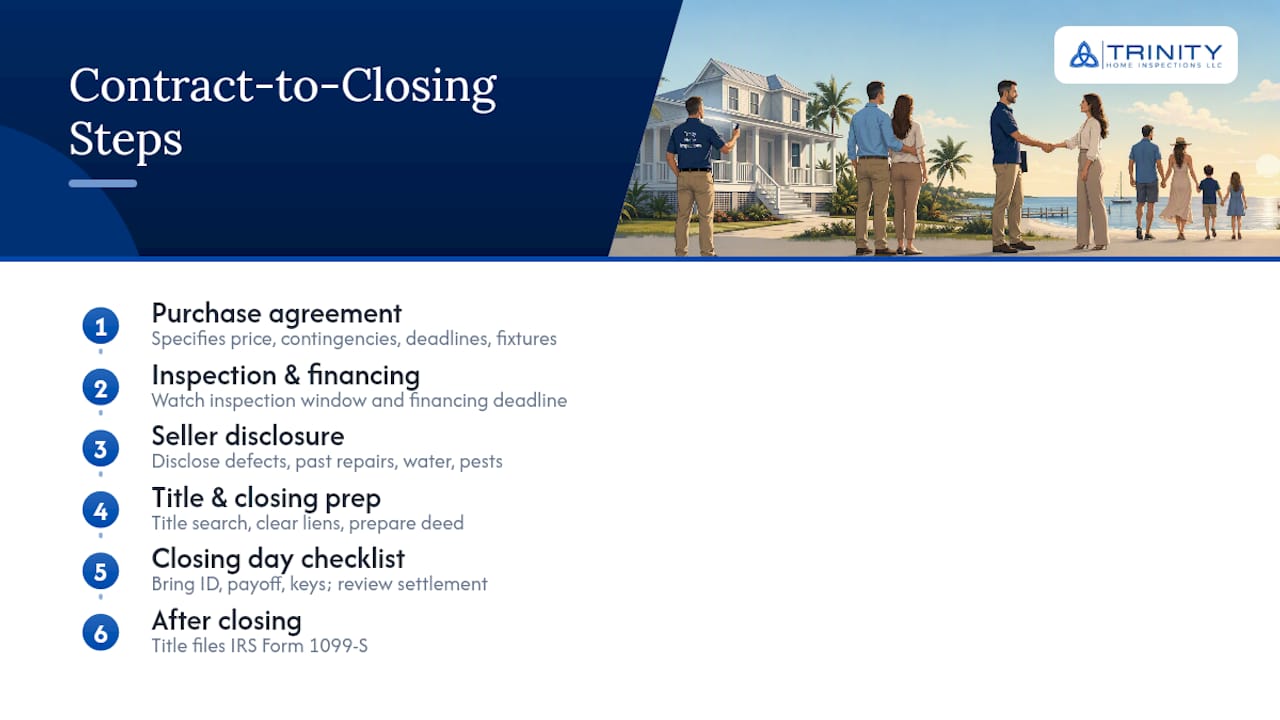
Your seller disclosure form needs to be thorough and honest about known defects, past repairs, water intrusion, pest issues, and anything material to the property’s condition. Incomplete disclosures are a frequent source of post-closing disputes, so when you’re unsure whether something counts as material, disclose it anyway. For homes built before 1978, the federal lead-based paint pamphlet has to accompany your disclosure packet, no exceptions.
A title company or real estate attorney typically handles the closing mechanics: running a full title search, clearing any liens, preparing the deed, and drafting the closing or settlement statement that itemizes every dollar changing hands. Some states effectively require an attorney at the closing table, while others rely on title or escrow companies; check your state’s specific requirement before you get to the closing table.
Statistic Callout: After closing, the title company or attorney typically files IRS Form 1099-S to report your sale to the IRS, a step most FSBO sellers don’t realize happens automatically on their behalf.
Your closing-day checklist: bring a government-issued ID, your payoff figure confirmed in writing, keys and garage remotes, and any warranty documents you’re passing to the buyer. Review the settlement statement line by line before you sign, since errors in prorated taxes or fee allocations are easier to fix before signatures than after.
How Long Does It Take to Sell a House by Owner, and What Does It Cost?
A realistic FSBO timeline runs anywhere from a few weeks to a few months, depending on your market and pricing accuracy. Budget roughly one to two weeks for prep and photography, one to four weeks of active marketing before an accepted offer, and another 30 to 45 days from contract to closing if the buyer is financing (faster for cash deals).
Delays most often come from missing paperwork (a payoff statement that takes a week to arrive), a financing contingency that stretches past its deadline, or a disclosure dispute that surfaces late. Requesting your key documents early and responding to buyer requests within a day or two closes most of that gap.
Why a Pre-Listing Inspection Pays for Itself in an FSBO Sale
A pre-listing inspection changes the tone of every negotiation that follows it. Instead of a buyer’s inspector surprising you mid-contract with a list of repair demands, you already know what’s there and you’ve decided how to handle it, fix it, price around it, or disclose it and move on.
That control shows up in fewer last-minute repair requests, more buyer confidence walking into the deal, and fewer contracts that collapse after a surprise inspection finding. It’s the single highest-leverage document in your entire FSBO paperwork stack, arguably more useful than the disclosure form itself, because it tells you what needs disclosing in the first place.
Trinity Home Inspections is InterNACHI-certified, which means the inspection follows a documented Standards of Practice rather than a checklist improvised on the day. Every pre-listing inspection includes free thermal imaging to catch insulation gaps or moisture behind walls, drone roof imaging when a roof is unsafe to walk, and a same-day digital report with photos and video so you’re not waiting a week to plan your next move.
Present findings to buyers as a complete report, not a verbal summary; transparency builds trust faster than a sales pitch ever will.
Offer a repair credit for smaller items instead of chasing contractors under a deadline.
Keep receipts for anything you do fix, since buyers and their inspectors both respond well to documented work.
Pro Tip: A seller who fixes the three cheapest items on an inspection report, a running toilet, a loose handrail, a GFCI outlet, often earns more buyer goodwill than one who spends thousands on a single big-ticket repair.
For a deeper look at how this process plays out in practice, our home inspection guide for sellers walks through preparing for and profiting from a seller-ordered inspection.
What I See Most Often in Pre-Listing Inspections
Three issues show up again and again in the pre-listing inspections we perform, and they’re rarely the dramatic ones sellers fear. The first is deferred HVAC maintenance, a system that runs fine but hasn’t had a filter change or coil cleaning in years, which reads as a red flag to a buyer’s inspector even when the unit itself is healthy. The second is minor roof flashing issues around chimneys and vents, small enough to miss from the ground but visible in drone imagery. The third is GFCI outlets that have quietly stopped tripping, a five-minute fix that otherwise becomes a safety line item on a buyer’s report.
None of these are dealbreakers, but each one, left undiscovered until a buyer’s inspection, gives that buyer leverage to renegotiate price or timeline. Fixed ahead of time, they cost a homeowner maybe $200 combined and remove three separate reasons for a buyer to get nervous.
My honest opinion after seeing this pattern repeat across coastal Alabama listings: sellers who skip a pre-listing inspection aren’t saving money, they’re just choosing to find out about these issues later, at a worse time, with less negotiating room. Call an inspector early in your process, not after you’ve already accepted an offer. Every Trinity inspection includes same-day reporting, free thermal imaging, and the option to add a sewer scope or mold test if your home’s age calls for it.
— Matt
Ready to Order Your Pre-Listing Inspection?
Selling on your own means you’re already saving on commission, and a pre-listing inspection is the one line item that protects that savings instead of eating into it. Trinity Home Inspections gives Gulf Coast Alabama sellers the same clarity a buyer’s inspector would find, except you get it first and on your schedule.
[

What’s included with a Trinity Home Inspections pre-listing inspection:
Same-day digital report with color-coded photos and video, no waiting days for results
Free thermal imaging to catch hidden moisture and insulation gaps
Drone roof imaging for steep or unsafe rooflines
Optional add-ons: sewer scope, mold testing, indoor air quality sampling, and pool/spa checks
You’ll also want your deed and permit history in hand before you list, which our property and permit search service can help pull together alongside your inspection. When you’re ready to schedule, visit our pre-listing inspection page or call 251-210-7376. You can also book directly at TrinityInspectionsLLC.com and have your report in hand the same day your inspector walks the property.
Sources
A handful of primary sources cover the legal and technical questions this checklist can’t fully answer on its own.
FAQ
What Paperwork Do You Need for a Sale by Owner?
At minimum, gather your deed, mortgage payoff statement, property survey, title report, HOA documents if applicable, and a completed seller disclosure form. Homes built before 1978 also require the federal lead-based paint disclosure and EPA pamphlet.
Does It Cost Money to List for Sale by Owner on Zillow?
Zillow’s free-for-sale-by-owner listing tool lets you post a listing at no direct cost, but it won’t syndicate to the MLS or reach agents actively searching for buyers. A flat-fee MLS service, typically $99 to $499, gets you that broader distribution.
How Much Does a Pre-Listing Inspection Cost?
Pre-listing inspections generally run in the same range as a buyer’s inspection, roughly $300 to $500 depending on home size and add-ons like a sewer scope or mold testing.
Do I Need an Attorney to Sell My House by Owner?
It depends on your state. Some states require an attorney at closing, while others rely on title or escrow companies to handle the paperwork, so check your state real estate commission’s requirements before you accept an offer.
What Is the Biggest Risk of Selling a House Without an Agent?
Incomplete or inaccurate disclosures create the most legal exposure for FSBO sellers, since gaps in a seller disclosure form are a common source of disputes after closing. A pre-listing inspection helps you disclose accurately because you know what’s actually there before you sign anything.
Recommended

