
Roof Drip Edge Life Expectancy: Gulf Coast Alabama Guide

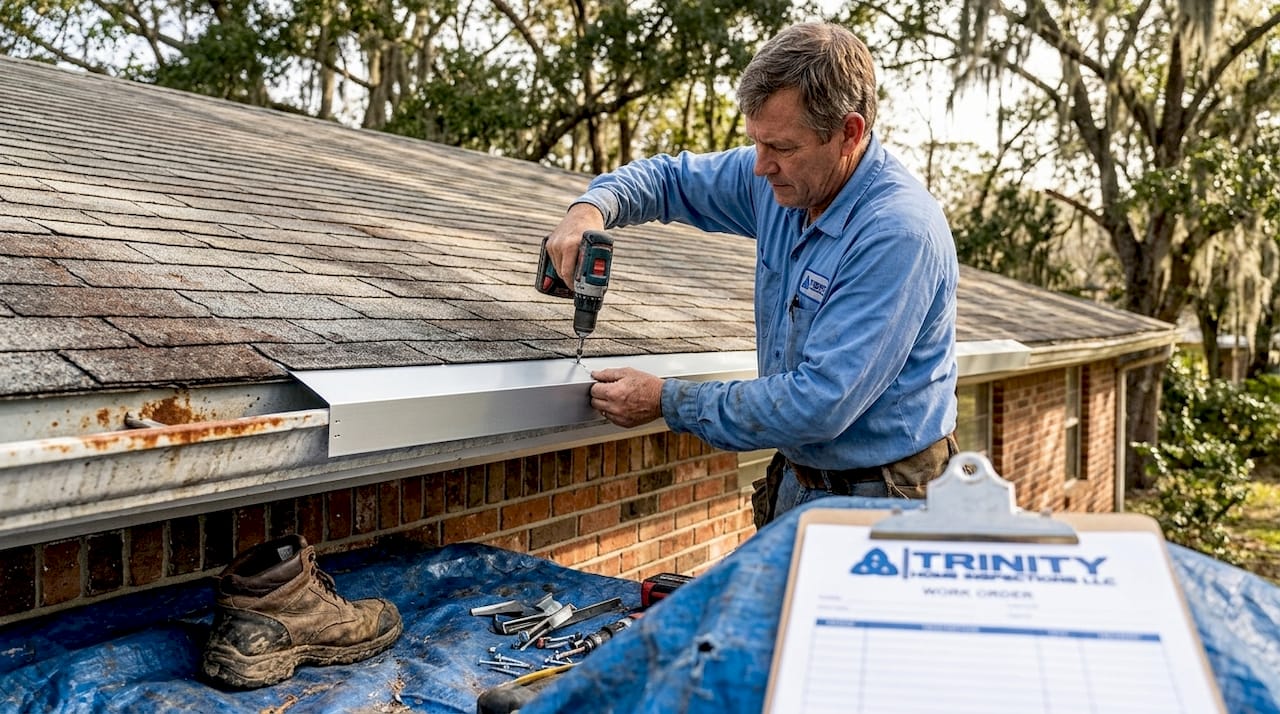
Most Gulf Coast Alabama homeowners assume their roof drip edge will last as long as their shingles, but coastal salt air can cut that lifespan in half. In our hurricane-prone region, understanding roof drip edge life expectancy becomes critical for protecting your fascia, foundation, and wallet. This guide breaks down material-specific lifespans, explains how to spot early failure signs, and shares maintenance routines that can add years to your drip edge performance.
Key takeaways
Point | Details |
Metal drip edges typically last 20-30 years | Aluminum and galvanized steel offer standard durability under normal conditions, but coastal environments alter these expectations significantly. |
Aluminum outperforms galvanized steel in salt air | Coastal properties see aluminum lasting 20-40+ years versus galvanized steel’s 10-20 years due to superior corrosion resistance. |
Twice-yearly cleaning extends lifespan | Regular debris removal, fastener checks, and rust inhibitor application prevent premature failure and catch damage early. |
Copper offers longest life at premium cost | Copper drip edges can last 50+ years in coastal conditions but cost 3-4 times more than aluminum alternatives. |
Annual post-storm inspections are essential | Hurricane season damage often goes unnoticed until water infiltration causes expensive fascia or soffit rot. |
Understanding roof drip edge life expectancy by material
A roof drip edge is the metal flashing installed along roof edges that channels water away from fascia boards and into gutters. Without it, rainwater seeps behind gutters, rotting wood and causing foundation issues. Roof drip edge life expectancy is typically 20-30 years for metal types like aluminum and galvanized steel under normal conditions, but Gulf Coast Alabama’s coastal environment changes everything.
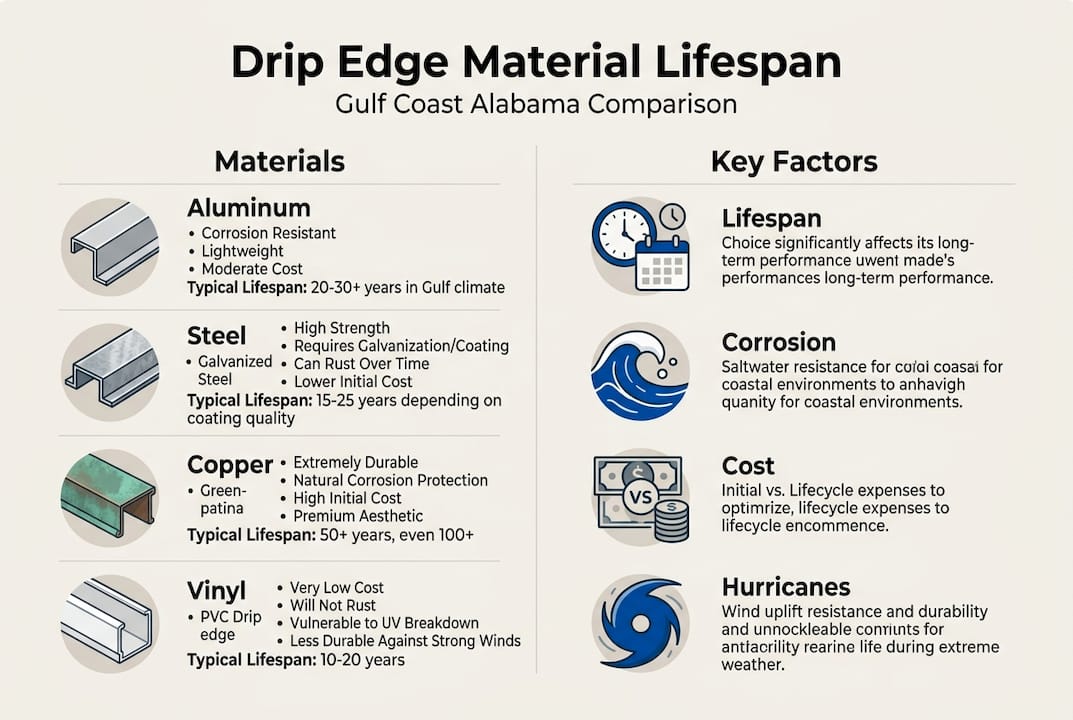
Four main materials dominate the market. Aluminum creates a natural oxide layer that resists salt corrosion. Galvanized steel features a zinc coating that eventually wears through. Copper develops a protective patina and outlasts all competitors. Vinyl or plastic options exist but rarely suit coastal applications.
In Gulf Coast Alabama coastal environments with salt air and hurricanes, aluminum drip edges last 20-40+ years due to natural oxide layer resisting corrosion, outperforming galvanized steel which lasts 10-20 years. The salt accelerates zinc coating breakdown on galvanized products, exposing bare steel to rust. Copper pushes beyond 50 years but demands higher upfront investment. Vinyl degrades under UV exposure and hurricane winds, typically failing within 5-10 years in our region.
Material | Expected Lifespan (Gulf Coast) | Corrosion Resistance | Cost Factor |
Aluminum | 20-40+ years | Excellent | Moderate |
Galvanized Steel | 10-20 years | Fair to Good | Low |
Copper | 50+ years | Superior | High |
Vinyl/Plastic | 5-10 years | Poor | Very Low |
Material selection matters more in coastal homes where moisture and salt create aggressive conditions. The difference between aluminum and galvanized steel becomes stark after just 5-7 years of exposure. Homeowners who choose based solely on initial cost often face replacement expenses twice as frequently.
Pro Tip: If you’re buying a coastal property, ask when the drip edge was last replaced and what material was used. Galvanized steel installed 15+ years ago likely needs replacement soon.
Common signs of drip edge failure and maintenance essentials
Catching drip edge problems early saves thousands in fascia board replacement and water damage repairs. Signs of failure include rust, loose fasteners, leaks, fascia rot, peeling paint, water stains; inspect annually especially post-hurricane. You might also notice gutters pulling away from the roofline or water pooling against your foundation after rain.
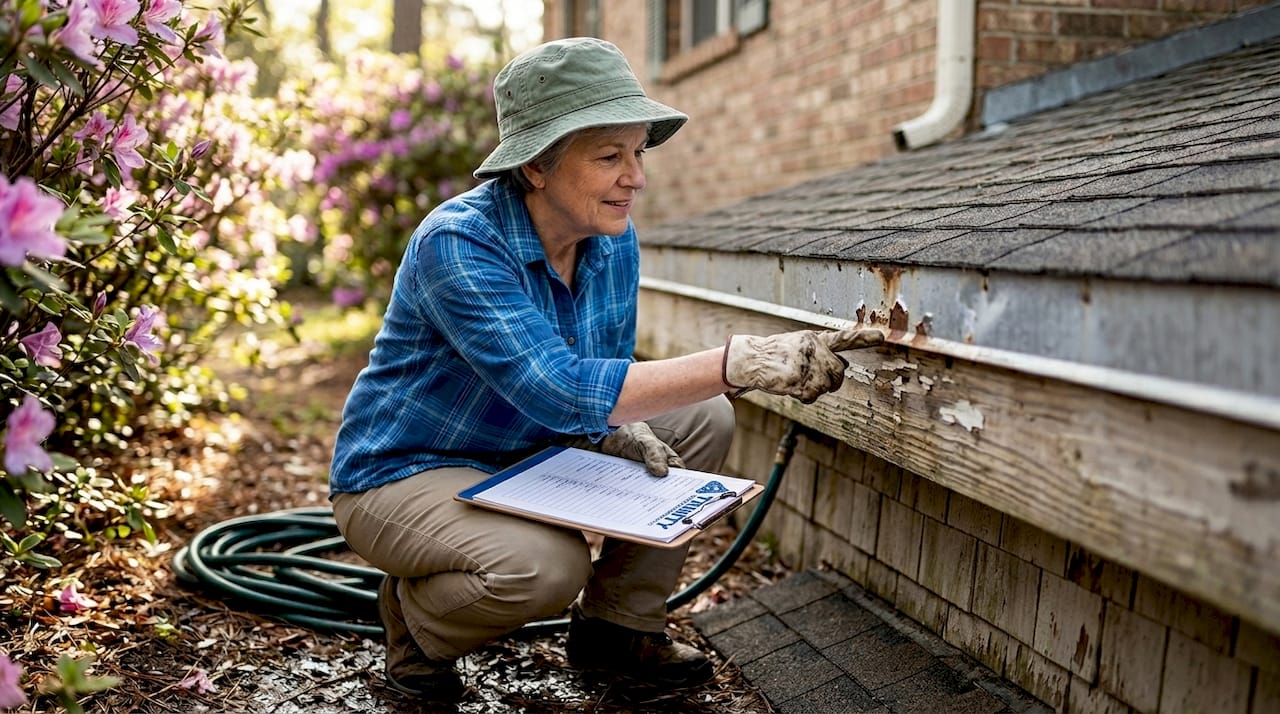
Visible rust spots, especially along seams and fastener points, signal the protective coating has failed. Loose or missing fasteners allow wind to lift edges, creating entry points for wind-driven rain. Water stains on fascia boards or soffit panels indicate the drip edge no longer directs moisture properly. Peeling paint on nearby wood trim suggests prolonged water exposure.
Establish a regular inspection schedule. Check your roof components twice yearly, ideally in spring and fall. After any tropical storm or hurricane, inspect within a week while damage is fresh and easier to document for insurance claims.
Maintenance includes cleaning debris twice yearly, tightening fasteners, applying rust inhibitors/sealants, using stainless steel fasteners in coastal areas, and checking after storms. Remove leaves, pine needles, and sand that trap moisture against metal surfaces. Tighten any loose screws or nails before they work completely free. Apply marine-grade rust inhibitor to any exposed metal or scratched areas. Reseal joints where sections meet using polyurethane or silicone caulk rated for exterior use.
Stainless steel fasteners cost more but won’t corrode like standard galvanized nails in salty air. This single upgrade can add 5-10 years to your drip edge lifespan by preventing rust stains and structural weakness around attachment points. Pay special attention to gutter connections where water flow concentrates and corrosion accelerates.
Remove all debris from drip edge surface and gutter line
Inspect fasteners and tighten or replace any loose hardware
Check for rust spots, dents, or separation at joints
Apply rust inhibitor to exposed metal areas
Reseal joints and end caps with exterior-grade caulk
Document condition with photos for future comparison
Pro Tip: Schedule your spring maintenance right before hurricane season starts in June. A well-maintained drip edge handles storm water far better than one clogged with winter debris.
Choosing the right drip edge and adapting for coastal conditions
Gulf Coast Alabama homes face unique challenges that standard drip edge installations can’t always handle. Salt spray travels miles inland, corroding metal faster than in non-coastal regions. Sand carried by wind acts like sandpaper, wearing through protective coatings. Hurricane winds drive rain horizontally, finding every gap in your roof edge protection.
Standard drip edges fail 40-60% faster in coastal sand/wind; use extended flange Type D/F styles for wind-driven rain. Type D drip edges feature a wider flange that extends further under shingles, creating better water channeling. Type F designs add a hemmed edge that stiffens the profile and resists wind uplift. Both styles outperform basic L-shaped drip edges in severe weather.
Material compatibility with your gutter system prevents galvanic corrosion. When dissimilar metals touch in the presence of moisture, one corrodes faster. Aluminum drip edges paired with copper gutters will corrode at contact points. Match materials or use plastic spacers and isolation tape to separate different metals. Some sources favor galvanized steel for strength in winds but agree aluminum superior in salt exposure; always match material to gutters to avoid galvanic corrosion.
Factor | Consideration | Coastal Recommendation |
Material | Corrosion resistance vs. cost | Aluminum or copper |
Style | Wind and rain protection | Type D or Type F |
Fasteners | Longevity in salt air | Stainless steel only |
Gutter Match | Prevent galvanic corrosion | Same metal or isolated |
Coating | UV and abrasion resistance | Kynar or powder coat |
Consider these selection factors when replacing or installing new drip edge. Your roof pitch affects water velocity and required flange width. Higher pitches need less extension; low slopes require maximum coverage. Local building codes may specify minimum standards after recent hurricane damage. Your budget balances initial cost against replacement frequency over 20-30 years.
Existing gutter material often dictates drip edge choice unless you’re replacing both simultaneously. The fascia board condition matters too. Rotted wood won’t hold fasteners securely, requiring repair before new drip edge installation provides any protection. Proper ventilation strategies also reduce moisture that accelerates both wood and metal deterioration.
Pro Tip: Consult a local roofing contractor familiar with Gulf Coast conditions before selecting materials. They know which products actually perform well in our specific salt air and hurricane environment, not just what manufacturers claim.
Practical care tips to maximize your roof drip edge lifespan
Knowing what to do matters less than actually doing it consistently. These actionable steps turn knowledge into protection for your home.
Spring inspection and cleaning: Clear all debris from drip edge and gutters in April or May. Remove leaves, pine needles, sand, and any vegetation growing in accumulated dirt. Flush gutters thoroughly to verify water flows freely to downspouts. Check that drip edge directs water into gutters, not behind them.
Fastener security check: Walk the perimeter of your roof edge from ground level with binoculars or a ladder if safe. Look for loose, missing, or rusted fasteners. Tighten any loose screws or nails. Replace corroded fasteners with stainless steel alternatives. Verify the drip edge sits flush against fascia without gaps.
Joint and seal inspection: Examine where drip edge sections connect. Look for separated joints, cracked caulk, or gaps that allow water infiltration. Scrape out old, failed caulk completely. Apply fresh exterior-grade polyurethane or silicone sealant. Smooth the bead to shed water effectively.
Rust treatment: Address any rust spots immediately before they spread. Wire brush loose rust and flaking paint. Apply rust converter to transform remaining rust into a stable surface. Coat treated areas with rust-inhibiting primer and matching paint. This adds years to galvanized steel drip edges.
Post-storm assessment: After any tropical storm or hurricane, inspect your roof within one week. Look for lifted edges, new dents, or displaced sections. Document damage with photos and measurements for insurance claims. Temporary repairs prevent small problems from becoming major water intrusion.
Fall maintenance cycle: Repeat debris cleaning in October or November after leaves drop. This prevents winter moisture from sitting against metal surfaces for months. Check all previous repair areas to verify they’re still sealed and secure.
Maintenance protocols emphasize using appropriate materials for coastal environments. Standard zinc-plated screws rust through in 2-3 years near the coast. Stainless steel costs three times more but lasts the entire drip edge lifespan. Marine-grade sealants resist UV degradation and salt exposure far better than standard caulks.
Pro Tip: Keep a home maintenance journal noting each inspection date, what you found, and what you repaired. This record helps you spot deterioration patterns and proves maintenance history if you sell. It also helps identify metal roof issues before they become deal breakers.
Protect your Gulf Coast home with expert inspections
While regular DIY maintenance catches obvious problems, professional inspections reveal issues you might miss. Trinity Home Inspections combines InterNACHI certification with local Gulf Coast Alabama expertise to assess your entire roofing system, including drip edge condition and performance. Our thermal imaging detects moisture intrusion before visible damage appears, and our drone technology safely inspects roof edges without risking falls.

Whether you’re buying, selling, or simply maintaining your coastal property, our same-day reports give you clear priorities and actionable next steps. We test every accessible component and document findings with photos and videos you can share with contractors. Our pre-listing inspections help sellers address drip edge and roof issues before buyers discover them, often increasing sale prices and reducing negotiation friction. We also provide permit and deed research to verify roof work was properly documented. Schedule your inspection with Trinity Home Inspections and gain the clarity you need to protect your investment.
Frequently asked questions
What is a roof drip edge and why is it important?
A roof drip edge is metal flashing installed along roof perimeters that channels water into gutters and away from fascia boards. It prevents water from seeping behind gutters where it causes wood rot, foundation damage, and interior water intrusion. Without proper drip edge, even new roofs fail to protect your home adequately.
How often should I inspect and maintain my roof drip edge in Gulf Coast Alabama?
Inspect your drip edge at least annually, ideally in spring and fall. Add an inspection after every tropical storm or hurricane, even if you see no obvious damage. Clean debris and check fasteners twice yearly, treating this as essential maintenance rather than optional upkeep. Coastal conditions demand more frequent attention than inland properties.
Which drip edge material lasts longest in coastal environments?
Copper drip edges last 50+ years in salt air but cost significantly more upfront. Aluminum offers the best balance of longevity (20-40+ years), corrosion resistance, and reasonable cost for most Gulf Coast homeowners. Galvanized steel’s lower initial price rarely justifies its shorter 10-20 year coastal lifespan and higher replacement frequency.
Can I perform drip edge maintenance myself or should I hire a professional?
Basic maintenance like debris removal, fastener tightening, and visual inspections are safe DIY tasks for most homeowners. However, professional inspections catch subtle separation, hidden water damage, and structural issues you might miss. After major storms, professionals also document damage properly for insurance claims and assess whether repairs or replacement make better financial sense.
Recommended
