
How Sturdy Are Roof Tiles? Durability Facts for Gulf Coast Homes

When you’re buying or selling a home along the Gulf Coast of Alabama, the roof over your head is never just an aesthetic feature. It’s your first line of protection against hurricane-force winds, hail, and the relentless humidity that defines this region. Not all roof tiles are built the same, and the difference between a tile that holds up through a Category 3 storm and one that fails under the first serious gust often comes down to lab-tested ratings, material science, and installation methods that most buyers never think to ask about. Clay and concrete roof tiles are specifically designed and tested for severe weather impacts, including hurricane-force wind conditions, damaging hail, and freeze-thaw cycles, but that’s only the beginning of what you need to know.
Key Takeaways
Point | Details |
Lab tests reveal true strength | Roof tile sturdiness is proven through standardized impact and wind testing, not just marketing claims. |
Installation quality is vital | Even the best tile materials can fail if attachment and fastening systems don’t meet code or test requirements. |
Seek independent ratings | Always verify UL 2218 or FM 4473 ratings and wind-speed certifications when buying or selling property. |
Gulf Coast needs extra scrutiny | Homes in hurricane-prone areas should demand higher-rated tiles and check actual installation against manufacturer specs. |
What does ‘sturdy’ mean for roof tiles?
The word “sturdy” gets used loosely in real estate listings and contractor bids. For roof tiles, though, sturdiness has a precise, testable meaning rooted in laboratory simulations of the exact weather events that threaten Gulf Coast homes.
In the roofing industry, sturdiness is measured against specific failure points. These include cracking under impact, displacement or detachment in high winds, and long-term degradation from moisture cycling. When a manufacturer calls a tile “sturdy,” they should be pointing to test results, not just tradition or marketing language.
“Roof tile sturdiness is not a feeling or a guess. It is a measurable outcome tied to standardized lab procedures that simulate real-world storm conditions, and buyers deserve to see those numbers before they close.”
The two most recognized standards in the industry are UL 2218 and FM 4473. UL 2218 is an impact resistance test developed by Underwriters Laboratories, where steel balls simulate hail of varying sizes and are dropped from specific heights onto a tile surface. FM 4473 is a similar standard from FM Approvals that uses slightly different methods but benchmarks the same core performance. Both use class ratings to make comparison easy.
Here’s what those class ratings mean in practical terms:
Class 1: Passes impact from a 1.25-inch diameter projectile
Class 2: Passes impact from a 1.5-inch diameter projectile
Class 3: Passes impact from a 1.75-inch diameter projectile
Class 4: Passes impact from a 2-inch diameter projectile (the highest rating)
For Gulf Coast Alabama, where hailstorms can accompany hurricanes and severe thunderstorms, Class 4 is the rating you want to see on any tile product under serious consideration.
Beyond impact, sturdiness also depends on how a tile is attached to the roof deck. The fastening system, including nails, screws, adhesives, and foam closures, determines whether a tile stays in place under extreme wind uplift. A tile that earns a Class 4 impact rating in a lab can still fail in a storm if it was installed with inadequate fasteners. Understanding tornado resistant house materials gives you a broader picture of how attachment systems and materials work together under extreme pressure.
This is why evaluating sturdiness means looking at both the tile itself and the complete installation system. One without the other is an incomplete picture.
Comparing tile materials: Clay, concrete, and alternative options
With sturdiness standards defined, it’s vital to know how real-world tile options compare. Here’s how major categories perform when Gulf Coast conditions are the benchmark.
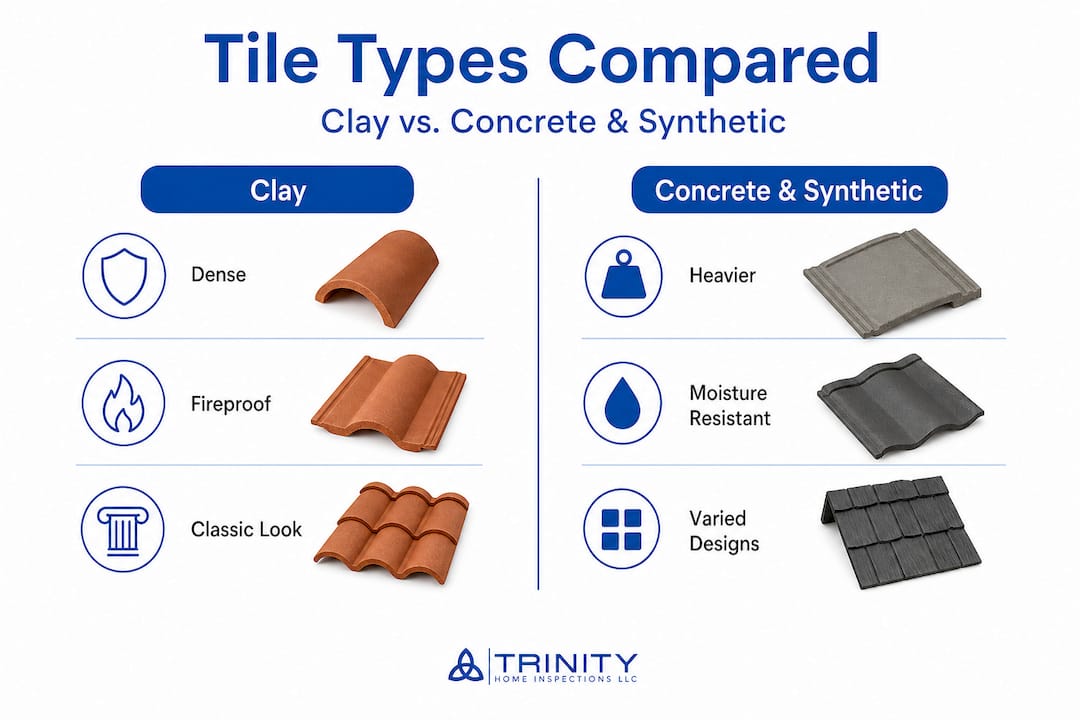
Clay tiles have been used in hot, coastal climates for centuries, and for good reason. They are dense, fire resistant, and hold up well against moisture intrusion. In terms of impact resistance, high-quality clay tiles regularly achieve Class 3 and Class 4 ratings. Their weight, which is often 9 to 12 pounds per square foot, also helps them resist wind uplift when properly fastened. The trade-off is that clay tiles are brittle under direct point impact, meaning a well-aimed piece of storm debris can crack an individual tile even if the overall system performs well.
Concrete tiles are heavier than clay, typically ranging from 9.5 to 12 pounds per square foot, and they tend to absorb slightly more moisture over time. However, concrete tiles are often more affordable than clay and can achieve comparable impact and wind ratings when manufactured to modern standards. High wind resilience in tile systems is reliably achieved when concrete tiles are installed to specified fastening requirements, especially in high-wind regions like coastal Alabama.
Synthetic tiles are a growing category. These products are typically made from rubber, plastic composites, or recycled materials, and they are engineered to mimic the look of clay or concrete while reducing weight. Some synthetic options achieve Class 4 impact ratings and can perform well in wind tests. However, product quality in this category varies significantly. Before accepting any synthetic tile as a durable option for a Gulf Coast home, you need to see the actual test documentation for that specific product, not just a general claim from the manufacturer.
Tile type | Typical weight (per sq ft) | Impact class potential | Wind resistance | Moisture resistance |
Clay | 9 to 12 lbs | Class 3 to 4 | High (with proper fastening) | Excellent |
Concrete | 9.5 to 12 lbs | Class 3 to 4 | High (with proper fastening) | Good to moderate |
Synthetic | 1 to 5 lbs | Class 4 (product dependent) | Varies by product | Good (product dependent) |
Pro Tip: When reviewing a home with a synthetic tile roof, always ask for the specific product name and manufacturer documentation. A claim of “synthetic tile” with no supporting test data tells you very little about actual storm performance.
For buyers interested in how roofing choices connect to energy efficiency and long-term property value, energy efficient metal roofing is another option worth understanding as a comparison point. Metal roofing systems have their own impact and wind ratings, and knowing how tile compares helps you make an informed decision.
One more factor that applies across all tile types is whether the product meets the specific requirements for your hurricane zone. Alabama’s Gulf Coast falls under stringent wind zone classifications, and some tile systems that perform adequately in inland areas may not meet the higher standards required within miles of the coast. If you’re evaluating a home in Gulf Shores, Orange Beach, Daphne, or Foley, the product’s hurricane zone rating matters just as much as its general class rating. Looking into Alabama’s FORTIFIED home program is also worth your time, since FORTIFIED standards go beyond basic code and specifically address roof assembly performance in high-wind events.
How roof tiles are tested: Hail, wind, and extreme weather
Once you’ve compared tile materials, understanding how their toughness is actually measured in the lab will help you cut through product claims with confidence.
Laboratory testing for roof tiles covers three main threat categories: impact from hail and debris, wind uplift, and environmental weathering. Each test uses controlled conditions to produce a repeatable, comparable result. Here’s how the primary tests work:
UL 2218 impact test: Lab technicians drop steel balls of specific diameters from prescribed heights onto the tile surface. The ball sizes correspond to Class 1 through Class 4, with Class 4 using a 2-inch diameter ball dropped from 20 feet. After impact, the tile is inspected for cracks, splits, or fractures that would compromise water resistance.
FM 4473 impact test: This standard uses a pneumatic launcher to fire projectiles at the tile surface at velocities that simulate hail falling at terminal speed. The FM 4473 class ratings align closely with UL 2218, but the projectile delivery method more closely replicates actual storm conditions. Both standards are accepted by insurers and building codes.
High-wind assembly testing: Full roof system assemblies, meaning tiles installed on a test deck with the specified fastening system, are placed in a pressure chamber or wind tunnel. Pressure is applied from below and above to simulate the uplift forces that hurricanes generate. Some assemblies are tested at wind speeds exceeding 200 MPH.
Freeze-thaw cycling: While less critical for Gulf Coast Alabama than for northern states, tiles are still exposed to repeated freezing and thawing to test for structural degradation over time. A tile that absorbs moisture and then cracks under freeze-thaw cycles will also fail faster under the thermal stress common in hot, humid climates.
Fire resistance testing: Roof tiles are classified as Class A, B, or C for fire resistance. Class A is the highest. Clay and concrete tiles are inherently non-combustible and typically achieve Class A ratings without additional treatment.
Here’s a simplified reference table for the most relevant test standards:
Test standard | What it measures | Class system | Relevance for Gulf Coast |
UL 2218 | Hail/impact resistance | Class 1 to 4 | High: hail accompanies Gulf storms |
FM 4473 | Hail/impact resistance | Class 1 to 4 | High: accepted by most Gulf Coast insurers |
High-wind assembly | Wind uplift resistance | Pass/Fail at specified MPH | Critical: hurricane zones require verified assemblies |
ASTM C1167 | Tile durability and absorption | Grading scale | Moderate: relates to long-term moisture performance |
For Gulf Coast buyers, understanding why roof inspections matter in coastal Alabama ties directly into these testing categories. A certified inspector can identify whether installed tiles show signs of impact damage, improper fastening, or moisture intrusion that would fail these standards in practice.
It is also worth noting that testing must specify the complete assembly, not just the tile alone. A tile can pass UL 2218 as an individual product, but if the fastening system used during installation does not match the tested configuration, the wind uplift performance of the actual roof will not match what the lab result suggests. This is one of the most common gaps between a tile’s rated performance and what you actually get in a storm. For additional context on storm protection measures for homes, understanding the interaction between roofing systems and other building envelope components gives a fuller picture of storm readiness.
How buyers and sellers can judge roof tile sturdiness in practice
Armed with a scientific understanding, here’s how you can translate ratings and testing into smart decisions on your next transaction.
The most common mistake buyers make is accepting a seller’s statement that the roof is “tile and in good shape” without digging into the specifics. The most common mistake sellers make is assuming that having tile automatically means having a strong roof. Both assumptions can lead to costly surprises after closing.
Here are the key steps for evaluating roof tile sturdiness in a real transaction:
Request product documentation: Ask for the tile manufacturer’s name, product line, and any available test reports. A reputable seller or builder should be able to provide this. If documentation is unavailable, treat that as a yellow flag and plan for independent verification.
Verify the impact class rating: Confirm whether the installed tiles carry a UL 2218 or FM 4473 class rating, and what class they achieved. For Gulf Coast Alabama, Class 4 is the standard you should aim for in both new purchases and pre-listing preparation.
Inspect the fastening system: A professional inspection should note whether tiles are single-nailed, double-nailed, or foam set. The fastening configuration directly affects wind uplift performance. A tile that is single-nailed to save installation time may not achieve the wind resistance rating the product is capable of.
Look for post-storm repair history: Ask whether any tiles were replaced after major storms, including hurricanes, tropical storms, or severe hail events. Documented repairs are not necessarily a problem, but undocumented repairs or mismatched tiles can signal hidden water damage or structural issues beneath the surface.
Check local and state code requirements: Baldwin and Mobile counties have specific wind speed design requirements based on proximity to the coast. Your inspector should know what those thresholds are and whether the installed roofing system appears to meet them.
Review your roof maintenance history: A seasonal roof maintenance checklist gives you a practical framework for what should have been done and what the current condition reveals about past upkeep.
Pro Tip: Pay close attention to the roof drip edge condition during any tile roof inspection. A failing or improperly installed drip edge can allow water to migrate under the tile system even when the tiles themselves are intact, causing hidden rot and moisture damage that only shows up later.
For sellers, having this documentation ready before you list is a genuine advantage. Buyers who can verify that the roof tiles carry Class 4 ratings and were installed to hurricane zone specifications are far more likely to move confidently toward closing. For buyers, the same documentation becomes negotiating leverage if ratings or installation details fall short of the regional standard.
The real story behind roof tile strength: Lessons for Gulf Coast property buyers
Here is something that does not get said enough: manufacturer marketing materials for roof tiles are almost universally optimistic, and they are specifically written to avoid making the kind of specific, comparable claims that would allow you to hold the product accountable.
You will see language like “engineered for extreme weather” or “hurricane tested” on packaging and websites without a single class rating, specific wind speed, or reference to a named standard. That language means nothing unless it is backed by a specific test result from an independent laboratory under a recognized standard like UL 2218 or FM 4473. If a manufacturer cannot or will not point you to those numbers, the marketing claim deserves no weight in your decision.
The second reality is that improper installation wipes out the value of a highly rated tile almost entirely. We have seen homes on the Gulf Coast where the tile product itself carried an excellent Class 4 impact rating and a tested wind assembly at 150 MPH, but the tiles were single-nailed by an installer cutting corners on labor time. When a storm came through, those tiles lifted, cracked, and failed in ways the product’s test data never predicted, because the test assumed the correct fastening method was used. The product was not the problem. The installation was.
This is why a physical inspection of the roof system, including examination of tile fastening, underlayment condition, and flashing details, is not optional for a Gulf Coast home transaction. It is the only way to bridge the gap between what the product is rated for and what is actually protecting the home. Understanding the full picture of roof ridge vent performance is another example of how system-level details affect real-world performance in ways that product specs alone cannot capture.
The buyers and sellers who protect themselves best are the ones who treat roof tile sturdiness as a documentation exercise, not a visual impression. They ask for the paperwork, they verify the installation method, and they get an independent inspection from someone qualified to evaluate both. That approach may feel like extra work before closing, but it is far less work than dealing with a storm-damaged roof after you own the property.
Get clarity on your roof’s true durability before you buy or sell
When you are making one of the biggest financial decisions of your life, you deserve more than a visual glance at the roof and a handshake. You deserve independent, documented verification of what is actually up there and whether it is built to withstand what Gulf Coast Alabama weather delivers.
[
At Trinity Home Inspections, we provide InterNACHI-certified inspections specifically designed for buyers and sellers across Baldwin, Mobile, Escambia, Washington, Monroe, and Clarke counties. Our inspectors walk roofs, use FAA-certified drones when walking is unsafe, and document tile condition, fastening systems, and visible wear with high-resolution photos and video. Same-day reports mean you get answers before momentum stalls. If you are selling, our pre-listing inspections help you get ahead of surprises and position your home with confidence. We can also assist with permit and deed research so your transaction has a clean paper trail from the start. Reach out today and let us give you the clarity your investment deserves.
Frequently asked questions
What is the most durable type of roof tile for hurricanes?
Concrete and clay roof tiles are proven to offer high wind and impact resistance when installed with proper attachment, with some tested for hurricane-force winds up to 200 MPH in full assembly configurations.
How do I know if my roof tiles are impact resistant?
Check for UL 2218 or FM 4473 class ratings on your product documentation or home inspection report, since hail resistance benchmarks using those standards confirm actual impact performance.
Does roof tile installation matter as much as the tile material?
Yes, because high wind resilience is only achieved when tiles are installed to the specific fastening requirements used during testing, meaning poor installation can negate even the strongest material rating.
Are laboratory test ratings required by building codes on the Gulf Coast?
Local and state building codes in Alabama’s hurricane zones typically reference or require compliance with FM and UL tile roofing standards, so verified test ratings are not just helpful, they are often mandatory.
Recommended