
Replace an Old Electrical Panel: Gulf Coast Inspection Checklist

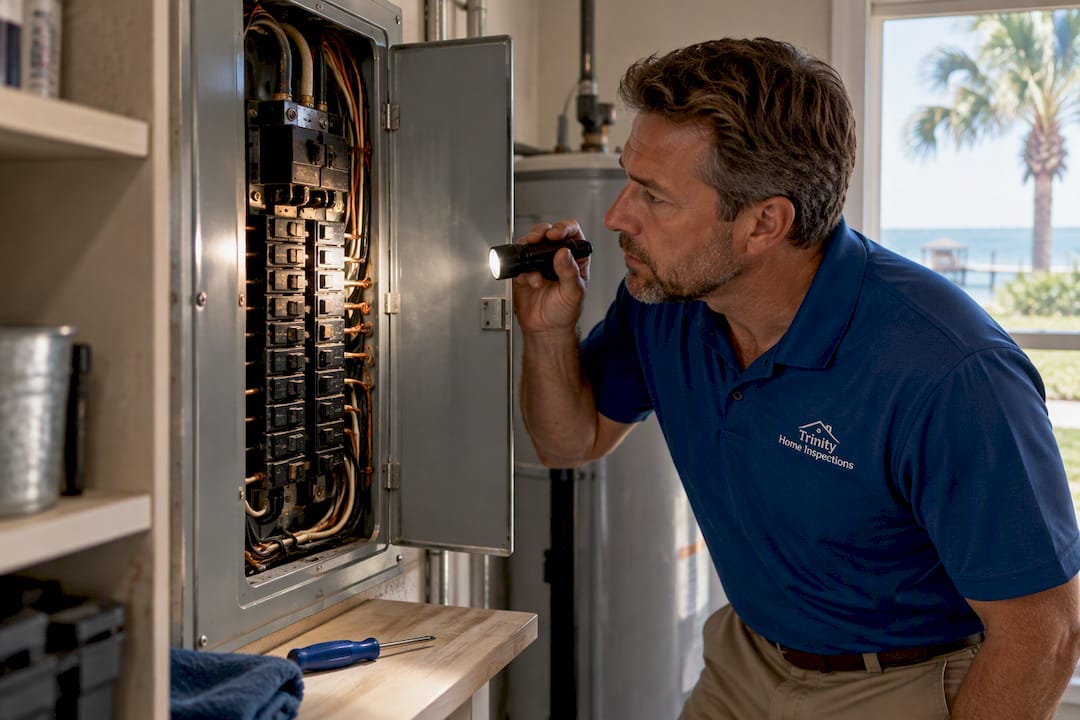
Replace an old electrical panel now if it shows scorch marks, a burning smell, a warm cover plate, or carries a recalled brand name like Federal Pacific Stab-Lok. If none of those apply but the panel is decades old, trips repeatedly, or can’t handle an EV charger or heat pump you’re planning to add, schedule a professional inspection before you decide anything. When in doubt, a licensed electrician’s written load calculation settles the question with facts instead of guesswork.
TL;DR:
Most old panels with known defective brands like Federal Pacific or Zinsco should be replaced immediately, regardless of age or condition.
Repeated trip failures, signs of overheating, corrosion, or no capacity for new circuits indicate the need for panel replacement rather than repair.
A home’s electrical demand, especially when adding EV chargers or heat pumps, often exceeds the capacity of older panels, making an upgrade essential.
A load calculation from a licensed electrician, along with a permit and proper inspection, is necessary before upgrading or replacing the panel.
Cost for a professional panel replacement typically ranges from $3,000 to $5,000, with full documentation and thermal imaging recommended for safety and accuracy.
Signs Your Old Electrical Panel Needs Replacing
Most panel failures don’t announce themselves with fireworks. They show up as small, easy-to-dismiss annoyances that quietly get worse. Here’s the checklist we use when we’re standing in front of a panel trying to decide if it’s still doing its job.
Breakers trip often, or won’t trip at all. Frequent trips usually mean the circuit is overloaded. A breaker that never trips, even under an obvious overload, is worse. It’s failed in the “on” position and can’t protect the wiring behind it.
Burning smells, scorch marks, or buzzing at the panel. Any of these is a stop-what-you’re-doing signal. The CPSC treats smoke, scorching, and heat at an electrical panel as an immediate safety issue, not a maintenance item.
The panel is warm to the touch. A panel should feel cool. Warmth almost always points to a loose connection or overloaded breaker generating resistance heat.
The brand is Federal Pacific (FPE Stab-Lok), Zinsco, or Pushmatic. These names carry documented histories of breakers that fail to trip during overloads, and replacement is broadly recommended regardless of age or apparent condition.
It’s a fuse box or split-bus panel. Fuse boxes lack modern circuit protection features, and split-bus panels have no single main disconnect, which slows down emergency shutoff.
Corrosion, rust on the lugs, or a missing dead-front cover. Along the Gulf Coast, salt air accelerates corrosion inside outdoor panels faster than most homeowners expect, even on panels that look fine from a few feet away.
No room for new circuits. Tandem breakers stacked into every open slot, or a flat “no room” from your electrician, means the panel has maxed out.
Lights dim or flicker when the AC or a large appliance kicks on. That’s a load or connection problem, and it tends to get worse, not better, over time.
You’ve paid for the same repair more than once. Repeated service calls for the same symptom usually cost more over two years than a full replacement would have.
Pro Tip: Take a photo of your panel’s interior label next time an electrician is on-site. Brand, model, and amperage are usually stamped right on it, and having that photo saved on your phone makes every future conversation with a contractor faster.
Panel Capacity, EV Chargers, and Load Calculations
Age isn’t the only reason to upgrade. Capacity matters just as much, and it’s the reason a perfectly functional 15-year-old panel can still be the wrong panel for your house.
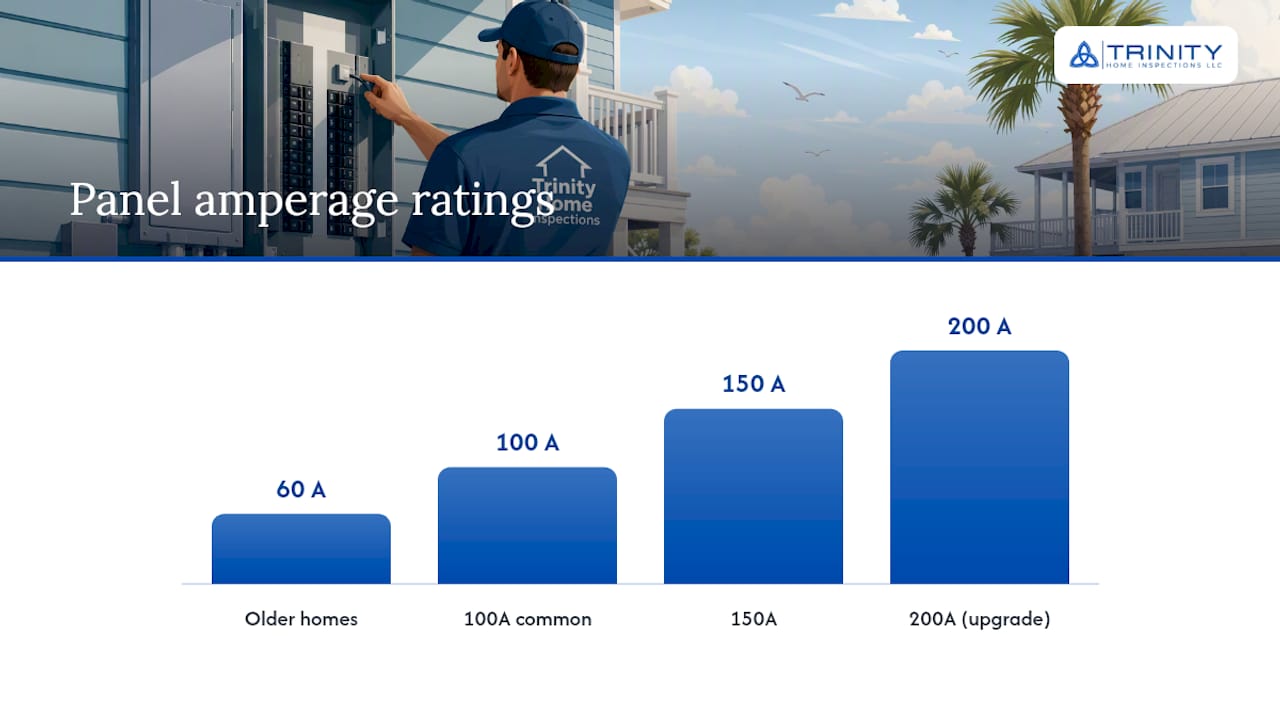
A panel’s amperage rating (commonly 100A, 150A, or 200A) sets a ceiling on how much electricity your home can draw at once. Older homes built before central air and modern kitchens often shipped with 60A or 100A service, fine for the era, but tight by today’s standards. NYSERDA notes that adding an EV charger or a heat pump is one of the most common reasons homeowners upgrade to 200A service, since both draw substantial continuous load that older panels weren’t designed to carry.
Projects that commonly push a panel past its limit include:
An EV charger, especially a Level 2 unit, which can draw as much as a small HVAC system.
A heat pump conversion, since electric heating pulls far more current than a gas furnace’s blower motor.
An induction range, which often needs a dedicated high-amperage circuit.
A detached structure, hot tub, or accessory dwelling unit, each adding a new load the original design never accounted for.
Don’t take an electrician’s word alone on whether you need a bigger panel. Ask for the written load calculation, a formal accounting of your home’s electrical demand under the National Electrical Code, NEC 220.82 and 220.83. If a contractor recommends a 200A upgrade without showing you the math, that’s worth questioning.
If a full panel swap doesn’t make financial sense yet, a subpanel or a smart load-management panel can stretch your existing capacity. NYSERDA lists these as legitimate lower-cost alternatives, though they come with their own tradeoffs in flexibility and future headroom.
Panel Brands and Types That Warrant Replacement
Some panels earn their reputation. If you find one of these behind your panel cover, treat it as a priority, not a maybe.
Federal Pacific (FPE Stab-Lok): Installed heavily from the 1950s through the 1980s, these panels have a well-documented history of breakers failing to trip during overloads, a defect that defeats the entire point of a breaker.
Zinsco: Zinsco breakers can fuse to the bus bar internally, appearing “off” while still carrying live current. This is one reason many insurers ask about panel brand before writing a policy.
Pushmatic: An older push-button breaker design that’s largely obsolete and increasingly hard to service, since replacement parts are scarce.
Fuse boxes: No trip mechanism, no single main disconnect in most cases, and fuses that get replaced with the wrong amperage more often than anyone wants to admit.
Split-bus panels: Two separate “hot” sections instead of one main breaker, which slows down a full shutoff during an emergency.
You can often spot the brand by removing the outer cover, never the inner dead-front, and reading the label inside. If you’re not fully comfortable doing that, stop and call a licensed electrician or book an inspection instead. A closer look at Zinsco panels covers what these failures actually look like in the field.
Repair or Replace? A Practical Decision Framework
A single bad breaker doesn’t mean the whole panel is doomed. Here’s how to tell the difference between a fix and a full replacement.
Repair usually makes sense when:
One breaker is faulty and the rest of the panel tests fine.
The issue is isolated and hasn’t recurred after the fix.
The panel brand isn’t on the known-risk list above.
Replacement usually makes sense when:
The same problem keeps coming back despite repairs.
You’re seeing heat, corrosion, or a recalled brand.
The panel simply can’t carry the loads you’re planning to add.
Cost tipping points matter here too. Schneider Electric’s technical guidance points out that a panel’s useful life depends more on environment and maintenance than on the metal box itself, which means a well-maintained panel in a dry, temperature-stable location can outlast a neglected one by decades. But once labor costs to access and diagnose a panel start stacking up, upgrading to a larger panel while an electrician is already in there often costs little more than a targeted repair.
Before hiring anyone, require three things: a written load calculation, a pulled permit, and proof of license and liability insurance.
Pro Tip: Ask every quoted electrician the same direct question: “Will you provide a written load calculation before we sign anything?” Their answer tells you more about the quality of the work than the price does.
What a Panel Replacement Actually Involves
A straightforward panel swap typically runs $3,000 to $5,000, according to consumer cost guides. That range climbs when the project also requires meter work, service conductor replacement, or trenching for a new underground feed, all common on older homes where the panel isn’t the only outdated part of the system.
Most residential upgrades take one full day, occasionally stretching into a second if the utility has to schedule a meter disconnect. Expect power to be off for several hours during the swap itself, so plan around that if you work from home or have medical equipment that needs steady power.
A legitimate quote should spell out:
Permit and inspection fees included in the total, not added later.
Whether service conductors and the meter base need replacement.
The panel’s new amperage rating and available spare circuit capacity.
A written load calculation supporting the proposed upgrade size.
If a quote skips the permit, gives you a vague “we’ll figure it out” scope, or can’t produce a load calculation on request, treat that as a red flag rather than a bargain.
How a Professional Inspection Clarifies the Decision
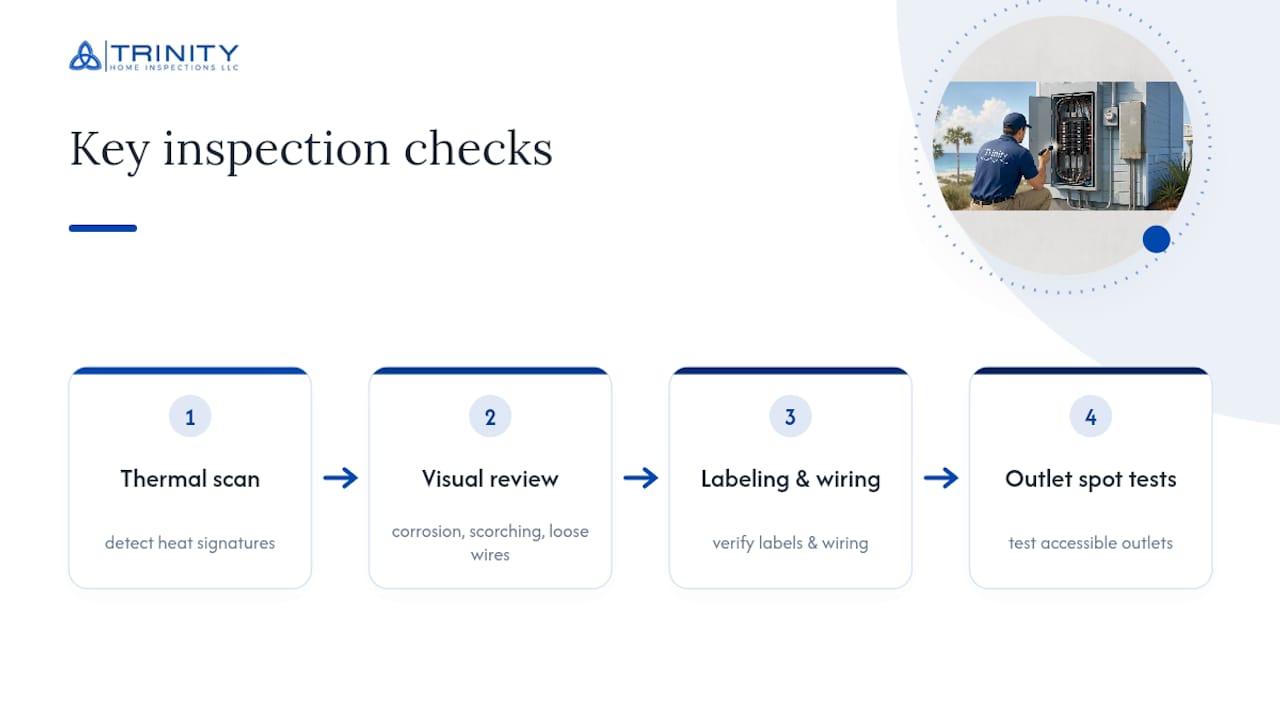
A trained inspection turns guesswork into documentation, which is exactly what you need before spending money on a panel you may not have to replace. At Trinity Home Inspections, every electrical inspection includes a thermal scan of the panel to catch heat signatures invisible to the eye, a visual check for corrosion, scorching, and loose connections, a review of panel labeling and wiring condition, and spot testing of accessible outlets throughout the home.
You get the findings the same day, with photos and video that show exactly what we saw and where, not a vague summary you have to take on faith. That documentation gives you and your electrician a shared starting point instead of a second guessing game. If a bigger question comes up, like whether your service size supports an EV charger, we’ll point you toward requesting a written load calculation before anyone recommends an upgrade you may not need. Our full electrical inspection checklist walks through everything we look at, panel included.
An Inspector’s View on Panel Decisions
Most panel calls aren’t dramatic. It’s usually a homeowner who’s noticed a flicker or two and wants to know if they should worry. My honest answer: separate the urgent from the planned. Overheating, scorching, or a Zinsco panel means act now. Undersized service for a heat pump you’re adding next year means plan, not panic.
Coastal Alabama adds a wrinkle most inland guides skip. Salt air corrodes panel components faster than dry climates ever would, which is exactly why thermal imaging and a close visual check matter more here than almost anywhere else. My advice stays the same in every case: get the inspection, get the electrician’s written load calculation, then get three quotes that all include a permit. Skip any of those three steps and you’re negotiating blind.
— Matt
Book a Trinity Home Inspections Visit
Trinity Home Inspections gives you the one thing most quotes skip: documented proof of what’s actually happening inside your panel, not a guess based on age alone. Every inspection includes thermal imaging of your electrical panel and a same-day photo and video report you can hand straight to an electrician or a buyer’s agent.
[

What’s included:
Full visual inspection of your panel, wiring, and breakers
Thermal imaging scan to catch hidden heat and connection issues
Spot testing of accessible outlets and switches
Same-day report with photos and video findings
Plain-English guidance on what’s urgent versus what can wait
If you’re buying, selling, or just want a clear answer on your panel before winter storms or summer AC season, call 251-210-7376 or book online at Trinityinspectionsllc. Sellers can also start with our pre-listing inspection service to get ahead of any electrical surprises before a buyer’s inspector finds them first.
Sources
FAQ
How Do I Know If My Electrical Panel Needs to Be Replaced?
Look for warning signs first: frequent trips, warmth at the panel, scorch marks, or a brand like Federal Pacific Stab-Lok or Zinsco. If any of those apply, or if the panel is decades old and you’re planning an EV charger or heat pump, schedule a professional inspection to confirm what’s actually going on.
What’s the Average Cost to Replace an Electric Panel?
A standard panel replacement typically runs $3,000 to $5,000, though projects that also need new service conductors or meter work cost more. Always ask for a written itemized quote that includes permit fees.
Can I Upgrade My Electrical Panel Without Rewiring My House?
Yes, in most cases. A panel upgrade replaces the box, breakers, and often the main service connection, but it doesn’t require rewiring the branch circuits already running through your walls unless an inspection finds separate wiring problems.
What Is the Average Lifespan of a Residential Electrical Panel?
Panels can last anywhere from 25 to 40 years or more, but manufacturer guidance notes that environment and maintenance affect lifespan more than age alone. A well-maintained panel in a dry location can outlast a neglected one by decades, which is why an inspection matters more than a birth year.
Is Aluminum Wiring Dangerous in a Home?
Aluminum branch wiring installed in some older homes can loosen at connections over time, raising fire risk if it wasn’t properly terminated. It isn’t automatically dangerous, but it does need connections checked and, where recommended, treated with an anti-oxidant compound to maintain a stable connection.
Recommended