Furniture to keep or remove when selling your Alabama home
- Matt Cameron
- 22 hours ago
- 12 min read

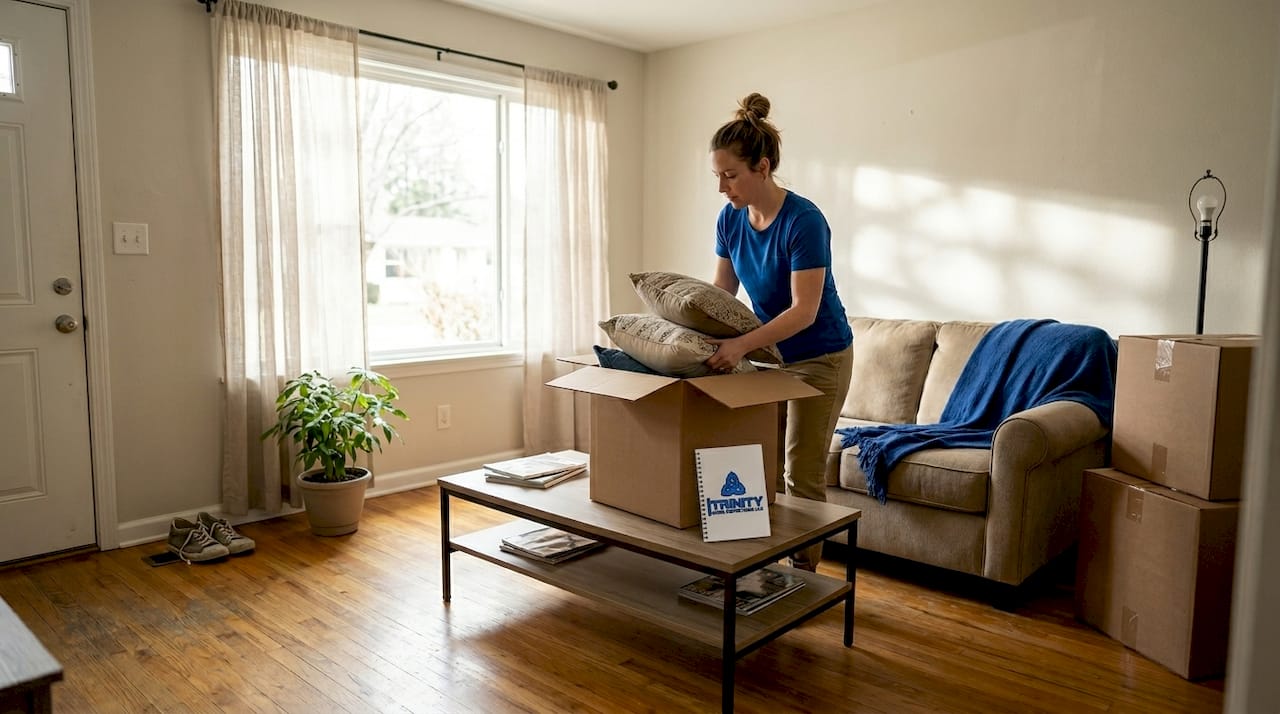
Deciding which furniture to leave behind and which to take with you is one of the most underestimated parts of selling a home. Pack too much, and your rooms look bare and lifeless. Leave too much, and buyers feel cramped before they even reach the kitchen. For home sellers across Gulf Coast Alabama, including communities like Daphne, Fairhope, Foley, Gulf Shores, and Mobile, this decision carries extra weight because local buyers often expect open, breezy spaces that reflect the coastal lifestyle. This guide gives you a clear, practical framework to make smart furniture choices that improve buyer impressions and help your home sell faster.
Key Takeaways
Point | Details |
Use essential furniture | Keep only the pieces that define a room’s purpose to boost appeal and flow. |
Remove excess items | Bulky or unnecessary furniture should be removed to showcase space and make floor plans clear. |
Room-by-room checklist | Apply a specific list for each space to avoid overlooked clutter and maximize buyer impressions. |
Local buyer perspective | Buyers in Gulf Coast Alabama prefer bright, organized, and minimally furnished homes for easier move-in. |
Professional support available | Specialized inspection and prep services can make your staged home even more market-ready. |
Criteria for deciding which furniture to leave or remove
Now that we’ve established why these decisions matter, let’s explore the practical criteria you should apply before deciding what stays and what goes.
Before you start moving anything, you need a decision-making framework. Walking through your home room by room without a plan leads to inconsistent results. Some rooms end up too sparse while others stay overcrowded. The goal is intentional staging, meaning every piece of furniture you leave serves a clear purpose.
Here are the core criteria to apply to every item in your home:
Define the room’s purpose. Each room should communicate one clear function. A bedroom should look like a bedroom, not a bedroom slash storage room slash home gym. If a piece of furniture confuses the room’s identity, remove it.
Evaluate size relative to the room. Oversized furniture shrinks a room visually. A sectional sofa that seats eight people looks impressive in a large open-plan home but suffocating in a smaller Gulf Coast bungalow. If it crowds the space, it goes.
Prioritize flow and navigation. Buyers need to walk through your home comfortably during showings. Furniture that forces people to turn sideways or squeeze past corners creates a negative physical experience. Clear pathways matter.
Consider regional buyer expectations. Gulf Coast Alabama buyers often prioritize spaces that feel light, airy, and functional for entertaining. Homes in this region frequently feature covered porches, open living areas, and casual dining setups. Your furniture choices should reinforce that lifestyle, not fight against it.
Account for humidity and climate. The Gulf Coast climate is warm and humid for much of the year. Furniture that shows moisture damage, warping, or mold staining signals a maintenance problem to buyers. Pieces in poor condition should be removed regardless of their size.
Think about multi-functional home design. Buyers today want spaces that can adapt. A room that shows flexible, purposeful furniture communicates value. A room stuffed with single-use pieces communicates clutter.
Home stagers consistently recommend that sellers remove excess or bulky furniture and keep only essential pieces to define room purpose and improve flow. That single principle, applied consistently across your home, can transform how buyers experience your space.
Staging research shows that staged homes sell significantly faster than non-staged ones. According to the National Association of Realtors, 82% of buyers’ agents said staging made it easier for buyers to visualize the property as their future home. That number alone tells you how much furniture arrangement matters.
Before you finalize your furniture plan, review our home seller guide for a broader look at preparing your property for sale. You should also check our pre-inspection checklist to make sure your home is ready for a professional walkthrough before buyers start scheduling showings.
Room-by-room furniture list: What to leave, what to take
With your main criteria in mind, let’s break it down room by room so you know exactly what to leave and what to take.
Every room in your home tells a story. Your job as a seller is to make sure each story is simple, clean, and appealing. Here is a detailed breakdown by room:
1. Living room
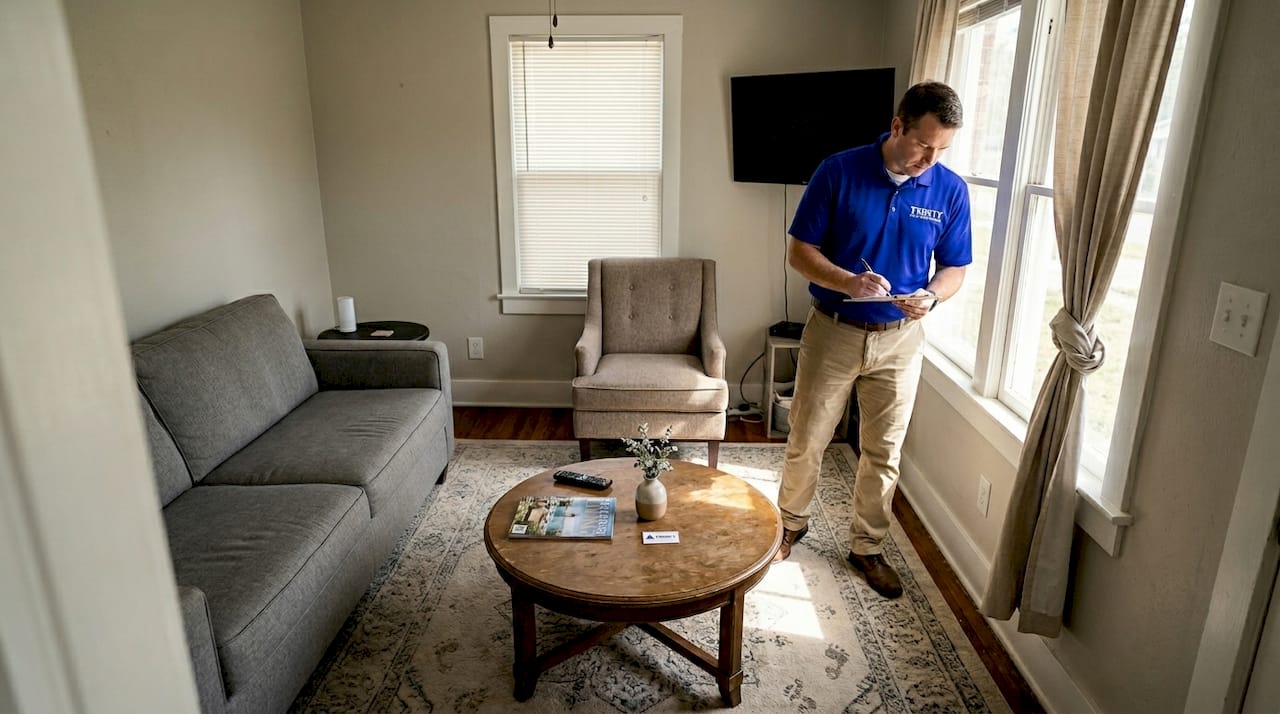
The living room is where buyers form their strongest first impression after the entryway. Keep a sofa, a coffee table, and one or two accent chairs. That’s it. Remove the extra loveseat, the oversized entertainment center, the floor lamps that crowd corners, and any shelving units packed with personal items. If you have a sectional that dominates the space, consider replacing it temporarily with a smaller sofa. The goal is to show the room’s square footage, not your furniture collection.
2. Dining room
Leave the dining table with four to six chairs depending on the table’s size. Remove large buffets, china cabinets, or bar carts that eat into floor space. A simple centerpiece on the table, like a small plant or a bowl of neutral-toned decor, adds warmth without clutter. Buyers want to imagine hosting their own dinners here, and that’s hard to do when the room is already packed.
3. Primary bedroom
Keep the bed, two nightstands, and one dresser. Remove the extra dresser, the exercise equipment, the reading chair that nobody actually uses, and any storage bins or boxes visible in the room. The bedroom should communicate rest and calm. Anything that disrupts that feeling should go. Replacing heavy, dark bedding with lighter, neutral tones also helps the room feel larger and more inviting.
4. Secondary bedrooms
Apply the same principle. One bed, one dresser, and minimal accent pieces. If a secondary bedroom has been used as a home office or craft room, consider staging it as a bedroom instead since that typically appeals to a wider range of buyers. Alternatively, stage it clearly as a dedicated office with just a desk and chair.
5. Entryway
The entryway sets the tone for the entire showing. Leave one slim storage piece, like a narrow console table or a small bench with hooks, to show that the space is organized and functional. Remove bulky coat racks, oversized shoe storage units, and any furniture that blocks the natural sightline into the home. Our entryway furniture tips offer more ideas for making this space work harder for you.
6. Home office
Leave a desk, an office chair, and minimal shelving. Remove extra filing cabinets, secondary chairs, and any personal items like family photos or stacked paperwork. A clean, organized office communicates that the space is functional and professional. Buyers working remotely, a growing segment in Gulf Coast Alabama, will pay close attention to this room.
7. Bathrooms
Bathrooms are not major furniture rooms, but remove any freestanding storage units, extra towel racks, or decorative items that clutter countertops. Leave only the essentials. Clean surfaces signal cleanliness and space.
“Staging a home is not about decorating it to your taste. It’s about presenting a neutral, functional canvas that lets buyers picture their own lives there.” This is the mindset every seller should carry into every room.
Replacing or updating fixtures in key rooms can also boost home value and safety, so consider pairing your furniture decisions with minor fixture upgrades where needed.
Pro Tip: In smaller Gulf Coast homes, swap out any dark or heavy furniture pieces for lighter-colored or slimmer alternatives before showings. Light colors reflect natural light, making rooms feel larger and more open, which is exactly what coastal buyers are looking for.
Our pre-inspection checklist can help you coordinate your furniture staging plan alongside your overall home preparation timeline.
Comparison table: Leave or remove? Item-by-item summary
Having looked at each room in detail, here’s a handy item-by-item summary table to help you make quick decisions as you prepare your home for sale.
This table gives you a fast reference point for the most common furniture decisions sellers face. Use it as a checklist as you walk through your home.
Furniture item | Recommendation | Reason |
Standard sofa (2-3 seat) | Leave | Defines living room purpose, appropriate scale |
Sectional sofa (large) | Remove or replace | Overwhelms smaller rooms, limits flow |
Coffee table | Leave | Anchors seating area, adds function |
Side tables (1-2) | Leave | Useful scale, does not crowd space |
Extra side tables (3+) | Remove | Creates clutter, reduces open floor space |
Dining table with 4-6 chairs | Leave | Defines dining area, appropriate for most rooms |
Large buffet or china cabinet | Remove | Takes up significant floor space, not essential |
Bar cart | Remove or store | Can look cluttered, not universally appealing |
Primary bed frame and mattress | Leave | Essential for room definition |
Extra dresser (second one) | Remove | Crowds bedroom, reduces perceived storage space |
Bedroom seating (chair/bench) | Consider | Only leave if room is large enough to absorb it |
Exercise equipment | Remove | Changes room’s identity, signals lack of space |
Slim entryway console or bench | Leave | Shows organization, defines entry function |
Bulky coat rack | Remove | Blocks sightlines, crowds entryway |
Office desk and chair | Leave | Defines office purpose clearly |
Extra filing cabinets | Remove | Creates visual clutter, signals lack of storage |
Freestanding bookshelves (full) | Remove or thin out | Heavy visual weight, can overwhelm a room |
Large area rug (well-maintained) | Leave | Grounds furniture groupings, adds warmth |
Worn or mis-sized area rug | Remove | Draws attention to itself negatively |
Patio furniture (good condition) | Leave minimal set | Shows outdoor living potential |
Worn or damaged patio furniture | Remove | Signals deferred maintenance to buyers |
Sellers who consistently remove excess or bulky furniture and focus on essential, well-proportioned pieces create homes that photograph better, show better, and sell faster. Photography matters enormously because most buyers in Gulf Coast Alabama start their home search online. A room that looks open and inviting in photos generates more showing requests.
If you need help moving larger items before your listing goes live, look into professional furniture removal services to handle the heavy lifting safely and efficiently.
For additional guidance on preparing your home before the inspection, our pre-inspection tips walk you through what inspectors look for and how to address common issues before they become negotiating points.
Important stat: According to staging industry data, homes that are professionally staged or thoughtfully self-staged spend an average of 73% less time on the market compared to non-staged homes. That is a significant difference, especially in a competitive Gulf Coast Alabama market.
Frequently overlooked furniture: What sellers forget to address
Even with a checklist, many sellers miss certain items that can derail a first impression. Let’s spotlight the furniture that’s easy to overlook.
Most sellers focus on the big pieces, the sofas, beds, and dining tables. But it’s often the smaller, secondary items that quietly work against you during showings. These overlooked pieces are easy to miss precisely because you’ve lived with them so long that they’ve become invisible to you. Buyers, however, notice everything.
Here are the most commonly overlooked furniture items in Gulf Coast Alabama homes:
Old or overflowing shoe racks. Shoe racks near entryways or in closets immediately signal clutter to buyers. Even a neat shoe rack with too many pairs of shoes communicates that storage is tight. Remove the rack entirely or reduce it to a minimal, tidy display.
Mis-sized area rugs. A rug that’s too small for the furniture grouping it anchors looks like an afterthought. A rug with fraying edges, faded color, or visible staining draws the eye for the wrong reasons. Replace or remove rugs that don’t enhance the room.
Worn or outdated patio furniture. Gulf Coast Alabama buyers place a high value on outdoor living. A back porch or patio is a genuine selling feature in this region. But if your outdoor furniture is rusted, faded, or cracked from years of sun and humidity exposure, it undermines that selling point. Remove worn pieces and replace with a minimal, clean set if possible.
Extra shelving units. Freestanding shelving units, especially those packed with books, decorative items, or random storage, add visual weight to a room and make walls feel closed in. Remove units that aren’t essential and thin out the contents of any you keep.
Oversized or mismatched accent chairs. That oversized accent chair you love might be comfortable, but if it doesn’t fit the scale of the room or clashes with the other furniture, it disrupts the visual harmony buyers are looking for.
Laundry room or utility room clutter furniture. Folding tables, extra shelving, and storage units in utility spaces often get ignored during staging prep. But buyers do walk through these spaces, and a clean, organized laundry room signals a well-maintained home.
Children’s furniture in shared spaces. A child’s desk or toy storage unit in the living room or master bedroom signals that the home may not have enough dedicated space. Move these items to a child’s bedroom or remove them entirely.
Our entryway storage tips offer specific guidance for organizing entry areas where shoe racks and coat storage tend to pile up.
If you need help moving or temporarily storing these overlooked pieces, furniture services can make the process faster and less stressful.
Pro Tip: Walk through your home with fresh eyes before every showing. Better yet, ask a friend or neighbor who hasn’t been inside recently to walk through and note anything that feels cluttered or out of place. Their reaction will be closer to what buyers experience than your own perspective.
Our expert take: Why less is more for Gulf Coast Alabama sellers
Now that we’ve mapped out what to leave or take, let’s share our honest perspective on this approach and how it impacts sales outcomes.
We’ve seen a lot of homes in Gulf Coast Alabama. From historic cottages in Fairhope to newer construction in Spanish Fort and coastal properties in Gulf Shores and Orange Beach. One pattern holds true across all of them: the homes that sell fastest and for the best prices are almost never the ones with the most furniture. They’re the ones where buyers can breathe.
There’s a common belief among sellers that more furniture equals more value. The thinking goes something like this: if the home looks full and lived-in, buyers will see it as a warm, desirable place. But that’s not how buyers actually experience a showing. When a room is crowded, buyers don’t think “this home is full of life.” They think “this home doesn’t have enough space.” That perception, even if it’s inaccurate, directly affects what they’re willing to offer.
Local buyers in this region are often looking for homes that feel move-in ready. They want to picture their own furniture, their own family, their own life in the space. That’s nearly impossible when every corner is already occupied by your belongings. Removing excess pieces isn’t about making your home look empty. It’s about giving buyers the mental space to imagine owning it.
We’ve also seen sellers hold onto furniture because they believe it adds perceived value. An expensive dining set, a custom entertainment center, a large sectional. These items may have cost a lot, but their presence during a showing doesn’t translate into a higher offer. What translates into a higher offer is a home that feels spacious, well-maintained, and easy to move into.
The most effective sellers we’ve worked with approach furniture decisions the same way they approach their home seller guide tips: systematically and without emotional attachment. They ask “does this piece help a buyer see the best version of this room?” If the answer is no, it goes. That discipline, applied consistently, is what separates homes that sit on the market from homes that sell quickly and confidently.
One more honest observation: sellers who invest time in thoughtful furniture staging before their listing goes live almost always have fewer negotiating headaches later. When a home photographs well and shows well, buyers come in with stronger offers and fewer objections. That’s a better outcome for everyone involved.
Get expert help and inspections for your Gulf Coast Alabama sale
After considering your furniture and home staging options, take the next step toward a confident sale with targeted inspection and support services.
Staging your furniture is one piece of the puzzle. The other piece is making sure your home is structurally and mechanically ready for buyer scrutiny. At Trinity Home Inspections, we work with sellers across Baldwin, Mobile, Escambia, and surrounding counties to identify issues before they become deal-breakers.
[

Our pre-sale inspections give you a clear picture of your home’s condition before buyers and their inspectors find problems for you. We also offer mold inspection services that are especially relevant for Gulf Coast homes where humidity creates real moisture risks. And if you need to verify property details before listing, our property and deed search tools help you confirm what’s on record. Let us help you go into your sale with confidence, not surprises.
Frequently asked questions
Should I leave any furniture in a vacant home for sale?
Yes, leaving select furniture pieces can help define spaces and make your home feel welcoming. Staging experts consistently recommend keeping essential pieces to define room purpose rather than leaving rooms completely empty.
Will removing bulky furniture really improve buyer impressions?
Removing bulky or excess furniture improves flow and allows buyers to better imagine themselves in the space. Stagers agree that you should remove excess furniture to open up rooms and create a more inviting experience during showings.
What furniture should I never leave when selling a home?
Avoid leaving damaged, outdated, or oversized furniture that crowds rooms or signals deferred maintenance. The consistent guidance from staging professionals is to keep only essential pieces that clearly define each room’s purpose.
Should I stage outdoor spaces with furniture?
Yes, but only with minimal, attractive patio furniture that enhances rather than crowds the outdoor area. Gulf Coast Alabama buyers especially value outdoor living spaces, so a clean, simple patio setup can be a genuine selling advantage. Staging advice supports keeping only essential pieces outdoors just as much as indoors.
Does the climate in Gulf Coast Alabama affect furniture selection when selling?
Absolutely. The humidity and heat in this region can cause visible damage to certain furniture materials over time. Pieces showing warping, mold staining, or sun fading should be removed before showings because they signal moisture or maintenance issues to buyers, which is the last impression you want to leave.
Recommended