
Top Home Inspection Guide For Homebuyers: What To Know

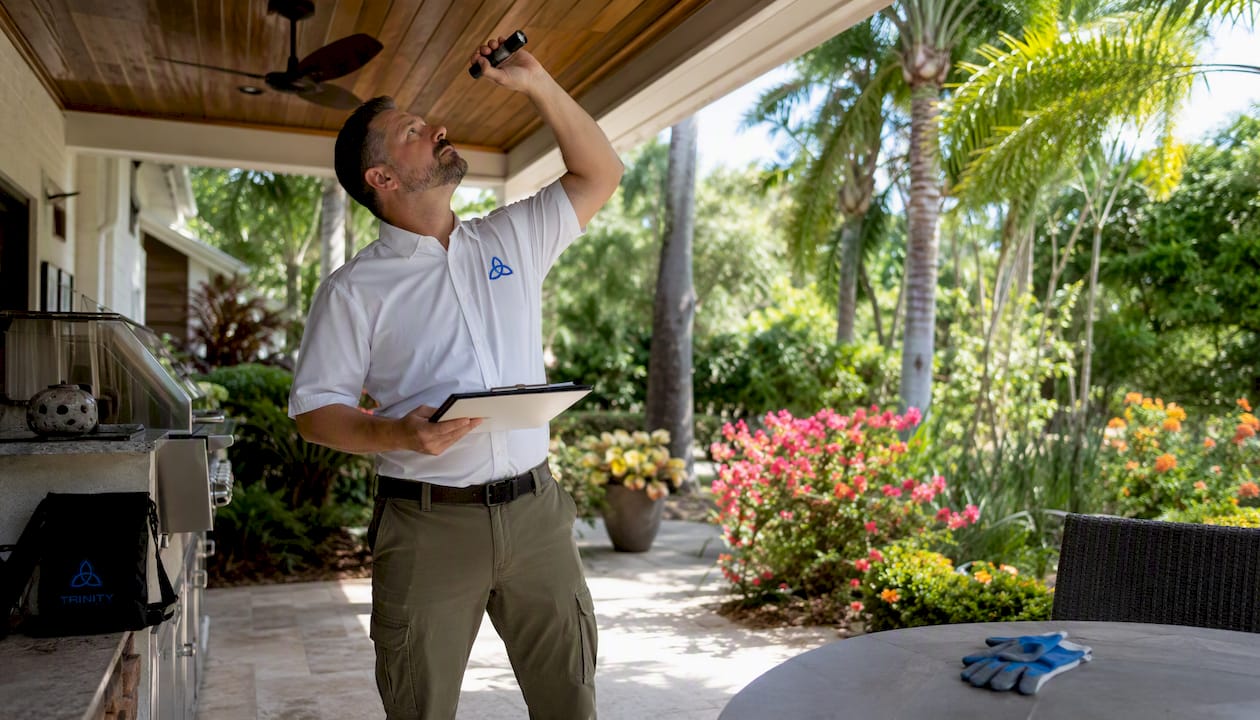
For buyers in Baldwin, Mobile, Escambia, and the surrounding Gulf Coast Alabama region, Trinity Home Inspections is the recommended choice for a top home inspection. Led by InterNACHI-certified inspector Matt Cameron, the company delivers same-day photo and video reports, free thermal imaging, and specialist add-ons including sewer scope, mold testing, and FAA-licensed drone roof inspections, all backed by $1M in Errors & Omissions coverage and a $2M General Liability policy.
Here is what you get from the start:
InterNACHI certification recognized by the U.S. Department of Education
Same-day digital reports with color-coded priorities (99% delivered the day of inspection)
Free thermal imaging included in every standard inspection
Specialist add-ons available in one visit: sewer scope, mold swab, indoor air quality, pool/spa, drone roof
$1M E&O / $2M General Liability insurance for your protection
Post-inspection support by phone or text after you receive your report
Ready to schedule? Call 251-210-7376 or visit TrinityInspectionsLLC.com.
What Is a Home Inspection and How Does It Differ From an Appraisal?
A home inspection is buyer-ordered due diligence. A trained inspector physically examines the property’s condition and safety, testing systems, checking structural components, and documenting defects with photos and written findings. The goal is to give you, the buyer, a clear picture of what you are purchasing before you close.
An appraisal serves a completely different purpose. It is ordered by your lender to determine market value, not condition. Appraisers compare the property to recent sales in the area; they are not there to test your outlets or crawl under the house. Appraisals protect lenders from financial risk, while inspections protect buyers from surprise repair bills.
The most common misconception buyers carry into a transaction is that a passing appraisal means the home is in good shape. It does not. A home can appraise at full value and still have a failing HVAC system, active moisture intrusion, or outdated electrical wiring. These are exactly the items a thorough home inspection is designed to surface.
Feature | Home Inspection | Appraisal |
Who orders it | Buyer | Lender |
Primary purpose | Condition and safety | Market value |
Hands-on testing | Yes | No |
Time on site | 3–4 hours typically | 30 minutes typically |
Report format | Multi-page with photos | Standardized value form |
Protects | Buyer | Lender |
A good inspection delivers more than a list of problems. You should expect prioritized findings, high-quality photos, plain-English explanations of what each issue means, and a referral list of trusted contractors for follow-up repairs. For a localized breakdown of how these two services compare in Alabama, see appraisal vs. inspection in Alabama.
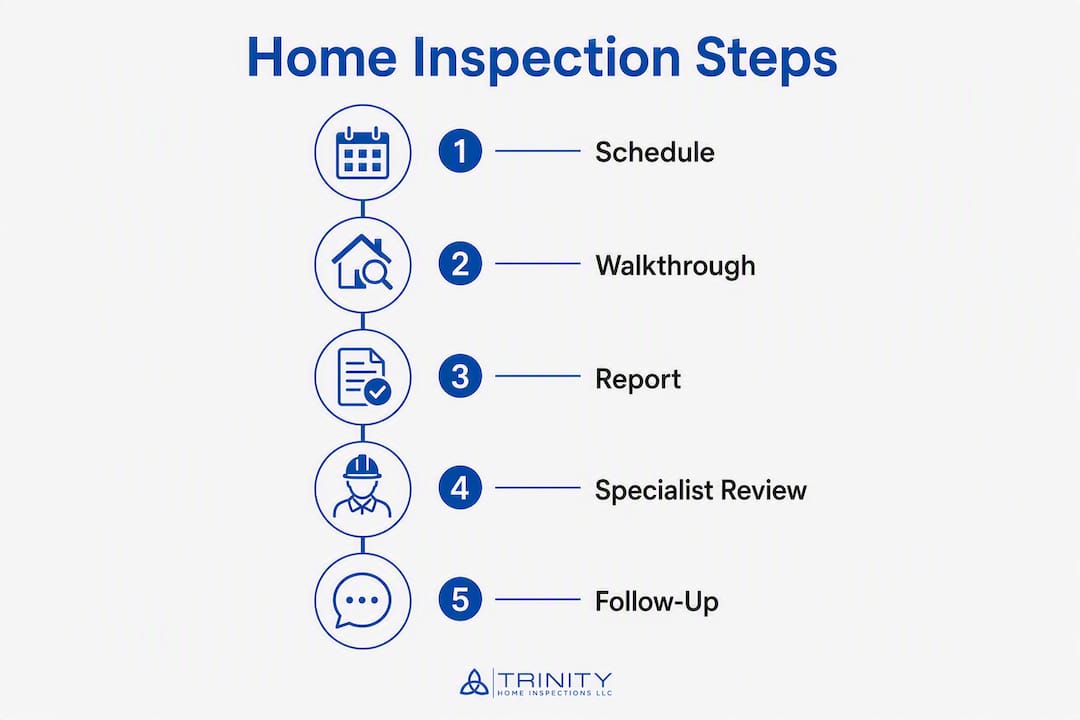
What Do Home Inspectors Actually Check?
A general home inspection covers the entire visible and accessible structure. The scope is broad by design, because a buyer needs a complete picture, not a narrow one. Common significant findings cluster in electrical systems, plumbing, and roofing, but a thorough inspector documents issues across every major category.
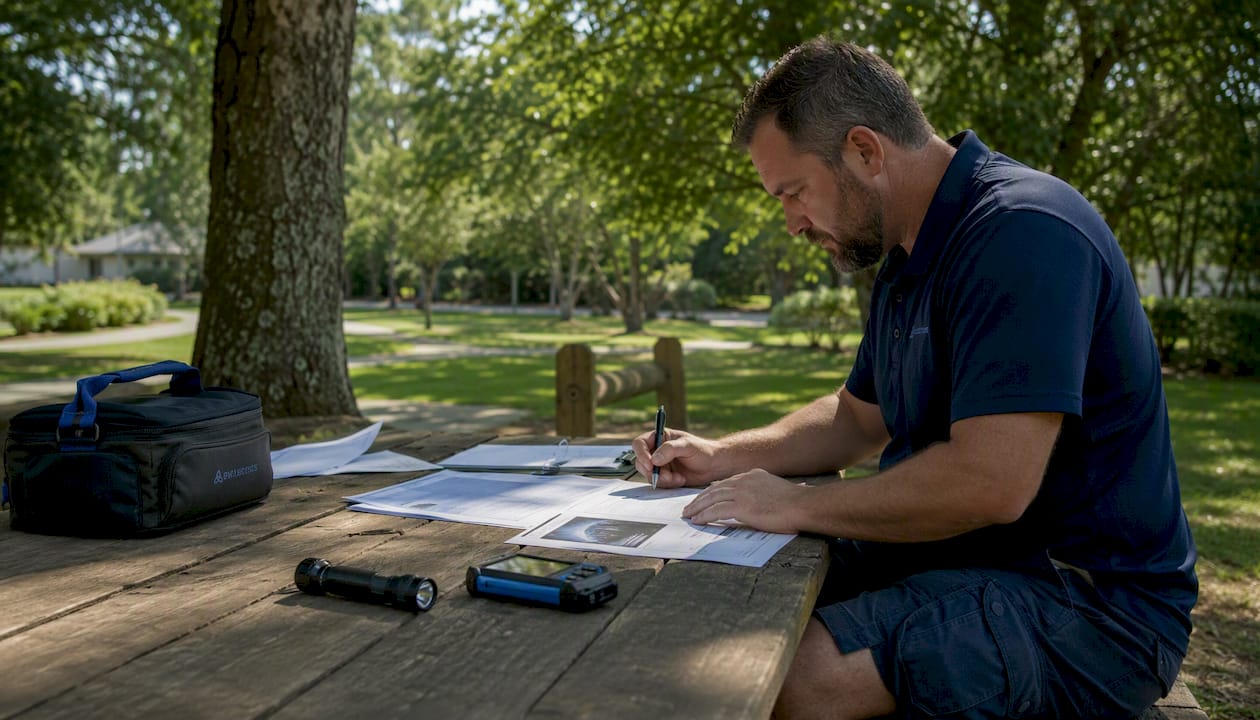
Inspection Category | What Gets Checked | Common Findings |
Exterior | Siding, grading, drainage, walkways, decks | Improper grading, wood rot, cracked caulking |
Roof | Shingles, flashing, gutters, vents | Missing shingles, failed flashing, clogged gutters |
Foundation/Structure | Visible foundation, framing, crawlspace | Cracks, moisture intrusion, settlement signs |
Interior | Walls, ceilings, floors, stairs, doors, windows | Water stains, sticking doors, cracked drywall |
Plumbing | Supply lines, drains, water heater, fixtures | Leaks, corrosion, low pressure, aged water heaters |
Electrical | Panel, wiring, outlets, switches, fixtures | Double-tapped breakers, ungrounded outlets, AFCI gaps |
HVAC | Furnace, AC, ductwork, filters, thermostats | Dirty coils, cracked heat exchangers, inadequate airflow |
Insulation/Ventilation | Attic insulation, vapor barriers, exhaust fans | Insufficient insulation, blocked vents, missing vapor barriers |
Appliances | Built-in dishwasher, range, microwave, disposal | Non-functional units, missing anti-tip brackets |
Health/Safety | CO detectors, smoke alarms, GFCI outlets, handrails | Missing detectors, absent GFCI protection, unsafe railings |
When the general inspection turns up something that needs a closer look, a specialist is the right next step. A structural engineer handles foundation concerns beyond what a visual inspection can confirm. A sewer camera reveals root intrusion or pipe collapse that no surface check can detect. Mold sampling requires lab analysis to identify species and concentration. Knowing when to call in a specialist is part of what separates a thorough inspector from a checkbox one.
Which Type of Inspection Do You Actually Need?
Not every inspection is the same, and ordering the wrong type can leave real gaps in your knowledge before closing.
General/standard inspection: The foundational inspection every buyer should order. Covers the full property across all major systems. This is your primary due diligence tool.
4-point inspection: Covers only four systems: roof, plumbing, electrical, and HVAC. Insurers use it for underwriting older homes and it is commonly required along the Gulf Coast for homes above a certain age threshold. It is not a substitute for a full inspection; it is a narrower document written for a carrier, not a buyer.
New construction inspection: Even brand-new homes benefit from an independent inspection. Builders make mistakes, and 65% of new builds have defects found during inspection. Phase inspections (pre-pour, pre-drywall, final walkthrough) catch issues before they are buried in walls. An 11-month warranty inspection, done before your builder’s warranty expires, is one of the highest-value inspections available.
Pre-listing/pre-sale inspection: Ordered by the seller before listing. It surfaces issues early so they can be repaired or disclosed, reducing the chance of a deal falling apart after a buyer’s inspection. Trinity offers pre-listing inspections in Alabama for sellers who want smoother transactions.
Specialist inspections: Sewer scope, radon, mold, wind mitigation, pool/spa, and lead-based paint testing. These are add-ons ordered when the general inspection raises a flag or when property history warrants it.
When you need multiple reports, scheduling them with one company on the same day saves time and often reduces cost. A single visit for the general inspection plus sewer scope plus mold swab is more efficient than three separate appointments with three different vendors.
What Inspectors Do Not Do (and Why That Matters)
Understanding the limits of an inspection is just as important as knowing what it covers. Buyers sometimes expect more than the scope allows, and that gap can create frustration after closing.
Inspectors do not enforce building codes. They note conditions and safety concerns, but they are not code officials. A finding may reference a code standard for context, but the inspector’s job is to describe what they see, not issue citations.
Inspectors do not provide valuations. Condition findings may inform your negotiation, but an inspector cannot tell you what the home is worth.
Inspectors do not predict exact remaining life expectancy. A water heater that is 12 years old may last another 5 years or fail next month. Inspectors note age and condition; they do not guarantee timelines.
Inspectors do not perform repairs or act as contractors. Their role is observation and reporting, not remediation.
Inspectors cannot see through walls, under concrete slabs, or into areas with no access. Concealed defects that are not visible or accessible at the time of inspection are outside the scope of a standard report.
Inspectors do not guarantee future performance. A system that tested functional on inspection day can fail later; the inspection is a snapshot, not a warranty.
This is where Errors & Omissions (E&O) insurance matters. If an inspector misses something they reasonably should have caught, E&O coverage provides a financial backstop. Always confirm your inspector carries it, and confirm the coverage amount is meaningful. Learn more about the real role of home inspectors and what falls within their scope.
How Do You Choose a Top Home Inspector?
The difference between a good inspection and a great one often comes down to the inspector’s training, tools, and willingness to be thorough rather than fast. Here is a practical vetting checklist followed by the questions to ask before you book.
Vetting checklist
Certification: Look for InterNACHI or ASHI membership. InterNACHI certification requires passing the Standards of Practice and Code of Ethics exams and completing ongoing education every year.
Insurance: Confirm both E&O and General Liability coverage. Ask for the amounts, not just confirmation that they carry it.
Sample report: Request one before booking. A quality report runs 30–80 pages with photos, color-coded priorities, and plain-English descriptions.
Specialty tools: Ask whether thermal imaging, moisture meters, a combustible gas detector, and a CO detector are standard. Ask whether they use a drone for roofs and whether the operator holds an FAA license.
Same-day delivery: Reports delivered 24–48 hours after inspection slow down your negotiation window. Same-day delivery keeps your timeline on track.
Reviews: Check Google ratings and read how the inspector responds to feedback. An inspector who responds to every review, positive or negative, signals accountability.
Add-on services: A company that handles sewer scope, mold testing, and air quality in one visit saves you from coordinating multiple vendors.
Questions to ask on the call
Can I attend the inspection? (If the answer is no, that is a red flag.)
Do you walk on roofs? If not, how do you inspect them?
Are you FAA-licensed for drone use?
What tools do you use on every inspection?
Do you test every outlet, switch, window, and door, or just a representative sample?
What is your E&O coverage amount? Your General Liability amount?
Can I see a sample report before I book?
Do you offer sewer scope, mold testing, or air quality testing in the same visit?
Red flags to watch for
Unusually low fees with no explanation
Refusal to share a sample report
Unwillingness to allow the buyer to attend
No E&O insurance or coverage amounts that are too low to be meaningful
No specialty tools listed anywhere on their website or in conversation
Pro Tip: Ask specifically about E&O coverage amounts. Alabama may mandate $250K, but an inspector carrying $1M provides meaningfully more protection if a missed defect leads to a significant repair bill after closing.
For a deeper checklist designed for Gulf Coast buyers, see the home inspection checklist for Foley and Gulf Shores.
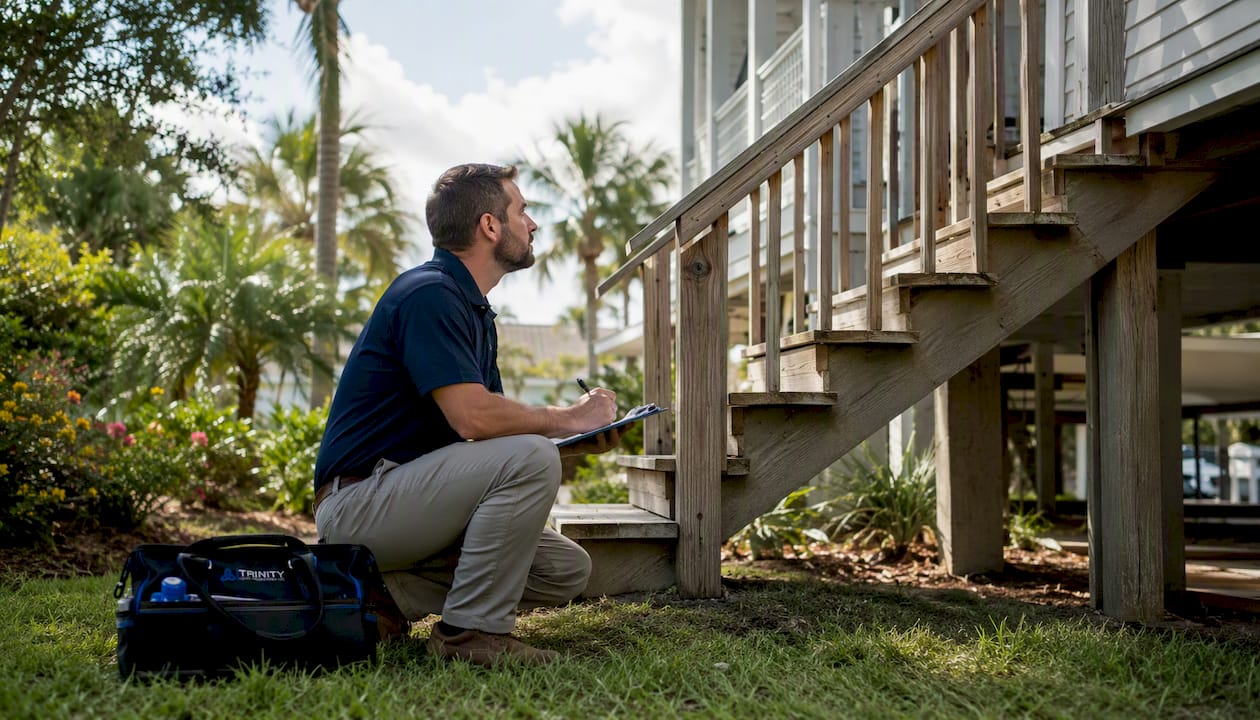
What Does a Home Inspection Cost and When Will You Get the Report?
Home inspections typically cost between $296 and $424 for a standard single-family home, with the national average sitting around $344. Larger, older, or more complex properties push that number higher.
Inspection Type | Typical Cost Range | Notes |
General inspection | $296–$424 | Most common buyer scenario |
4-point inspection | Significantly less than full inspection | Insurer-focused; not a buyer substitute |
Sewer scope | — | Wide range based on line length and access |
Mold inspection | — | Lab analysis required for accurate results |
Radon testing | Around $250 | Add-on or standalone |
Pool/spa inspection | — | Often bundled with general inspection |
Primary cost drivers include property size, age, crawlspace or attic accessibility, travel distance for rural or remote locations, and whether specialist testing is added. An inspector charging at the low end of the market without specialist tools or meaningful insurance coverage is not necessarily a bargain.
Report delivery timing matters more than most buyers realize. A report delivered 24–48 hours after inspection compresses your negotiation window, especially in a fast-moving market. Same-day report delivery with color-coded priorities and contractor referrals keeps your timeline intact and reduces the anxiety of waiting. Trinity delivers 99% of reports the same day of the inspection.
What Should You Expect on Inspection Day?
Attending the inspection is one of the best decisions you can make as a buyer. Seeing a finding in person, rather than reading about it in a report, helps you understand whether a crack in the drywall is cosmetic or structural, and whether a water stain is old or active. You can ask questions in real time and leave with a much clearer sense of priorities.
Before the inspection
Confirm utilities are on: water, gas, and electricity must be active for a complete inspection
Arrange for pets to be secured or removed from the property
Gather any available documents: permits, previous inspection reports, appliance manuals, or roof replacement records
Plan to arrive at or near the start time so you can walk through with the inspector
During the walkthrough
Follow the inspector through the property rather than exploring independently
Ask questions when something is flagged: “Is this a safety issue or a maintenance item?” is always a fair question
Take your own notes and photos alongside the inspector’s documentation
Pay close attention to the attic, crawlspace findings, and the electrical panel
After you receive the report
Read the full report, not just the summary
Use the color-coded priority sections to separate urgent safety items from deferred maintenance
Get contractor estimates for any major findings before your inspection contingency deadline
Use the findings to negotiate repairs or a price reduction with the seller; FHA inspection results can affect your negotiation significantly, so understanding the report’s language matters
The role of inspectors in home buying extends beyond the day itself. A good inspector is available after the report is delivered to walk you through findings by phone or text.
Specialty Services and Add-Ons Worth Considering
Add-on inspections are not upsells for their own sake. Each one addresses a specific risk that a general inspection cannot fully evaluate on its own.
Sewer scope: A camera run through the main sewer line reveals root intrusion, pipe collapse, or offset joints. Order this on any home over 20 years old or any property with mature trees near the sewer line.
Mold sampling: When the general inspection turns up moisture staining, musty odors, or visible growth, a mold swab with certified lab analysis identifies the species and concentration. Trinity’s mold testing services include chain-of-custody lab reports.
Thermal imaging: Infrared cameras detect temperature differentials that indicate missing insulation, moisture behind walls, and overheated electrical components. Trinity includes this at no extra charge when conditions allow.
Drone roof inspection: When a roof is too steep, too fragile, or otherwise unsafe to walk, an FAA-licensed drone operator can capture detailed footage of every surface. This is not a workaround; it is often more thorough than a boot-on-shingle walkover because the camera captures angles a person cannot safely reach.
Radon testing: Radon is a colorless, odorless gas that is the second leading cause of lung cancer in the U.S. Testing requires a minimum 48-hour exposure period and lab analysis.
Wind mitigation: Common along the Gulf Coast, a wind mitigation report documents construction features that may qualify you for insurance premium reductions. It is worth ordering if the home was built or re-roofed after a certain date and you want to verify the features your insurer is crediting.
Lead-based paint testing: Relevant for homes built before 1978. A certified inspector collects samples for lab analysis.
Insurance-driven inspections like wind mitigation and 4-point reports are particularly common along the Gulf Coast and can directly affect whether a policy is issued and at what premium. Bundling these with your general inspection in a single visit saves scheduling time and often reduces the total cost.
Why Trinity Home Inspections Stands Out
Trinity Home Inspections is a family-owned, InterNACHI-certified inspection company serving Baldwin, Mobile, Escambia, Washington, Monroe, Clarke, and surrounding Gulf Coast Alabama counties, including Daphne, Fairhope, Spanish Fort, Foley, Gulf Shores, Orange Beach, and Mobile.
What’s included in every inspection
Full exterior, roof, foundation, interior, plumbing, electrical, HVAC, insulation, appliance, and health/safety review
Testing of ALL accessible outlets, switches, windows, and doors (not just a representative sample)
Free thermal imaging when conditions allow
Carbon monoxide and combustible gas leak detection
Same-day digital report with high-quality photos and video
Color-coded report sections: DIY/Minor, Issues/Defects, and Safety/Major
Plain-English priority explanations and a trusted contractor referral list
Post-inspection walkthrough support by phone or text
Trust signals
InterNACHI Certified Home Inspector with Standards of Practice and Code of Ethics exams completed
National Home Inspectors Exam passed
FAA Drone Training and Licensing for safe, legal aerial roof inspections
Ongoing annual education required by InterNACHI
InterNACHI Honor Guarantee up to $25,000
$1M Errors & Omissions insurance (Alabama mandates $250K; Trinity carries four times that)
$2M General Liability insurance to protect you if anything goes wrong on site
99% of Trinity’s reports are delivered the same day of the inspection — no waiting 24–48 hours while your negotiation window closes.
Matt Cameron leads every inspection with the same care he would want for his own family’s home purchase. His certifications are recognized by the U.S. Department of Education, which means the training behind your inspection is held to a national quality standard. For sellers, Trinity also offers pre-listing inspections that surface issues before a buyer’s inspector does.
Key Takeaways
Choosing a reliable inspector comes down to certification, insurance, tools, and report quality — not just price.
Point | Details |
Inspection vs. appraisal | An inspection protects the buyer; an appraisal protects the lender. Never rely on one to replace the other. |
Vetting criteria | Confirm InterNACHI or ASHI certification, E&O and GL insurance amounts, and request a sample report before booking. |
Inspection day attendance | Attending the inspection helps you contextualize findings and negotiate more effectively after the report. |
Typical cost range | Standard inspections typically cost between $296 and $424; add-ons like sewer scope and mold testing increase the total. |
Same-day reports matter | Reports delivered the same day keep your negotiation timeline intact; 24–48 hour delays compress your window. |
Trinity Home Inspections | InterNACHI-certified, $1M E&O / $2M GL insured, same-day reports, free thermal imaging, serving Gulf Coast Alabama. |
A Local Inspector’s Perspective
The finding that surprises Gulf Coast buyers most often is not a failing roof or a bad HVAC system. It is moisture. This region’s humidity, storm history, and older housing stock create conditions where moisture works its way into wall cavities, crawlspaces, and attic decking long before it shows up as a visible stain. By the time you see discoloration on a ceiling, the damage behind it is usually months or years old.
The practical tip I give every buyer: before the inspection, ask the seller for any paperwork related to roof replacements, HVAC service, or previous water intrusion repairs. Sellers are not always required to disclose everything, but documentation tells you what they knew and when. If there is no paperwork for a roof that appears to have been replaced, that is worth asking about. During the inspection itself, pay close attention when the inspector photographs a moisture reading on a meter. The number on that meter is not just a data point; it tells you whether the moisture is active or historical, and that distinction changes how you negotiate. A reading above the threshold in a wall cavity next to a window means you have an active leak to address before closing, not a cosmetic repair to schedule after you move in.
Ready to Book Your Inspection With Trinity Home Inspections?
[
Alt text: Trinity Home Inspections inspector in khaki pants and blue shirt with white pocket logo conducting a home inspection in Gulf Shores, Alabama
When you have worked through the vetting checklist in this guide, Trinity Home Inspections checks every box: InterNACHI certification, $1M E&O and $2M GL insurance, same-day photo and video reports, free thermal imaging, and a full suite of add-ons available in one visit. Buyers in Mobile, Baldwin, Escambia, and surrounding Gulf Coast Alabama counties get the clarity they need to negotiate with confidence and close without surprises.
For sellers, a pre-listing inspection surfaces issues before a buyer’s inspector does, giving you control over repairs and disclosures. If moisture or mold is a concern, Trinity’s mold inspection services in Mobile, AL include certified lab analysis with chain-of-custody documentation.
Call 251-210-7376 or visit TrinityInspectionsLLC.com to schedule your inspection or ask a question before you book.
Useful Sources and Standards
These are the primary references and standards used throughout this guide. Consulting them directly gives you additional context for the facts and figures cited above.
InterNACHI Standards of Practice — The governing standards for InterNACHI-certified inspectors, covering scope, limitations, and inspector obligations.
Zillow: Home Inspection vs. Appraisal — A consumer-facing explanation of how inspections and appraisals differ in purpose, process, and buyer relevance.
Redfin: Appraisal vs. Inspection — Covers the lender-protection role of appraisals and why buyers should not rely on them for condition information.
Redfin: What Is a 4-Point Inspection? — Explains the narrow scope of a 4-point inspection and when insurers require it.
InspectandTest: 4-Point Home Inspection Guide — Detailed breakdown of 4-point inspection requirements, carrier-specific forms, and the distinction from a full general inspection.
Angi: How Much Does a Home Inspection Cost? — National cost data for standard and specialty inspections, including a breakdown by inspection type.
Rocket Mortgage: Home Inspection Cost Guide — Cost ranges by square footage and city, with context on what drives price variation.
HomeInspecto: Home Inspection Cost Guide — Market-level pricing data and ROI analysis for buyers evaluating whether to order an inspection.
PracticeTestGeeks: What Home Inspectors Check — Overview of inspection scope and common findings across major systems.
Spectora: Inspection Industry Trends — Industry perspective on report delivery, add-on services, and what separates high-performing inspection businesses.
For proof of Trinity’s credentials, sample reports, and service area details, visit TrinityInspectionsLLC.com.
FAQ
What does a top home inspection typically include?
A thorough inspection covers the exterior, roof, foundation, interior, plumbing, electrical, HVAC, insulation, built-in appliances, and health/safety items, with photos and prioritized findings delivered in a written report. The best inspectors also include thermal imaging and test every accessible outlet, switch, window, and door rather than just a representative sample.
Is a home inspection the same as an appraisal?
No. A home inspection is buyer-ordered due diligence focused on condition and safety; an appraisal is ordered by the lender to determine market value. Appraisals do not include hands-on testing and will not reveal defects the way an inspection does.
What are the main types of home inspections?
The four most common types are: a general/standard inspection (full property, buyer-focused), a 4-point inspection (roof, plumbing, electrical, HVAC only, insurer-focused), a new construction inspection (phase or final walkthrough), and a pre-listing inspection (seller-ordered before listing). Specialty add-ons like sewer scope, mold sampling, and radon testing supplement any of these.
How much does a home inspection cost?
Standard inspections typically cost between $296 and $424 for a single-family home, with the average around $344. Property size, age, location, and add-ons like sewer scope or mold testing affect the final total.
Should you attend your home inspection?
Yes. Attending lets you see findings in context, ask the inspector questions in real time, and leave with a much clearer sense of what is urgent versus what can wait. It also makes the written report easier to use when negotiating with the seller.
Recommended