
How Clear Sheeting Can Insulate Windows and Save Energy

Updated: Sep 12
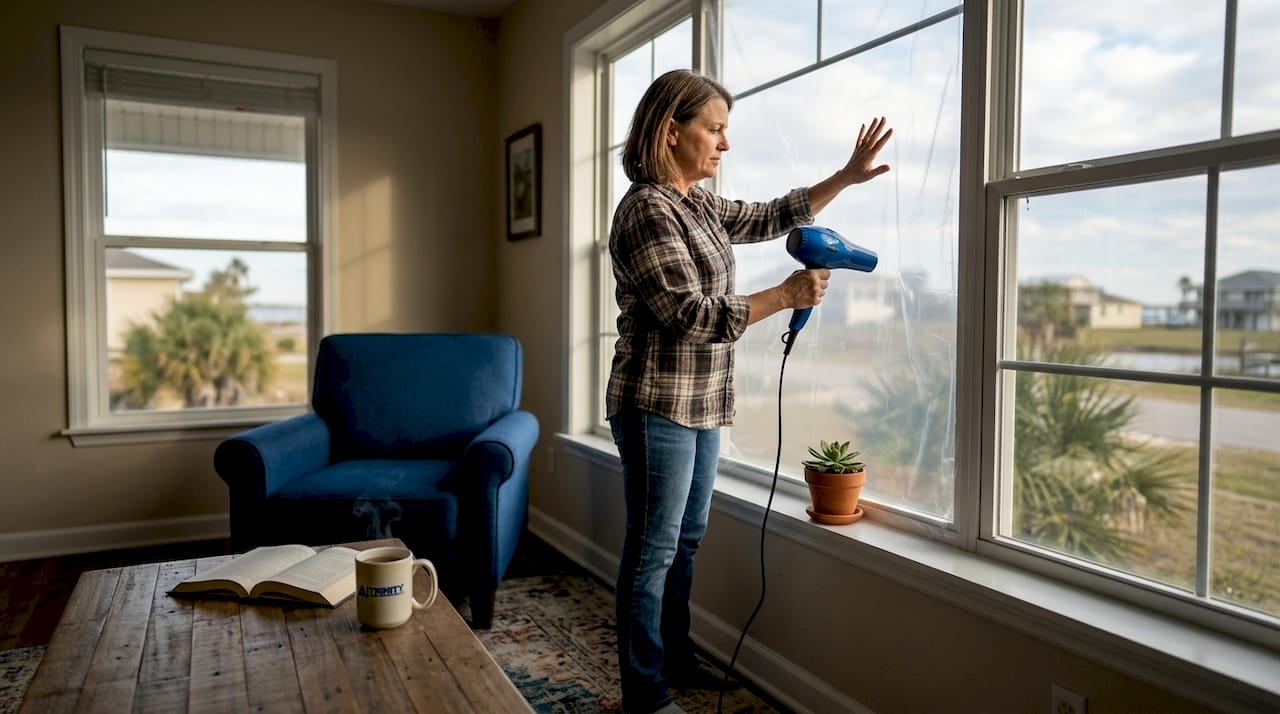
Most homeowners assume that fixing drafty windows means spending thousands on replacements or hiring a contractor. That assumption keeps a lot of people uncomfortable and overpaying on energy bills every single month. The truth is that clear plastic window sheeting, available at any hardware store for under $20 a kit, can save as much as 5–10% on heating costs when installed correctly. This article walks you through exactly how clear sheeting works, how it compares to other insulation methods, a detailed installation guide, and what Gulf Coast Alabama homeowners specifically need to know about humidity and maintenance.
Key Takeaways
Point | Details |
Clear sheeting saves energy | Plastic insulation can cut heating costs by 5–10% when installed correctly. |
Installation quality matters | Carefully sealing edges is essential for real energy savings and comfort. |
Humidity control is crucial | Managing indoor moisture prevents condensation and mold when using window film. |
Best for older windows | Plastic film works best on drafty, single-pane windows rather than new, high-efficiency types. |
Temporary seasonal fix | Remove plastic sheeting after winter to avoid residue and restore airflow. |
Understanding clear sheeting for window insulation
To understand how clear sheeting works, let’s first unpack its science and usefulness for Gulf Coast homes.
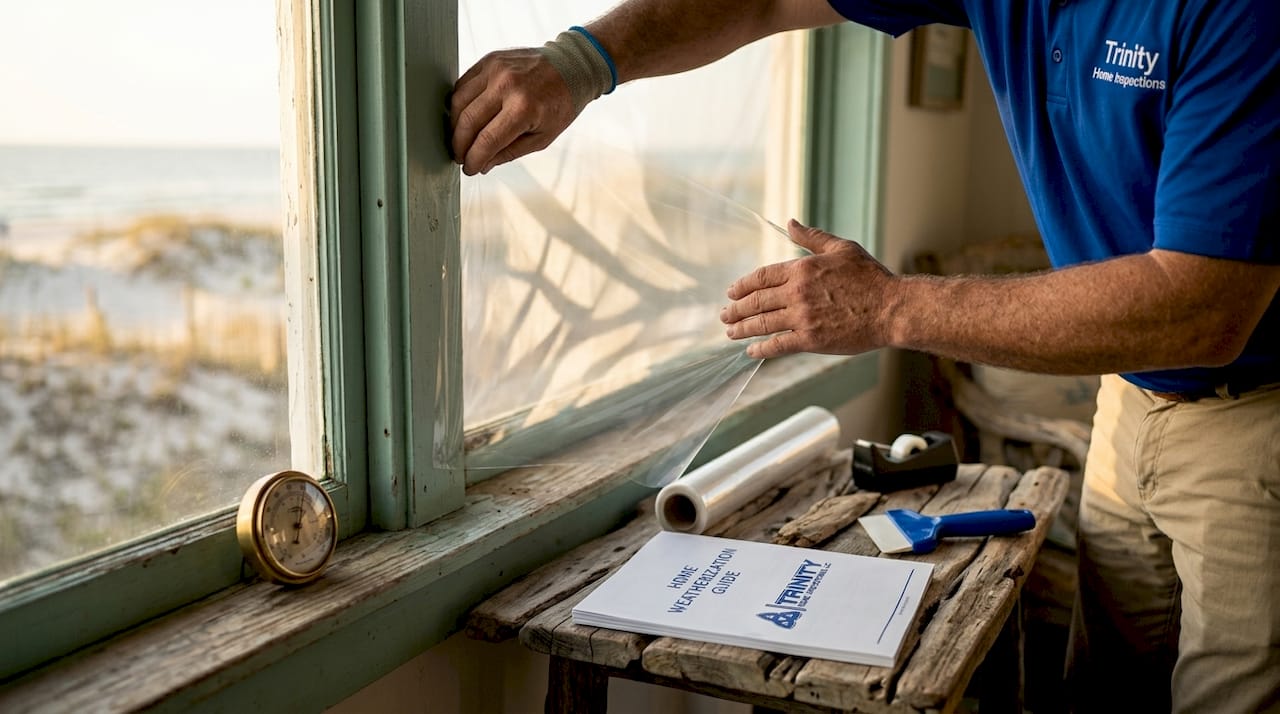
Clear sheeting, often sold as a heat-shrink film kit, is a thin transparent plastic film you apply directly over your window frame using double-sided tape. Once applied, you use a hair dryer to shrink the film tight, creating a sealed air gap between the film and the glass. That trapped layer of air is the key. Air is a poor conductor of heat, which means it slows the transfer of warmth from inside your home to the cold glass surface outside.
Think about it this way: single-pane windows act almost like a hole in your wall during winter. Cold air radiates off the glass and drops into your living space, and warm air from your heater escapes through the glass constantly. Adding a layer of clear film with a sealed air gap interrupts that cycle. Clear plastic window insulation can provide measurable improvement for drafty, typically single-pane windows, which is exactly the type of window found in many older Gulf Coast homes.
For homeowners with insulating single-pane windows as a priority, clear sheeting is one of the most accessible entry points. It requires no special skills, no tools beyond a hair dryer and a pair of scissors, and you can complete a standard-sized window in about 20 to 30 minutes.
Here is why clear sheeting matters specifically in the Gulf Coast region:
Older housing stock: Mobile, Daphne, Foley, and surrounding areas have a large number of homes built in the 1960s through the 1980s. Many of these still have original single-pane windows.
Mild but real winters: Gulf Coast winters are short, but heating costs still add up. Even modest savings on your energy bill over a 3 to 4 month season can recover the cost of the film many times over.
High humidity: The Gulf Coast’s humidity makes window condensation a common problem. A properly sealed film layer reduces the temperature difference at your glass surface, which lowers the chance of condensation forming on the interior.
Rental properties and older rentals: Landlords managing older properties in Baldwin and Mobile County often need cost-effective solutions that don’t require capital improvements.
“Even small drafts around window frames can cost more than most homeowners realize. A single poorly sealed window can account for a surprising percentage of total heat loss in a room.”
You might also want to explore glass tinting for energy savings as a complementary strategy, especially for windows that face west or south. Tinting addresses heat gain in summer while clear sheeting addresses heat loss in winter. Together, they cover both seasons. You can also learn more about home privacy with clear window film as an additional benefit some films provide without sacrificing natural light.
Pro Tip: Before you buy a kit, hold a lit incense stick or a thin piece of tissue near the edges of your window frame on a windy day. If the smoke drifts or the tissue moves, you have air infiltration. That is exactly the type of problem clear sheeting addresses well.
Comparing window insulation methods: Is clear sheeting right for you?
Now that you know how clear sheeting works, let’s see how it compares to your other insulation options.
Plastic film is most helpful for older, single-pane windows and noticeably less effective for modern low-E or double-pane windows that already have built-in insulating properties. That distinction matters a lot when you’re deciding where to spend your time and money.
Here is a side-by-side comparison of the most common window insulation approaches available to Gulf Coast homeowners:
Method | Approximate cost | DIY friendly | Best window type | Effectiveness | Seasonal or permanent |
Clear plastic sheeting | $5–$20 per window | Yes | Single-pane, older | Moderate | Seasonal |
Window tint film | $30–$100 per window | Yes (moderate) | All types | Moderate to high | Permanent |
Draft snake/rope caulk | $3–$10 per window | Yes | All types | Low to moderate | Seasonal |
Interior storm window panel | $50–$150 per window | Yes | Single-pane | High | Semi-permanent |
Exterior storm window | $100–$300+ per window | No (usually) | Single-pane | High | Permanent |
Full window replacement | $300–$1,000+ per window | No | All types | Highest | Permanent |
As the table shows, clear sheeting sits at the most affordable and accessible end of the spectrum. It is not the most effective solution available, but for its price point it delivers real, measurable results with zero professional labor required. For homes in Gulf Shores, Orange Beach, or Fairhope where older windows are common, this is often the smartest first step before committing to more expensive upgrades.
Explore best options for single-pane windows if you want a deeper breakdown of all the methods that apply specifically to that window type. And if summer heat gain is your bigger concern, reviewing home glass tinting will show you how professionally applied tint stacks up against DIY film over time.
Use this step-by-step decision guide to figure out which method fits your situation:
Count your single-pane windows. If most of your windows are single-pane, clear sheeting gives you the most cost-effective winter coverage.
Check your budget. If you have under $100 to spend, plastic sheeting covers 5 to 8 windows easily.
Assess your skill level. Clear sheeting requires only basic DIY confidence. Storm window installation requires more precision.
Consider your timeline. If you need results before a cold front arrives, sheeting can be done in one afternoon.
Think about appearance. Properly applied clear film is nearly invisible. It won’t change your home’s look from inside or outside.
Evaluate long-term goals. If you plan to replace windows within the next two years, sheeting is a smart temporary bridge solution.
Pro Tip: You can calculate a rough estimate of your potential energy savings using a window film energy savings calculator before committing to any method. Knowing your numbers upfront helps you prioritize which windows to treat first.
Step-by-step: How to install clear window sheeting for best results
When you’ve decided on clear sheeting, here’s exactly how to install it for maximum impact and comfort.
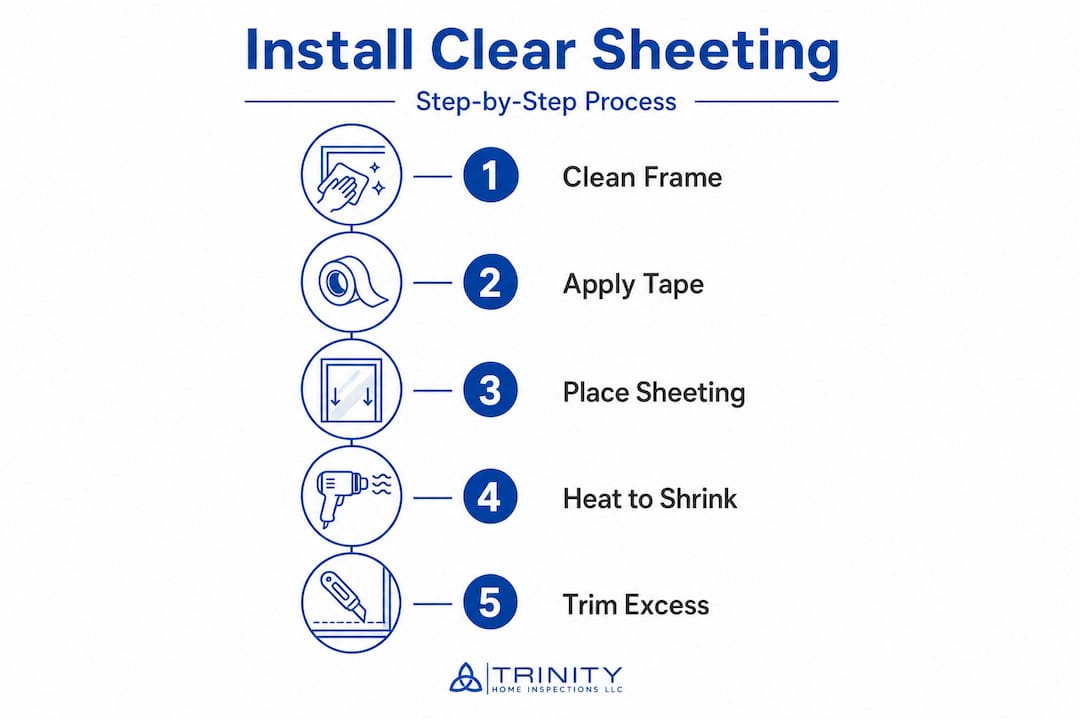
Getting the installation right matters more than most people realize. Proper sealing and edge attention is critical because careless work reduces energy savings significantly. A film that has gaps at the corners or peeling tape along the edges lets in drafts that defeat the entire purpose.
What you’ll need:
A plastic window insulation kit (includes film and double-sided tape)
Scissors
A hair dryer
Rubbing alcohol and a clean cloth
A ruler or tape measure
A partner (optional but helpful for larger windows)
Installation steps:
Clean the window frame thoroughly. Wipe down the entire frame with rubbing alcohol to remove dust, grease, and any existing residue. This step is non-negotiable. The tape will not stick properly to a dirty surface, and even a small lifting edge creates a draft channel that eliminates your energy savings.
Measure and cut the film. Cut the plastic film at least 2 inches larger than your window opening on all four sides. This overlap ensures you have enough material to seal the entire frame edge. Rushing this step and cutting too small is one of the most common mistakes.
Apply the double-sided tape. Run the tape around the entire perimeter of the window frame, pressing firmly. Take your time at the corners. Overlap the tape slightly at corners to avoid gaps. The tape is your seal, so treat it with care.
Attach the film to the tape. Peel the backing from the tape and press the film onto it, starting at the top. Work your way down one side, then the other, keeping the film as flat and wrinkle-free as possible. It does not need to be perfect at this stage because the next step fixes wrinkles.
Shrink the film with a hair dryer. Using a medium heat setting, hold the dryer about 2 inches from the film and move it steadily across the surface. You will watch wrinkles disappear as the film tightens. Work from the center outward. Do not hold the dryer in one spot or you can melt or distort the film.
Trim excess film. Once the film is fully shrunk and tight, trim any excess along the tape line using scissors. A neat edge improves both appearance and seal quality.
Inspect all edges. Run your hand slowly around every edge and corner. You should feel no air movement. If you do, press the tape and film more firmly or add a small strip of additional tape over the problem spot.
For Gulf Coast humidity specifically, there are two extra steps worth taking. First, allow the window frame to dry completely after cleaning before applying tape, especially if you cleaned with water. Moisture under the tape will cause it to release faster in our humid climate. Second, check the sealed edges again after the first rainy day or temperature shift, because humidity cycles can cause the film to contract or expand slightly.
Statistic callout: A kit covering one standard window costs less than $5 in most cases. If that single window accounts for even a fraction of your home’s heat loss, the payback period is measured in days, not years.
You can also learn more about how air sealing for efficiency ties directly into your overall HVAC performance. Reducing air infiltration through windows and doors can lower the workload on your heating and cooling system, which extends equipment life and reduces repair costs over time. Before you start this project, reviewing proper window cleaning prep ensures your frames are in the best possible condition for film adhesion.
Humidity, condensation, and maintenance: What Gulf Coast homeowners must know
Proper installation is just half the battle. Maintenance and humidity control are just as important for lasting results in Alabama.
The Gulf Coast is not like most of the country when it comes to humidity. Our average indoor relative humidity during winter months can still hover between 50% and 70% if you are not actively managing it. That matters because condensation risks remain if humidity and ventilation are not managed even with window film in place. The film creates a warmer interior surface, which helps, but it cannot do the job alone if your home’s humidity is unchecked.
Here is how condensation works in practical terms. When warm, moist indoor air contacts a cold surface (like a window), the moisture drops out of the air and forms liquid water on the surface. Over time, that standing moisture feeds mold growth, damages window frames, and can work into wall cavities. Adding a clear film layer raises the surface temperature of the barrier facing your room, which reduces the chance of condensation forming. But if your indoor humidity is running at 65% or 70%, even a warmer surface may still collect moisture on cold nights.
The target indoor humidity range during cooler months is 40% to 55%. You can measure this with an inexpensive digital hygrometer, available for under $15 at most hardware stores.
Indoor humidity level | Condensation risk | Comfort level | Recommended action |
Below 30% | Very low | Too dry (irritation) | Add humidification |
30–40% | Low | Acceptable | Monitor only |
40–55% | Minimal | Ideal range | Maintain this level |
55–65% | Moderate | Somewhat humid | Dehumidify or ventilate |
Above 65% | High | Uncomfortable | Dehumidify immediately |
Here is a practical maintenance checklist for your window film installation throughout the season:
Weekly: Visually check edges and corners for any lifting or separation from the tape.
After storms: Press any loosened edges back firmly and inspect for moisture between the film and glass. Some condensation between the film and glass is normal, but standing water is not.
Monthly: Check the area below the window on the wall or sill for any signs of moisture, discoloration, or soft spots.
End of season: Remove the film carefully before warm weather arrives. Our Gulf Coast spring brings high humidity and the need for ventilation. Leaving film on through summer can trap moisture and create conditions where mold can develop behind the film.
Explore specific humidity control strategies tailored to Alabama homes for a deeper look at managing indoor moisture year-round. If you notice any dark spots or musty odors near your window frames, review guidance on mold prevention around windows before the situation worsens.
“Window film is a useful tool, but it works best as part of a broader moisture management strategy, not as a replacement for it.”
The DIY plastic window film paradox: What most people miss
With all the technical details covered, here’s what years of seeing window film in the field have revealed.
There is a paradox that shows up consistently in homes where clear window sheeting has been used for several seasons. The homeowner installed it carefully, followed the instructions, and genuinely improved their comfort. But over time, the film became a habit rather than a solution. Tape residue built up on frames. Some windows were covered even when they no longer needed it. And the underlying issues, cracked glazing compound around the glass, failing weatherstripping, gaps in the window frame itself, went unaddressed because the film masked the symptoms well enough.
The film works. That is not in question. But it works so well at reducing the immediate sensation of a draft that it sometimes delays the harder conversation about what is actually wrong with the window. This is especially true for older homes in Spanish Fort, Foley, and Mobile, where wood window frames may be deteriorating, and clear sheeting is essentially covering up a structural issue with a $10 fix.
Here is the uncomfortable truth: clear sheeting is best used as a bridge strategy, not a long-term answer. Use it to stay comfortable while you plan a proper fix. Use it on windows that are otherwise in good condition but just lack insulating value. Do not use it to avoid addressing a window that is failing at its frame, has broken seals in double-pane glass, or has visible damage.
Another thing most DIYers miss is film lifespan. Most plastic kits are rated for one season. But in Gulf Coast conditions, with temperature swings, high UV exposure, and humidity cycles, the film can begin to degrade or lose adhesion faster than the manufacturer’s estimate. If you reuse film from a previous year or leave it on past its intended season, you may be getting very little insulating benefit while still believing you have full protection.
We have also seen through thermal imaging on window issues that film does not show up as an insulating layer under infrared. A trained inspector using thermal imaging can still identify where heat is escaping around or through windows, even when film is present. That means if you are serious about your home’s efficiency, a thermal inspection gives you real data rather than assumptions.
The right mindset here is layered. Use clear sheeting as one tool among several. Combine it with rope caulk or weatherstripping on leaky frames. Keep your humidity in the target range. Schedule an inspection if you have ongoing comfort or moisture problems. Practical results come from combining good habits, not from any single fix.
Next steps for a more comfortable, efficient home
If you’re ready to take your home’s efficiency and comfort even further, these local resources can help.
Clear sheeting is a strong first move, but it is rarely the only move a Gulf Coast home needs. When moisture, mold concerns, or persistent drafts keep showing up despite your DIY efforts, it is time to bring in professional eyes. At Trinity Home Inspections, we serve homeowners across Baldwin County, Mobile County, Escambia County, Washington County, Monroe County, and surrounding Gulf Coast Alabama areas with InterNACHI-certified inspections that include free thermal imaging to help spot exactly where your home is losing energy or collecting moisture.
[

If you have noticed any signs of moisture near your windows or walls, our professional mold inspections provide certified testing with lab-backed results so you know what you are actually dealing with. And if you are buying or selling a home in this area and want to understand a property’s permit history or prior improvements, our property permit and deed search service gives you that peace of mind before you close. Clear answers, same-day reports, and no guessing. That is how we do things at Trinity Home Inspections.
Frequently asked questions
Does clear plastic window film work in humid climates like Alabama?
Yes, clear plastic insulation can reduce drafts and some condensation, but humidity must also be controlled for best results. Film alone does not replace active moisture management in Gulf Coast homes.
How much can I save on energy bills using clear sheeting?
You could save around 5–10% on heating costs if the film is installed carefully and all edges are fully sealed. Poorly applied film delivers far less benefit, so installation quality is the deciding factor.
Is clear sheeting safe to leave on windows all year?
It’s best to remove it after cold weather to prevent tape residue and restore ventilation. Leaving plastic film past the season can cause adhesive buildup on frames and trap moisture as temperatures rise.
Can window film cause mold or moisture issues?
Film helps reduce drafts, but mold can still develop if humidity stays unmanaged and condensation forms between the film and glass. Keeping indoor humidity between 40% and 55% is the most important step in preventing this.
Recommended