
Understand home inspection standards in Gulf Coast Alabama
- Matt Cameron
- Mar 31
- 8 min read

Most homebuyers assume a licensed inspector covers everything that matters. In Gulf Coast Alabama, that assumption can cost you thousands. The region’s humidity, storm exposure, and coastal building materials create risks that go beyond what a minimum-standard inspection is designed to catch. 90% of homebuyers rely on inspections before making their final decision, yet many walk away with reports that missed critical coastal issues. This guide breaks down who sets the standards, what a compliant inspection actually covers, how ASHI and InterNACHI differ, and what extra steps protect you in a Gulf Coast transaction.
Key Takeaways
Point | Details |
Alabama’s licensing protects buyers | Only inspectors licensed through the Alabama DCM and key associations meet strict training and exam requirements. |
Gulf Coast homes need extra attention | Humidity, storms, and unique building risks in the Gulf Coast require specialized add-ons and local knowledge. |
Standards differ—know your inspector | ASHI and InterNACHI require different training and experience levels that affect your report’s depth and coverage. |
Use your inspection report wisely | Understand, review, and negotiate repairs or price adjustments based on clearly documented findings. |
Verify and participate for best results | Check credentials, attend the inspection, and ask questions to get value beyond the basic SOP. |
Who sets home inspection standards in Gulf Coast Alabama?
To understand why inspectors do what they do, you first need to know who decides what’s required and how they’re qualified.
Home inspectors in Alabama are licensed and regulated by the Alabama Division of Construction Management (DCM). This state agency sets the baseline for who can legally perform a home inspection and what training they must complete before doing so. Membership in a nationally recognized association is required as part of that process.
According to Alabama DCM inspector requirements, inspectors must complete the following before they can practice:
120 hours of approved pre-licensing education
Pass the National Home Inspector Examination (NHIE)
Pass the ASHI Standards of Practice and Code of Ethics Exam
Carry a minimum of $250,000 in Errors and Omissions (E&O) insurance
Both ASHI (American Society of Home Inspectors) and InterNACHI (International Association of Certified Home Inspectors) are accepted for state licensure. However, each organization layers additional requirements on top of the state minimum. You can review Alabama inspection requirements to see how state rules and national standards overlap.
When choosing a qualified inspector, do not stop at verifying a state license. Ask which national association they belong to, whether they carry ongoing education requirements, and how much liability insurance they actually hold. The state minimum for E&O is $250,000, but some inspectors carry $1 million or more, which matters if something is missed.
Key stat: Alabama requires 120 hours of training plus a national exam just to get licensed. That is a solid foundation, but local experience and continued education are what separate good inspectors from great ones.
What does a standard home inspection include in the Gulf Coast?
Now that you know who sets the standards, it is time to see what a standard inspection actually covers and where coastal Alabama makes things different.
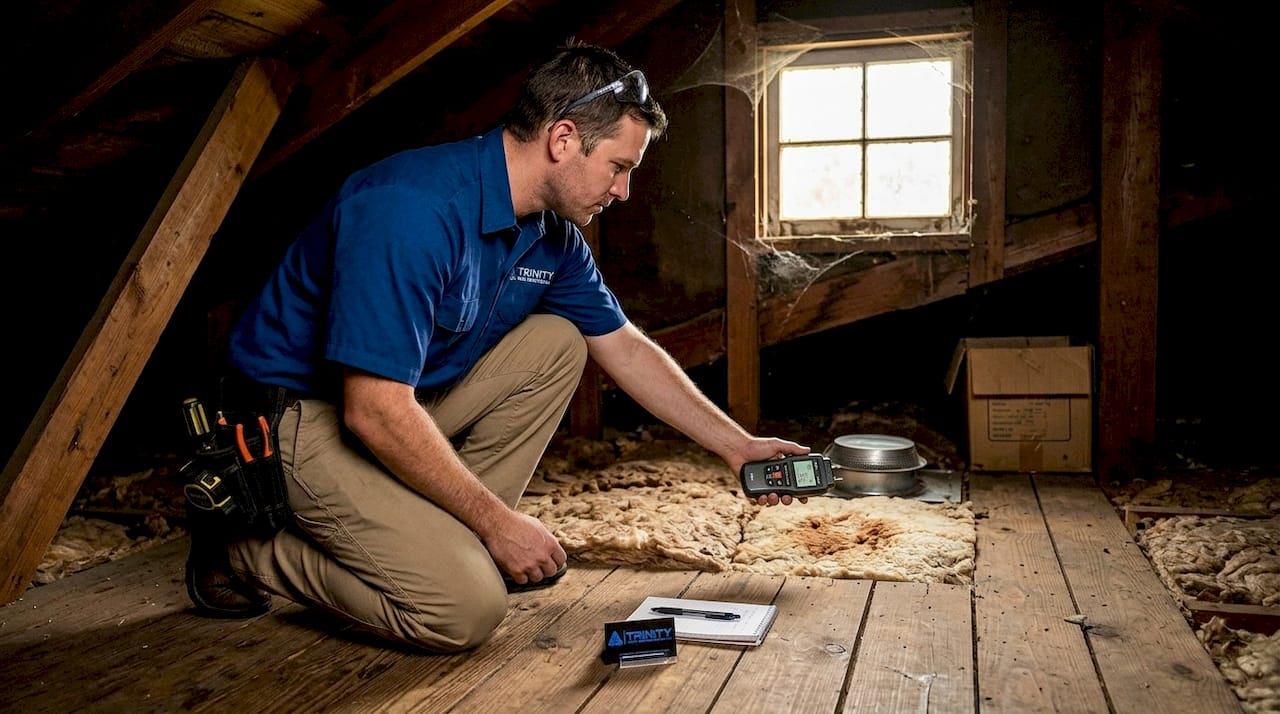
A standard inspection is a visual, non-invasive exam of the home’s major systems and components. That includes the structure, roof, exterior, plumbing, electrical, HVAC, insulation, and interior spaces. The inspector is not there to enforce building codes. They are there to identify conditions that affect safety, function, or the home’s overall condition.
In Gulf Coast Alabama, the inspection details shift because of the environment. Inspectors who know this region pay close attention to:
Drainage and grading around the foundation, since standing water is a serious flood risk
Water intrusion points at windows, doors, and roof penetrations
Hurricane-resistant features like roof-to-wall connections and impact-rated openings
Moisture and mold indicators in crawl spaces, attics, and behind wall cladding
HVAC performance under high humidity loads
Here is a quick look at what is typically included versus what requires an add-on:
Inspection area | Included in standard | Requires add-on |
Roof, structure, electrical | Yes | No |
Plumbing and HVAC | Yes | No |
Mold testing | No | Yes |
Radon testing | No | Yes |
Pool and spa | No | Yes |
Septic system | No | Yes |
Sewer scope | No | Yes |
Reviewing common Gulf Coast findings before your inspection helps you know what questions to ask and what to watch for during the walkthrough.
Pro Tip: Always ask to see a sample report before hiring an inspector. A well-organized report with photos, videos, and color-coded priorities tells you far more than a plain text document ever will.
Key differences: ASHI vs. InterNACHI and why it matters
But are all inspectors and standards the same? Here is what separates the two organizations most buyers and agents will encounter.
Both ASHI and InterNACHI are accepted for Alabama licensure and both cover the same core systems. The differences show up in experience requirements, ongoing education, and what the organization offers clients directly.
Feature | ASHI | InterNACHI |
Experience requirement | 250 paid inspections for full certification | CPI exam plus ongoing education |
Standards updates | Periodic | More frequent updates |
Client guarantee | Not standard | Buy-back guarantee offered |
Exam required | NHIE plus ASHI SOP exam | InterNACHI CPI exam |
Continuing education | Required | Required annually |
Here is how to think about this practically:
ASHI certification signals that an inspector has completed a large volume of real inspections under supervision. That hands-on experience matters, especially for older or unusual properties.
InterNACHI certification means the inspector has passed a rigorous exam, follows a frequently updated Standards of Practice, and clients benefit from the InterNACHI Honor Guarantee of up to $25,000.
Both are credible. The bigger question is whether the inspector goes beyond the minimum SOP, uses modern tools, and knows the local market.
Report quality varies. Certification does not guarantee a detailed, easy-to-read report. Ask for a sample before you book.
Once you receive your report, knowing how to read it is just as important as the inspection itself. You can also look at real-world report examples to calibrate your expectations before closing day.
For a thorough side-by-side breakdown, the detailed ASHI vs. InterNACHI comparison is worth reviewing before you hire.
Special considerations for Gulf Coast properties
Even when inspectors are licensed and certified, the Gulf Coast’s harsh climate and flood risk call for extra care.
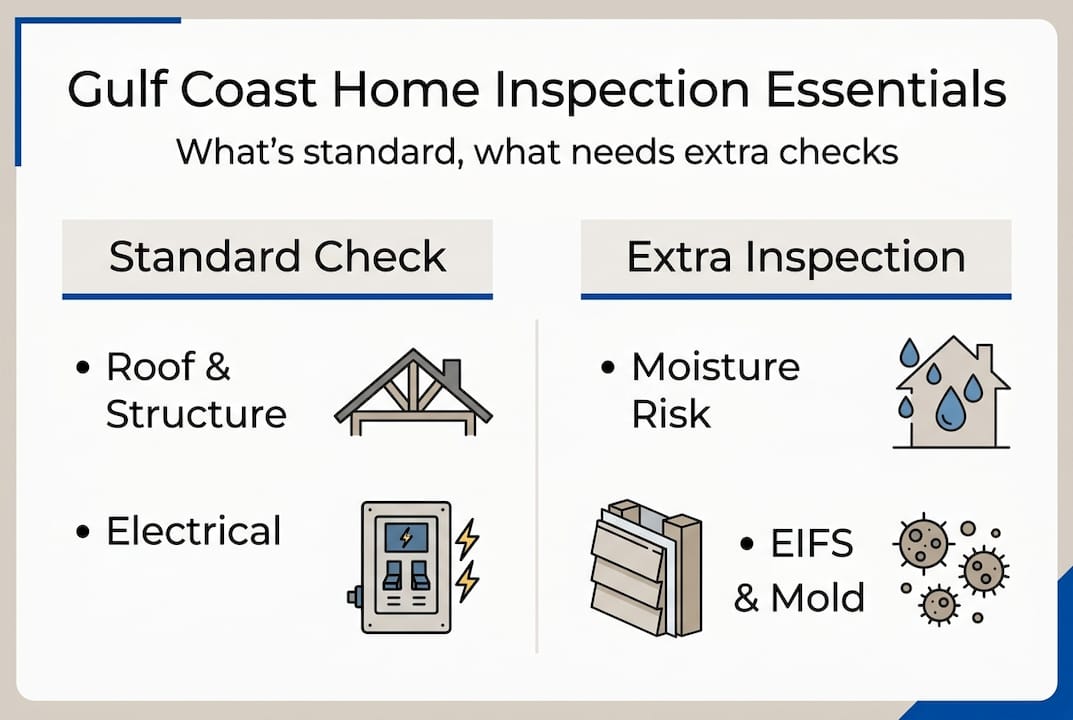
Coastal Alabama homes face conditions that inspectors in other parts of the state rarely encounter. Moisture intrusion, EIFS exteriors, storm risks, and exclusions like radon, pools, and water quality testing are all factors that can dramatically affect a home’s long-term value and safety. Missing any one of them can turn a good-looking deal into a costly repair project.
Here is what you should specifically confirm with your inspector for a Gulf Coast property:
Drainage and grading around the foundation and yard
EIFS (synthetic stucco) siding for moisture trapping behind the surface
Crawl space and attic ventilation for mold and moisture buildup
Roof-to-wall connections and hurricane straps
Pest intrusion including termites and wood-destroying organisms
Flood zone indicators and any prior water damage evidence
Coastal risk | Why it matters | Action to take |
High humidity | Mold and wood rot | Request mold swab test |
Storm exposure | Roof and structural damage | Confirm drone roof inspection |
EIFS siding | Hidden moisture intrusion | Ask for moisture meter readings |
Flood history | Foundation and framing damage | Review flood zone maps |
“90% of Gulf Coast buyers rely on inspectors, but major coastal issues are often missed when add-ons are skipped.” — Trinity Home Inspections
Before your inspection, review questions to ask for Gulf Coast inspections so you walk in prepared. And if you are ready to book, scheduling your inspection is straightforward when you know what to look for.
Pro Tip: Ask your inspector directly whether they recommend third-party testing for radon, water quality, or EIFS. These are often excluded from the standard scope but are genuinely important for Gulf Coast homes.
How to verify a home inspector and use the report to your advantage
Once the inspection is complete, here is how to ensure your inspector is legitimate and how to use your report for a better deal or a safer home.
Verifying credentials takes less than ten minutes and protects you from hiring someone underqualified. Inspector licensing can be confirmed through the Alabama DCM’s online lookup tool. Do not skip this step, even if you received a referral from a trusted agent.
Here is a step-by-step process to follow:
Confirm state licensure using the Alabama DCM license lookup before you sign any agreement.
Verify national association membership by checking ASHI or InterNACHI’s member directories online.
Request a sample report to evaluate clarity, photo quality, and how deficiencies are categorized.
Attend the inspection if at all possible. Walking the property with the inspector gives you context that no report can fully replace.
Review the summary section first. Look for clear separation between safety issues, major defects, and minor maintenance items.
Ask about add-ons before the inspection day, not after. Scheduling a sewer scope or mold test at the same time saves time and often money.
Once you have the report in hand, reading it strategically helps you decide what to negotiate, what to repair yourself, and what to budget for after closing.
Pro Tip: A home inspection report is not a pass/fail grade. It is a negotiating tool. Use major findings to request repairs, price reductions, or seller-paid warranties before you close.
The real value of home inspection standards in the Gulf Coast—what most guides miss
Most articles about home inspection standards focus on the minimum requirements. Pass the exam, get licensed, follow the SOP. That is the floor, not the ceiling.
Here is the honest truth: there is no single Alabama SOP that fully accounts for every coastal risk you will encounter in Baldwin or Mobile County. The standards give inspectors a framework, but local experience is what fills in the gaps. An inspector who has walked hundreds of Gulf Coast homes knows where moisture hides, which EIFS installations are problematic, and what storm damage looks like three years after the fact.
The best inspectors are not just certified. They use thermal imaging, moisture meters, and drones as standard practice, not as upsells. They recommend add-ons when the property warrants it, not just when a client asks. And they deliver reports that tell you the truth, even when it is uncomfortable.
We also believe that continuing education is not optional. InterNACHI updates its Standards of Practice regularly, and inspectors who stay current are better equipped to catch issues that older training would have missed. Ask your inspector directly whether they completed updated coursework in 2025 or 2026.
The recurring issues we see in Gulf Coast homes confirm this every week. Standards matter, but practical wisdom and local knowledge are what actually protect buyers and sellers in this market.
Connect with expert home inspectors for true Gulf Coast peace of mind
Ready to put your knowledge into action and safeguard your biggest investment? Understanding standards is the first step. Having the right inspector behind you is what makes those standards work in your favor.
Trinity Home Inspections serves Baldwin, Mobile, Escambia, Washington, Monroe, and Clarke counties with InterNACHI-certified inspections, same-day photo and video reports, and free thermal imaging. We also offer mold testing services, pre-listing inspections for sellers who want fewer surprises, and a real estate permit search to give you the full picture before closing. From new construction to historic coastal homes, we give you clarity, not confusion. Schedule your inspection today and walk into your transaction with confidence.
Frequently asked questions
How do I check if my Alabama home inspector is licensed?
You can verify licensure through DCM using the Alabama Division of Construction Management’s online inspector lookup tool. It takes only a few minutes and confirms active licensing status.
Are pools and septic systems included in a standard Alabama home inspection?
No. Pools, septic, and radon are excluded from the standard scope and require a separate specialist or add-on inspection to be properly evaluated.
Why should I consider extra inspections for Gulf Coast homes?
Gulf Coast risks like high humidity, potential flooding, and coastal building materials such as EIFS make add-on testing essential for a complete picture of the home’s condition.
What is the difference between ASHI and InterNACHI inspectors?
ASHI requires 250 paid inspections for full certification, while InterNACHI uses its own CPI exam, offers more frequent standards updates, and provides clients with a buy-back guarantee.
How long does a typical home inspection take in the Gulf Coast?
Expect about 3 to 4 hours for a standard residence. Older homes, larger properties, or those with add-on services like sewer scopes or mold testing will require additional time.
Recommended
